
Virginia Woolf’s Night and Day Review
Introduction
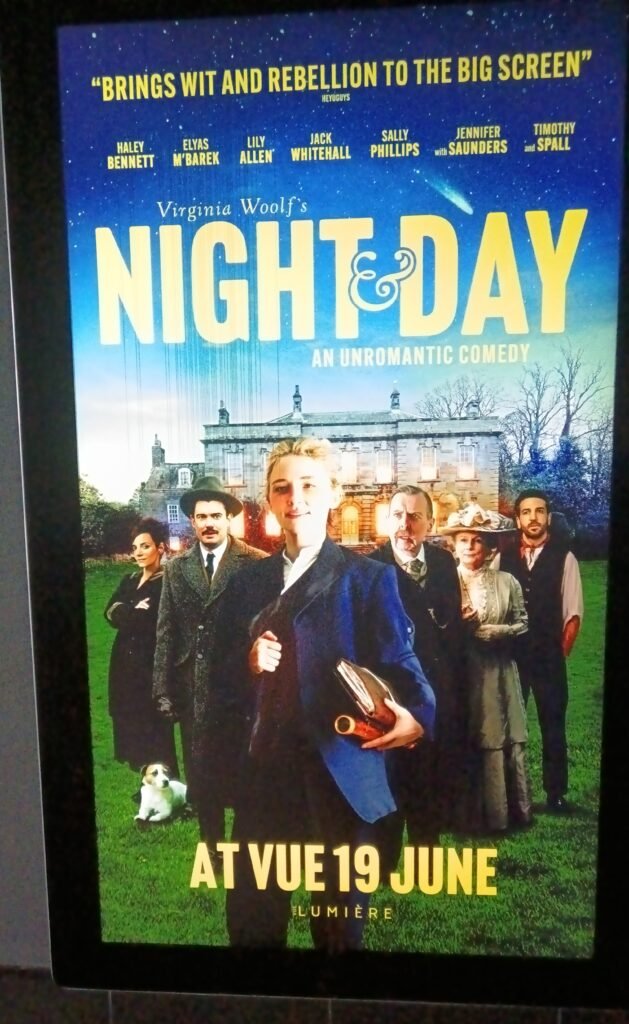
Creating an adaptation of a favorite literary work is fraught with difficulties. The audience usually expects adherence to the original book, but also something new and original to make the film worthy of being seen. Tina Gharavi’s film, Virginia Woolf‘s Night and Day, seeks to accomplish both of these aims. A remake of Virginia Woolf’s novel published in 1919, it offers a blend of the old and the new.
The movie takes place in Edwardian London and tells the story of Katharine Hilbery, an intelligent woman who is a brilliant astronomer. She has to fight against society’s norms of marriage and femininity. Instead of settling for the traditional path in her love life, Katharine decides to pursue intellectual success. Such opposition makes the core of the movie emotionally.
This Virginia Woolf’s Night and Day movie review analyzes the movie’s directing, acting, cinematography, soundtrack, themes, and adaptation. Even though the movie does have its drawbacks, it still gives an interesting interpretation of Woolf’s novel. Moreover, it shows how the book’s messages are topical nowadays.
Direction and Creative Vision

Tina Gharavi presents the narrative in a confident and innovative manner. Rather than adopting a traditional literary adaptation, Gharavi adopts a modern voice. The adaptation appears less rigid compared to other period dramas. The narrative includes humour that keeps it from being too rigid.
One of the best decisions made by Gharavi is the way she presents the character of Katharine. The passion of Katharine for astronomy is well highlighted in the movie. Her interest in science becomes symbolic in terms of freedom and possibilities. The stars represent a limitless world free of social constraints.
Indeed, Gharavi manages to strike a good balance between authenticity and relevance of the movie. She does not deviate from Edwardian society but manages to make sure that her themes can be related to today’s audience. In fact, issues regarding career aspirations and self-realization are extremely relevant nowadays and thus give the film freshness and relevance.
Moreover, the director manages to create a good atmosphere that allows for an open discussion of the topic. The movie is not bound by the constraints of its historical background but gives the viewer space to think about the continued relevance of the author’s thoughts. This is yet another good example of the director’s understanding of what constitutes a good adaptation. Good adaptation is supposed to connect with the modern-day audience.
Of course, some of the director’s decisions may not seem to be perfect to everyone. Indeed, there might be people who consider some modern references in the movie to be too obvious and thus decrease the subtle nature of Woolf’s literary pieces. Literary purists may also criticize some simplifications.
However, even with these considerations, Gharavi managed to produce a good movie.
Cinematography
Cinematography by Sebastian Edschmid is yet another strength of this picture. The visuals are always impressive and captivating. Each frame is thought out and well-composed.
The picture portrays Edwardian London in an extremely elegant way. Many details contribute to the authenticity of the period. There are no moments when the production looks fabricated or too theatrical. On the contrary, the environment seems alive.
Lighting makes an integral part of the movie. Natural hues help to create a cozy atmosphere which perfectly matches the romantic and pensive nature of the plot. At the same time, there is no sentimentality in the approach.
One of the strengths is the portrayal of the night sky and astronomical phenomena. These moments provide some of the best visuals of the movie. Contrasts between the vastness of the space and constrained environment serve as a strong visual metaphor.
It should be mentioned that Edschmid employs composition as an effective tool of visual storytelling. In many shots, Katharine is shown in the frame surrounded by large empty spaces. It symbolizes her need for freedom and adventure.
Cinematography at times compromises reality in order to achieve the effect of beauty. Some scenes appear to be idealized as opposed to being realistic. Although these scenes are visually pleasing, they may have the effect of undermining the drama. There is an element of certain audience members wanting a more modest style.
However, despite the above observation, the cinematography is extremely effective. It adds to the emotion and theme of the narrative. The contribution of Edschmid in this regard is significant.
Soundtrack and Music
One of the film’s most innovative ideas is the soundtrack by Simon Goff. He does not use an ordinary orchestral arrangement, but decides to make the movie more unique and to add some electronic music. This decision allows the film to distinguish itself among many period dramas.
Incorporation of the electronic texture makes the film sound modern. It reminds us that its issues are still topical nowadays. This idea corresponds to the director’s vision of the film. Music links the film’s historical background with topical issues.
This kind of music works well for many scenes in the film. For instance, in many cases the music reveals Katherine’s curiosity and ambitions. Electronic sounds denote innovation and progress. They perfectly fit the character.
Moreover, this soundtrack is effective for astronomy scenes. Atmosphere music adds emotional depth to these scenes and makes them more spectacular and amazing.
However, not all people would like this idea. For some people, it is difficult to get used to the modern soundtrack in a period drama. Electronic sounds combined with Edwardian images look very strange.
The score, however, is one that has to be commended for its originality. Not making any obvious choices, the music creates a very distinct mood. The music by Goff complements the film and makes it more relevant to modern times. Making it an interesting addition
Themes and Storytelling
These are some of the themes that have been captured in the movie and are still relevant even in the modern day. The first theme is female independence. The conflict in the movie is driven by Katharine’s fight for freedom.
Marriage is another key theme in the movie. The movie captures how society puts pressure on women. There are expectations from society as far as how Katharine should conduct herself is concerned.
Career ambitions have also been highlighted in the movie. The choice of the field that Katharine chooses shows her desire for intellectual satisfaction. The film emphasizes how personal success is as important as marital bliss.
Issues of identity and self-realization are developed throughout the movie. Katharine needs to define what sort of life she wishes to live. Such experiences provide for much of the emotional content of the movie.
Progress and changes within society are another theme explored by the movie. Progress in scientific and technological terms is a feature of the plot of the movie. At the same time, changes in attitudes towards gender roles are also part of the picture.
The use of humor is a very important aspect. Humor serves as an outlet for dealing with difficult topics in the movie. In that way, social commentary becomes easier to swallow.
Themes vary in importance. Independence sometimes overshadows the development of relationships. Also, some emotional issues found in the book get little attention. However, the movie does convey its message effectively.
Adapting Virginia Woolf’s Novel
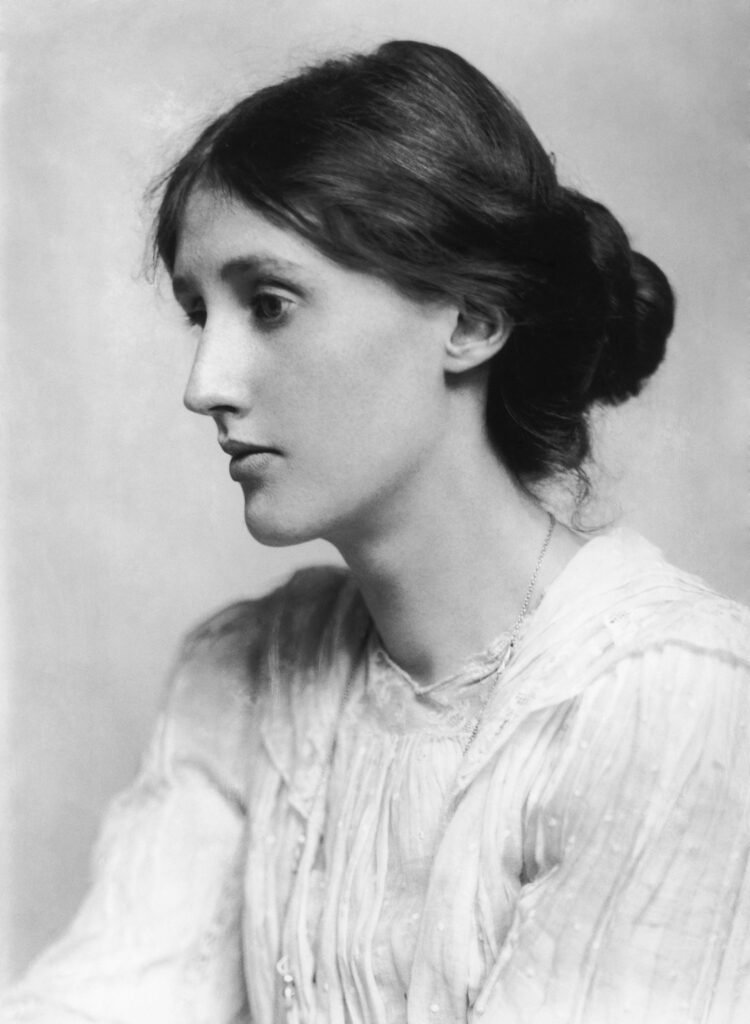
Every adaptation of Virginia Woolf requires a great deal of expectations. Many readers can be deeply attached to her stories. The filmmaker will have to choose what to keep and what to alter.
The movie stays true to many essential themes from the novel. The struggle between love and freedom continues to exist. All the questions connected with marriage and personal happiness remain in their place. It preserves the essence of Woolf’s book.
Nevertheless, some aspects in the film are altered significantly. The passion of Katharine for astronomy is developed better. The film itself becomes somewhat feminist. It helps the viewer to identify better with the characters and the plotline.
The atmosphere is not similar to that of the novel. Virginia Woolf uses a lot of subtle observations in her books. The filmmaker chooses to make his approach more straightforward.
Some readers may take exception to these modifications. Many subtleties inherent in the novel will be necessarily missed. The intricate nature of Woolf’s social commentary cannot easily be transferred. There is no way that a full-length feature film can fit everything.
However, perfect faithfulness is neither possible nor necessary. An adaptation must stand alone in its own right. Gharavi recognizes the difficulty of this task and takes it on. Her film embodies the themes of the novel while forging its own path.
The adaptation works because it honors the ideas of Woolf. It does not merely update the story in a convenient way for today. Instead, it applies contemporary methods to universal themes.
Performances
The actors are another strong point in the movie. Every actor gives something special to the general picture. Together, they create a credible and interesting environment that is very easy for an audience to get immersed in.
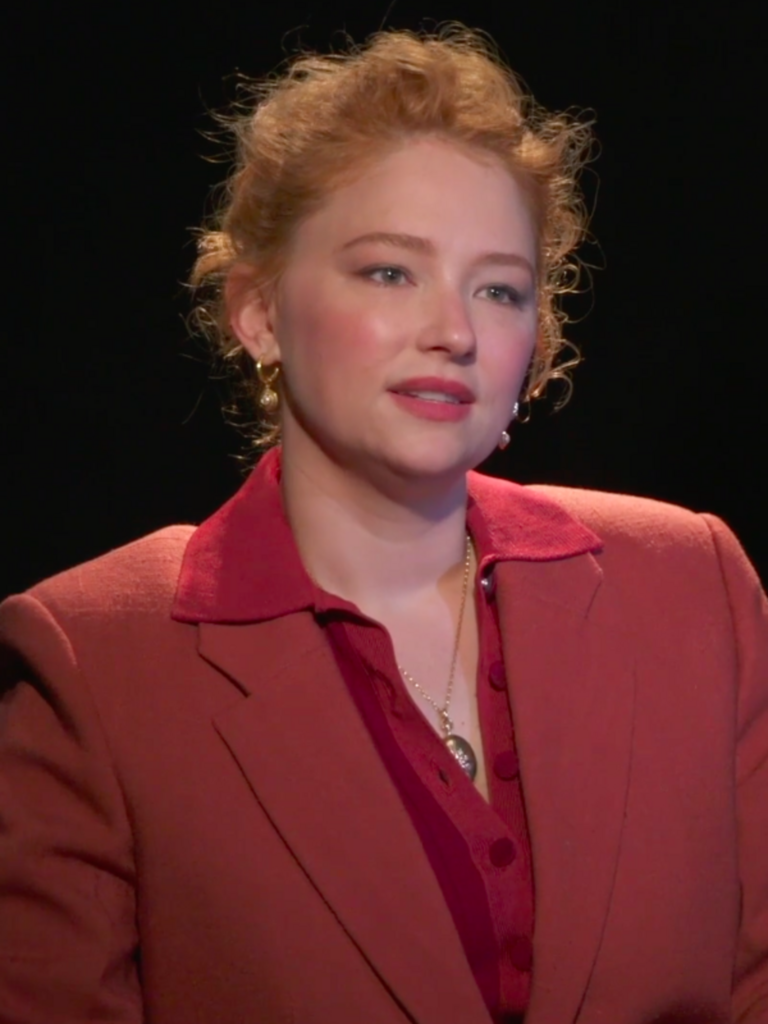
The portrayal of Katharine Hilbery by Haley Bennett is superb. It is not hard to see why Bennett won the role as she portrays the intelligence and determination of the character easily. She makes Katharine come across as a confident yet vulnerable person.
Internal problems of Katharine need to be handled delicately. In her writing, Bennet succeeds in conveying internal struggles by making use of delicate facial expressions and gestures. The author ensures that the character is not portrayed in such a way that she appears aloof or distant.
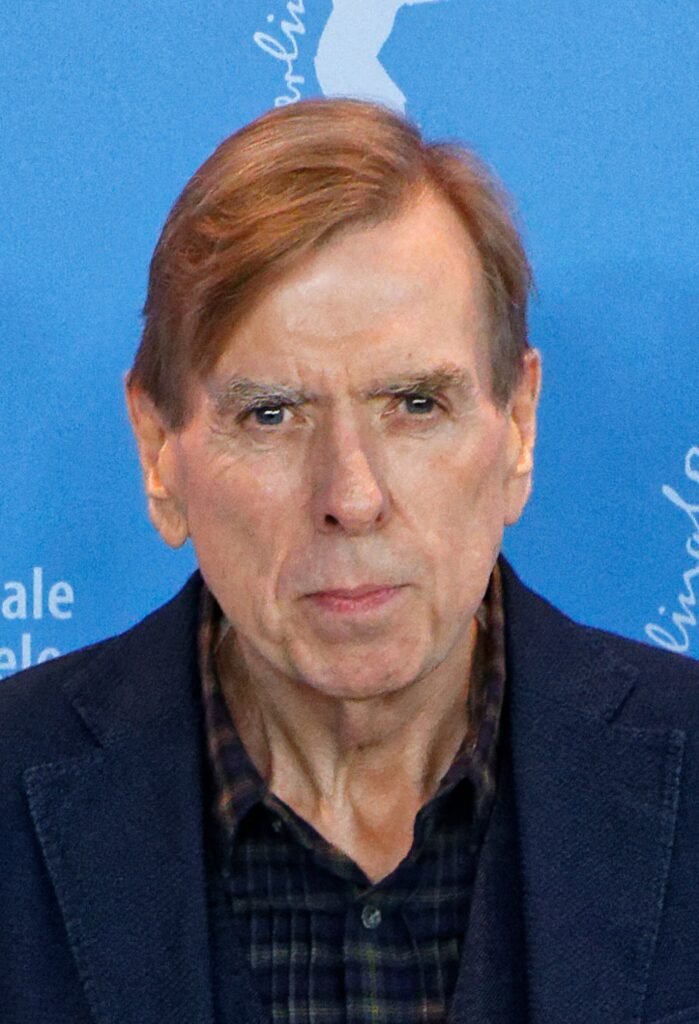
Timothy Spall contributes warmth and experience to the film production. Spall’s performance is natural and subtle. Spall assists in giving realism to the fantasy components of the film. The presence of Spall makes the period setting of the film more credible.

Supporting roles within the group are well taken by Elyas M’Barek. He displays excellent chemistry with other actors in the movie. Elyas’ performance adds to the drama and romance of the movie. Though the development of his character is minimal, he leaves a good impression.
The portrayal of Mary Ratchet by Lily Allen is interesting. She plays her part in an effortless manner. She fits well into the movie’s modern take. Allen demonstrates that she can carry off comedy as well as drama.
Jack Whitehall is responsible for most of the comedy in the film. Comedy timing has always been Jack Whitehall’s best quality. He helps to keep the lightness of the film. Some might argue that his acting style seems a little modern for the period. But his performance is still entertaining.
Jennifer Saunders and Sally Phillips make up an excellent part of the ensemble. They both possess great sense of comedy. There is no scene involving them where you won’t be laughing. They make every appearance lively and warm.
Ensemble has some problems due to lack of screen presence sometimes. There are some secondary characters that could have been developed a little more. But overall their acting has always been great.
What Worked and What Did Not
There are many elements in this movie that work really well. The actors always perform at their best. Haley Bennett gives an outstanding main actor’s performance. Other actors add humor, warmth, and emotion to the movie.
There is one more aspect of the movie that works extremely well. Sebastian Edschmid does amazing work as a cinematographer. He brings the whole world to life through his imagery.
Also worthy of discussion is the soundtrack used by the director. Simon Goff’s music is innovative despite being somewhat unusual and it distinguishes the movie from other similar works.
Contemporaneity of the work is another advantage that can be identified in the movie. Such topics as ambition and independence remain relevant for people at the moment and people can relate to the experiences and struggles of Katharine.
There are some problems associated with the movie. Sometimes the rhythm of the story seems to be rather chaotic. The atmosphere sometimes comes to the first place before the plot.
Some things from the original work are simplified in the adaptation and the audience can notice some elements which are missing from the movie.
Innovative solutions in the movie may turn out to be controversial and people might have different preferences concerning such things as electronic music and contemporary humor.
Nevertheless, advantages clearly outweigh the mentioned disadvantages.
Final Verdict
This Virginia Woolf’s Night and Day review can say many good things about the Tina Gharavi’s adaptation. This film is smart, innovative, and confident. It respects and interprets the classic literature book.
Great acting creates emotional backbone of the movie. The main character played by Haley Bennett is very believable and charismatic. Supporting actors add dynamism to the picture.
Beautiful cinematography of Sebastian Edschmid makes a wonderful visual experience for the viewer. Innovative musical score of Simon Goff offers many new interesting ideas. These are what create the unique art style of the movie.
There are some interesting creative decisions taken by the author. They are not perfect but show some originality. There may be people who would like to see more traditional adaptation or even the remake of the novel.
However, the main goal of the movie was reached successfully. The movie presents Virginia Woolf’s work to the new generation. Even more important, it proves that her ideas are still topical.
Virginia Woolf’s Night and Day is an interesting and deep adaptation. The movie is entertaining and socially relevant at the same time.