
Spider-Man: Homecoming Review
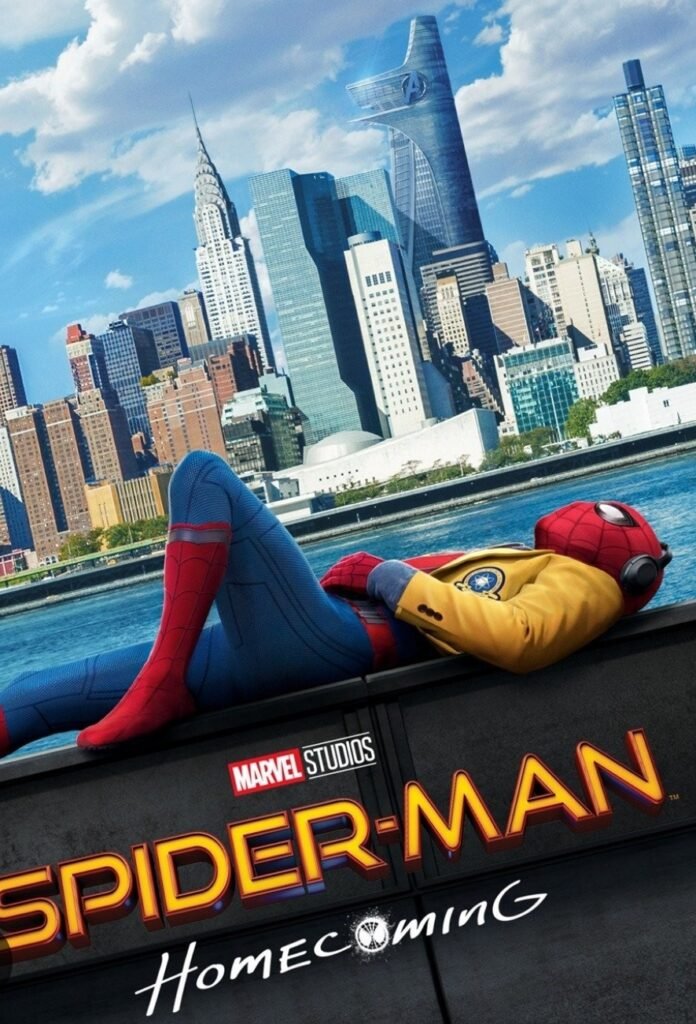
Introduction (Warning Contains Spoilers)
Now that Spider-Man: Brand New Day is on the horizon, I’m revisiting all the Tom Holland Spider-Man movies starting here with 2017’s Spider-Man: Homecoming. Peter Parker, as seen in Captain America: Civil War, takes his very first steps into his own solo Marvel journey.
This movie was the first really big try at something a little more fresh for the iconic Spider-Man. The movie saw a very young teenaged Peter Parker come to discover who exactly he is and what really makes a hero, the movie played upon the typical Spiderman superhero story but fused together a school drama with teenage awkwardness, friendship groups and social hierarchy.
The success of this move has allowed Holland’s Spider-Man to be distinguished instantly from the previous iterations and with previous live-action movie attempts from Tobey Maguire and Andrew Garfield. This time we have a younger and more vibrant Peter Parker to the MCU.
By and large, however Homecoming successfully introduces Peter Parker to the MCU with tons of heart and hilarious moments to match – but going back and rewatching it makes me wonder if their formula truly hit home on its initial release!
While Homecoming undoubtedly has its highlights, I get the impression that it never quite committed itself to a clear path. A testament to Marvel still seemingly testing the waters on how to bring a live-action Spider-Man to the screen again.
There are great performances, intense action scenes, and some hilarious parts. However, there are instances where the pace becomes inconsistent and some visuals do not look very good for their age. It also depends heavily on the overall universe, which may prove difficult to follow for those unfamiliar with Civil War.
Directing and Cinematography

Director Jon Watts makes the interesting choice to treat Homecoming as a coming-of-age story. Peter is not portrayed as an experienced superhero. Instead, he’s an eager teenager who wants to prove himself desperately.
That decision works out because Peter’s age becomes the crux of the story. He has homework, friends, school events and a crush to think about. His superhero identity is always interrupting his everyday life.
Watts keeps much of the action light and comedic. Some of the movie’s funny moments stem from Peter’s enthusiasm for being Spider-Man. But the director also lets Peter’s mistakes have consequences.
So the movie does not show Peter as a perfect hero. He acts on impulse and sometimes places himself in needless danger. Sounds appropriate for a teen who just discovered his powers.
Watts also wanted the visual effects to look real. Even though CGI would later take its place, the production used practical elements whenever it could. This gave the effects team real movement and lighting reference.
Salvatore Totino’s cinematography complements this approach. The film makes use of bright, natural-looking environments around Peter’s school and neighbourhood. So Queens feels like a real teenage world, not a fantasy one.
When Peter becomes Spider-Man, the camera becomes more energetic. His movement through New York gives a greater sense of speed and freedom. This contrast represents the two identities of Peter.
The school scenes are typical teen-ager. Action sequences show a person finding out that they have amazing powers. This visual difference serves to underscore one of the film’s key ideas.
I also think the cinematography helps make homecoming feel right at home in the MCU. It has the slick look you would expect from a Marvel. Still, it feels more intimate and smaller than some other MCU films.
Visual Effects and CGI
The visual effects were obviously ambitious for 2017. The film was said to have around 1,500 visual-effects shots. And a few companies worked on different sequences and characters.
There are many impressive moments. Spider-Man’s movement through the city is often spectacular to watch. In many sequences his suit also interacts convincingly with its surroundings.
Vulture’s artificial wings represent another technological innovation, giving Adrian Toomes a unique look and realistic movement. In addition, the effects artists attempted to make him fly in a grounded manner.
However, in my opinion, there are moments when the CGI appears to be slightly off. It becomes especially evident during some fast-paced action scenes. Some frames seem to have a video game-like appearance against a realistic background.
This is essential since advanced technology does not necessarily mean high-quality visual effects. Homecoming represents many examples of technical proficiency, but not always consistent.
Some scenes are amazing to watch, whereas some scenes seem very obviously constructed on the computer. The difference between both may be quite pronounced at times when there are big action sequences involved.
The movie has to be commended for its attempt to mix practical effects and digital effects as well. They did not just create everything inside the computer. Practical effects made it possible to perform things based on something tangible.
This becomes especially useful in case of the ferry sequence. Tangible objects are mixed with CGI effects in order to give more reality to destruction.
As compared with previous Spider-Man movies, technology definitely seems to be improved. However, that does not necessarily mean that all the CGI effects in this film are better.
However, during that time, the MCU was also making visually stunning movies. Films like Guardians of the Galaxy Vol. 2 and Thor: Ragnarok used very intricate visual effects. Homecoming was much more realistic; hence, it required different visuals.
Generally, the use of CGI is effective enough to make the movie work. Nonetheless, there were times when I would be taken out of the movie due to the use of CGI.
Modernising Spider-Man
One of the best ideas the film offers is that of a modernized version of Peter Parker. Phones and social media are an inevitable part of his daily life as a teenager.
That is essential since Peter has always been the reflection of his generation. The previous versions of Peter were existing in a different context of technology and culture. Holland’s Peter has definitely grown up in the age of social media.
The filmmakers understand well how significant phones and online communication are for teenagers. Everything about Peter’s life is influenced by technology as it happens to his fellow students.
Another aspect of technology that provides an intriguing contrast is the difference in Peter’s identities. While he is leading an average teenage life, he is fighting crime undercover. Technology makes his phone a part of the complicated duality.
Moreover, the social media aspects make the film unique compared to previous adaptations of Spider-Man. It is clear that the character has not changed, yet his environment has.
I believe that it was necessary for the film studio Marvel to show the audience a new version of the character without changing who he is completely.
Sometimes, there are elements of technology which are introduced artificially into the film. Some aspects make the movie unique for the time it was filmed, namely the late 2010s. However, I think it is part of its uniqueness.
Homecoming reflects a certain era of teenage life. It demonstrates how Peter’s generation used to communicate, party, and present themselves.
Thus, Homecoming makes Spider-Man more modern without modifying his fundamental character traits. He still remains clumsy, ambitious, humorous and eager to prove himself.
Themes, Storyline and Character Development
The core message of Homecoming is responsibility. This has always been one of the key issues associated with Spider-Man.
At first, Peter thinks that the act of being a hero involves proving himself as belonging to the Avengers and earning respect from Tony Stark because of his capabilities.
But then Peter comes to understand that being a hero isn’t about recognition, but about helping people even when no one’s watching.
This is especially true when Peter does not have access to his suit anymore. Peter needs to think about whether he can be Spider-Man without the help of Tony’s technology.
The fact that he chooses to keep helping people demonstrates the character’s development. Peter learns that he is not a hero because of the suit, but because of the decisions that he makes.
This interpretation seems to be more realistic compared to other versions of the character in movies. Peter has always had problems with accepting responsibility for his actions.
Yet, this version is different from others because we don’t see how Peter discovers his abilities.
Instead, we get to see how he evolves into the kind of Spider-Man that he would like to be. In essence, the film Homecoming is more mature than transformative.
The age of Tom Holland makes this story line credible. As Peter, he struggles to keep up with school life, relationships and peer pressure. Being a superhero is only a small part of his life.
I really enjoyed this story line since it made Peter appear more human-like. He is very strong but he is just an immature teenager.
However, this story line has one major flaw. The plot revolves around the film Captain America: Civil War.
This was rather confusing for me since I had not seen the film before watching Homecoming.
It is expected that the audience is familiar with Peter’s joining the Avengers and with Peter and Tony’s history.
This is an example of both the advantages and disadvantages of the MCU universe. Due to the interconnecting of movies, the universe seems very big and coherent.
Nevertheless, each movie must be independent. Sometimes, it feels like Homecoming is not an independent movie but a continuation of some other story.
This is particularly evident since Homecoming presents a new Spider-Man. However, part of his history had been covered in another movie before.
Pacing and Story Structure
Another element where the film loses some of its power is the pacing of the film. Homecoming has many interesting things going on, but sometimes the film loses focus.
This is due to the fact that the film is trying to juggle several plot lines. Peter has his school life, his friends, his superhero duties, and his relationship with Tony.
There is also the need to catch the Vulture and establish himself as a competent hero. All these things at times seem to clash.
The school scenes in the film are necessary since they distinguish Peter from other superheroes. However, some of them can be shorter.
The middle of the movie tends to lag in places. The conflict with the Vulture could have been developed consistently.
This is not an issue with the quiet scenes in and of themselves. The issue is how these scenes work in the larger structure of the film.
The movie often appears to be a battle between three movies fighting for your attention. It is a teen comedy, a superhero origin movie, and an MCU movie.
For the most part, Watts manages to juggle all of these elements. However, sometimes it falters.
In addition, I believe that the pacing plays a role in giving me the impression that Marvel is learning its way. There are a lot of great ideas, but not all of them get enough attention.
However, the movie could have been structured better without diminishing its teenage charm. The good moments would have had greater impact if only the structure was tighter.
Performances

One of the strongest points of the movie is Tom Holland. He has enough energy and humor to fill the role of Peter Parker.
He does equally well when the situation requires him to be serious. The uncertainty of Peter gives Tom Holland a chance to display his vulnerability through humor.
His chemistry with Jacob Batalon makes Peter and Ned’s relationship truly entertaining.
This is not to say that Holland has completely settled into his part. At times, it does not feel as though his portrayal is as emotionally mature as those seen in subsequent scenes.
This is not always a fault. Peter himself is a novice, and it is appropriate for him to be unsure of himself at times.
What counts is his potential. There is no question about Holland’s capacity to develop into the part.

Another good performance comes from Michael Keaton as Adrian Toomes, who brings a lot more realism to the role of the Vulture than most MCU villains.
Toomes does not want to rule the world; he simply wants money to ensure he provides well for his family.
That makes his character easy to understand while still being criminal and hard to sympathize with. It also makes him a fitting adversary for a rookie Spider-Man.
Keaton manages to make Toomes a scary guy without making him absurd. His quietness makes him even scarier than a ham actor would be.
A connection between Toomes and Liz reveals itself. The hero suddenly finds out that the villain comes from his world.

Tony Stark played by Robert Downey Jr. is also very entertaining as well. The actor is full of charisma and wit, which makes his scenes very fun to watch.
The chemistry between Holland and Downey is also the best part of the movie because Tony acts both like a mentor and an oppressor towards Peter.
At the same time, Tony’s role is one of the film’s flaws because Peter tends to rely too much on Tony’s opinion about him.
It makes Spider-Man less independent, which is not how Spider-Man should act.

Jacob Batalon is one of the people who brings comedy to the movie as Ned. Jacob’s excitement makes him stand out in Peter’s life.
Zendaya has a minor character as Michelle, but she stands out with her performance. The chemistry between her and Holland is quite evident.
It is still too early in the movie to make judgments about the relationship. However, there is plenty of potential for the future.
Marisa Tomei gets equally little screen time as Aunt May, but she certainly delivers every single time she shows up.
Clearly there is more potential to explore the relationship between her and Peter, but regrettably Homecoming fails to develop it fully.
This once again makes for one of the examples of how the movie sets up future prospects, as there seem to be many more of them.
What Worked and What Did Not
There are many things done right in Spider-Man: Homecoming. The performance of Tom Holland as Peter makes the character likable, humorous and realistic.
Humor is another very important element of the film. Peter is not made too serious and allowed to make some embarrassing mistakes.
Moreover, Michael Keaton offers an interesting villain. Vulture does not look too unrealistic and works well within Peter’s storyline.
Modern world looks like a good fit for Peter. Social networks and smartphones make his youth realistic.
Finally, Spider-Man: Homecoming easily integrates into the MCU. Tony Stark links Peter’s story to the larger universe but does not dominate the plot.
Cinematography is what makes the movie lively and youthful. Effects are fun to watch, although there are some flaws.
The biggest issues are the pacing and poor use of CGI. Not all scenes have the same level of focus.
There are other characters that could be developed further too. Zendaya and Tomei are promising but lack substance.
Being connected to Civil War is another problem. The new viewer will be able to follow the plot but will miss out on some background information.
In my opinion, these flaws make Homecoming unable to become a perfect Spider-Man movie. They don’t spoil it but prevent it from being as good as it can be.
Final Verdict
Generally, Spider-Man: Homecoming is an entertaining and promising debut of Tom Holland as Spider-Man. It manages to make Peter Parker more youthful, relevant and likable.
This movie understands that not all times Spider-Man must save the world. Some times, he just needs to be there for people who surround him.
It is one of the most prominent strengths of the movie, and it allows Peter to be himself and act his age.
But of course, one cannot overlook the shortcomings of the movie. First of all, the rhythm of the movie is becoming quite unfocused. Moreover, not all CGI seems quite convincing.
Secondly, the dependence on the Civil War hinders the possibility of understanding of the film by newcomers. There are even some characters who seem intentionally underdeveloped.
In general, for me, Homecoming is an example of Marvel being unsure about this version of Spider-Man. There are a lot of promising elements in the movie.
It is possible to see the formation of Peter’s future relationships and character traits taking place already now. It is shown by Holland how much potential there is in him to develop into a hero.
It gives the film an aura of incompleteness. But on the other hand, it adds to its appeal.
Considering the upcoming release of the next installment of Spider-Man: Brand New Day scheduled for 31 July 2026, it becomes quite intriguing to watch Homecoming.
In hindsight, Homecoming may not be a perfect reboot, but it’s certainly an assured enough beginning for a new generation.
It introduced Spider-Man to the social media era while still retaining his quintessential persona. It also gave Tom Holland the character with limitless possibilities.
Perhaps some of those possibilities could only be realized in subsequent movies. Still, there’s more than enough left by Homecoming to make the process worthwhile.
That’s probably what Homecoming does best, in my opinion. Even though it might not have found its footing yet, it gives Spider-Man somewhere interesting to go.