Spider-Man: No Way Home Review
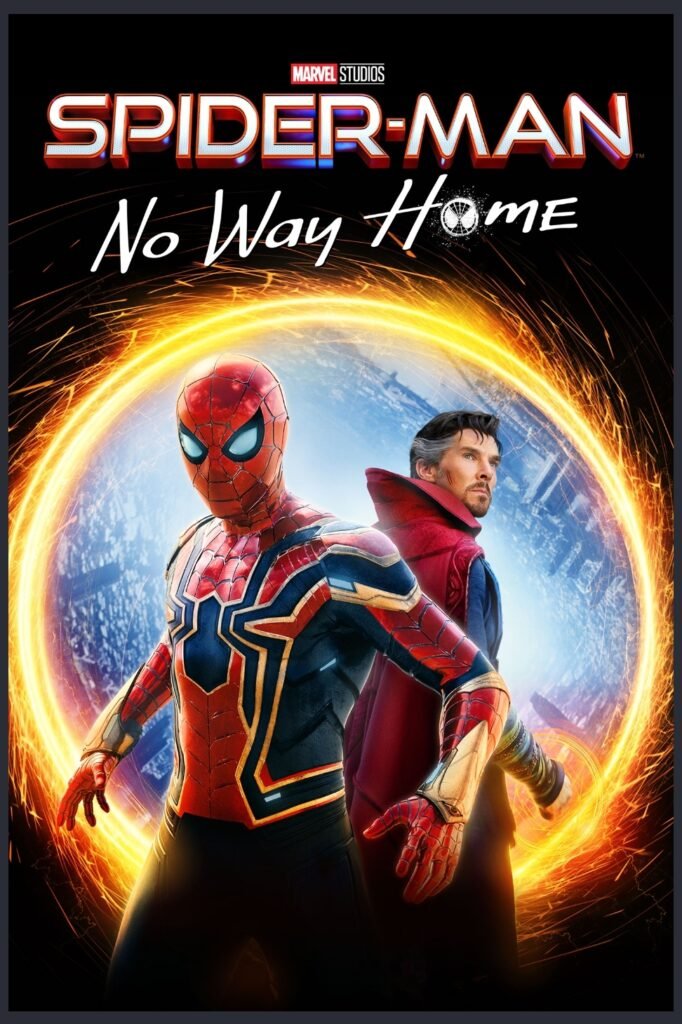
Introduction (Warning Contains Spoilers)
With the upcoming release of Spider-Man: Brand New Day we thought we’d take another look at Tom Holland‘s Spider-Man trilogy. Following the reviews of Spider-Man: Homecoming and Spider-Man: Far from Home, we felt that it was appropriate to continue with the third part of the trilogy, Spider-Man: No Way Home.
Very few superhero movies have had as much anticipation associated with them as did Spider-Man: No Way Home. The arrival of the movie in 2021 was not just another one of Marvel’s movies, but it marked nearly two decades of Spider-Man films.
The task for director Jon Watts was a monumental one. He needed to maintain the storyline from the movies Homecoming and Far From Home. But at the same time, he had to give something that would be bigger than that.
He needed to make a movie that would be appreciated by his fan base as well as bring in a new audience into the multiverse.
That balance was never going to be easy. Spider-Man: No Way Home is the story of how Peter Parker’s life changes after his identity has been revealed to everyone. As a result of being revealed by Mysterio in Far From Home, the life of Peter Parker becomes different from what it was before.
This affects his friends, family, and future as a whole. Peter Parker requests the help of Dr. Stephen Strange to fix his life. He wants the whole world to forget that he is Spider-Man. But, when Peter interrupts the spell of Dr. Stephen Strange, multiverse opens up.
This error will draw individuals from alternate universes into Peter’s universe. These individuals consist of heroes and villains from past Spider-Man movies.
The following is a tale of accountability, sacrifice, and coming of age. Amidst the spectacular action scenes and multiverse story, this is ultimately the story of Peter Parker.
That is where No Way Home excels the most.
A Bigger Challenge For Jon Watts
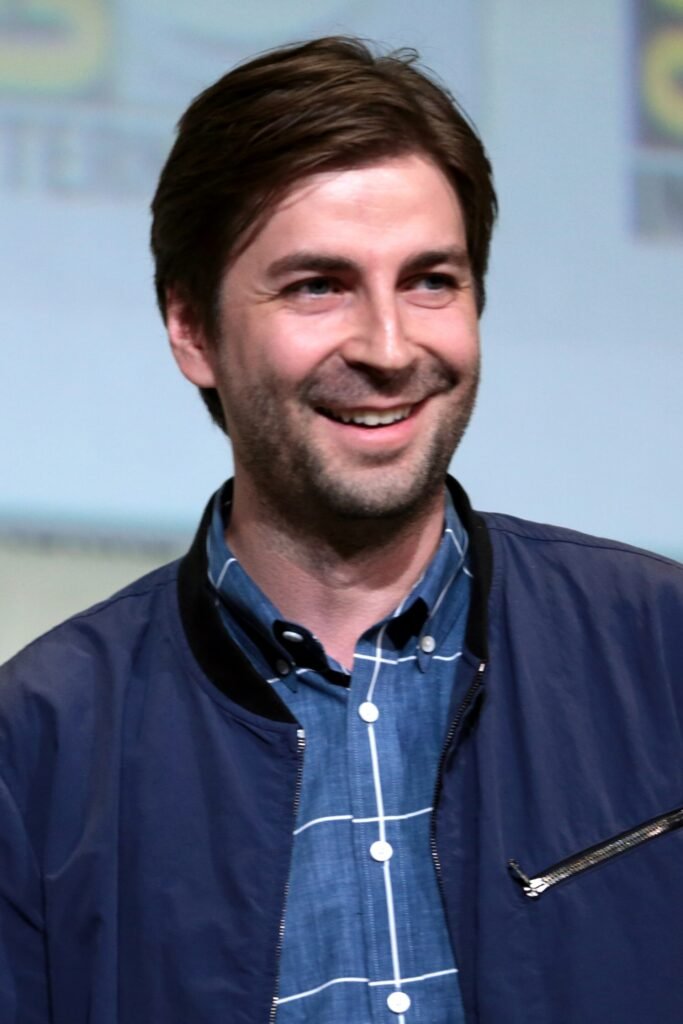
Jon Watts came back to direct. He had already worked on the two previous movies in this franchise, which means he knew how this particular Peter Parker worked.
Nevertheless, No Way Home had to be completely different.
The first movie was centered on the fact that Peter realized who he is as a superhero and wanted to become someone better.
In the second movie, Peter is faced with handling his own expectations. Peter had difficulties with the burden that was left after Tony Stark.
In the third movie, Peter matures into an adult.
Watts changes the focus from gaining the knowledge on how to be Spider-Man. The movie becomes about living up to that responsibility.
Peter’s choices will have grave consequences. There is no easy way out. There is no easy win.
The character looks more mature than those seen in other films. Allowing Peter to make mistakes is one of Watts’ best moves.
While many superhero films feature characters who succeed in overcoming their difficulties, No Way Home illustrates how well-meant actions of Peter may cause trouble.
Being willing to help people is one of his best traits. It is also the thing which gets him into trouble.
It’s because of this conviction that Peter feels he can redeem the bad guys and hence does not choose to just vanquish them.
Such an action becomes the source of one of the major conflicts in the movie. Also, Watts manages to maintain the delicate balance between humor and drama. The former was part of the previous Spider-Man movies.
The humorous side remains present in No Way Home. But the overall mood of the movie is more serious. The movie focuses on grief, loss, and sacrifice. While the jokes provide a relief, they do not take away from the seriousness of the story.
This difference shows the growth of Peter. He is now not only a teenager struggling with being a student and a superhero.
He is becoming an adult who must accept difficult truths.
The Pressure After Avengers: Endgame
The launch of Avengers: Endgame provided Marvel Studios with a special challenge. It became one of the greatest cinematic events ever produced.
The film wrapped up several years of narrative build-up. At the same time, it established expectations for all upcoming movies.
Despite the fact that No Way Home did not seek to substitute Endgame, it was met with the same amount of hype.
People needed another big Marvel moment. They needed an important movie. Due to the rumors associated with the film, the pressure mounted since there were possibilities of previous actors from Spider-Man films reprising their roles.
The task of Jon Watts was ensuring that this film was not just an act of nostalgia. It is easy for these characters to end up being a distraction but Jon Watts uses them to aid in the development of Peter Parker.
Returning characters matter because they help shape how Peter perceives his role as Spider-Man. They do not just come back to add spice.
It is essential that this film introduced the multiverse appropriately, too. Marvel had already dabbled in alternate universes before. But in the case of No Way Home, the multiverse became the focus of the movie.
Multiverse stories can quickly get very complicated. Too many characters make the emotional aspect of the story less important.
Watts circumvents this issue by making Peter’s journey the focal point. The multiverse is simply the setting. Peter Parker is still the story.
Cinematography And Visual Style
Spider-Man: No Way Home’s cinematography is an evident evolution from that of the earlier movies. The cinematography work was done by Mauro Fiore, who took over from Matthew J. Lloyd. The latter had been the cinematographer of Spider-Man: Far From Home.
The Fiore came with an impressive wealth of experience to the project. He had won the Oscar Award for Best Cinematography in Avatar (2009). His approach helped create a more cinematic and mature visual style.
The previous Spider-Man films had a youthful energy. They focused on Peter’s teenage life and his experiences growing up.
There is more darkness about No Way Home’s visual aesthetic. The lighting gets more intense. The color palette is not as fun. The settings seem more expansive and more intense.
This is indicative of Peter’s emotional progression. As Peter experiences more difficulties, so do the visuals get darker. In terms of scale, the movie does a good job.
The multiverse plot needs extensive environments and inventive sequences. The viewer is aware of the scale of danger that comes to Peter.
Yet, the movie does not depend solely on spectacular scenes. Sometimes, some of the most impressive visual moments come from silence.
Close-up shots let the viewer feel Peter’s emotions, creating an emotional connection between him and the viewer.
The contribution of Fiore makes it possible to distinguish No Way Home from its predecessors. It seems to be the culmination of the trilogy. It is grand yet very personal.
Visual Effects And Scale
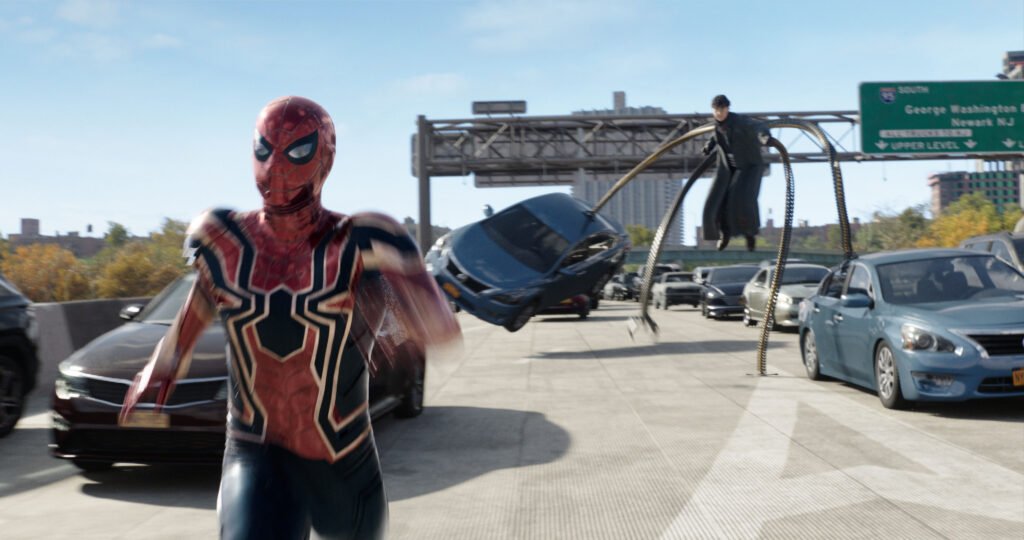
The visual effects in Spider-Man: No Way Home are one of the biggest technical highlights in the movie. However, they are a definite progression compared to the previous movies.
Although Homecoming and Far From Home boasted high-quality CGI work, No Way Home places emphasis on visual effects.
It is worth mentioning that the inclusion of the multiverse gave the creators the ability to raise the bar significantly. The magic of Doctor Strange, the Mirror Dimension, and the cracks in reality require plenty of visual effects work.
These scenes are creative and visually appealing. Moreover, they allow viewers to understand the consequences of Peter’s decisions without too much exposition.
The most impressive aspect of the movie is its ability to make old characters seem new. The Sandman, the Lizard and the Electro have all been improved using contemporary CGI.
In particular, Electro’s updated powers are quite convincing. They are both realistic for the comic book and make the villain look cool.
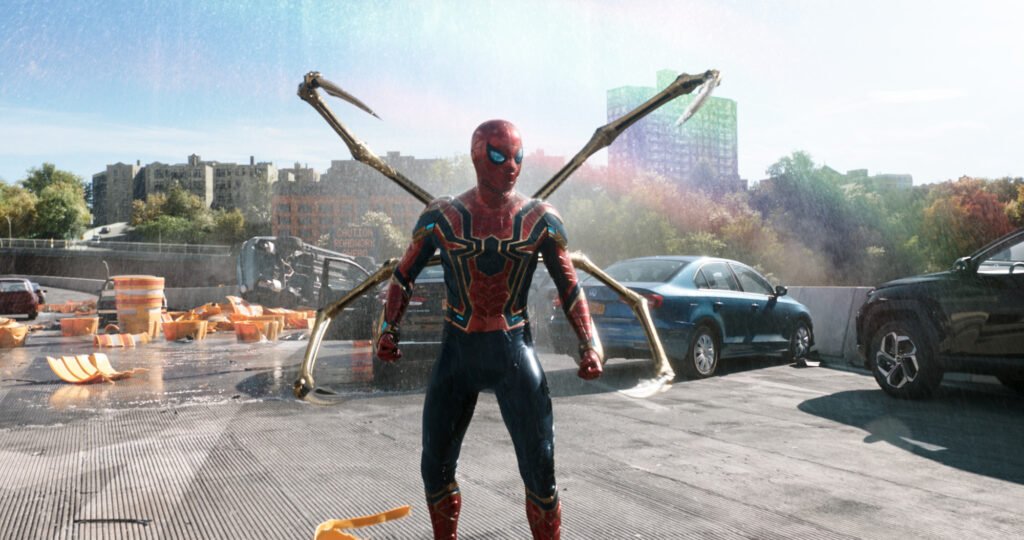
Doctor Octopus also looks great, with the mechanical arms using practical and digital effects to make their movements plausible.
The big finale at the Statue of Liberty demonstrates the ambition of the visual effects department. Combining several Spider-Men, villains, magical effects and massive destruction scenes could be confusing. However, it all comes across clearly with room left for each character to shine.
However, there are problems with the use of CGI in this movie. There are some environments that seem to be created on a computer, especially in the bigger action sequences.
Occasionally, the effect becomes overwhelming and seems to distract from the emotional plot. There are even some effects that seem fake when examined in detail.
None of these problems destroy the movie, but they demonstrate how much superhero movies have come to depend on computer effects.
In general, CGI works well in this movie due to its contribution to the storyline rather than its domination of it.
It helps make the concept of the multiverse believable while increasing the emotional aspect of the plot.
Themes And Peter Parker’s Growth
Even though the multiverse gets all the glory, it is the themes which really make No Way Home so emotionally resonant.
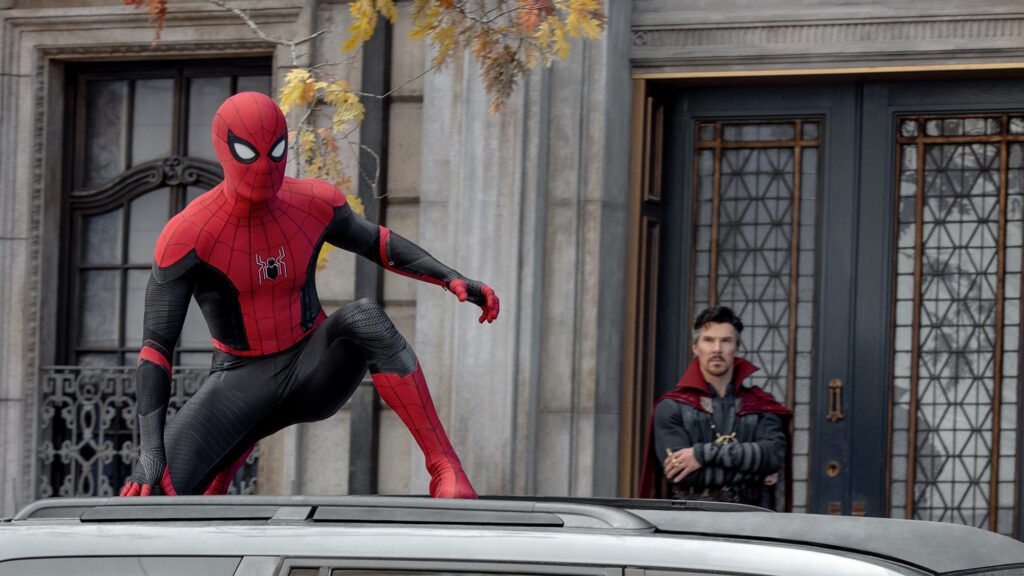
The film follows many of the same themes which were developed in Far From Home. But it explores them much more thoroughly.
Peter still has much to learn about the responsibilities of being Spider-Man. Unlike before, where he sought to prove himself worthy of being a hero, Peter now has to learn that sometimes being a hero means having to do impossible things.
Responsible continues to be the main topic all through the movie. Peter thinks he can save everybody.
He wishes to save the villains rather than send them back to their worlds. The compassion shows Peter as a responsible person who defines Spider-Man. Nevertheless, his commitment puts the loved ones into a dangerous situation.
The movie also portrays the trusting nature of Peter Parker. In Tom Holland’s trilogy, Peter trusts most people.
He had trusted Quentin Beck in the film ‘Far from Home’ which almost costed his life. Similarly, he trusts Norman Osborn in the film No Way Home, again the kindness is exploited by others.
Instead of blaming Peter for caring, it is implied that compassion is still one of his strongest qualities.
However, it is also made clear that sometimes, kindness will not work to resolve every issue. Peter sees that tough decisions can result in painful outcomes.
Another important theme in the movie is loss. The death of Aunt May marks a new chapter in Peter’s life.
Prior to that event, he has only encountered failures and disappointments. He is faced with a loss that will challenge him.
This scene becomes the key one in the movie series. Now Peter understands what responsibility really means. He realizes that being Spider-Man means doing the right thing regardless of any difficulties it can cause.
The movie raises the theme of redemption. Peter knows that everyone deserves a second chance. He doesn’t see the bad guys as the villains. Instead, he sees lost people who need to get back on the right track.
As the movie progresses, we see how much Peter changes by the time of the finale. The innocence of the previous Spider-Man movies is now gone.
He has grown up and become independent, sacrificing his personal interests for the sake of other people. In the end, Peter becomes the hero he wasn’t at all in the Homecoming.
Storyline
The plot is one of the best and worst features of the movie. At one point, it tells an emotionally rich story about Peter Parker while honoring the film franchise’s past, but at another, it sometimes suffers because of the movie’s ambitions.
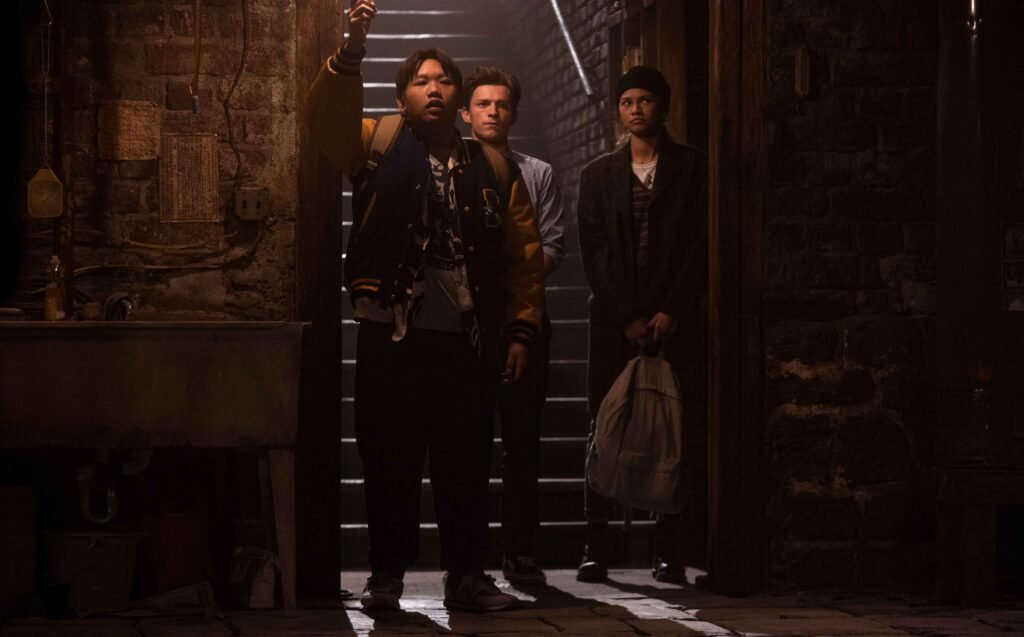
The opening act immediately creates strong emotional stakes. Peter’s identity has been revealed, and every aspect of his life changes overnight. Watching him struggle to protect MJ, Ned and Aunt May creates genuine sympathy for the character.
At the same time, the introduction of Doctor Strange makes sense since Peter is panicking, scared and still thinks that there is an easy solution to the problem.
Finally, the creation of the multiverse seems to be a very smart move since it allows the creators to bring back other Spider-Man characters without doing it forcefully. In addition, those characters help Peter develop emotionally.
Nevertheless, there are cases where the movie seems overcrowded. A number of antagonists compete for attention along with Doctor Strange, three Spider-Man versions, and Peter’s personal story.
Therefore, some of the characters do not receive the necessary development. The Sandman and the Lizard appear mainly in the background during most of the film.
Also, there are instances where the pace of the film seems too fast. There are fast scenes which do not give the audience enough time to think about them before moving on to another one.
Perhaps, a longer time period or fewer characters would help the emotional scenes become more meaningful.
Sometimes, the No Way Home can be called rather an Avengers movie than a Spider-Man movie. Despite the fact that it is very exciting and full of action scenes, sometimes the small-scale neighbourhood atmosphere which was present in Homecoming is lost because of its great scale.
Despite the fact that the mentioned above disadvantages exist, the emotional plotline of the film is quite obvious. It all centers around the main character and his decisions.
Performances
The performances are arguably the best aspect of this movie, with nearly every actor providing an outstanding performance.
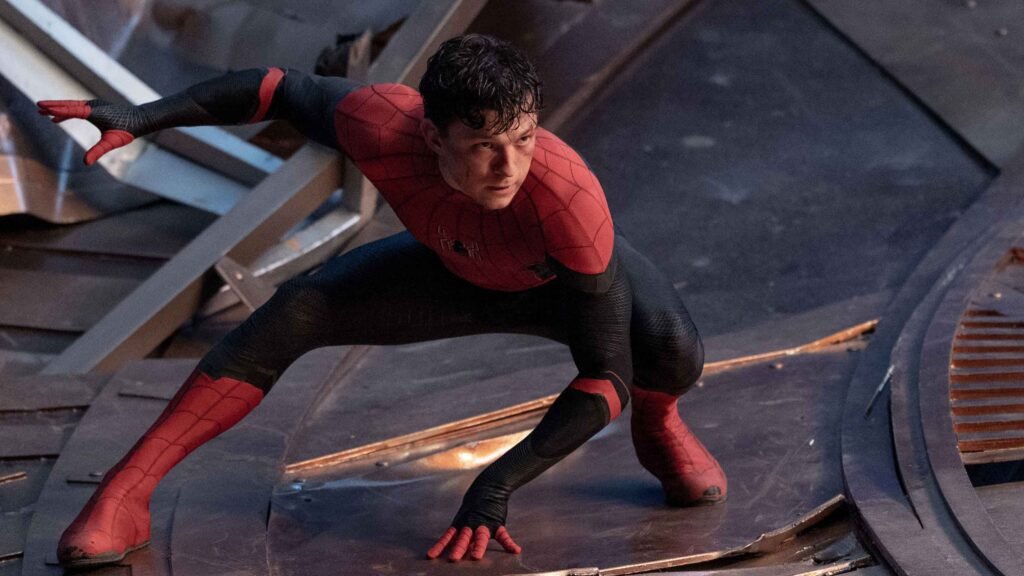
Tom Holland gives his finest performance as Peter Parker. Having played the character for several years, Holland appears completely comfortable in the role.
More importantly, he demonstrates significant growth as an actor. Peter experiences joy, fear, guilt, heartbreak and anger throughout the film. Holland makes every emotion believable.
His comic timing remains excellent, but it is the dramatic scenes that leave the biggest impression. The audience can clearly see how Peter’s experiences shape him into a more mature hero.
Zendaya has also become a better actress as MJ. The actress has not fallen into the usual trap of portraying a superhero girlfriend.
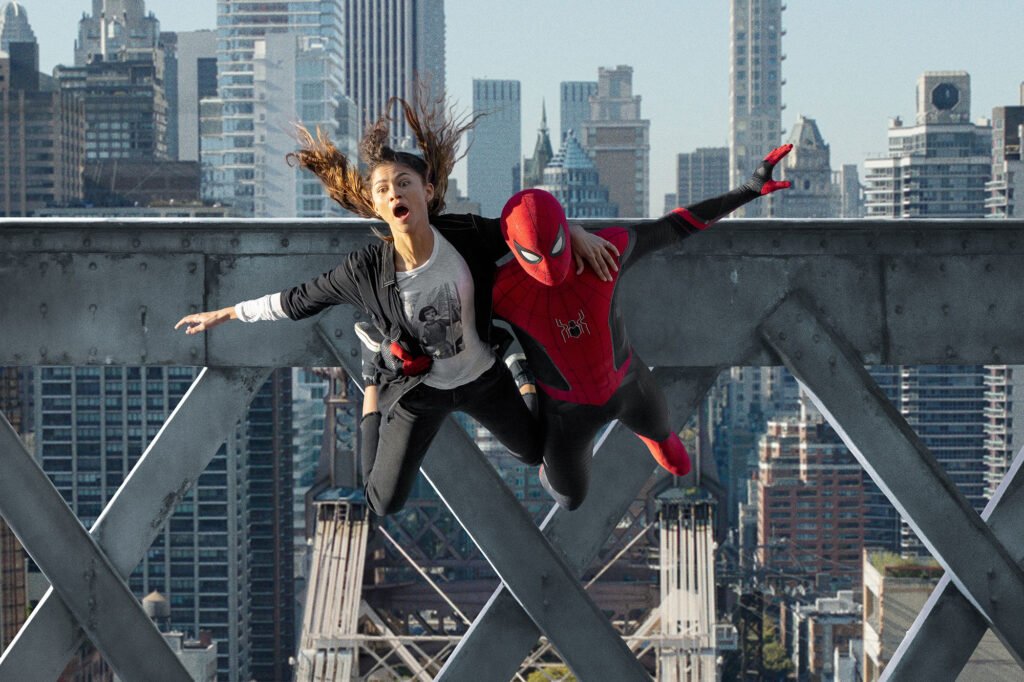
MJ is a smart, determined, and strong-willed girl. She risks her life for the sake of believing in Peter. She does not wait until she is saved, she actively tries to help Peter solve any problem. The chemistry between Holland and Zendaya is one of the highlights.
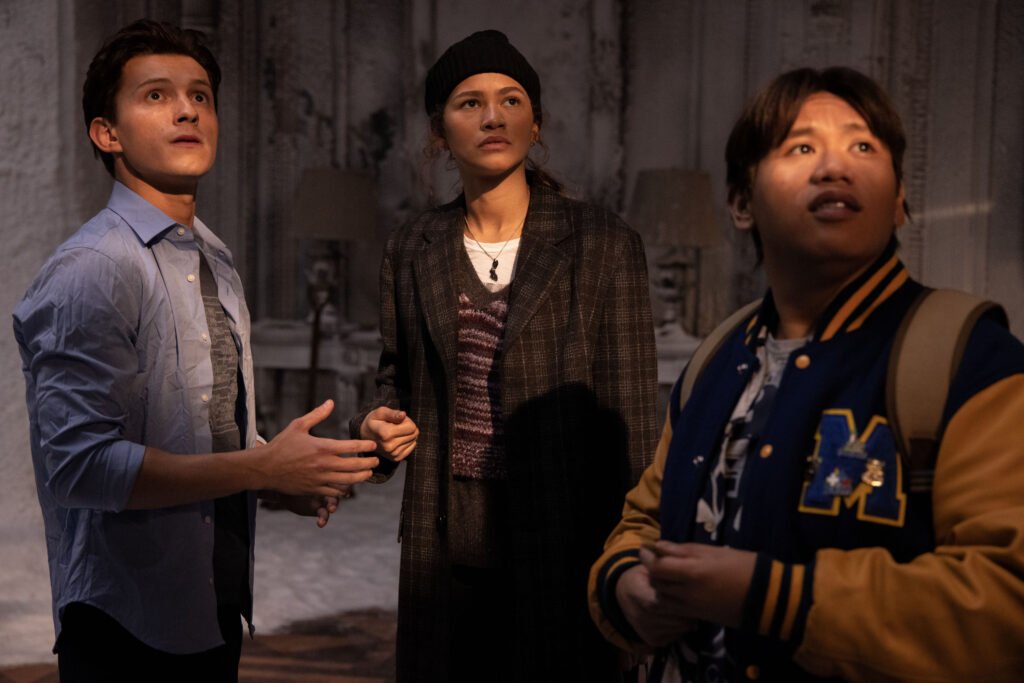
Again, Jacob Batalon plays an entertaining Ned Leeds, both in terms of warmth and humor. It’s quite convincing how close Ned is to Peter and how funny his encounters with MJ become.
Even though Ned offers numerous funny scenes in the movie, he’s never turned into a mere comic character.
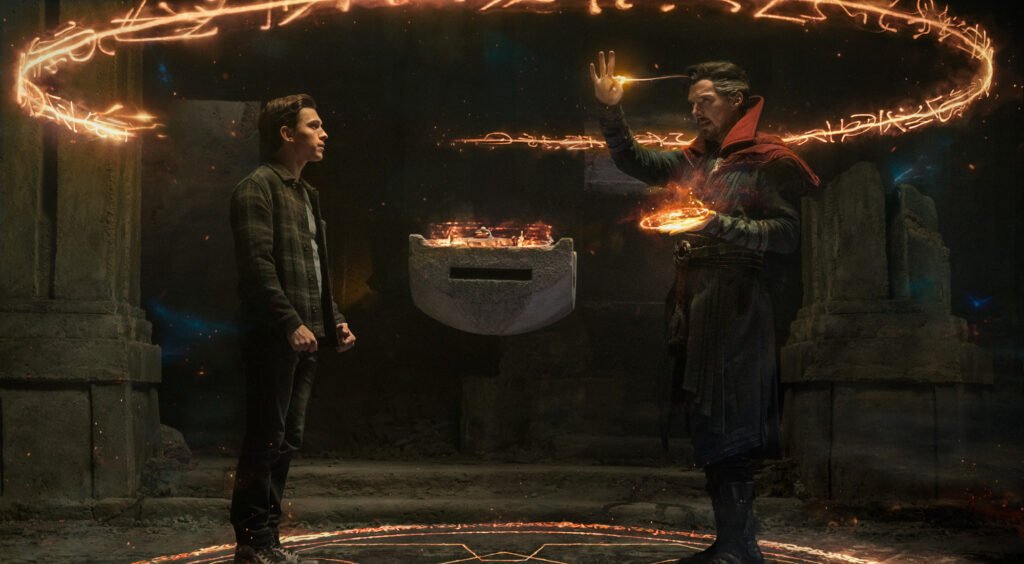
Benedict Cumberbatch is again in form in his role as Doctor Strange. He exudes confidence and wisdom in every scene he appears in, although sometimes showing a little empathy towards Peter.
He plays both the role of a mentor as well as a challenge for the latter. He combines the serious side of his character with dry humor in some scenes.
The appearances of Andrew Garfield and Tobey Maguire are executed with great consideration. The two actors fit in quite seamlessly into their roles as Peter Parker, seeming like they never left it behind.
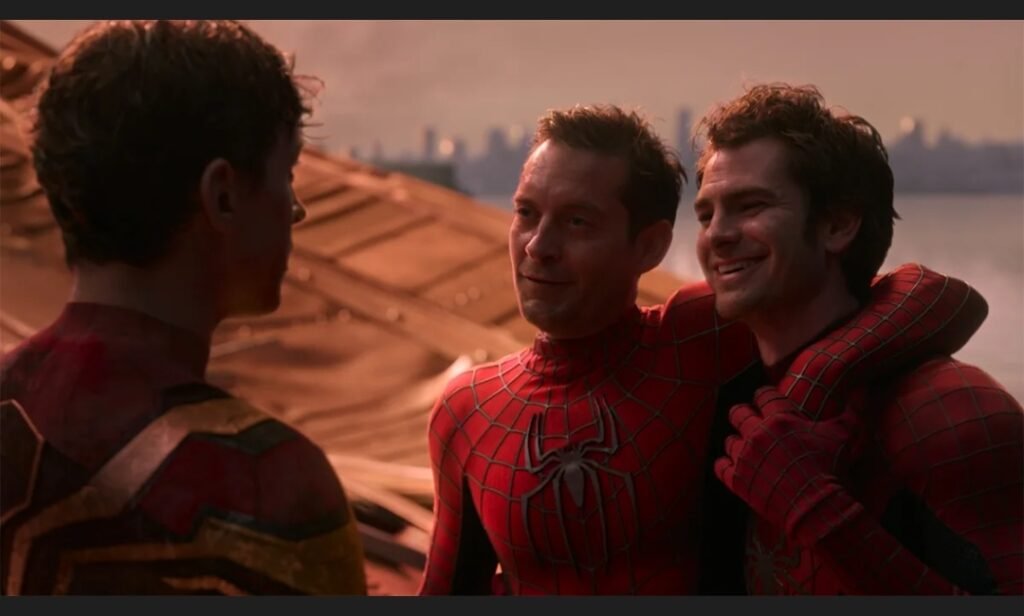
Moreover, they are not merely there because of nostalgia but because they add something to the plot.
Their Spideys are different in success and failure, giving them the ability to advise Holland’s character when things get rough.
The chemistry between the three actors is good. They do not try to outshine one another in any way but are equal, adding something of themselves into the conversation.
It is through their conversations that the audience receives humor, emotions, and knowledge about the responsibility of all Spideys.
However, Jon Favreau and Marisa Tomei should be mentioned as well as the participants who performed their roles in three films.
The first one is Jon Favreau who plays Happy Hogan who is the friend and the fatherly protector of Peter Parker.
His character is less visible in this film, but his role is important since it reminds viewers about the relationship between Peter and Tony Stark.
The other performer who deserves mention is Marisa Tomei who plays Aunt May. This woman has always inspired Peter Parker to do good deeds with the help of his abilities, but it becomes even more important in this film.
Her advice helps Peter Parker to make the most significant decisions which define his destiny and personality.
Returning Villains
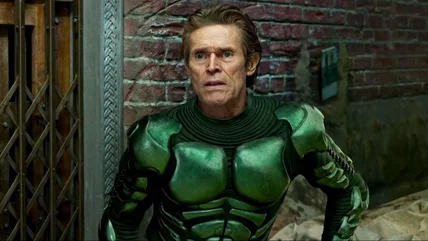
It is no doubt that the villains who reappear in the movie play a significant part in its success. The first one worth mentioning is the Green Goblin played by Willem Dafoe.
Dafoe manages to combine the roles of Norman Osborn and the Goblin successfully, thus creating one of the most unpredictable villains from the Marvel Cinematic Universe.
The scene with the confrontation between Peter and the Goblin after the death of Aunt May can be considered the turning point of the whole movie.
Alfred Molina slides back into his role as Doctor Octopus with surprising ease. He brings the comedy, the intelligence, and the humanity that made Doctor Octopus such an endearing villain in Spider-Man 2.
While the Green Goblin remains as a villain of vengeance, Molina shows how Doctor Octopus turns into a symbol of redemption as he shows Otto Octavius’ transformation into the caring and loving scientist.
Jamie Foxx, returns as Electro having previously played him in The Amazing Spider-Man 2.
He plays Electro with confidence and charm, while the new visual effects make his powers much more appealing to look at.
Rhys Ifans and Thomas Haden Church reprise their roles as Lizard and Sandman, respectively. Despite having a lesser role, they still provide familiar villains to this movie while emphasizing its theme of redemption and second chances.
The third cameo appearance is that of Charlie Cox playing the role of Matt Murdock, aka Daredevil. Even though his cameo is very short-lived, it is done with a lot of confidence and helps to quickly establish the legal implications involved after revealing Peter’s identity.
At the same time, it is a nice bonus for the Marvel fandom without diverting from the main plot line of the movie.
What Worked And What Did Not
The most appealing thing about the film is the emotional aspect that underpins everything else in the film.
No matter how many dimensions, returning characters, or action there is, it never gets away from the character of Peter Parker.
The acting is very strong across the board, Tom Holland continues to grow with the character. The rest of the cast brings something valuable to the table as well.
Jon Watts should get some credit for managing humour, action and drama at the same time. He realizes that being a superhero has always been about the heart as well as the action.
And this understanding makes his emotional moments stick in your mind even after the action is finished.
The cinematography and effects in this movie are a great improvement compared to all of the previous films. Dark cinematography is connected to the process of Peter Parker growing up emotionally, while amazing effects create a multiverse.
Nevertheless, the biggest asset of the movie is its major drawback. Sometimes, its scope becomes a bit too much to handle.
There are moments when too many things happen and characters get into play at the same time. This is why some moments may seem somewhat rushed.
Also, some villains lack proper development; the movie sometimes forgets about its simplicity which was Homecoming’s main feature.
The fact that there is too much computer-generated imagery can become another reason for losing realism. Despite the fact that the special effects are very impressive, there should be more real-life environments.
Final Verdict
Spider-Man: No Way Home is an emotionally-charged and thrilling ending of the Spider-Man trilogy starring Tom Holland.
The film succeeds at acknowledging the cinematic legacy of the Spider-Man character while helping the character himself come of age.
While the movie may struggle at times because of its huge scale and overcrowded plot, it compensates for any shortcomings with its emotions.
Director Jon Watts gives viewers a thrilling ending filled with both nostalgia and growth of the characters involved.
With the excellent acting, amazing technical achievements, and mature themes, No Way Home is easily one of the best Spider-Man movies ever made.
Even more importantly, the movie proves to viewers the reason Spider-Man has been such an enduring Marvel character.
Underneath the superhero costume, there is a simple but good man always doing the right things. And it has always been the core of the Spider-Man character.
With that, we have now reached the end of our reviews of Tom Holland’s Spider-Man trilogy. From Spider-Man: Homecoming to Spider-Man: Far From Home and now Spider-Man: No Way Home, Peter Parker’s journey has taken him from an eager teenager to a hero who truly understands the meaning of responsibility.
Now, our attention turns to the next chapter. With Spider-Man: Brand New Day on the horizon, we’ll be following Peter Parker’s next adventure to see where his story goes from here. If No Way Home is any indication, the future of Spider-Man looks just as exciting as its past.