
Momo And The Time Thieves Review
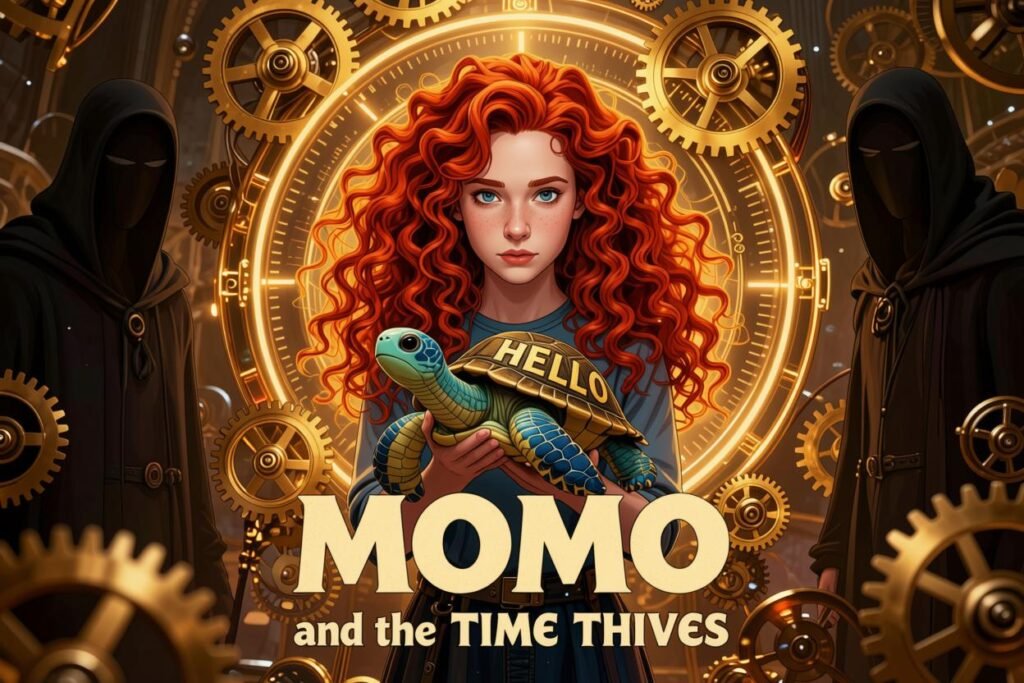
A Story About Time
Momo and the Time Thieves directed by Christian Ditter is a fresh fantasy adventure movie. It brings a very famous novel by Michael Ende to the modern audience on the big screen.
It starts with a very straightforward idea about how we decide to spend our lives. How would our life be if saving time became more important than living?
Ditter creates his answer with the help of Momo – a young girl who can do something extraordinary. She pays attention to people when nobody wants to listen anymore.
This ability becomes crucial when a mysterious organization starts to steal time from people. The story combines fantasy, adventure, humor, threat, and also a very serious social issue.
This is also the film which finds itself torn between two opposite aims. It is supposed to keep the spirit of Ende’s novel at the same time adapting its ideas to modern viewers.
Sometimes it manages to do that excellently. Other times it looks rushed and polished. Overall it is an entertaining, thought-provoking, and visually challenging film.
The Plot
The protagonist in the movie is Momo, played affectionately by Alexa Goodall. She resides in the ruins of an ancient Roman amphitheater.
Her dwelling is humble, but her community lends it character. The uniqueness of Momo stems from her capacity to listen without judgment.
Those who converse with Momo feel heard and understood. This single trait forms the backbone of the entire film.
It is clear to the movie that listening is an act of generosity. It is also clear that attention has become highly valued.
Life in the modern world tends to compel individuals to rush from one activity to another. The author uses this premise to build the conflict in the film.
Everything changes when the Grey Corporation shows up. The men in grey have an alluring offer for everyone.
They suggest that it is possible to save time and be more productive. This idea seems beneficial until its real intention gets revealed.
The inhabitants start giving up on their leisure, friends, and creativity. Step by step, their efficiency makes them more cold and nervous.
This evolution is easy to perceive from the film. The plot also gains great relevance. The Grey Corporation can be considered as a fictional representation of the modern culture of productivity.
The way in which they work corresponds to the world of strict routines, objectives, devices, and permanent actions. This innovation is one of the best choices made in the film.
The film does not simply repeat the novel’s ideas word for word. It translates them into a language that younger audiences can recognise.
The special bracelets make the theft of time feel more immediate..They also connect the story with modern wearable technology.
The Greys become representatives of a system that measures everything. That makes the threat feel less distant than a traditional fantasy villain.
The danger comes from an idea that can initially sound sensible. That makes the Greys more interesting than simple monsters.
They do not demand that people stop living.
They convince people that they can improve their lives by working harder. That distinction gives the story its strongest social criticism.
Faithful To Ende’s Ideas
This movie sticks to the general scheme of the novel by Ende. The protagonist, Momo, is still the focal point of the community.
The Grey Men continue their manipulation of people using the offer of saved time. The Master Hora is still the guardian of time.
Cassiopeia is still a significant guide to Momo. The struggle still relates to the question of human contact preservation.
These elements create recognizable Momo. However, Ditter makes a number of alterations to fit modern viewers.
Some characters get updated and have changed life conditions. Also, the Grey Corporation appears to be much more modern than before. Such alterations are quite understandable in the new version of the story.
The most important issue is whether these changes have helped retain Ende’s core messages. To a certain extent, they did.
It still tells us that time is something beyond a resource. Time is what enables people to build friendships.
Time is what enables people to create, imagine, play and listen. Time is also what enables people to become aware of who they really are.
The Grey Corporation destroys all of those qualities without seeming threatening at first. This gives the metaphor quite a lot of weight.
The film realizes that people can lose their identity in pursuit of efficiency. It also realizes that technology makes this process even easier. This makes the plot feel topical while still staying true to its original idea.
Of course, there is a price to be paid for modernizing the novel..The novel features a great deal of philosophy.
All of these ideas develop slowly through relationships and pauses. There is little time to do so in the film.
Its duration imposes a constant pressure on almost every character in the film. As a result, some emotional development happens rather fast.
One can see the change, but perhaps not feel it. This becomes an important factor in the plot revolving around human relations.
The film sometimes spells out the message instead of revealing it. Sometimes it picks the rhythm of adventure over contemplation.
The Irony Of The Running Time
There is some funny irony at the heart of this adaptation. A movie about appreciating time does not always provide its characters with enough time.
This movie is full of concepts that could be given more space to grow. Momo’s relationships could have been developed better emotionally.
The role of the community could have been given more prominence. The transformation caused by the Grey Corporation could have had a little more duration.
Mythology of Master Hora could have been explored further. But the movie rushes too often from one event to the other.
This way it maintains the interest of its younger viewers. It also endows the movie with the atmosphere of traditional fantasy adventure. Though, sometimes, it contradicts the nature of the book.
It does not imply that the film is dull or poorly constructed. On the contrary, the pacing may be energetic and enjoyable.
The trouble is that sometimes the plot requires calmness. Momo is a character who draws her power from patience.
Consequently, the world of Momo must have some moments of introspection. The movie realizes the necessity of such moments but does not always adhere to them.
As a result, one of the most vivid conflicts in the adaptation emerges. It aims at making people slow down. However, it rushes where its own premise lies.
A Strong Visual World
The direction by Christian Ditter gives the film its own visual identity. The fantastic world seems much grander than any regular family quest.
The production design provides for rooms that look old, bizarre, and imaginary. The particular success is achieved with the ancient amphitheater, Momo’s home.
Her story acquires its historical substance there.
In addition, there is a sharp contrast between it and the futuristic world of Grey Corporation.
While one world looks organic, the other world is well-organized, controlled, and sterile.
Christian Rein’s cinematography adds considerably to that effect. His camera makes strong use of the film’s physical locations.
Wide compositions give the fantasy world a sense of scale. Closer shots bring attention back to Momo and her relationships.
The visual approach also helps separate different emotional spaces. Momo’s world can feel warmer and more open.
The Grey Corporation feels more controlled and artificial. The contrast is simple, but it works. It turns visual style into part of the storytelling.
The film also uses extensive visual effects..These effects help create the supernatural parts of the story.
They allow Master Hora’s world to feel larger than reality. They also bring Cassiopeia and the time-based elements into the adventure.
At their best, the effects are imaginative and convincing. They can create genuine spectacle on a large cinema screen.
There are moments when the film looks impressively cinematic. The locations and fantasy imagery benefit from being seen at scale. This is a film that can reward the theatrical experience.
The Effects Are Not Always Perfect
It is also possible for the effects to become a weakness for the movie. In some cases, the digital effects seem more artificial than the live action.
This could create a sense of an artificially created fantasy realm, rather than a realm that actually exists.
Cassiopeia is an instance of a character who could end up splitting audiences. The character is vital to the storyline.
Nonetheless, the digital effect may not always be seamlessly integrated. This is particularly so where the surroundings are very lifelike.
The problem isn’t that the film has too many effects. Fantasy movies tend to rely on effects in order to realize impossible settings.
The problem lies in how well those effects integrate into the cinematography. Good effects become part of the narrative.
The weak effects keep reminding the viewers that the technology has made that image. This is crucial because of the fact that the fantasy movie relies on immersion. The viewers have to accept the world for the emotions to work.
Still, the movie has to be praised for its ambitions. It doesn’t pick an understated and modest style. Ditter wants his fantasy to be a solid and tangible world.
Rein’s cinematography helps in this. Production design provides the actors with credible settings. Thus, the movie looks much more expensive than any children’s adventure movie.
Visual confidence is one of the reasons why you should watch it in a cinema. The big screen is the way for its settings and fantasy sequences to impress you.
The Performances

Alexa Goodall delivers the key performance of the film. Her portrayal of Momo is gentle without being too overly sentimental.
She also adds a level of quiet determination to the character. This is important as Momo is no typical action heroine.
She doesn’t conquer her opponents physically. Her biggest weapon is her capacity for listening. These traits come across thanks to Goodall’s subtle reactions.
She makes Momo a person who is worth trusting. This forms the basis of emotion in the movie.
Araloyin Oshunremi adds warmth to Gino. Their friendship provides a personal motivation for Momo to fight.
Gino serves as an embodiment of the importance of imagination and stories. His evolving connection with the environment adds emotional intensity to the story.
Oshunremi adds vitality to the movie without overpowering its subdued mood. The friendship works most effectively when the film lets the two characters just spend time together.
These subdued moments are essential. They show what the Grey Corporation wants to destroy.
Kim Bodnia gives a down-to-earth quality to Beppo. His portrayal ensures that the film retains its earthiness and connection to common people.
In this context, Beppo symbolizes a person from the society who is impacted by the Greys. Bodnia provides him with humanity without being self-serving.
This is appropriate for the character as well as an apt foil for the villains.
One of the most entertaining characters in the film is played by Claes Bang. As Richter, he exudes self-confidence, charisma, and threat.
Bang prevents Richter from becoming a caricature of the villain. He knows that the Grey Corporation has to look good first.
Therefore, his productivity pitch comes only after its price is revealed. His performance forms a major part of the social commentary in the film.
His cool self-confidence becomes more scary than aggressiveness. He gives a human face to the Greys.
Martin Freeman‘s Master Hora is more likely to cause controversy among the audience. The actor imbues the character with a great deal of eccentricity.
This makes the character unique and memorable. Still, other people would rather see the mysterious interpretation of the same character.
The character should have wisdom, strangeness, and something surreal about him. Freeman’s performance seems to be more inclined to the eccentric and comedic aspect.
If this approach will work or not depends on the expectations of each person. It is certainly a very unique interpretation of the character and not a boring one.
The supporting actors add valuable colour to the community of characters. Laura Haddock, Jennifer Amaka Pettersson, and David Schütter are included.
Their characters make it possible to create a community. At the same time, the limited runtime doesn’t allow the scriptwriters to give much to those characters.
Thus, some of the supporting characters become more functional than developed. This is the problem of the screenplay and not of the performance.
The Themes That Matter
The most developed idea is the necessity of human connections. According to the film, spending time with other people is never a waste.
This notion adds significance to Momo’s gift of listening. She is not expected to solve anyone’s problems.
What she needs to do is give people the opportunity to talk. Such a message in a family fantasy movie is a very strong one.
Moreover, it makes Momo a very unusual protagonist. Empathy is her primary quality instead of power.
Friendship is the second theme explored in the film. The Grey Corporation distances people making them work. There is less time for friends and relatives.
In addition, the opportunity to enjoy life disappears completely. These changes are illustrated with help of Momo’s village.
As time goes by and is controlled more and more, people become colder. This transformation adds emotionality to the fantasy story.
Finally, the movie touches upon such an important topic as creativity. Painting, storytelling, playing games and using imagination is viewed as waste of time.
The Grey Corporation sees these activities as inefficient..However, Momo’s world considers them integral part of human nature.
This adds depth to the story instead of just telling that all work is useless. In fact, this film is not about the uselessness of work at all.
This film warns of the danger when work takes place of all other things. This message is more complex than any anti-work ideas.
The corporate theme of the film is especially actual in nowadays world. Many people calculate how productive their day is.
Mobile phones are always telling you to answer, to track, to improve, to optimize. All these ideas are presented in the film by The Grey Corporation.
What Works
The concept behind the film still works very well. The contemporary setting brings relevance to the warnings of Ende.
The emotional heart of the film is provided by Alexa Goodall. The antagonists receive charisma and presence thanks to Claes Bang.
The settings create an intriguing fantasy world. Christian Rein directs a great photography for the film.
The production design serves the idea of freedom versus control. Visual effects can provide some good spectacle.
It also manages to remain entertaining to young people. It can entertain but also bring some weighty ideas about contemporary society.
The best scenes happen when the theme and characters blend well. Momo listening to somebody can tell more than any lengthy monologue.
The Greys getting more powerful shows the loss of freedom of a community. A colorful location means a life full of opportunities.
A sterile place means a life ruled by routine. This is a great example of how the film can balance the theme and style.
What Does Not Work
For me the biggest flaw in this movie is that there is no breathing room. The movie is overloaded with important elements given the short length.
Multiple relationships could use more attention. Some characters leave before the audience discovers their importance.
The mythology also seems to be rushed. The world of Master Hora could have used more mystery. The Grey Corporation could have had more complex portrayal.
The audience gets their purpose very quickly. Gradual development would have made them even more terrifying.
There are also moments when the movie opts for spectacle over subtlety..This is a natural thing to do in modern family adventure movie.
Nevertheless, the story by Ende needs the quiet moments. The adaptation can be seen as trying to move too quickly towards the next plot point.
In turn, it undermines the effect of certain emotional moments. Moreover, it makes the central idea of the movie somewhat ironic.
The movie that promotes the idea of taking your time can seem worried about wasting it. There is one more question of tone as well.
The novel is dark under its fairy-tale surface. Sometimes the movie makes the darkness more appealing and entertaining.
This can help the audience better understand the story. Nevertheless, this may undermine the frightening nature of the story.
The result will be more entertaining but less scary. Again, this is not necessarily bad. It is just another take on the material.
Final Verdict
Momo and the Time Thieves has ambitious goals and a number of strengths. It recognizes the importance of the novel’s main theme.
It also recognizes why this theme remains relevant today. The Grey Corporation is an effective symbol of productivity culture.
The film’s visual world is imaginative and impressive. Its strongest performances bring warmth, humour, and menace to the screen.
Alexa Goodall delivers Momo with appropriate emotional sincerity. Claes Bang makes the antagonist unexpectedly entertaining. Christian Rein brings visual style to the project.
However, the adaptation does not deliver the magic of the book. It moves at a quick pace which does not allow all of its themes to be developed.
The characters lack development opportunities. Some visual effects distract from the illusion of fantasy world.
The philosophical side of the story is oversimplified. The film looks more magical than it feels. It might not be a problem for the people who read the book before.
As a family adventure movie, the film has many strengths. It offers adventures, humour, fantasy world, interesting visuals and a clear message.
It might also make younger viewers think about contemporary productivity culture. This adds value to it compared to the movie with only effects.
As an adaptation, however, the movie is not quite straightforward. It captures the essence of Ende’s novel but lacks its complexity. It updates the message but does not always maintain its subtleness.
The most significant achievement of the film is that it makes people realize the importance of time. It is not a small accomplishment.
The movie challenges the views on what is considered wasteful use of time. It reminds that listening can be important.
It reminds that friendships can be important. It reminds that imagination can be important. Most importantly, it reminds that life can never be only efficiency.
Ditter’s film does not recreate entirely the strange magic of the novel. Still, it offers a new audience a way to understand its ideas through its visuals.
It makes the film worthwhile despite its flaws. For the first-time viewers, it offers an entertaining and thoughtful fantasy story.
For devoted readers, it is slightly conventional. In either case, the movie poses an interesting question to its audience. If one spends all their time saving it, then what is it saved for?
In summary, Momo and the Time Thieves is a striking adaptation that is both visually appealing and full of heart.
It succeeds in capturing the warning of Ende, even if it misses some nuance. It should be appreciated as a modern fantasy story and not as a faithful adaptation.
It has one major flaw, which is in fact what its story tells us to avoid. It fails to give all of its characters enough time.