Mutiny 2026 Movie Review
Introduction
There is a sense of security watching Jason Statham‘s action films. You can be assured that you are not going to expect any surprises from them. Fistfights, guns, explosions, and bravado – all are present.
However, Mutiny not only comes packed with the above-mentioned elements but also tries to provide an additional hazardous place for its hero to conquer.
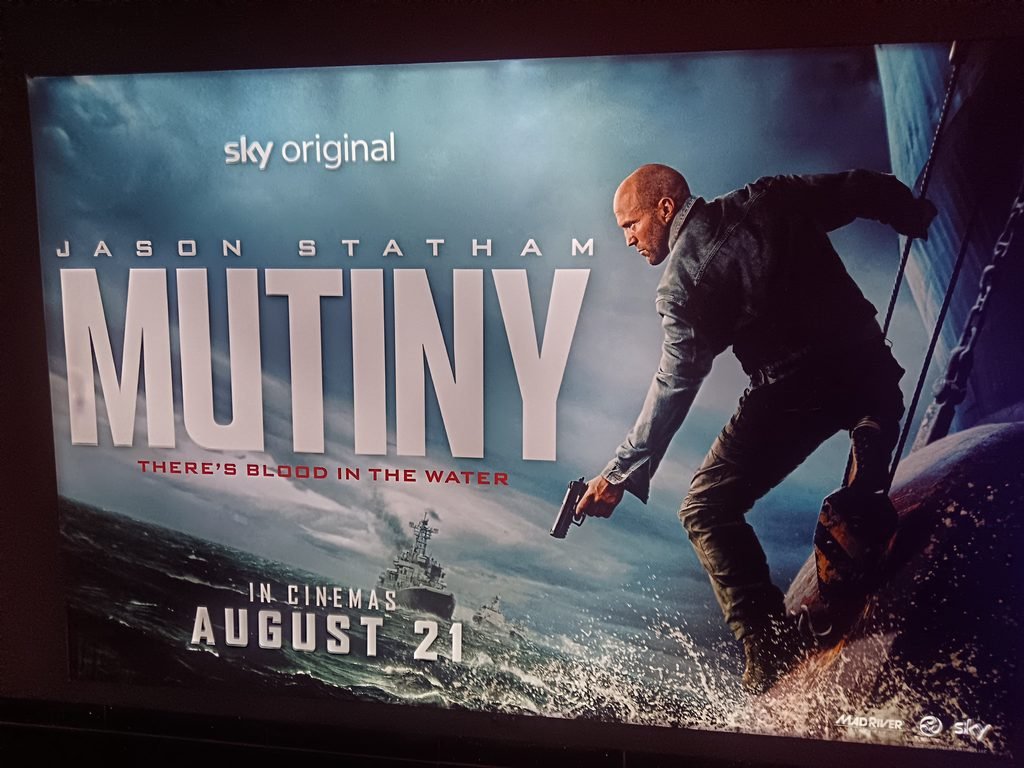
Mutiny is an action thriller directed by Jean-François Richet and distributed to the movie theatres on August 21, 2026.
The main character, played by Jason Statham, is called Cole Reed. Reed is an ex-Special Forces and former police officer from New York.
The protagonist’s life undergoes significant changes due to the murder of his wealthy boss, a shipping magnate. He is quickly framed for the crime and forced into hiding.
His journey leads him onto a giant cargo vessel. The ship turns into a floating battlefield where mercenary forces chase after Reed, while the latter is trying to reveal the conspiracy behind the murder.
In this way, the movie gains an interesting combination of intrigue and action, as well as an interesting setting for staging its climaxes.
Mutiny is not an innovative action movie. Yet, it does not pretend to be one. The movie knows about the appeal of traditional action movies, and it uses this knowledge by putting Statham into a threatening environment and relying on his physicality for most of the time.
The important question is whether that familiar formula still has enough energy. The answer is somewhat complicated.
Mutiny delivers several enjoyable action moments, but its limitations become increasingly difficult to ignore.
Direction
Mutiny is directed by Jean-François Richet and he demonstrates a strong grasp of the genre. Richet rarely overcomplicates the simple objective of the film, which is to portray Reed being chased, being trapped and then being forced to fight for survival. Direction in Mutiny accomplishes the stated goals relatively successfully.
The director’s greatest asset is the cargo ship. This setting provides plenty of space where confined and physical action can take place.
Corridors create tight spaces where confrontation occurs, whereas staircases create a few levels and obstacles. Containers create barriers and hiding spots in the ship.
Machinery is another element that brings an industrial environment into the production. Hard and dangerous environment fits the violent tone of the film perfectly. Reed does not feel secure because danger can come from anywhere.
Scale is also an important element in Mutiny. The ship is a very large object when viewed from the outside. When Reed comes inside the ship, the film creates an illusion of a small environment.
Direction of Mutiny works best in the situations when the environment has an influence on the action.
Characters do not have a freedom to move through an open environment. Instead, they have to navigate tight and physical spaces. As a result, some confrontations become unpredictable.
However, Richet does not invent anything new in action filmmaking. His direction is based on the refinement of the genre rather than innovation of it. Techniques used in the film have been used in many modern action thrillers before.
It is not necessarily a flaw. Familiar direction technique can be very effective in execution. It becomes a flaw when the familiar elements are not supported by something more interesting.
Richet allows the film to get visually chaotic in some moments. Tight spaces make action intense but they make it unclear as well. The audience has to make an extra effort to figure out the position of the characters.
It is an important feature in the action movie. Intensity should ideally raise the level of excitement without affecting the visual understanding of the film. Mutiny does not accomplish this task.
But Jean-François Richet deserves respect for knowing the advantages of the premise. He does not treat the ship as just a background but constantly uses its design to shape the action.
Cinematography
The cinematography of Brendan Galvin works well with Richet’s directing style. The photographer gives the movie an industrial and gritty look, which is appropriate for the film and its setting.
There are many textures available in a cargo ship for Galvin to use. The metal surfaces, containers, machinery and passageways dominate the visual world of the film.
Galvin also has to combine two conflicting elements of visualisation. The ship is extremely big, but at the same time Reed is often restricted by it. This is reflected in the cinematography as different angles and compositions are used.
Long shots show the grandness of the vessel, but the tight shots make the viewer immerse into the character’s surroundings. It helps to understand the state of entrapment in which Reed finds himself.
The close shots are also good for Statham’s action scenes. Physical movements of the actor take the centre of the screen and allow the viewer to enjoy the effect of his punches and other moves.
There is a benefit of avoiding polished looks in this case. The action scenes can gain something from looking rough and brutal. And there is an industrial environment that reinforces this style.
There is a downside, however. The tight framing in this case may do the same to the cinematography as the director’s style.
Sometimes the rapid movements within the confining space become hard to follow because of the lack of spatial understanding.
It doesn’t ruin the scenes, but it may prevent them from being as impressive as they should be. The best action cinematography is one which makes the audience understand what’s happening on the screen.
Mutiny may sometimes go for the involvement at the cost of information. It creates the feeling of adrenaline, but sometimes makes some scenes look chaotic.
Thus, the cinematography is successful but it isn’t particularly remarkable. It works for the movie, but not against it, which is appropriate for the movie that relies heavily on physical action scenes.
There are no attempts to turn Mutiny into a visual experiment. Galvin focuses on atmosphere, scale and physicality of the film. It preserves the film’s traditional genre.
The Action
Obviously, action is a very important feature of Mutiny. There are certain expectations raised due to Statham’s presence. Fans want to see fights and some kind of dangers. There should be stunts.
Luckily, the film knows about this expectation. Action scenes usually feel physically present, not weightless. Statham’s movements keep the same grounded feeling typical for him on the screen.
Also, the fights look good due to the setting. Reed can rely on walls, railings, machines and other elements of the setting when fighting. This can make some confrontations seem more spontaneous.
The cargo ship is a particularly useful setting for physical confrontation. There are few ways for people to escape from it. Every corridor can be used to catch someone.
Such limitation makes some fights more entertaining. Reed cannot just dominate opponents due to freedom of motion. He should use the space.
Violence is also not suppressed in this film. Hits are powerful, confrontations can be really rough. This works fine considering R rating.
The most successful moments occur when unusual locations are used in choreography. It is always more entertaining to see a fight influenced by the setting. The cargo ship gives plenty of such opportunities to the stunt team.
However, the action does not always impress. Sometimes it seems like the film holds back which can be a little surprising in light of the plot and the presence of Statham.
The pace of the film suffers sometimes due to placement of action scenes between investigations. The conspiracy storyline should be developed, but sometimes it hinders the overall speed of events.
There is also a feeling of repetitiveness in the choreography. Statham has already performed many similar fights. The physical language looks good, but it never feels completely fresh.
This may be considered as the main criticism of action of the film. It entertains the viewers, but does not change the genre.
Also, sometimes the film fails to use the potential of the cargo ship. Not all scenes could not have been shown in any industrial setting. The best scenes were the ones which could happen only in such place.
It is possible to say that when the film reaches that level, the action becomes much more entertaining. The setting stops being only a scenery and starts becoming a part of choreography.
Mutiny is able to deliver on that promise. It shows that an environment that is practical can produce action that is thrilling without necessarily requiring large explosions.
In other words, the action works more times than it doesn’t. This film delivers what you would expect from the genre in terms of entertainment value. However, those looking for something new may be let down.
Jason Statham
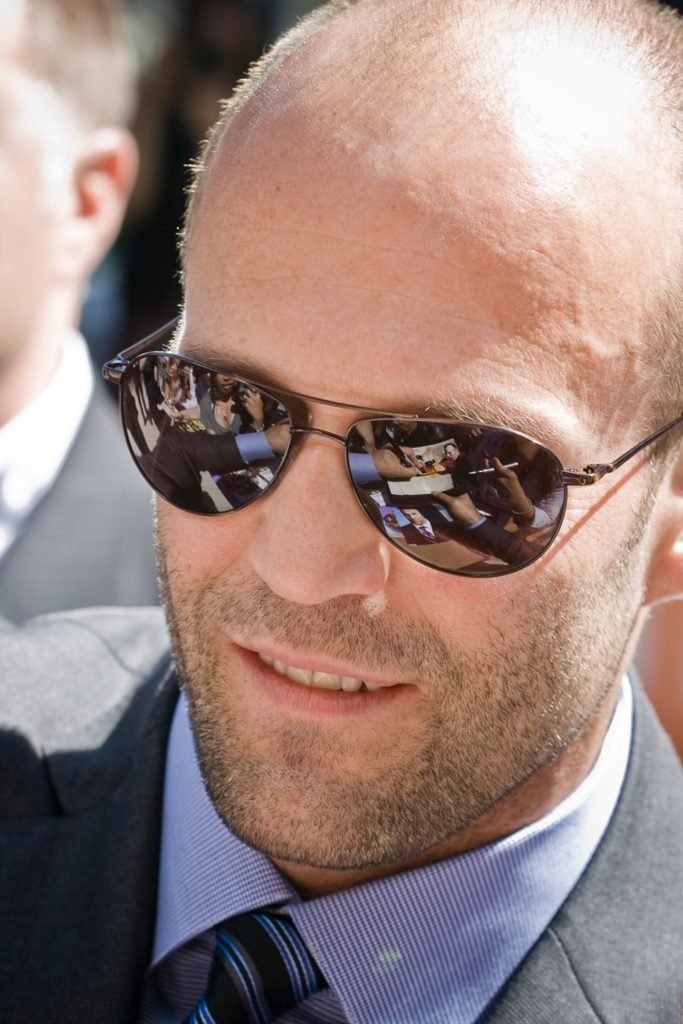
Statham continues to be the best part of the movie. For several decades already, Statham has been cultivating his own action hero persona. The filmmakers know how to work with him perfectly.
Playing Cole Reed, Statham is able to bring a certain aura of confidence to the character. Reed does not have to deliver lengthy monologues in order to prove his abilities. Everything is said through the body language of the character.
Statham is especially good at action scenes. His movements seem very calculated and not exaggerated which gives Reed the experience and danger.
Moreover, there is a certain toughness about the performance of Statham as well. Reed almost never seems overwhelmed. Even being surrounded by foes, he still looks like he has some kind of control over the situation.
However, the problem is that this time the character does not offer anything new to Statham. Reed is yet another capable and physically strong action hero who shows determination in any situation. His personality is very similar to that of Statham in general.
This does not mean that the performance is bad. Actually, it is the exact performance that the audience wants to see. It is just that this time the viewer cannot expect something dramatically new from Statham.
Statham still manages to remain charismatic enough to pull the movie together. He is able to provide Reed with such an aura of watchability that makes the viewer interested in the story. Even when the screenplay gets predictable, the charm of Statham saves the day.
Annabelle Wallis

Annabelle Wallis is an asset to the rest of the ensemble cast. Her acting adds vitality to the character driven aspects of the film. Wallis also shines during the action aspect of the movie.
Unfortunately, the script does not allow Wallis much room for improvement. There is just not enough depth given to her character to make her truly unforgettable. Most of her acting is done around the main storyline.
This is disappointing since Annabelle Wallis is able to add more depth to the character she plays. The actress delivers, but there was definitely potential to develop her even further.
In addition, Wallis’ relationship with Statham is vital for the film. The performances are greatly enhanced when the two are together on screen. This dynamic between the actors, however, could have been expanded.
The result is a solid performance that fits into the storyline.
Roland Møller
Roland Møller has what it takes physically to play the part of the opposing side. He has the looks to make the villain threatening enough for the protagonist to deal with.
Møller knows what kind of movie he is acting in. Rather than complicating things, he manages to provide the role with the right amount of menace needed to make the conflict real.
There is definitely a lack here. The character could’ve been even more memorable because of his strong writing. Møller has the presence; the script just lacks the meat.
That is why he manages to do well in single scenes. But the villain lacks the same lasting effect as some better action villains.
Adrian Lester
Adrian Lester also brings another aspect to the cast. He brings both gravitas and intelligence to the proceedings. This will help give the film some balance with regard to the physical aspects surrounding Statham.
Lester is especially useful in the exposition heavy portions. He brings enough character to make sure these sequences don’t become too mechanical.
Yet there are some issues regarding his own lack of development. There are a lot of things that need to be conveyed by the script.
It is for this reason that Adrian Lester elevates the work. But he cannot compensate for the shortcomings of the script entirely.
What Works
The biggest success of Mutiny is simplicity. This movie realizes the fact that the appearance of Jason Statham will remain one of the strongest advantages. Therefore, no additional elements are necessary in order to complicate his part.
The cargo ship is one of the best aspects as it gives the opportunity to get the environment that is full of tension. In addition, the confined space allows having physical fights.
The other positive aspect of the movie is its realism. The action seems to be really connected with characters’ interactions with the environment and their physicality. Thus, the violence looks real.
The combination of the director and the cinematographer works quite well as Richet manages to control the action and Galvin creates the proper atmosphere. Thus, the film receives consistency in its identity.
The performances are quite functional. Statham leads the movie. At the same time, Møller is the physical opponent and Wallis and Lester help in this.
It is nice that the movie has an old-fashioned atmosphere that does not look desperate to invent everything. In general, it seems to be just focused on providing entertainment.
Thus, for those who search for the simple action, it may become an advantage.
What Does Not Work
The major flaw of the movie is its lack of originality. Firstly, the main plotline of the film follows the classic action-thriller template. Secondly, conspiracy themes are not used in a creative way.
Reed is another example of the classic action hero type. Statham fits into this role pretty well, but the character has no particular uniqueness.
The same applies to the supporting characters who lack development. Many actors look good enough for their roles, however, the script is not able to provide them with sufficient material.
Pacing is another drawback of the movie. While being relatively short, some parts of the film may seem too slow. The narrative often stops right when the action begins.
Action scenes are also inconsistent. The most spectacular ones deserve appreciation because of the limited scope of the film. Other scenes look rather typical for the genre.
The camera work is exciting but it may make some scenes difficult to watch. While the close shots make the fights thrilling, they can make some movements hard to see.
Finally, the cargo ship looks like the lost potential of the film. The setting is terrific but the scenes can often take place in another location.
It means that all mentioned drawbacks prevent Mutiny from becoming an excellent action film. Nevertheless, it is good and entertaining enough.
Final Verdict
Mutiny is a good action film that realizes the strength of its principal actor. Jason Statham remains believable, charismatic and physically fit. Jean-François Richet also exploits the cargo ship environment effectively.
The action in the film is sufficient for entertainment that satisfies the fans of the genre. Cinematography adds to the appropriate ambiance of the movie. The supporting actors also give credible performances despite limited parts.
Nevertheless, predictability becomes a drawback of the movie. The story does not bring anything new despite an intriguing plot. Some problems with the pacing also do not allow the action to proceed smoothly.
Certainly, the film does not change action movies, and it did not intend to do so. It just gives a reliable interpretation of the Statham’s formula.
For those who need a plain and brutal action movie, this may be enough. Those who expected something new will be disappointed.
The conclusion is positive but moderate. Mutiny is a decent action movie that needs a more interesting story and better direction to become exceptional.