
Furious TV Series Review

Furious TV Series Review: Introduction (Warning Contains Spoilers)
Furious is instantly unsettling. The mystery at its core is intriguing, but its subject is trauma.
The show is created by Elizabeth Meriwether and revolves around FBI Agent Alice Black. She is played by Emmy Rossum, a determined yet vulnerable, emotionally drained woman.
Alice works on a case where a series of murders have been committed by Catherine Grace, who is portrayed as a smart and crafty serial killer by Lola Petticrew.
Catherine is no run-of-the-mill villain in a crime thriller show. She has a history of being abused and that impacts her concept of justice.
It progressively becomes clear how she has come to be a murderer and how the institutions have let her down.
This adds an element of complexity to the central investigation, making it more than a typical cops-and-robbers affair. Alice is doing more than pursuing a dangerous criminal.
She is asking why Catherine is there at all. This difference is what lends a lot of power to the series.
Ultimately, the psychological thriller ends up being one that carries a great deal of contemporary resonance as well. The critics have been quite vocal about its relationship to the #MeToo culture.
Such comparisons can be easily made since the show deals with issues of institutional corruption and the failure of the law. However, there are no easy answers offered by the show as it never makes either woman entirely innocent.
While Alice stands for the law, she ends up being corrupted herself. Catherine stands for revenge but is still a violent character.
Their struggle thus moves beyond being merely a simple fight between the detective and the murderer. It becomes a clash between two different views of justice.
This way, Furious takes on a more mature personality. Its focus lies in understanding why people do such bad things.
The most important thing, however, is its ability to question whether comprehending people’s actions implies forgiving them.
Direction and Atmosphere

The direction is key in building the psychological environment of the show. Furious relies on suspense rather than spectacle.
Sometimes, the show allows some scenes to breathe before explaining their importance. In such a way, the uncertainty builds regarding both main characters.
Alice’s investigation tends to be somewhat chaotic. It is built up slowly by giving information and re-assessing previous scenes.
On the other hand, Catherine’s story takes a different course. Her scenes may seem controlled and intimate.
This distinction is made due to the very nature of the characters in question. While Alice is trying to gain control over herself,
Catherine has been able to do that through constructing several identities for herself. The ability of Catherine to manipulate different circumstances is one of the factors that make her dangerous.
This approach is significant because the TV series seeks to explore the psychology of Catherine. In this case, even though she commits acts of violence, they are not considered horrifying without reason.
The first few episodes set up the procedural aspect of the show. Alice tries to solve mysterious deaths while Catherine is preparing her next steps.
It results in two distinct plotlines. The viewer knows more about Catherine than Alice.
Dramatic irony provides for most of the suspense at the beginning of the season. The viewer sees the danger coming before Alice realizes it.
The way the directors shoot the scenes focuses on their relation. It becomes more significant later in the season.
Where the series could rely on action for confrontation, conversations are used instead. Conversations may be just as menacing as a fight.
It works best when Alice and Catherine start to understand one another. In their conversations, they have something in common but they are not the same.
Discomfort also works well in the series. There are certain scenes in the series that are hard to look at.
That would be appropriate since the series talks about abuse, exploitation, and vengeance.
But then, the intense mood that the series evokes might sometimes be too much for it to bear.
The intensity will definitely suit some viewers. For others, they will find it hard to cope with all the dark moments through the season.
Cinematography and Visual Style
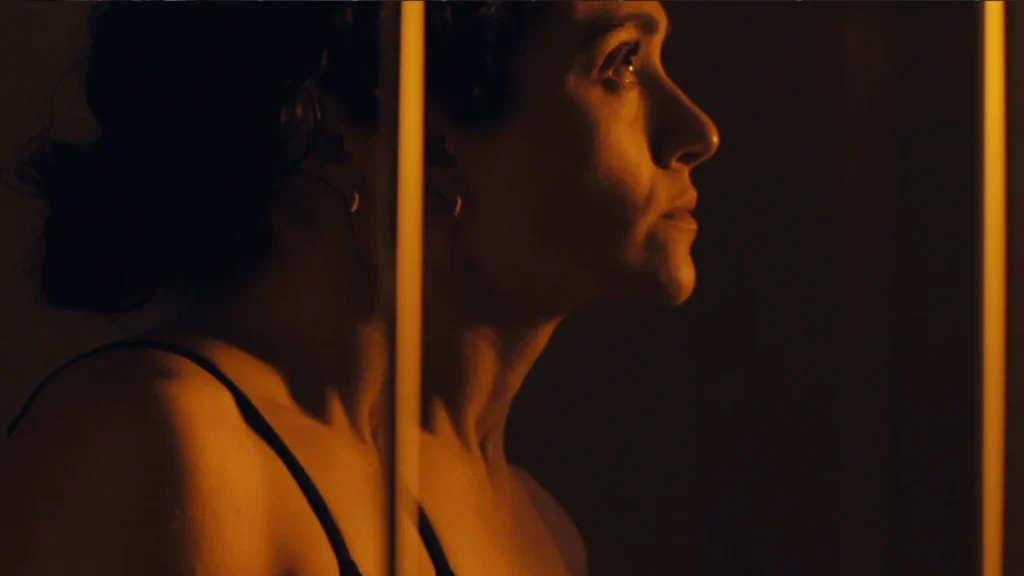
The visual style of Furious enhances the psychological approach. Often, characters are set against constrained and repressed backgrounds.
Offices, flats, interrogation rooms, and various interior settings are used as sources of emotional stress. Characters seem imprisoned even when they physically have room to move around.
This technique works well with the psychological state of Alice since she is not safe in her professional surroundings.
In contrast, the interrogation continually drives her back into situations that she wishes to control.
Catherine’s scenes usually generate a totally distinct visual experience. Her controlled appearance indicates her capability of constructing different selves.
Disguises thus go beyond being a mere story-telling tool. They also signify the gap between the public and private Catherine.
This is how the show utilizes this concept in order to keep viewers in doubt about what is true and what has been fabricated.
Such uncertainty works especially well in the story of manipulation. Catherine knows how people see her.
Using this information, she can easily navigate through various social circles. Her ability to blend into everyday life makes her even more frightening.
Moreover, the visual narration does not make all the violent episodes look like special ones. The most frightening episodes are rather modest.
In this way, the story does not become an action one. It still focuses on the psychological suspense.
In conclusion, such a visual approach supports the characters. It does not always struggle for attention.
This restraint is what makes this show unique. The visuals always back up the emotions that a scene conveys.
There are some instances where visuals take on an uncomfortable role. The show sets viewers close to the characters at moments that are emotionally charged.
It gives viewers an intimate feel, which is uncomfortable. It also emphasizes the importance of survivor psychology for the show.
The visual language also backs up the other themes. In Furious, people are constantly being watched, judged, manipulated, or overlooked.
The cinematography reflects that sense of surveillance. Even ordinary spaces can feel unsafe
Storytelling, Pacing, and Character Development

The narrative is most effective when it is centered on Alice and Catherine, whose similar psyches become increasingly significant as opposed to their individual histories.
The story becomes more personal after this point. The professional investigation of Alice starts interfering with her personal life.
She has some experience before that affects her way of solving the problem. It makes her different from any ordinary TV detective.
Alice is not a cold investigator at all. She has a lot of emotional problems that come along with everything else.
This makes her investigation very unpredictable. Her intuitions can help her but can also get her into trouble.
Catherine too evolves in an equally complex manner. The viewers learn more and more of her history.
Her history explains her outlook on life without validating her choices. It is crucial for the series.
It is necessary for the show that the viewers get to know Catherine but need not validate her decisions.
This is one of the most intriguing conflicts in the season. Sympathy and morality are seen separately here.
As the middle stories develop, they become less of a straightforward detective narrative. This is because the investigation becomes very personal and psychological.
Season six is of much importance for the relationship of the season. Alice has a very small period in which she can convince Catherine to trust her.
Such a setting affects the kind of conflict that they have. Alice is not in a position to merely chase after Catherine anymore.
She now needs to know Catherine well enough to be able to get to her. This creates some kind of strange tension between the two.
Their conflict is rarely in a hurry for any confrontation. In some cases, the delayed psychological growth could be repetitive. Some notions of trauma and institutional breakdown have been repeated quite a few times.
The repetition of a motif is an excellent way to emphasize it, but at the same time, it can weaken the flow of drama. This is one point where the show loses its concentration sometimes.
The process of investigation is not always important in the series, which could be disappointing for those who expect a good detective story.
This is not a flaw. It merely shows that Furious has more concern for psychology than solving cases.
This season is all set to end with a highly personal confrontation. The end also offers scope for much more to come in the future.
The first season ends with an arrest, a death, and a revelation from Alice’s past. These things undoubtedly pave way for another season.
Performances and Characterisation

The acting is definitely one of the best things about Furious. It relies on the actors’ ability to convey complex emotions through their acting skills.
Alice, played by Emmy Rossum, is portrayed with understated emotion. She never turns her trauma into something constantly emotional.
Rather, she is usually tired, on guard, and very concentrated. It adds to her credibility. She is an investigator and finds it difficult to function.
Alice’s determination is also well-captured by Rossum. Even as the investigation starts affecting her, she is determined not to give up on the investigation.
Her determination is praiseworthy but could also lead to destruction.
This allows for both sides to co-exist in the performance. Alice can be a skilled investigator but also take irrational steps.
This stops her from being a typical heroic detective.

Lola Petticrew faces an equally difficult challenge as Catherine. She has to make a serial killer compelling without romanticising her violence.
Petticrew creates a composed and unpredictable personality for Catherine. Her calmness can be more threatening than any form of aggressiveness.
Catherine comes across as extremely comfortable in situations where she is supposed to feel fear.
But then there are also instances where she shows her vulnerable side. This reveals her as an individual hidden behind her constructed personalities.
This duality makes Catherine one of the most intriguing characters of the show. She is neither an absolute villain nor an innocent victim.
The supporting actors enhance the main actors’ performances. Scoot McNairy is a homicide detective named Danny who is very close to Alice.
Quincy Tyler Bernstine is an FBI agent called Nora who adds her angle to the investigation process.
Marshall is portrayed by Jake Lacy, and the relationship that he has with Alice creates yet another personal entanglement.
These characters ensure that the narrative does not revolve around Alice and Catherine alone. These characters bring different angles about justice and responsibility.
The use of an ensemble cast helps make the series more of a drama rather than a conventional serial killer thriller.
The acting helps make the series able to pull off the dark comedy elements. Furious has gallows humor even though the theme is dark.
These elements provide a temporary break from the seriousness of the situation. It also ensures that the characters are not artificial.
The humour never completely transforms the show’s tone. Instead, it appears as a coping mechanism within an extremely dark story.
The Themes of Justice, Revenge, and Institutional Failure
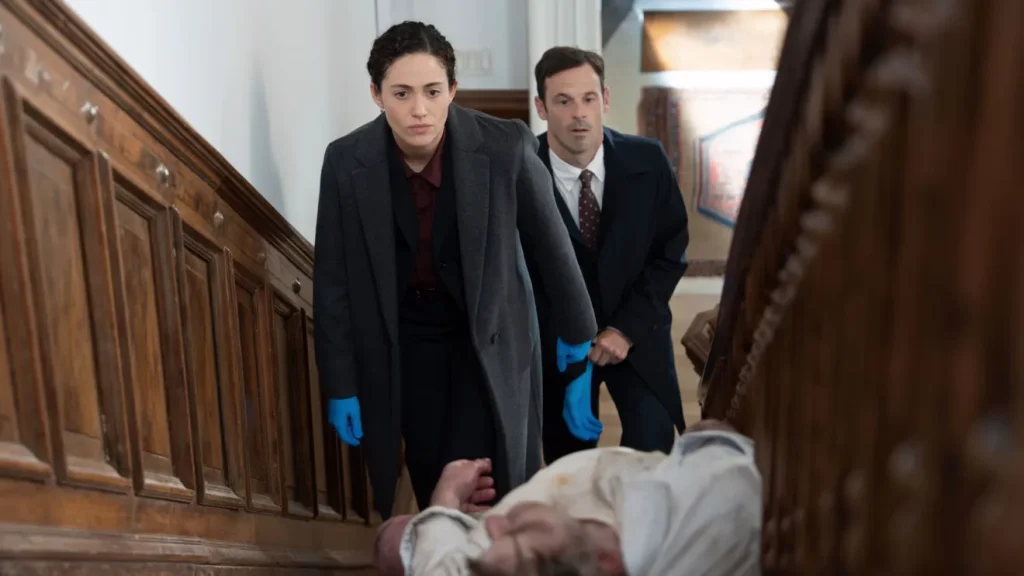
The most fascinating part about the series Furious is the way justice is addressed. While Alice works through the system, Catherine does not.
They both know that there is no justice served for the people. Their responses to that knowledge are completely different, thus giving rise to the moral dilemma of the show.
In addition, the show addresses the issue of institutional failures. The elites can shield themselves through their financial resources and influence.
The plot ties this notion with sexual exploitation and trafficking. These topics make the thriller modern.
A fictional thriller with real-world abuse at its core runs the risk of becoming exploitative in its desire to shock over sense-making. Furious tries to steer clear of this trend.
Its main emphasis is on the effects of violence on the psyche. In addition, it addresses the impact of such abuse even years after it occurred.
In essence, trauma is presented as a lasting phenomenon. Its presence continues despite the end of the actual threat.
In a complex way, this ties Alice and Catherine together. They have different stories to tell, yet violence is part of them both.
That doesn’t mean they are the same in morality. They make choices that have very different results.
This makes the film more powerful when it recognizes that difference. This makes it less successful when it gets carried away with its own symbolism.
Sometimes, there is an abundance of directness in the themes that isn’t really needed. The viewer doesn’t need to be reminded of the institutional failure at work here again and again.
Nevertheless, the thematic approach gives Furious more depth than just any serial killer plot.
What Works Best
First of all, the best feature of the show is its main relationship. Alice and Catherine are interesting because no one of these women can be easily put into a stereotypical category.
The characters’ performance helps them look realistic. The writing adds emotions to the tension between them.
Another important feature of the show is its moral ambiguity. Furious never says that an act of vengeance is always righteous.
Also, it is not implied that law enforcement brings justice. Relevance to today’s times is yet another strength. The series tackles tough subjects but does not become just another drama dealing with social issues.
It is a thriller at heart. Thrill and character development propel the plot.
The other thing that makes the series effective is its eight episode format. There is enough room for developing characters without making the series too lengthy.
The use of both procedural and psychological aspects of the crime series is very effective. The audience gets an investigation story as well as two very complex personal stories.
What Could Have Been Better
This series does have some flaws. The most serious of which is how its gravity can sometimes be overwhelming.
The topics being covered are very heavy. Sexual exploitation, abuse, violence, and trauma seem to be prevalent throughout the show.
Sometimes it seems like the series wants the viewers to feel the burden of each and every one of those problems at once. This makes for emotionally taxing episodes at times.
At the same time, the psychological aspect of the show can sometimes slow down the procedural storyline.
At times, Alice’s research seems almost like an afterthought compared to her personal journey. This works to increase the intensity of the character narrative at the expense of the typical mystery setup.
Catherine’s character also presents another hard-to-strike balance. Her background is meant to evoke sympathy, but her brutal acts cannot be overlooked.
There are some occasions where the show seems to verge on making her too sympathetic. Most times, this line is not crossed, but the challenge is there all the same.
Another challenge with vengeance as a theme is that audiences might empathize with Catherine’s anger but not necessarily with her methods.
It is in this way that the series is at its most powerful.
Additionally, some of the themes might have been more subtle in their approach. The critique on institutions was valuable, but there were points where this seems very intentional.
This can make some scenes less complicated.
The resolution of the series presents one of these issues. Its revelations are interesting, but raise several important questions.
However, viewers looking for complete closure may find the ending frustrating. The unresolved material means the first season functions partly as the beginning of a larger story.
Final Verdict
Furious is a brave psychological crime thriller that knows how to differentiate between explanation and justification.
The plot is frightening because its key issues lack easy solutions. Alice believes in justice within the bounds of the legal system.
Catherine feels that some individuals require punishment which the law cannot provide for. None of the above-mentioned viewpoints can be considered absolutely right.
The acting brings this issue into light. The emotional complexity of Alice, played by Emmy Rossum, does not diminish her.
Lola Petticrew makes Catherine frightening, intelligent, vulnerable, and unpredictable. Their performances give the series its emotional centre.
Direction helps them with their style which is restrained and tense visually. Storytelling also enables them to slowly build their relationship.
The show becomes most interesting when it focuses on its characters. The procedural elements of the show work better when they give insight into Alice and Catherine.
The thematic scope of the show is also worth acknowledging. Furious delves into institutional failure, survivor’s trauma, revenge, and justice.
These subjects lend significance to the show outside its murders. They also complicate the moral issues posed by the show.
Sometimes, though, the show drives its themes a little too hard. Its emotional power can be wearing.
The search for the killer can also be overshadowed by the character drama. This will leave some viewers unsatisfied.
These are important flaws that should be noted. However, they do not undo the good that the series does.
What makes Furious most notable about the series is the way that it avoids oversimplifying its characters. Alice is not the hero.
Catherine is not just a villain. That relationship operates in the gray area between those descriptions.
That lack of moral certainty defines the show. It also explains why the name fits so well.
The characters are motivated by rage, sorrow, terror, and an attempt to exert control. These emotions drive them again and again to make decisions that have significant repercussions.
Consequently, Furious shines as a character-based thriller. The killings provide the suspense, while the characters generate the intrigue.
Furious proves how psychological thrillers can continue to be relevant. The most successful ones don’t just ask who committed a crime.
They ask how institutions could fail to prevent it. They ask what is justice after the failure.
They also ask what will happen when the decision is made to establish justice of his/her own.
Furious is not offering any simple answer to the above questions. It is one of the best qualities of the show.
It is also one of the toughest things about it.
For people who watch for simple chase movies, this show might look unnecessarily complicated. For those who like morally ambiguous characters, there is much more to it.
Furious works through creating an emotional link to its main conflict. This is why Alice does not just solve the crime.
She challenges her views on herself, justice, and the system. Catherine does not just avoid being found by the authorities.
This forces all those around her to consider what they were unable to stop the law from doing.
This makes Furious an interesting addition to the genre of the contemporary psychological thriller. It is thrilling, complex, and disturbing.
Its only problem is that it is very ambitious. There are just too many ideas trying to compete for attention.
Nevertheless, its best themes still hold strong ground. A person may be affected by trauma without this being the basis for each of their decisions.
Justice can be imperative without always being enough. Revenge can be comprehensible but not without having any moral complexities.
This creates a certain tension that adds to the power of Furious.
Overall, the Furious review shows the series as an intriguing psychological crime thriller.
Although it may not always find the right balance between the two, the core of its dynamic certainly works throughout the season.
It is a mystery that poses tough questions rather than providing comforting answers. This makes Furious way more fascinating than your average serial killer story.
There are still a few options left to be explored in its first season, which means that there is room for the second one to dig deeper into its characters.
Time will tell whether it will continue to be just as deep. Still, at the moment, the first season has laid a good foundation.
Furious is dark, intelligent, and disturbingly moralistically gray. It is a series that is as challenging in terms of content as it is entertaining to watch.
This is precisely what makes it so captivating as a crime drama.