Mickey 17: Dying for the Job Has Never Been This Absurd
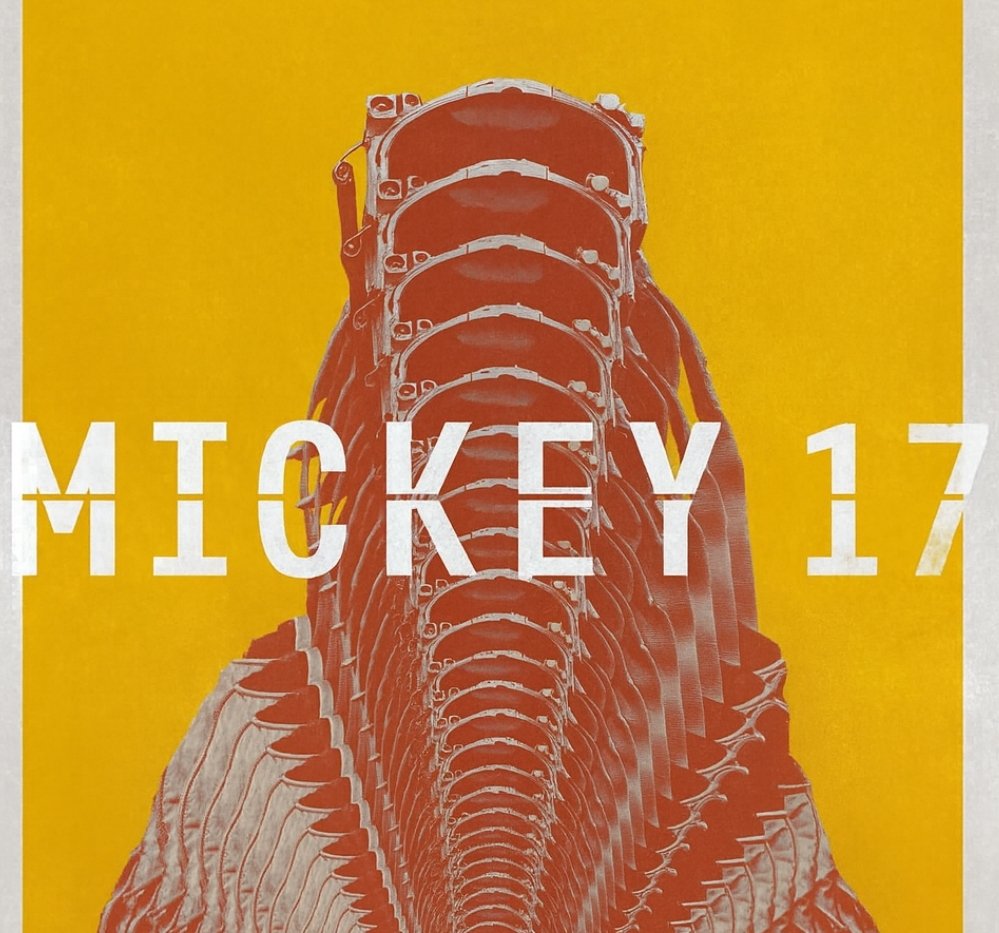
Walking into Mickey 17, I wasn’t expecting subtlety. But I also wasn’t expecting Bong Joon Ho to go quite this strange, bleak, and occasionally hilarious. After Parasite, expectations were sky-high, and instead of playing it safe, Bong swings hard in a completely different direction. The result is a sci-fi dark comedy that feels like an anxiety dream about labor, identity, and being completely replaceable.
Based on Edward Ashton’s novel Mickey7, the film stars Robert Pattinson alongside Naomi Ackie, Steven Yeun, Toni Collette, and Mark Ruffalo. The film sets the story in a future that feels uncomfortably close, where capitalism, colonialism, and corporate indifference have spiraled completely out of control.This isn’t a clean or elegant movie—but it is a fascinating one.
The Premise: A Job You Literally Can’t Survive
The story takes place in 2054, as humanity attempts to colonize an ice planet called Niflheim. Mickey Barnes (Robert Pattinson) signs up to be an “Expendable,” which is exactly as awful as it sounds. He performs the most dangerous tasks imaginable—testing toxins, exploring hostile environments, and undertaking suicide missions—because each time he dies, the team prints a new version of him and uploads his memories.
From the very beginning, the movie makes it clear how dehumanizing this process is. The filmmakers treat Mickey not as a person but as equipment.There’s something deeply unsettling about watching a man casually talk about his own deaths as just another workday inconvenience. Bong leans into the absurdity, but the horror underneath never fully disappears.
Things really kick off when the team presumes Mickey 17 dead during a mission.The colony immediately prints Mickey 18 to replace him. The problem? Mickey 17 survives and makes it back alive.
Now there are two Mickeys—and the colony has strict rules against “multiples.” Limited resources and the need to maintain order create an existential and political problem when two identical people share the same memories. The movie ramps up tension as both versions of Mickey hide while figuring out what it means to exist simultaneously with yourself.
Watching this unfold is where the film becomes genuinely compelling. It forces you to sit with uncomfortable questions: if both Mickeys share the same past, which one deserves to live? Are they equally real? And if society only recognizes one of them as valid, what does that say about identity?
Robert Pattinson Carries the Entire Film
Robert Pattinson is the reason Mickey 17 works as well as it does. He doesn’t just play two characters—he creates two fully distinct versions of the same person.
Mickey 17 is anxious, and quietly broken. He moves like someone who expects pain at all times and has already accepted that the system will never care about him. There’s a sad, almost pathetic quality to him, but Pattinson makes him deeply sympathetic.
Mickey 18, on the other hand, is sharper and more volatile. He’s quicker to anger, and clearly not content with being disposable. The contrast between the two is fascinating, especially when they’re on screen together. Their interactions are funny, uncomfortable, and surprisingly emotional, as both versions grapple with the idea that only one of them is able to exist.
It’s one of Pattinson’s most interesting performances, and easily the highlight of the movie.
Supporting Characters and Wildly Different Tones
The rest of the cast brings a lot of energy—but not always in the same direction.
Naomi Ackie’s Nasha, Mickey’s girlfriend and a security officer, feels like the most grounded character in the film. Her performance adds much-needed humanity, and she serves as an emotional anchor when everything else gets chaotic. I found myself gravitating toward her scenes because they felt the most real.
Mark Ruffalo’s colony leader, Kenneth Marshall, is deliberately over the top. He’s loud, vain, and openly authoritarian, with a delivery that’s impossible not to associate with modern political figures. His supporters even wear red hats, just in case the point wasn’t clear enough. Sometimes this worked for me—it’s undeniably funny—but other times it felt so broad that it distracted from the story.
Toni Collette matches that energy as his wife Ylfa, who’s obsessed with social status and perfecting a bizarre sauce recipe. She’s entertaining but thinly written, more of a caricature than a fully realized character.
Steven Yeun’s Timo, Mickey’s so-called friend, is intentionally unpleasant. His role adds to the film’s cynicism, but his storyline feels oddly disconnected, like it belongs to a different version of the movie.
Themes: Exploitation, Identity, and Colonialism
At its core, Mickey 17 is about exploitation. Mickey’s body is seen as a renewable resource, a grim exaggeration of how workers are often seen as replaceable parts in a larger machine. Watching Mickey casually discuss his own deaths is darkly funny, but it also hits uncomfortably close to home.
The film also touches on colonialism through the native inhabitants of Niflheim, known as “Creepers.” While the idea is compelling, this subplot never gets the depth it deserves. It feels like Bong wanted to say something meaningful here but didn’t fully commit to exploring it.
The strongest theme by far is identity. When two Mickeys exist at once, the film asks whether identity is tied to memory, physical form, or social recognition. The movie doesn’t give clear answers, and while that ambiguity feels intentional, it may leave some viewers unsatisfied.
Where the Film Struggles
As much as I admired the ambition, the movie struggles with focus. It feels like three different films competing for attention: a dark workplace comedy, a sci-fi thriller, and a philosophical drama. None of them are bad, but they don’t always blend smoothly. The pacing is uneven. The opening is dense and slow, the middle is genuinely engaging once both Mickeys are on screen, and the ending feels rushed.
The filmmakers introduce several ideas—especially the Creepers and the colony politics—but never fully resolve them. The satire hits heavily; unlike Bong’s earlier films, which conveyed sharpness without bluntness, here the message appears so clearly spelled out that it loses some impact.
Ruffalo’s character is the most obvious example—sometimes funny, sometimes exhausting.
Final Thoughts: Ambitious, Frustrating, and Worth Watching
Mickey 17 isn’t a masterpiece, but it’s not a failure either. It’s messy, strange, and uneven—but also bold, thought-provoking, and often very funny. Robert Pattinson gives one of his best performances, and Bong Joon Ho’s visual style is as striking as ever.
I walked out feeling both impressed and slightly disappointed. There’s so much here to chew on, but I couldn’t shake the feeling that the movie never quite becomes the cohesive whole it wants to be. Still, I’m glad it exists. It takes risks, it asks uncomfortable questions, and it sticks in your head long after the credits roll.
Would I recommend it? Yes—especially if you enjoy ambitious sci-fi or Bong Joon Ho’s work. Just don’t expect another Parasite. This is a weirder, rougher experience, and while it doesn’t fully come together, it’s absolutely worth the ride.