Locked
Overview: Locked
David Yarovesky (Brightburn) directed Locked, a 2025 psychological survival thriller, and Michael Arlen Ross wrote it. It’s a Hollywood remake of the 2019 Argentine film 4×4. The filmmakers loosely drew inspiration from real-life news stories about thieves who got trapped inside vehicles during robberies.
The premise is simple but cruel
Eddie (Bill Skarsgård), a desperate, small-time thief, breaks into a high-end, custom-built SUV. Only to realize too late that the vehicle is a trap. The owner, William (Anthony Hopkins), remotely locks him inside. He subjects him to a calculated campaign of psychological and physical punishment, claiming it’s all in the name of justice.
As someone who’s a big fan of both Skarsgård and Hopkins, I went into Locked genuinely excited. On paper, it’s a tight, high-concept thriller with two powerhouse actors and a claustrophobic setup that *should* work incredibly well. The final result, though, is a lot more mixed.
Context & Production Background
Sam Raimi produced Locked, and the filmmakers released it on March 21, 2025. This immediately sets certain expectations for intensity and style. Originally Glen Powell was cast as Eddie but dropped out due to scheduling conflicts. Skarsgård stepping in turned out to be one of the movie’s smartest decisions.
Anthony Hopkins reportedly loved the script so much that director David Yarovesky flew to New York personally to pitch it. Interestingly, Hopkins delivers most of his performance through his voice alone, using only the SUV’s immersive sound system for the majority of the runtime.
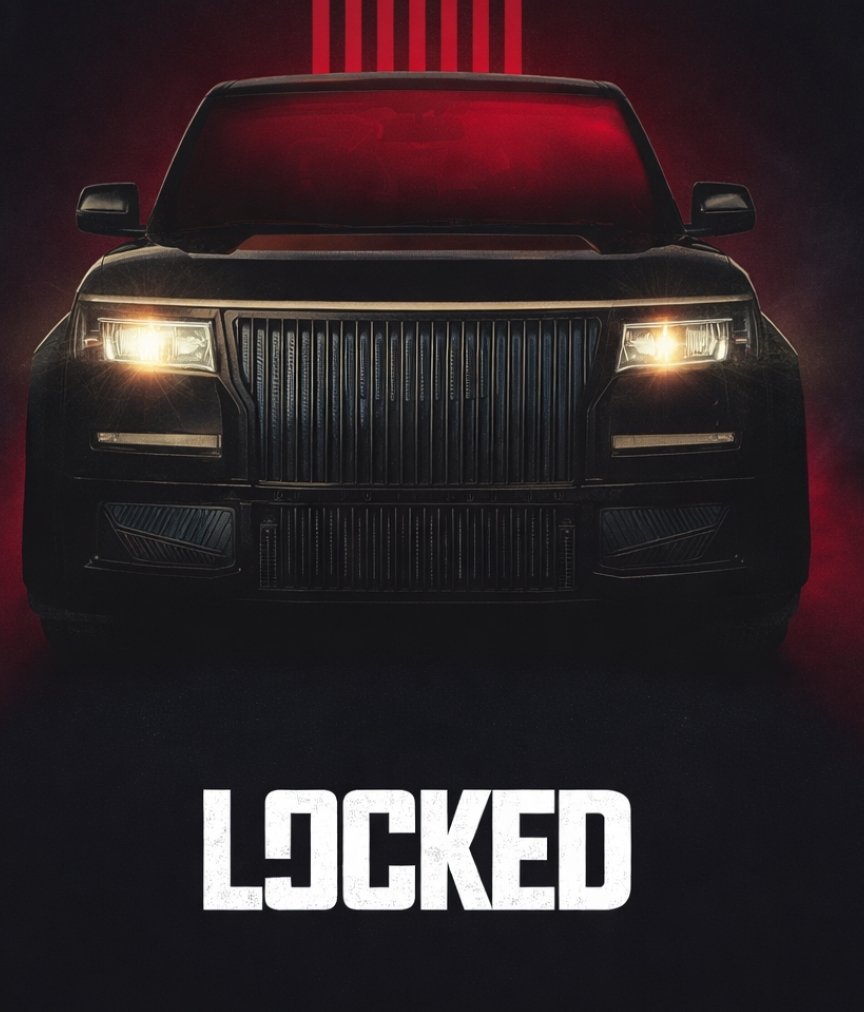
To realize the story, the production team built three distinct versions of the fictional SUV, nicknamed the Dolus, for filming. The crew modified these specifically to allow camera movement, adjust lighting, and enable on-set destruction during filming.
A Remake That Plays It Safer
One of the biggest differences between Locked and 4×4 is how much more palatable the American version is. In this remake, the filmmakers intentionally soften Eddie, giving him a daughter, a redemption arc, and a clearer moral framework. However, that effectiveness also dulls the original story’s discomfort, stripping away some of its unsettling edge and moral ambiguity entirely. The thief in 4×4 felt like a real moral gray area. Eddie feels like someone the movie wants you to root for.
The SUV itself is also far more exaggerated here. Instead of feeling like a believable trap, it slowly morphs into something out of a Bond villain’s garage. It’s complete with electric shocks, extreme temperature controls, surveillance tech, and remote manipulation. Critics have split on this, but I believe it undercuts the realism that made the original so unsettling.
Direction & Visual Style
Yarovesky’s Approach. David Yarovesky leans hard into claustrophobia, and that’s where the movie is at its strongest. The direction makes the car feel less like a vehicle and more like a coffin on wheels. The filmmakers shoot scenes to feel overwhelming, sweaty, and exhausting—almost like watching a panic attack unfold in real time.
One smart choice is how the film treats phone conversations between Eddie and William. The filmmakers stage them like confrontations rather than exposition dumps, keeping the tension alive even when nothing “physical” happens.
There’s a clear visual contrast throughout the movie. Eddie’s world is chaotic, handheld, and unstable. William’s presence is clean, static, and controlled that visual language reinforces the power imbalance without spelling it out.
Cinematography
The camera work does a lot of heavy lifting. Extreme close-ups trap us in Eddie’s face. This forces us to experience every breakdown, panic attack, and burst of anger alongside him. The filmmakers use the ultra-wide aspect ratio (2.76:1) ironically. It stretches the frame horizontally while making the vertical space feel even tighter.
To make this possible, the crew built a specialized SUV version with sliding panels and removable sections on internal rails.
Sound Design & Score
Sound is one of locked’s most effective tools. The composer builds the score almost entirely on percussion, pounding, relentless, and repetitive to mirror Eddie’s mental state.The composer even used unconventional techniques, like striking a cello like a drum, to create harsher, more primal sounds.
The sound team mixes Hopkins’ voice with surgical precision. It’s calm, intimate, and inescapable, which makes his threats feel disturbingly personal. In my opinion, this is one area where both critics and audiences largely agree. The sound design elevates the material more than the script ever does.
Performances
Bill Skarsgård as Eddie
Locked is, without question, Skarsgård’s movie. He’s on screen nearly the entire time, and the role is physically and emotionally brutal. Watching him deteriorate—from smug opportunist to terrified, broken man—feels authentic. He convincingly sells exhaustion, pain, and fear, grounding the performance and maintaining audience investment throughout difficult emotional stretches onscreen consistently.
In my opinion, this performance is the reason audiences are more forgiving of the film than critics. Skarsgård makes Eddie feel real, fully fleshed out, and relatable. So audiences genuinely hope he survives despite the surrounding story flaws.
Anthony Hopkins as William
Hopkins appears very little physically, but his presence dominates the film. His voice performance is cold, articulate, and deeply unsettling. He never raises his voice, which somehow makes him even scarier.
In my opinion, he feels like a more polished, intellectual version of Jigsaw—less sadistic theatrics, more righteous cruelty. Some of his dialogue veers into cartoon-villain territory, but Hopkins’ delivery usually saves it.
Their Dynamic
Despite barely sharing the screen, the psychological tug-of-war between Eddie and William is consistently engaging. Many critics have pointed out that the script itself is thin, and I agree. However the performances mask that weakness better than they have any right to.
What Works
Strong Lead Performances: Skarsgård and Hopkins carry the film almost entirely on their backs.
Claustrophobic Atmosphere: The direction, camera work, and sound design successfully sustain tension for most of the runtime.
High-Concept Simplicity: When the movie sticks to its core idea, it’s genuinely gripping.
What Doesn’t Work
A Blunt, Simplified Script.
The film’s attempts at social commentary are painfully on-the-nose. When William rants about generational entitlement or people being “triggered,” it feels more like preaching than revealing true character insight. In my opinion, this is where critics were especially harsh—and understandably so.
Shallow Characterization
Despite strong acting, neither character is particularly deep. Eddie’s daughter subplot feels more like a sympathy shortcut than meaningful development. While William sometimes feels like a greatest-hits remix of Hopkins’ past villain roles.
Logic Takes a Backseat
The movie falls apart if you think about it too long. William’s elaborate setup feels absurdly impractical, and the tech-heavy SUV stretches credibility to the breaking point. For a story that relies on realism to be scary, that’s a problem.
Pacing Issues
Even at just 90 minutes, the middle section drags. Once the novelty of the setup wears off, locked starts spinning its wheels.
Final Verdict
The Bottom Line: Locked is a flawed but watchable thriller elevated by two excellent performances. If you’re a fan of Bill Skarsgård or Anthony Hopkins, it’s worth a single viewing—especially as a streaming pick.
Critics are right: it plays things too safe, offering thrills but ultimately lacking depth, risk, and memorable emotional weight throughout. If you want something sharper, darker, and more unsettling, the original 4×4 remains the superior version.
A solid concept with uneven execution. Strong performances can’t fully compensate for a thin script and a disappointing ending.
Best For: Fans of contained thrillers and psychological cat-and-mouse games.
Skip It If: You’re looking for smart social commentary or a genuinely disturbing conclusion.