The Death Of A Unicorn
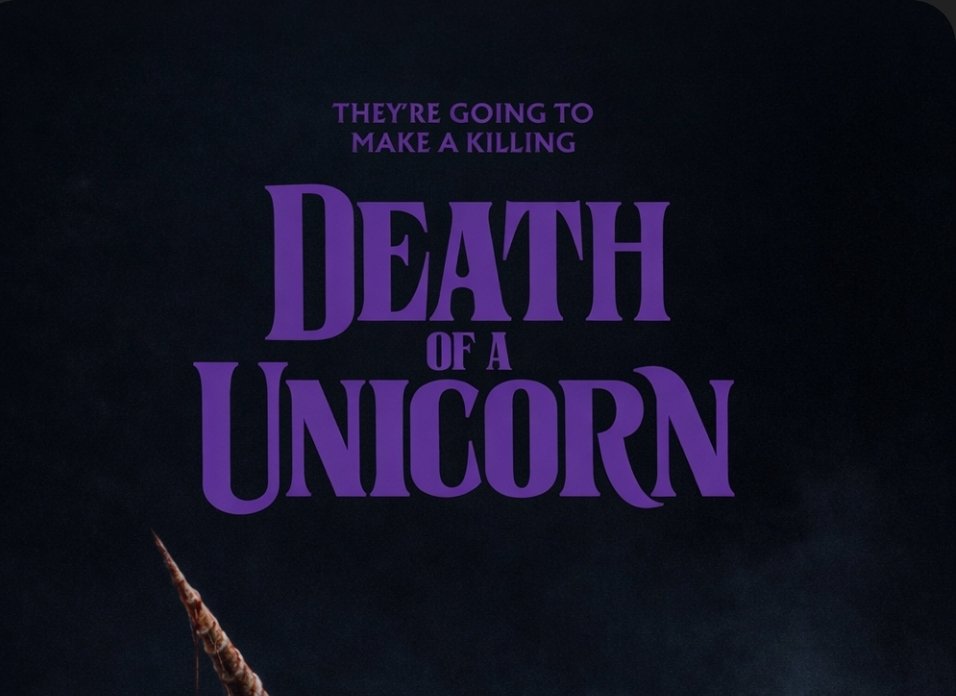
Death Of A Unicorn; Introduction
I went into A Death of a Unicorn expecting something strange, maybe bold, and definitely weird. On that front, the movie delivers. What I didn’t expect was just how conflicted I’d feel by the end. This is a film bursting with ideas, ambition, and talent, but it never quite figures out how to bring all of its elements together into a satisfying whole. By the time the credits rolled, I felt entertained in moments, frustrated in others. Mostly disappointed by what could have been.
Film Overview
A Death of a Unicorn, coming in 2025, marks Alex Scharfman’s feature directorial debut as he writes and directs this dark fantasy comedy horror film. Paul Rudd plays Elliot, a struggling father trying to secure his future, in a strong ensemble cast. Jenna Ortega plays his daughter Ridley, a sharp, cynical teenager still grappling with grief. Supporting roles from Will Poulter, Téa Leoni, Richard E. Grant, and Anthony Carrigan flesh out the film’s wealthy antagonist family and their orbit.
Story and Setup
The plot kicks off with a genuinely intriguing hook. Elliot and Ridley accidentally hit and kill a unicorn while driving to a secluded weekend retreat hosted by Elliot’s billionaire employer. In a panic, they bring the creature’s body with them. The discovery of the unicorn’s miraculous healing powers sparks a rapid spiral of corporate exploitation.
What they don’t realize, of course, is that unicorns are not solitary creatures. The rest of the herd is very much alive — and very much not forgiving.
On paper, this setup feels like the perfect blend of creature feature, satire, and moral fable. In execution, though, the film struggles to maintain momentum and tension, often circling the same ideas without pushing them far enough.
Scharfman’s Vision and Themes
Reimagining the Unicorn
One of the film’s strongest aspects is its rejection of the typical sparkly, child-friendly image of unicorns. Instead, Scharfman draws on medieval lore, portraying unicorns as dangerous, untamable beasts. That influence is clear, especially in the creature design and overall tone.
This darker reinterpretation is exactly the right instinct. The unicorns feel ancient, territorial, and genuinely threatening — at least conceptually. It cleverly highlights the timely idea of modern billionaires treating mythical creatures as mere ‘resources. Even if the execution doesn’t always live up to the promise.
Corporate Greed as Horror
The film targets pharmaceutical companies and ultra-wealthy families with sharp satire Who treat everything — even magic — as something to monetize. The Leopold family serves as an exaggerated stand-in for real-world corporate dynasties. While the commentary is clear, it’s also extremely blunt.
Personally, I found the messaging obvious to the point of being repetitive. The movie keeps reminding us that rich people are greedy and morally bankrupt, but it rarely digs deeper than that. There’s potential here for sharper, more uncomfortable satire that never quite materializes.
Tone and Genre Identity
Scharfman bills the movie as a horror-comedy, but for me, it leans far more heavily into dark comedy than actual horror. The humor is dry, absurd, and sometimes genuinely funny — but it consistently undercuts tension. Even during scenes where characters are being hunted or killed, the tone stays oddly playful.
This creates a strange disconnect. The characters may be terrified, but I rarely felt that fear as a viewer. Instead of blending comedy and horror seamlessly, the film often flips between them. This makes the experience feel uneven rather than intentionally chaotic.
Visual Effects and Creature Design
Practical Effects vs. CGI
The unicorn designs themselves are fascinating. They resemble Ice Age animals more than fantasy creatures, with thick musculature, predatory teeth, and animalistic movement. Each unicorn has a distinct form — from a goat-like foal to a massive, bull-like alpha. This helps sell the idea of a real species rather than a magical novelty.
That said, while the designs impressed me, the execution didn’t always hold up. The practical puppets are clearly made with care, but the heavy reliance on CGI to enhance them often backfires. In several scenes, the digital effects looked weightless or unfinished, pulling me out of the moment instead of immersing me.
Ironically, this inconsistency made the film feel less convincing than older creature features that relied almost entirely on practical effects.
Visual Continuity Issues
I also couldn’t ignore some distracting continuity problems. Scenes during the unicorn rampage jump inexplicably between nighttime and morning light, which made the timeline confusing. On top of that, the unicorns’ intelligence seems to fluctuate depending on what the plot needs. For example capable of elaborate revenge one moment, yet unable to avoid obvious hazards the next.
Music and Soundtrack Choices
The film’s score has a strange backstory, and it shows. John Carpenter originally composed a full synth score, which was later replaced by Dan Romer and Giosuè Greco. While the final score isn’t bad, I couldn’t help wondering how much stronger the atmosphere might have been with Carpenter’s music intact.
Some of the needle drops are fun — particularly the ironic use of upbeat songs during violent moments. But overall the music never became a defining element for me.
Performances
Jenna Ortega: The Emotional Anchor
Jenna Ortega is easily the film’s emotional center. As Ridley, she brings a grounded, believable sense of grief and moral clarity to an otherwise exaggerated world. While the role shares DNA with characters she’s played before, I thought she gave it enough nuance to feel sincere rather than recycled. Her performance made me wish the film had focused more on the father-daughter relationship. Which often gets sidelined in favor of satire and gore.
Paul Rudd: A Miscast Lead?
Paul Rudd’s casting is the most puzzling choice here. He plays Elliot as subdued and emotionally flat, which I understand is intentional — but in my opinion, it doesn’t work. The character’s moral decline lacks sharpness, and Rudd’s natural likability falls flat without anything compelling to replace it. Instead of feeling conflicted or dangerous, Elliot often comes across as passive, which weakens the film’s emotional stakes.
Supporting Cast Highlights
Will Poulter is a standout. He delivers an unhinged, hilarious, and fully committed performance as Shepard Leopold. Every scene crackles with energy, showing he knows exactly the kind of movie he’s in.
Anthony Carrigan also deserves praise for injecting dry, physical comedy into a role that could have been forgettable.
Richard E. Grant and Téa Leoni are entertaining as the Leopold parents, though I felt Grant, in particular, was underused.
Despite the talent on display, many of these characters remain thinly written, which limits the impact of the performances.
Marketing and Expectations
One of my biggest issues with A Death of a Unicorn has nothing to do with the film itself — it’s how it was sold. The marketing strongly suggested a horror-forward experience, especially with Jenna Ortega at the center. What the movie actually delivers feels closer to a splattery, absurdist B-movie.
Because the trailer showcased most of the film’s best moments, the rest of the runtime felt padded. The middle section drags, repeating the same conversations about unicorn blood and profit instead of escalating tension.
Final Thoughts
By the end, A Death of a Unicorn left me conflicted. There’s a genuinely interesting film hiding inside it. One that could have been a sharp satire wrapped in a tense, terrifying creature feature. Instead, it settles into an awkward middle ground where none of its elements are pushed far enough.
I didn’t hate it. There are moments I genuinely enjoyed, especially the creature concepts and Will Poulter’s performance. But I couldn’t shake the sense that this was a missed opportunity. The film wants to say something meaningful about greed, morality, and exploitation, yet it rarely moves beyond surface-level commentary.
If you go in expecting a goofy, bloody, midnight-movie experience to watch with friends, you’ll probably have fun. But if you’re hoping for clever horror-comedy or biting social satire, you may walk away disappointed.
In the end, A Death of a Unicorn is ambitious, strange, and occasionally entertaining — but it never quite finds its identity. A unicorn that looks fascinating from a distance, but up close, just doesn’t feel magical enough.