Possession (2026) TV Review
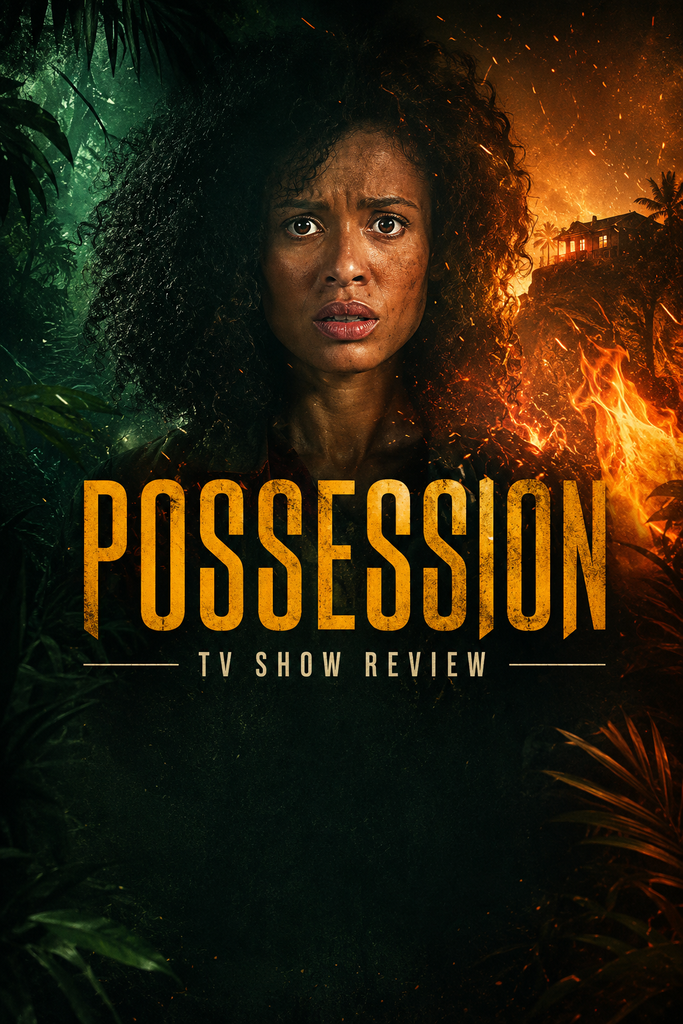
Possession (2026): Why This Brilliant Genre-Bender Buckled Under Its Own Ambition
Sky Atlantic’s five-part limited series Possession is one of the most polarizing pieces of television to hit our screens this year.
Created and written by Karla Crome (Something Very Bad Is Going to Happen) and directed by Storm Saulter (Better Mus’ Come, Sprinter), the series is set between Bristol and Jamaica and splits its timeline between the 1700s and the present day.
It’s a bold, genre-bending experiment that confronts the enduring legacy of colonialism, blending eerie mystery with the vibrant, restless energy of the Caribbean — and it’s one of the most visually striking pieces of television this year.
The genre-blending won’t be unfamiliar to Crome, who appears in the ensemble cast of Netflix’s supernatural wedding thriller Something Very Bad Is Going to Happen.
But where that show leans on the horrors of marriage, Possession goes after something heavier: the lingering legacy of colonialism and identity, wrapped in Gothic horror and warmed by Caribbean atmosphere.
The narrative follows Claudia (Gugu Mbatha-Raw), an intelligent, ambitious bi-racial British lawyer who travels to Jamaica to challenge a £50 million inheritance claim.
She’s thrown into the deep end almost immediately, caught between Cudjoe East (Sheldon Shepherd), who’s filed the claim, and Oliver Connaught (Jonny Lee Miller), the wealthy aristocrat contesting it.
Claudia’s investigation takes a dark turn when she realizes the estate is the same place that haunts her nightmares: Hope Hill, the Connaught family’s former plantation.
The location becomes a character in its own right, lending the show much of its visual and emotional texture.
The Perfect Hook vs. the Confused Horror Pivot
The first act plays as a grounded legal mystery before mutating into something far more volatile. Centring the conflict on a £50 million estate gives the premiere a brilliant, high-stakes hook — a richly textured mystery with an interesting take on horror, one that pushes past the well-worn territory of family secrets and legal manoeuvring.
As the story progresses, though, supernatural elements take over, and the show argues that real-world horror can be just as terrifying as dread and gore.
That the colony turns out to be the true evil isn’t a twist — but the show doesn’t lean on that as a crutch. Instead, it renders that evil through European witchcraft.
The pivot into supernatural horror is where the narrative loses its footing. It becomes frustratingly unclear whether the horror elements exist purely to frighten the audience, or whether they’re meant to function within the story as a defence against a real-world evil.
The reveal of the Obeah man clarifies the intent — Obeah isn’t the threat here, it’s a shield against the true villain: colonialism — but because the thematic delivery is so muddled elsewhere, the idea of the supernatural as a tool for enslaved people’s justice never lands with the emotional weight it deserves.
The Unreconciled Clash of Two Magics
The show’s most critical failure lies in how it frames its supernatural forces. Rather than exploring the friction between them, the script collapses two systems together when the narrative needed to sharpen the contrast:
European dark magic (oppression): Represented by the malevolent spirit Charlotte (Bel Powley), this magic leans into aggressive horror-movie tropes — jump scares, possession, violent doom. It’s the lingering curse of colonization, built to terrorize.
Jamaican Obeah (justice and liberation): Rooted in West African tradition, this practice is used by the enslaved characters as a shield.
Episode 3 folds in elements of science fiction alongside horror — not sci-fi tropes so much as a spiritual, afterlife-driven approach to time travel.
It’s a risky move that has derailed other shows, splitting the narrative between past and present while making its case for the importance of history and reparations. The spirit world becomes a bridge connecting Claudia to her ancestors.
But because the series never clearly separates its two magical systems, the ancestral Obeah magic gets swallowed by the sensationalized visual language of the European ghost story.
The show needed to treat Obeah not as a generic horror trope, but as a protective, time-bending vehicle for historical reckoning — and it doesn’t quite get there.
A Masterclass Cast Rescuing an Uneven Script

What saves Possession from structural collapse is its cast — Gugu Mbatha-Raw, Jonny Lee Miller, Sheldon Shepherd, and Bel Powley all understood the assignment.
Mbatha-Raw gives a fierce, grounded performance as a corporate rationalist undergoing a gruelling psychological unravelling.
The rest of the ensemble delivers equally compelling work:
Bel Powley brings emotional truth to Charlotte, playing a villain who feels sincere and believable, not exaggerating the emotional scenes.
Jonny Lee Miller has to pivot from an innocent man into a deranged, unhinged presence once Oliver becomes possessed, and the shift never pulls focus from the scene — it enhances it.
The actors carry the emotional reality of the characters even when the script drags them too abruptly across genres. Their performances mask the structural faults well enough to keep viewers invested.
The Verdict
Possession is a highly original experiment that doesn’t fail for lack of ideas — it fails for lack of a steadier hand in the director’s chair and the writers’ room, one that could have let its complex themes breathe.
There’s a rich story here, one that pushes past the inheritance plot and deeper into the island’s history and its colonial wounds. Using the afterlife as a sci-fi-style portal remains a fascinating idea.
The writing and acting are exceptional, and the show remains a must-watch for its ambition — even if it proves that sometimes a story can have too many spirits to control.