Thunderbolts (2025) Review
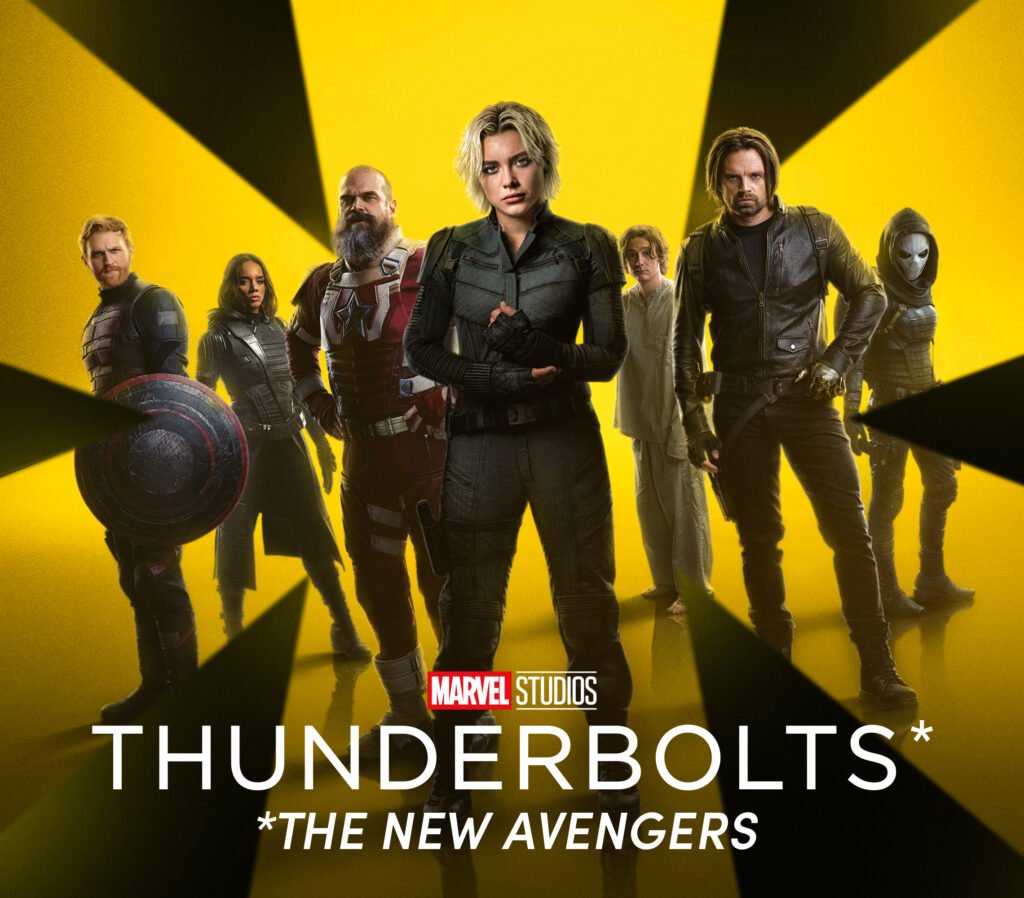
Thunderbolts: Walking In With Expectations — and Watching Them Fall Apart
Before watching the movie Thunderbolts, I was expecting a story more akin to Marvel’s typical plot of “misfit group learns to cooperate.”
Maybe rougher around the edges, maybe darker, but still familiar. What I didn’t expect was how the film would be — emotionally, tonally, and structurally.
This is not a movie that wants to hype you up. It does not rush to impress. It doesn’t bend over backward to entertain.
Instead, it takes its time and asks you to sit with people who are clearly not okay. From the opening alone, it becomes obvious that Thunderbolts is less concerned with spectacle and more interested in emotional aftermath.
What happens to people after the applause fades, after the missions end, after the world stops needing them.
It feels like a movie made by people willing to risk alienating part of the audience. To tell a more grounded, honest story.
Whether that gamble works will depend entirely on what you want out of a superhero film.
A Team Built on Disposability, Not Destiny
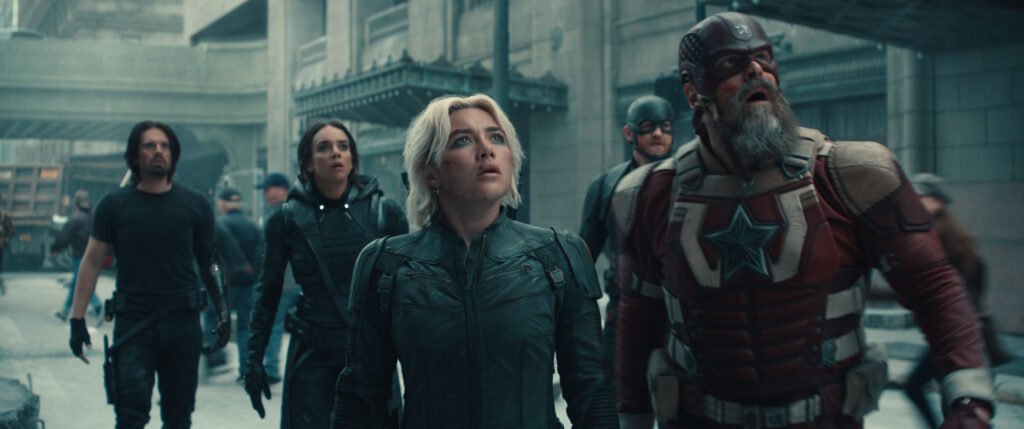
One of the smartest things Thunderbolts does is remove any illusion that this team exists for noble reasons.
These characters aren’t brought together because they’re special. They’re brought together because they’re expendable. Valentina (Julia Louis-Dreyfus) doesn’t see them as heroes, or even assets.
She sees them as problems to be erased. The mission isn’t about stopping a threat — it’s about cleaning up her own mess.
That underlying betrayal hangs over the entire film and gives every interaction a layer of tension.
What I appreciated most is that the movie never pretends this group is destined for greatness. There’s no speech about unity or honor.
These people barely tolerate each other, and sometimes they outright resent one another. Their bond is forged through shared damage, not shared ideals.
That makes their eventual connection feel fragile and earned rather than inspirational by default.
Yelena Belova: Grief Without an Expiration Date
Florence Pugh’s Yelena isn’t just grieving — she’s stuck. And the film lets her be stuck. There’s no montage of healing, no clear “before and after” moment.
Instead, we see someone who has lost her sense of direction entirely. She goes through the motions of life because stopping feels more dangerous than continuing.
That numbness is portrayed with an honesty that’s rare in this genre. What hit me hardest was how little the movie tries to soften Yelena’s depression.
It avoids glamorizing it and rushing past it. Instead, it lets it exist in her body language, her silences, and her tired expressions
Pugh’s performance is full of restraint. Even when Yelena jokes, it feels like she’s using humor to keep herself upright rather than to entertain others. The film trusts the audience to notice that difference — and I did.
By the time Yelena steps into a leadership role near the end, it doesn’t feel triumphant. It feels heavy. Like someone accepting responsibility not because they want power, but because they don’t want anyone else to feel as alone as they did.
Bob Reynolds and the Void as Emotional Horror
Bob Reynolds might be one of the most unsettling characters Marvel has ever put on screen. Not because he’s violent, but because he’s familiar.
Lewis Pullman plays Bob like someone constantly apologizing for existing. There’s a softness to him that makes the eventual emergence of the Sentry and the Void feel tragic rather than exciting.
The Void, in particular, doesn’t feel like a villain in the traditional sense. It feels like intrusive thoughts given form.
The voice that tells you that you ruin everything, that the world would be better without you.
Watching the Void take shape felt less like watching a monster and more like watching a mental breakdown externalized.
What really stayed with me is how the film refuses to simplify Bob’s struggle. There’s no cure. No reset button.
Just people choosing to stay with him instead of abandoning him — and even that feels tentative and fragile. That choice makes the film’s climax feel emotionally honest rather than narratively convenient.
Bucky Barnes and the Weight of a Life Half-Lived
Bucky Barnes’ presence in the film is subtle, almost restrained to a fault. Seeing him as a Congressman is fascinating.
A man who spent decades as a weapon now trying to function inside systems built on paperwork and compromise.
There’s something quietly tragic about that transition, and I wish the film explored it more deeply.
Bucky often feels like the most stable person in the room, which is ironic given his history. He’s not loud, not reactive, not trying to prove anything. He’s just there — listening, observing, stepping in when necessary.
While I understand why the film focuses more heavily on Yelena and Bob. Bucky’s absence from deeper emotional exploration feels like a missed opportunity.
Still, Sebastian Stan brings a sense of lived-in exhaustion that grounds the group whenever he’s present.
Red Guardian and the Film’s Quiet Emotional Anchors
David Harbour’s Red Guardian could have easily tipped into parody, but the film resists that temptation. His relationship with Yelena feels sincere, flawed, and quietly loving.
He’s not a perfect father figure — far from it — but his attempts to connect feel genuine. The movie allows him moments of humor without letting him become a distraction from the emotional core.
Valentina (Julia Louis-Dreyfus), on the other hand, represents the cold machinery behind everything. She’s charming, manipulative, and terrifying precisely because she never doubts herself.
Watching her casually rebrand broken people as symbols made the film’s critique of institutional exploitation feel sharp without being preachy.
Tone, Pacing, and Why This Won’t Work for Everyone
This is a slow film. Intentionally slow. lingers on conversations. It allows awkward silences. It lets scenes breathe longer than most Marvel movies would dare.
That pacing won’t satisfy viewers looking for constant stimulation — and I can understand why some people would check out.
The action is functional rather than flashy. When fights happen, they’re messy and exhausting. No one looks cool for very long.
That choice reinforces the film’s themes. It also means the movie doesn’t deliver traditional “wow” moments.
Personally, I found that restraint refreshing. It felt like the movie trusted me to stay engaged without dangling spectacle in front of me.
The Ending and What It Says About Strength
The resolution of Thunderbolts is emotional rather than explosive. And that’s where it fully commits to its identity. Instead of defeating the threat, the characters acknowledge it.
Instead of erasing pain, they sit with it. That won’t satisfy everyone, but for me, it felt brave. Strength here isn’t about dominance — it’s about vulnerability. About choosing connection when isolation feels safer. About staying when leaving would be easier.
Final Reflection: Why Thunderbolts Stuck With Me
Thunderbolts isn’t clean. It isn’t slick. It isn’t comforting. But it felt honest. It’s a film about people who were never meant to be symbols being forced into symbolic roles anyway.
About mental health treated as something ongoing rather than something to conquer. About survival as a collective act rather than a heroic solo journey. I don’t think it’s perfect.
I do not think it’s universally accessible. But I do think it’s one of the most emotionally sincere films the MCU has ever released — and that sincerity stayed with me long after the credits rolled.