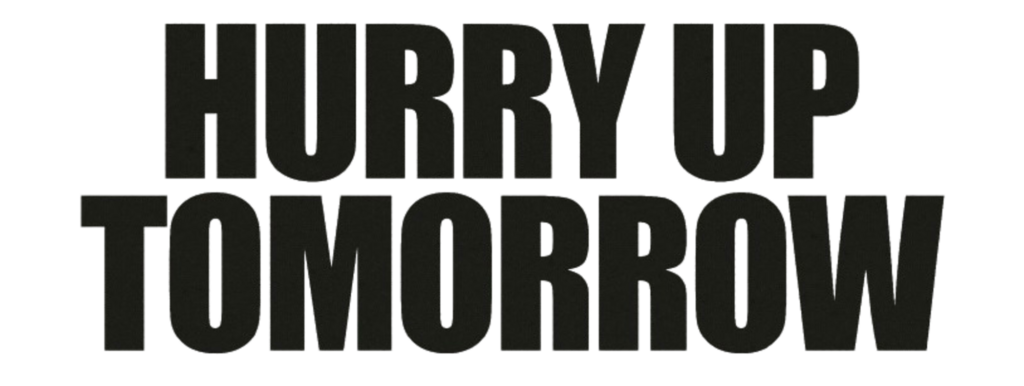
Introduction, Hurry Up Tomorrow
In 2025, Trey Edward Shults directs the American psychological thriller Hurry Up Tomorrow, following his work on It Comes at Night.
It is co-written by Shults, Abel “The Weeknd” Tesfaye, and Reza Fahim. Designed as a companion piece to Tesfaye’s album of the same name. The film stars Tesfaye as a fictionalized version of himself, alongside Jenna Ortega (Wednesday) and Barry Keoghan (The Killing of a Sacred Deer).
The story centers on Tesfaye’s character as he spirals through depression, insomnia, and self-destruction. A mysterious fan, played by Jenna Ortega, draws him into a strange, existential journey.
It’s much more of a mood piece. One that lives inside Abel Tesfaye’s psyche and emotional state rather than following a straightforward narrative path.
Going In With Low Expectations
Going into Hurry Up Tomorrow, I’ll admit my expectations were pretty low. The last time I watched Abel Tesfaye act was in HBO’s The Idol. A series that felt painfully misjudged and often unintentionally embarrassing. Because of that, I expected the film to deliver another self-indulgent mess that favored aesthetics over substance.
To my surprise, Hurry Up Tomorrow is a noticeable step up. It’s far from perfect, but it feels more focused and self-aware than The Idol ever did. Tesfaye seems more comfortable playing a fractured, exhausted version of himself here. And the film at least knows what emotional space it wants to exist in—even if it struggles to fully communicate that to the audience.
Hurry Up Tomorrow pulls you into a dream you’re never meant to fully understand.
Director Trey Edward Shults leans hard into atmosphere. The film floods the screen with disorienting camera movements, warped sound design, and frequent slow-motion sequences. That make everything feel slightly unreal. At times, it genuinely feels like watching someone else’s dream—or nightmare—unfold in real time.
This approach both helps and hurts the film. When it works, it creates an unsettling, immersive mood that fits the story’s themes of insomnia, dissociation, and emotional collapse. When it doesn’t, it feels indulgent and exhausting. It feels as if the film is more interested in how it looks and feels than in grounding the viewer in what’s actually happening.
Performances That Don’t All Land the Same
Abel Tesfaye is undeniably better here than he was in The Idol. But that doesn’t mean his performance is fully convincing. In quieter moments, his withdrawn, hollowed-out presence makes sense for the character. In more emotionally demanding scenes, however, he still struggles to convey depth without feeling stiff or detached in the wrong way.
Where the film really comes alive is whenever Jenna Ortega is on screen. Her performance as the enigmatic fan is easily the strongest part of the movie. She brings an unpredictability and emotional complexity that the film desperately needs. There’s something unsettling about her character. Yet also something strangely empathetic, and Ortega balances those elements beautifully. She kept me engaged, even when the story began to lose its grip on me.
Barry Keoghan also does solid work, though he feels slightly underused. He brings his usual off-kilter intensity, but the script doesn’t give him enough room to fully make an impact.
A Story That Feels Intentionally Fragmented
One of my biggest frustrations with Hurry Up Tomorrow is how confusing the narrative can be. The story unfolds in fragments, often jumping between moments without clear transitions or explanations. While I understand that this is intentional. And meant to reflect the main character’s fractured mental state—it often left me feeling disconnected rather than intrigued.
At several points, I found myself wondering if I’d missed something important or if the film was deliberately withholding information. The movie assumes a lot of familiarity with The Weeknd’s music and persona. Many scenes feel like visual interpretations of specific lyrics or themes from his songs. This will resonate deeply if you’re already invested in his work. If you’re not, a lot of the symbolism and emotional weight can feel vague or inaccessible.
Themes That Don’t Fully Come Together
The film clearly wants to explore fame, self-loathing, obsession, and emotional numbness. However it never fully ties these ideas together in a satisfying way. Instead, they exist as scattered impressions—strong in isolation, but weaker as a cohesive whole. I appreciated the ambition, but I couldn’t shake the feeling that the movie was more interested in expressing pain than in examining it.
Final Thoughts
By the time the credits rolled, I felt conflicted. On one hand, Hurry Up Tomorrow is visually striking and occasionally haunting, with a standout performance from Jenna Ortega that elevates the entire experience. On the other hand, its disjointed storytelling and uneven performances kept it from fully landing for me.
In my opinion, this is a film that will mean far more to devoted fans of The Weeknd than to casual viewers. Without Ortega anchoring it, I don’t think I would’ve stayed as engaged as I did. Hurry Up Tomorrow is ambitious, moody, and frustrating—a film that reaches for something profound but only partially gets there.