East of Eden Netflix Review
Introduction (Warning Contains Spoilers)
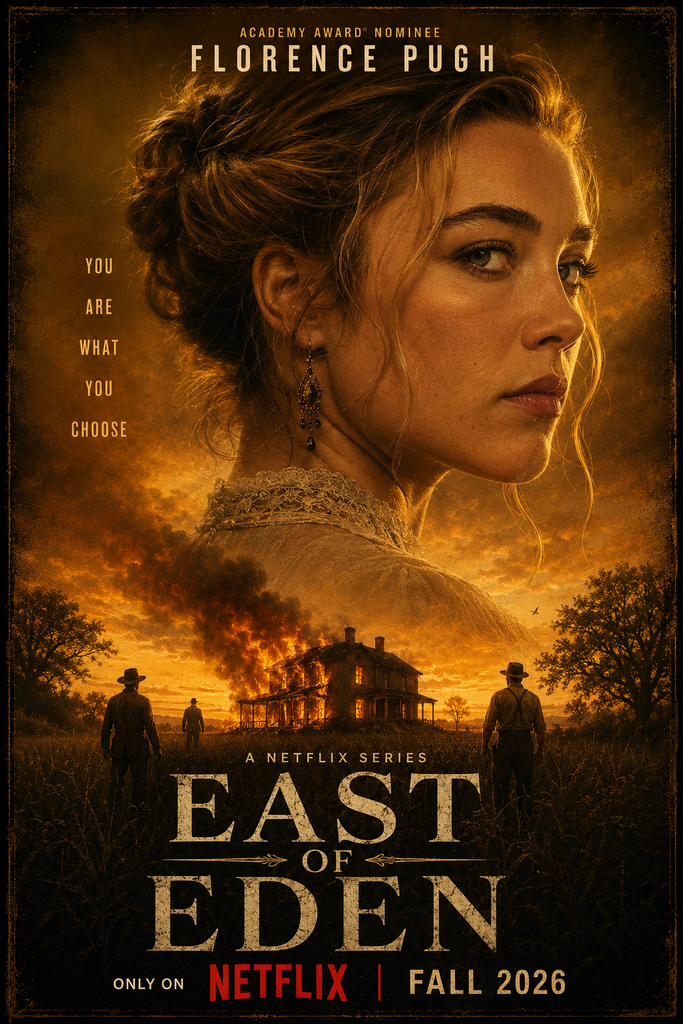
Adapting John Steinbeck‘s East of Eden has always presented an enormous challenge for filmmakers. The novel spans generations, locations and decades of family conflict.
It also combines biblical symbolism with questions about morality, identity and personal responsibility.
Zoe Kazan‘s seven-part Netflix adaptation finally has enough space to embrace that complexity.
The show premiered on October 1, 2026, with all of the seven parts being streamed.
As the lead character, Florence Pugh stars as Cathy Ames, the most intriguing and terrifying character of Steinbeck’s book.
Christopher Abbott and Mike Faist play brothers Adam Trask and his unpredictable brother Charles.
Hoon Lee plays Lee, the philosophical center of the Trask family. While Joseph Zada and Joe Anders play Adam’s twin sons, Cal and Aron.
The outcome is a grandiose family drama, which takes Steinbeck’s tale seriously.
It also makes significant changes to the way his characters are understood.
A Different Approach to the Novel
One of the main advantages of the Netflix series is its length. In fact, the novel by Steinbeck is too long to be adapted into a two-hours film easily.
As a result, Elia Kazan‘s well-known adaptation of 1955 was focused on the latter part of the novel. Of course, this movie was very popular mainly thanks to James Dean who played Cal.
Additionally, it paid a lot of attention to problems between Cal, Aron and their father.
However, Zoe Kazan decided to follow quite a different way.
Her adaptation starts much earlier, focusing on the Trask family from generation to generation. The action begins in Connecticut, while in the end, it ends up in California.
It means that there is enough place for the history of the family, which can explain some conflicts. At the same time, it pays attention to biblical themes of Cain and Abel.
As a consequence, the novel becomes closer to Steinbeck than the movie of 1955. However, the length does not mean the superiority of the series.
Zoe Kazan’s Perspective
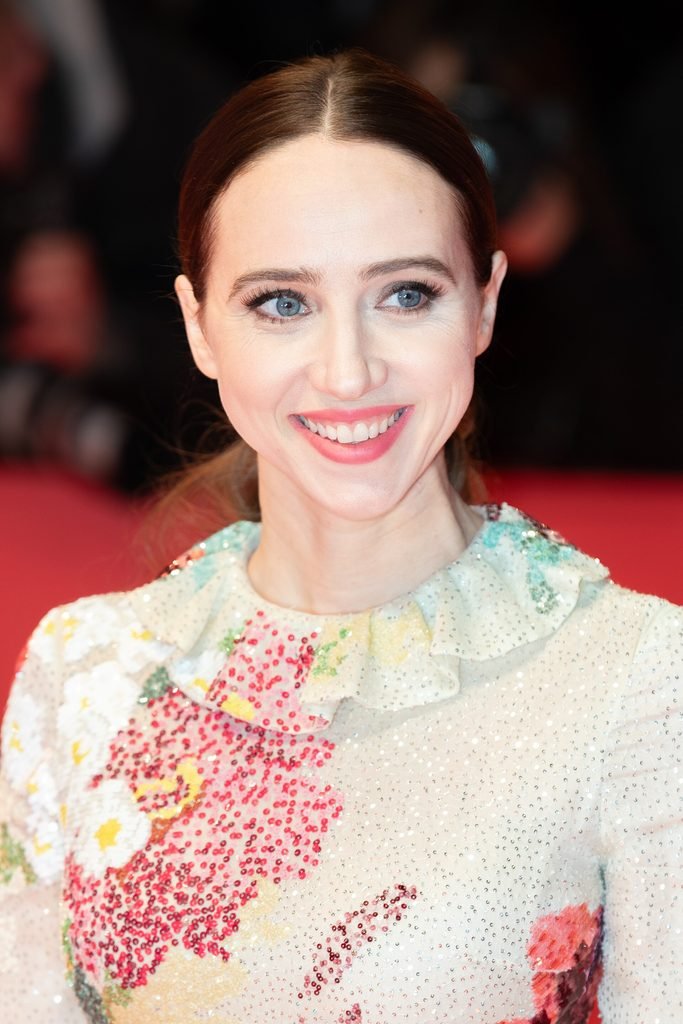
Zoe Kazan has an unusual personal experience of the story. Elia Kazan was Zoe Kazan’s grandfather who directed the iconic film of 1955.
This family connection can easily work against the her. However, she takes this connection as a starting point in order to create her own story.
Firstly, Zoe Kazan’s adaptation does not try to copy her grandfather’s film. Furthermore, she does not let the film define how East of Eden should be shot.
The new adaptation is more concerned about the whole story of the family. Moreover, it focuses on Cathy more and puts her at the centre of the plot.
Thus, the emotions of the plot change dramatically. Now we see Cathy not from the eyes of the men but with her.
As a result, it gives the opportunity to explore the motives that influence her behavior. The behavior of Cathy cannot be justified.
However, it gives an opportunity to explore why one becomes capable of such cruelty.
Florence Pugh as Cathy Ames
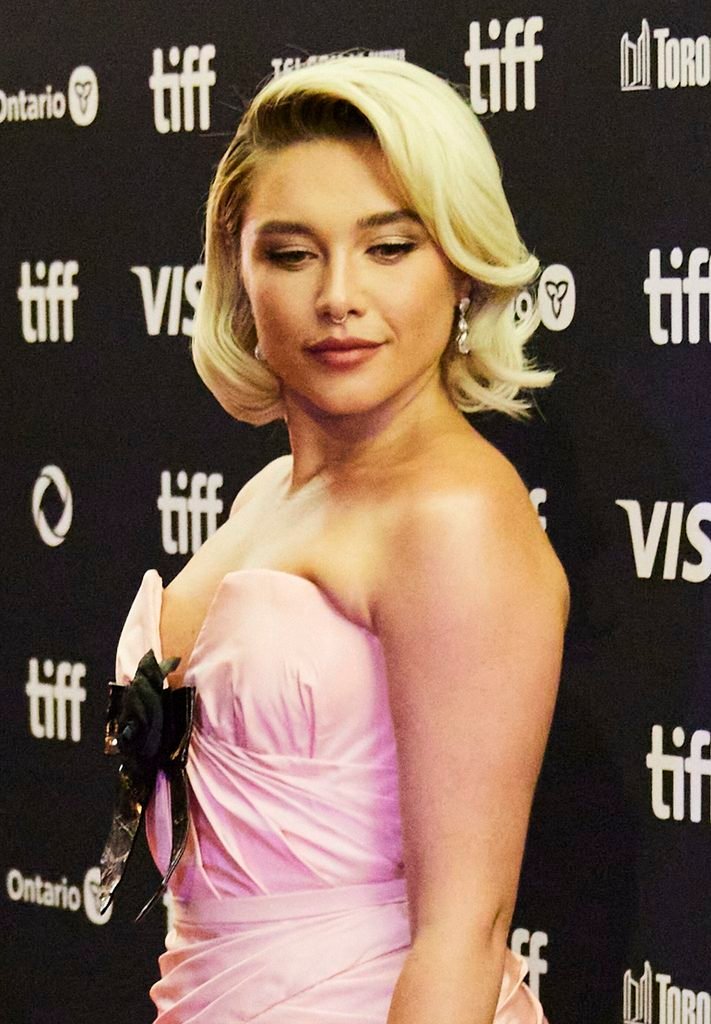
Florence Pugh gives the series its most immediately magnetic performance. Cathy is a notoriously difficult character to portray.
She can easily become a one-dimensional symbol of evil. Pugh avoids that trap by constantly shifting between different versions of Cathy.
At times, she appears charming, vulnerable and almost impossibly innocent. At other moments, that performance disappears completely.
What remains is someone calculating, detached and frighteningly cold. Pugh makes the transition between those identities remarkably subtle.
A smile can become threatening because the audience knows what might exist behind it. Her performance also understands that Cathy needs to remain unpredictable.
If viewers completely understand her motivations, some of her power disappears. Pugh instead allows contradictions to remain within the character.
There is vulnerability without innocence. There is intelligence without wisdom.
There is a desire for freedom that becomes increasingly destructive. The series does not remove Cathy’s darkest actions to make her more sympathetic.
Her behaviour remains horrifying even when the story explores the experiences behind it. That balance is one of the adaptation’s greatest achievements.
Christopher Abbott as Adam
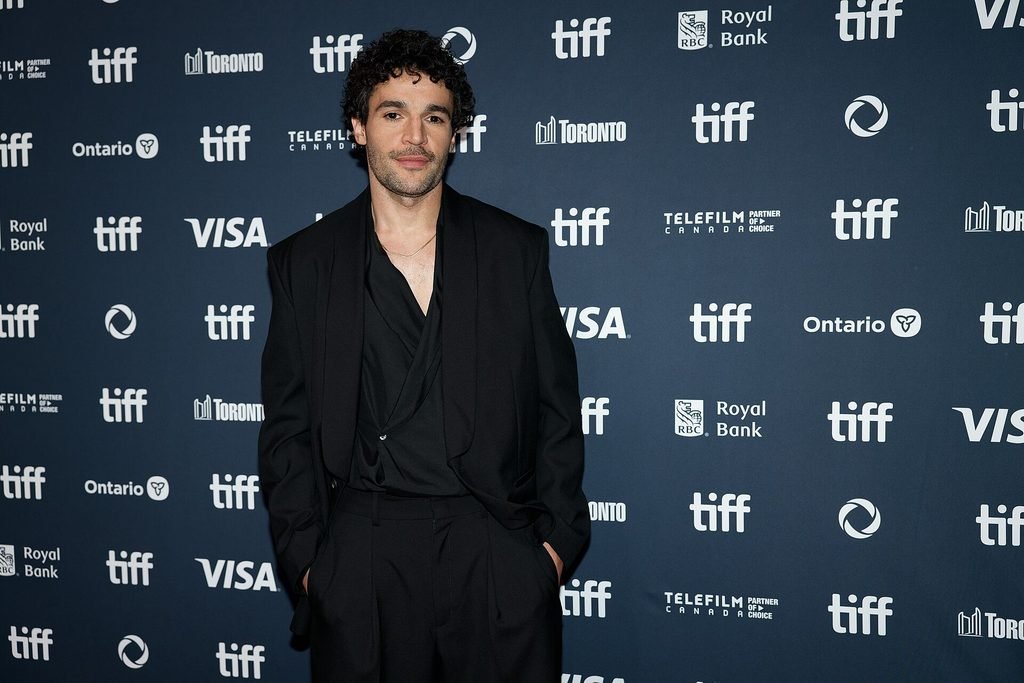
Christopher Abbott takes a very different approach to Adam Trask. Adam could easily become passive compared with the more dramatic characters around him.
Instead, Abbott portrays him as someone carrying enormous emotional damage. His quietness becomes part of the performance.
Adam often appears physically weighed down by experiences he cannot properly process. His posture, expressions and increasingly tired appearance communicate his emotional decline.
The performance becomes especially effective as the story moves across decades. Adam changes physically as his family circumstances deteriorate.
His relationship with Cathy leaves a lasting mark on him. However, the series does not reduce Adam to a man destroyed by one relationship.
He is also a father struggling to understand his children. His inability to recognise himself in Cal becomes particularly painful.
Abbott makes Adam sympathetic without turning him into a perfect father. That distinction is important because Steinbeck’s characters rarely fit neatly into categories.
Mike Faist as Charles
Mike Faist brings considerable intensity to Charles Trask. Charles represents another side of the Cain and Abel relationship.
Where Adam is often restrained, Charles is volatile. His anger frequently appears to be rooted in a desperate need for recognition.
Faist avoids playing him as simply aggressive or jealous. Instead, Charles feels like someone who has spent his life believing he was overlooked.
His relationship with his father becomes central to understanding his behaviour. That emotional wound helps explain the hostility between Charles and Adam.
The performance also creates an important foundation for the conflicts that follow. Charles is not simply a villainous brother.
He is another damaged person caught within a family structure he cannot escape.
Hoon Lee’s Exceptional Performance
Hoon Lee is one of the most important performers in the entire series. His portrayal of Lee gives the adaptation an intellectual and emotional centre.
Lee is more than a servant within the Trask household. He becomes a trusted companion, adviser and emotional anchor.
His relationship with Adam develops into one of the series’ most meaningful connections. The friendship works because Lee sees things Adam cannot see himself.
He understands the family’s patterns and recognises the danger of repeating them. The series also gives considerable attention to Lee’s experiences as a Chinese-American man.
He understands that racism limits how openly he can present himself. His outward behaviour therefore becomes partly performative.
He can appear submissive when circumstances require it. Away from that pressure, his intelligence and confidence become much more apparent.
Hoon Lee handles these contrasting sides with considerable subtlety.
The result is a character who challenges the prejudices of the period without becoming merely symbolic
Cal and Aron
Joseph Zada and Joe Anders have inherited another important conflict from the story. Cal and Aron are the second generation who repeat the cycle set forth by Adam and Charles.
The similarities to Cain and Abel are more apparent in the case of Cal and Aron. Cal desires to win his father’s affection.
At the same time, he is troubled by the idea of what Adam perceives in him from Cathy. This creates a psychological problem for him which he cannot resolve.
Aron takes a different place within the family. He seems closer to the ideal Adam wishes his children to be like.
This causes tension between the brothers. In Zada, Cal is portrayed in an agitated and vulnerable manner.
Cal’s performance shows the audience the anger which stems from the desire to gain the recognition.
In Anders, Aron serves as a great contrast to Cal.
The Theme of Timshel
One of the most important ideas in East of Eden is the concept of timshel. The Hebrew word is associated with the idea that a person may choose.
That concept sits at the heart of Steinbeck’s exploration of good and evil. People may inherit circumstances, personalities or family histories.
However, those influences do not necessarily determine their final choices. The Netflix adaptation places this idea much closer to the centre of the story.
That is significant because it changes how the audience interprets the characters. Cathy’s behaviour raises questions about whether people are shaped by nature or experience.
Cal’s story asks whether someone can escape the mistakes of their parents. Adam struggles with the consequences of his own choices.
Charles demonstrates how unresolved pain can pass between generations. The series therefore becomes more than a family melodrama.
It becomes an examination of whether people can break patterns created before they were born. That idea remains one of the novel’s most powerful themes.
Good, Evil and Human Choice
The series constantly questions the concept of good or evil characters. Cathy is the first character whose situation is used as an example.
Though she performs extremely negative deeds, her experience is still questioned. This poses an interesting dilemma to the viewer.
Is it possible to justify the behavior of an individual with his or her experiences? The series does not have to give an easy answer.
Instead, it constantly returns to the conflict between circumstances and choice. This makes the plot remarkably relevant.
Upbringing and traumatization remain the subjects of debates nowadays regarding behavior and choices.
The series does not claim that tough experiences inevitably make one a bad person. Instead, it questions how people deal with the circumstances they were born into.
It is here that the concept of personal choice comes into play.
The Role of Women and Cathy
Another change in the plot made by Kazan is the focus on Cathy. The original presentation was a product of its era.
This new series takes a modern approach to Cathy. It considers the limitations faced by women during the late nineteenth and early twentieth centuries.
Cathy realizes that men hold all the cards. She also knows very well that she can be manipulated very easily by the people around her.
Her reaction is extreme. She tries to manipulate others before they try to manipulate her. This does not justify what she does.
However, it helps us understand her motives better. Thus, the series wonders if Cathy’s brutality is independent of her surroundings.
This question gives Pugh a lot more to work with. This also makes Cathy a crucial figure in the overall discussion of freedom within the series.
Cinematography
The visual design of East of Eden is one of the production’s major strengths. The series uses two principal cinematographers.
Stuart Dryburgh photographed episodes one through four, while Sam Chiplin handled episodes five through seven.
Their work gives the series a richly textured period appearance. The imagery often balances enormous landscapes with intimate character photography.
That contrast suits a story concerned with both family history and individual emotion.
The rural environments create a sense of scale around the characters. Yet the camera frequently moves back into close, personal spaces.
Faces become particularly important during emotionally complicated conversations. Small expressions can reveal tensions that the dialogue deliberately leaves unresolved.
The lighting also contributes to the darker atmosphere surrounding Cathy. Some scenes feel warm and inviting before becoming psychologically unsettling.
Other sequences are noticeably shadowed, creating a sense of confinement. This visual approach reflects the moral uncertainty at the heart of the story.
There is rarely a completely comfortable distinction between light and darkness. For many viewers, though, the shadow-heavy photography will reinforce the series’ dramatic mood.
New Zealand Becomes California
Possibly the most unexpected choice made during production regards the location.
Despite the strong connections of Steinbeck’s narrative with California, the series was produced in New Zealand.
Production teams moved over 6,000 miles away from the location of their story.
Obviously, such a choice seems to be a big disadvantage at first glance.
Still, there was something that could be found in New Zealand but not in modern California.
Indeed, there were significant changes of the landscape since the times of Steinbeck.
As Kazan explained, it was quite hard to find historical landscapes in California.
New Zealand provided extensive landscapes that could serve as perfect backgrounds for early twentieth century California.
Moreover, there was Victorian architecture preserved in New Zealand.
For example, period buildings and streets of Dunedin could become historical America.
Queen’s Garden was used for exterior period scenes. Moreover, Dunedin Railway Station was useful for production team too.
The landscapes of the countryside were suitable for Salinas Valley landscapes. Thus, there is a fascinating cinematic illusion created here.
Of course, the audience understands that the production was made in New Zealand.
But landscapes make the impression of another time and place anyway.
Production Design
Grant Major, the production designer, must be praised for creating the physical world. Major has already worked on such massive projects as The Lord of the Rings trilogy.
For East of Eden, the production design crew has created the environments of different eras. The Trask houses were created with the knowledge of people who inhabited them in mind.
Even small things have been used to show that generations of families lived there. This way objects are incorporated into the narration.
A piece of furniture, pictures and worn spots do not require any explanation. Such approach suits a movie about inheritance well enough.
Characters not only inherit names and property. They inherit hopes, memories and pains. The physical environment reflects this notion.
In a way houses become archives of all events which happened inside. Even Netflix has emphasized the amount of attention paid to this aspect during production.
The American Dream
Another crucial theme is that of the American dream. The story occurs at a time when America is undergoing many transformations.
The characters are striving to create families, businesses, and futures. However, just because they achieve success does not mean they find happiness.
The Trask family proves that wealth and opportunity do not preclude emotional devastation.
Here, the role of the setting in California is very important. The setting symbolizes both hope and competitiveness.
The land provides wealth, but it can also subject its inhabitants to loneliness and suffering. It is this paradox which makes the setting an important symbol.
The characters are trying to build better lives and yet cannot escape from their past.
Family and Inheritance
The most powerful theme may ultimately be inheritance. The series repeatedly asks what parents pass down to their children.
In certain cases, the inheritance is tangible. It includes land, financial gains, and even last names.
But in more cases than not, the inheritance takes on an emotional form. Children take over their parents’ hopes and dreams.
They also become heirs to problems not entirely of their own making. Adam and Charles create the first motif of inheritance.
Cal and Aron reiterate the second motif of inheritance. This creates the element of tragedy in the series.
But the theme of timshel offers resistance to the theme of inevitability.
What Works
The greatest triumph is in how big the adaptation is. The division into seven episodes allows for Steinbeck’s novel to flourish.
The characters are presented slowly, not forced into dramatic situations. This multi-generational aspect makes the themes of legacy and repetition very strong.
Another huge asset is Florence Pugh. She manages to imbue Cathy with enough subtleties to be interesting but does not take away her capability of being cruel.
Hoon Lee is also outstanding in his role. His performance brings warmth, intellect, and emotional stability to a problematic family.
Christopher Abbott brings the emotional depth to Adam in a restrained way.
Mike Faist provides plenty of energy to Charles.
The younger actors continue this trend in Cal and Aron.
The cinematography and locations also provide a fantastic period setting.
New Zealand becomes surprisingly convincing as early twentieth-century America.
Production design adds a lot of details to this world.
Most importantly, the TV series realizes that the East of Eden is more than just a family drama.
It is more about the choices people make.
What Does Not Work
The grand scope of the series sometimes works against it. There is an immense quantity of material in the story.
Even seven episodes will not suffice to cover all characters equally. Some plot lines are thus more evolved than others.
The pacing can at times be slow in the earlier episodes. Patience may be required from those expecting fast-paced drama.
The dark tone of the film is another possible flaw. Some shots are so shadowed that it can become hard to see important visual details.
The literary aspect of the series is taken very seriously. It sometimes results in a deliberately crafted dialogue.
Some people may think that there is too much symbolism. Others will appreciate the approach to discussing Steinbeck’s literary ideas.
The broader perspective of Cathy may prove controversial.
Reimagining a well-known literary villain inevitably makes the original character different.
The series does not blindly copy Steinbeck. It discusses his work in an engaging manner.
This is the most powerful asset and vulnerability of the series.
Overall Verdict
East of Eden is a striking and visually arresting film based on an incredibly hard novel to adapt.
Its best feature is that it does justice to the scale of Steinbeck’s story. The seven episodes allow the characters in each generation to come to life.
Florence Pugh makes Cathy an intense, scary, and complex character. Christopher Abbott portrays Adam with quiet devastation. Mike Faist makes Charles volatile and vulnerable.
Hoon Lee offers one of the most memorable performances of the series with Lee. Joseph Zada and Joe Anders make the family rivalry move into the next generation.
The cinematography makes the series look grand and intimate. New Zealand turns out to be surprisingly good replacement for Steinbeck’s California.
The production design adds to the idea of changing America. There are issues, namely pacing and problematic lighting.
Some viewers may also find the adaptation’s psychological reinterpretation of Cathy challenging.
However, those choices make the series more than a simple reproduction of the novel.
Zoe Kazan has managed to create an adaptation that realizes the significance of the crucial Steinbeck’s question.
Do people live their lives according to their inheritance or do they have a choice to be someone else?
This very question makes the novel unique.
Thus, the adaptation is not only the retelling of the classic American novel.
It is the new interpretation that takes advantage of the plot of Steinbeck’s book and studies such notions as family, morals, trauma and freedom.
For those who know the 1955 movie, it is quite different experience.
For those who read the novel, it offers much more of the plot than all previous adaptations.
Above all, it sees the characters as complex personalities, not merely symbolic figures.
Therefore, East of Eden is a meaningful, ambitious and sometimes even creepy part of modern literary TV.