
Klara And The Sun Movie Review

A Dystopian Story About Love and Humanity (Warning This Review Contains Spoilers)
Director Taika Waititi takes on an ambitious challenge with Klara and the Sun, a science fiction drama adapted from Kazuo Ishiguro‘s acclaimed 2021 novel.
In a society characterized by elitism, genetic modification, and artificial intelligence, the movie examines how it feels to be loved and the possibility that machines can have emotions similar to those of humans.
The plot revolves around Klara (Jenna Ortega), who is an Artificial Friend created with the objective of keeping company to children who feel alone.
Klara watches the outside world through a shop window and has an extraordinary power of observation.
She becomes part of the family of Josie (Mia Tharia), a teenager suffering from an ailment.
Josie is a victim of a lifelong illness caused by a risky genetic enhancement process called lifting. In this uneven society, parents are willing to take drastic risks to secure their child’s future, despite the dangers involved.
As Klara joins the household, she firmly believes in the healing powers of the Sun for Josie. Her perception of reality is naive, but her unshakeable determination to heal the girl she adores drives the film’s emotional core.
There is a fascinating movie idea about artificial intelligence, parental ambitions, and sacrifices made to protect those we care about.
However, Klara and the Sun fails to unite its powerful themes with its filmmaking approach.
Jenna Ortega Gives Klara a Heart
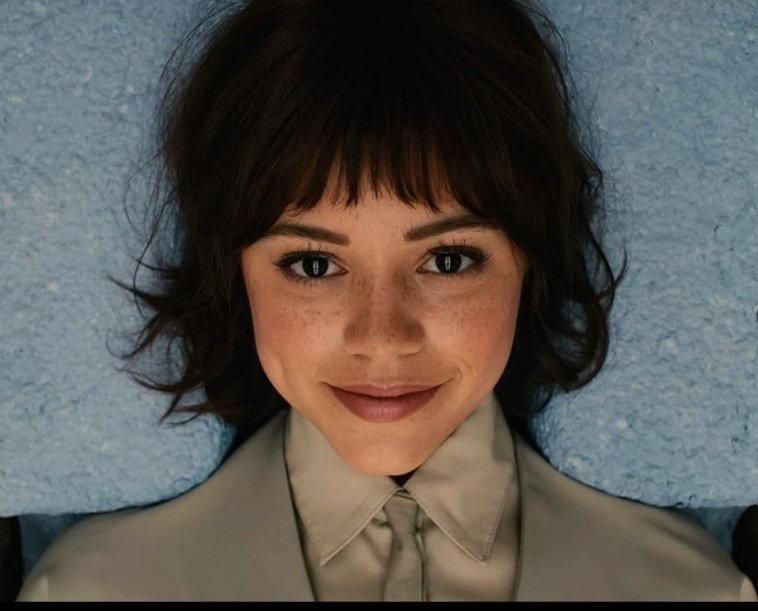
Jenna Ortega is the biggest asset of this movie. With her usual understated acting style and gloomy demeanor, she gives a completely different interpretation of Klara.
Ortega depicts Klara as a robot that has wide-open eyes full of wonder, awkward movements, and genuine desire to comprehend the people surrounding her.
It is worth remembering that Klara does not think about the world the way people do. She notices minute details, interprets actions according to her own logic, and misinterprets the emotions that come along with it.
Ortega’s performance becomes especially convincing when Klara tries to understand human pain and suffering.
She is obsessed with the idea that she can help by carefully studying and being devoted to the Sun.
Klara’s determination is rather admirable. Even though she cannot comprehend the concept of mortality, she knows that helping Josie is the only thing that really matters.
Ortega provides her with an appealing sincerity, despite the fact that the script tries to make her as quirky as possible.
Sometimes, Klara’s eccentricities look quite unnecessary from the physical point of view. The movie tends to care about making her quirky,
rather than about delving into her unique artificial perception. However, despite all the flaws of Klara, Ortega makes her quite warm and emotionally consistent character.
However, Klara’s acting makes us wonder whether she really loves Josie, or she just follows her programmed purpose. This question is never answered in the movie completely.
Mia Tharia and Amy Adams Add Family Drama
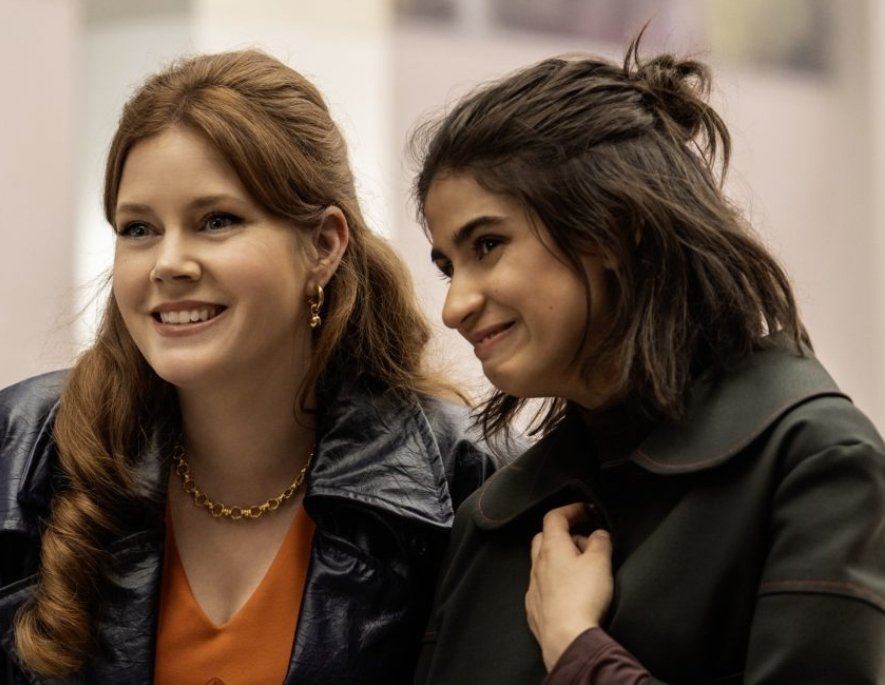
In Mia Tharia’s Josie, there is a natural frailty of someone who is young, sharp-witted, and occasionally irritable in order to hide the fears connected with her disease.
In other words, Josie is not just another victim who needs to be saved. She is a character with her own traits, issues, and attitude towards the future.
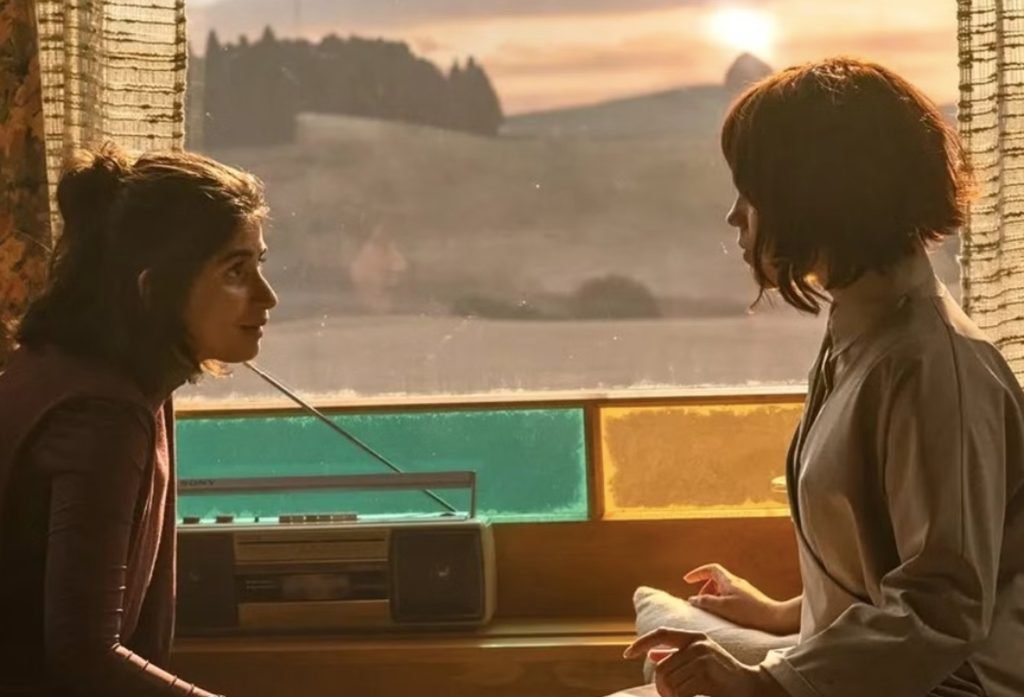
The friendship with Klara gives some of the most interesting moments in the movie. The two characters have totally different approaches to life; however, it turns out that their connection is much deeper than it seems at first.
Tharia and Ortega play very well and create an authentic connection which makes the movie so emotional.
Their scenes show us how the connection could form between two characters who perceive the world completely differently.
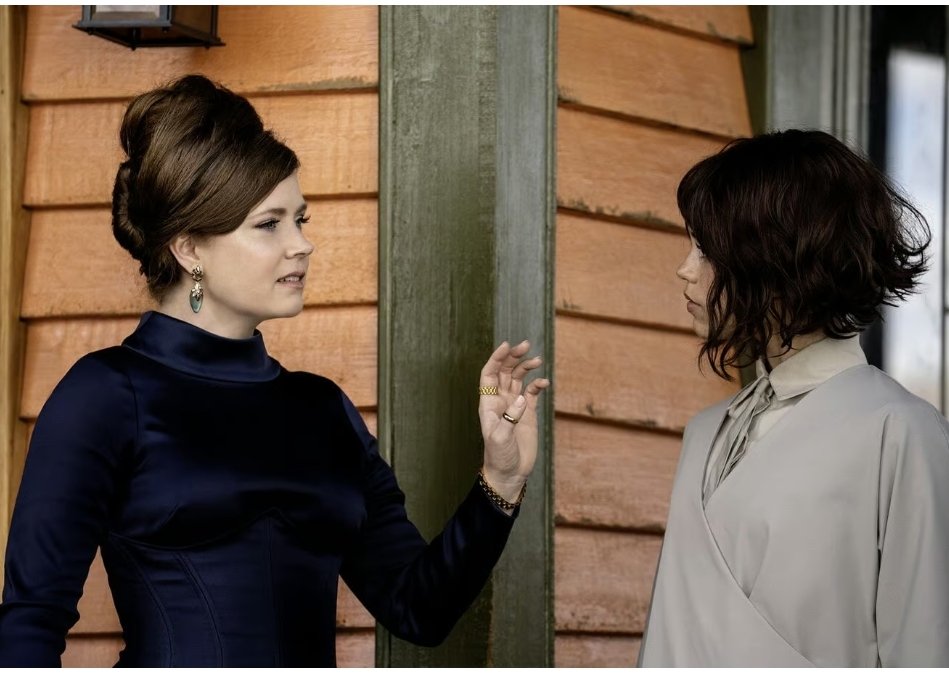
Amy Adams portrays Josie’s mother, Chrissie, who is facing another tragedy after losing one child already.
Her treatment of Klara is harsh and openly aggressive, which is a manifestation of fear and desperation.
Amy Adams portrays Chrissie with a high level of emotional involvement. The viewer sees a parent who feels the necessity of protecting her child along with despair and the desire to control the unpredictable future.
Unfortunately, in some moments, the movie portrays Chrissie’s behavior as too aggressive, making her motivations rather simple.
The most exciting aspect of Chrissie’s character is when she allows her fear to come through her aggression.
Chrissie’s behavior poses many disturbing questions concerning what parents would do to protect their children in a world where genetic engineering means success.
Also bringing warmth to his performance is Aran Murphy in the role of Rick, the childhood friend of Josie who is completely loyal to her.
The connection between Josie and Rick offers yet another viewpoint on the social rifts that occur due to lifting, while Natasha Lyonne and Steve Buscemi are responsible for the brief interlude of oddness.
Despite the fact that there is enough talent among the ensemble, the problem lies in the fact that the script fails to afford sufficient development of the characters.
Taika Waititi’s Whimsical Approach Does Not Always Fit
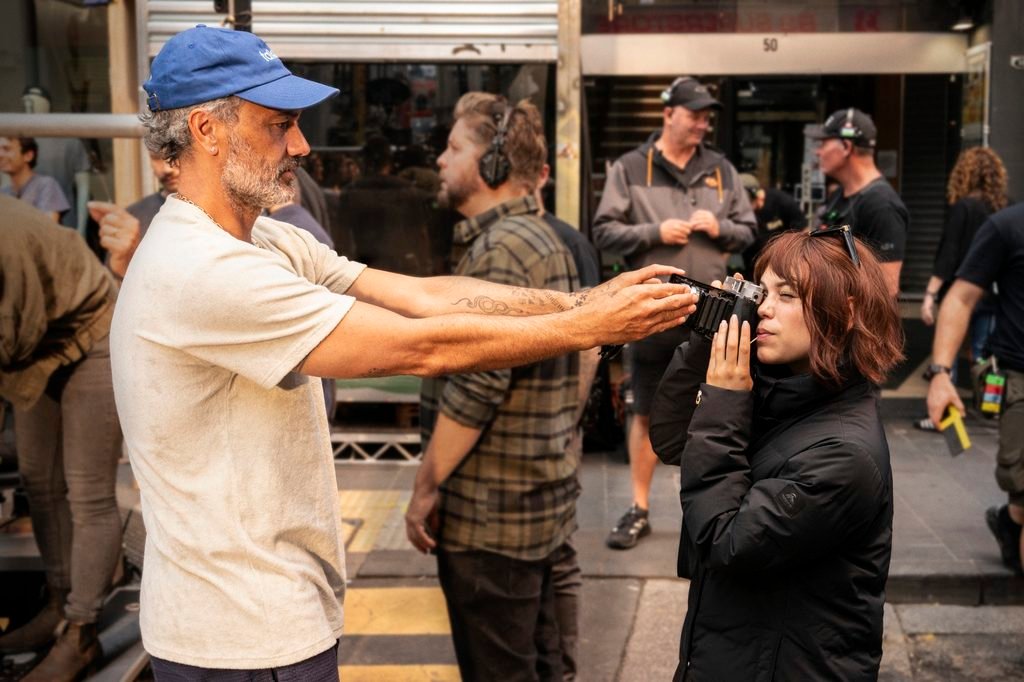
Taika Waititi is known for his ability to blend humor, offbeat characters, and emotional authenticity. All of which work well in most cases, but not Klara and the Sun.
Ishiguro develops the emotional aspect of his novel using subtle methods. The unsettling nature of the novel is created by restraint, uncertainty, and the limited awareness of Klara.
The reader must try to understand the motives of the family and Klara’s inability to understand everything.
The movie is much more direct. Whimsical behavior, exaggeration, and heightened emotions disrupt the atmosphere needed by the plot.
It is not wrong per se to bring elements of humor into the sci-fi drama. Klara’s unique point of view gives enough chances for such touches.
However, sometimes it seems that they are aimed at making Klara likeable instead of deepening the understanding of her.
The end effect is a tone that lacks consistency. Elements of disease, family conflict, and existential crises are balanced by a sense of playfulness which at times detracts from the seriousness of the subject matter.
Waititi’s filmmaking works best when he lets Ortega portray Klara’s point of view without having to over-explain it.
Her interest in human behavior can be quite touching because of her inability to comprehend what she sees.
The movie could do well with this approach more often. By explaining the emotions and going too far into melodramatic territory, it takes away from the ambiguity that makes the story intriguing.
A Vibrant Visual World Built Around the Sun
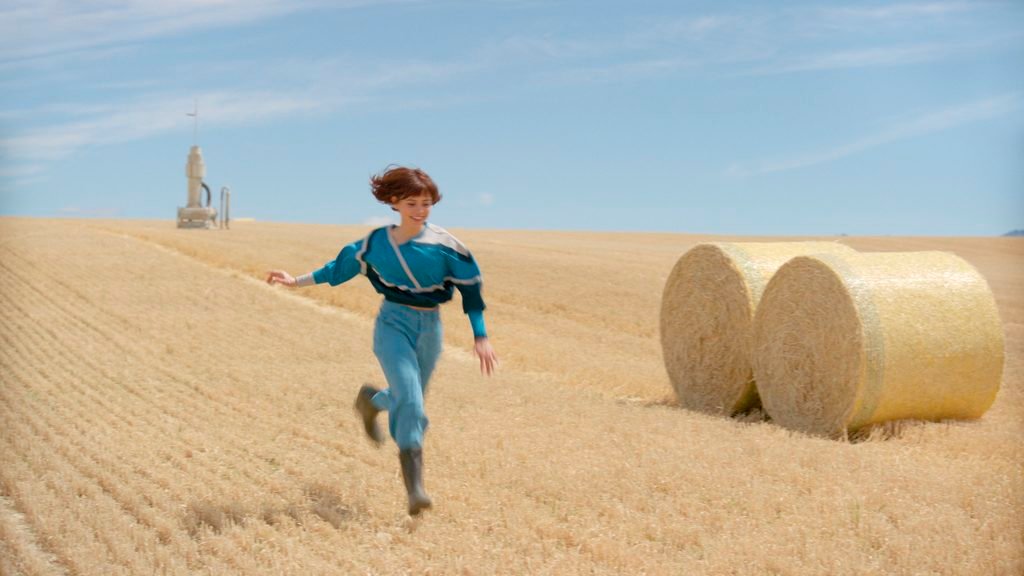
There are some interesting visual decisions in this film. The cinematographer of Klara and the Sun, Mike Berlucchi, saturates his film with vibrant colours, warm sunlight, pastel shades, and picturesque landscapes.
It is not a typical way of showing a dystopia in the science fiction genre. Usually, the future in the films about dystopia is shown as an exclusively grey and dark world, while in this film the filmmakers decided to show a seemingly idyllic world.
The focus on light is also in line with Klara’s worldview. As a solar-powered companion, Klara sees the Sun as something positive, able to offer energy and healing.
Photographing golden hour, using lens flares, and shooting upwards are all visual references to her faith in its power.
Such pictures become one of the most recognizable characteristics of the movie. Despite its social injustices, the brightly colored world is full of promise.
Moreover, the camera tries to depict the way Klara perceives reality as an artificial being. Digital glitches, disoriented visions, and other distortions of vision represent how Klara interprets reality or reinterprets it.
All of these techniques make the movie different from the ordinary dystopian film. They show the viewer what the world can look like to an artificial mind.
Sometimes, however, the beauty becomes too forceful. It is possible for the beautiful nature of the film to undermine some of the sinister undertones that the story holds.
It is difficult to understand why a society would allow children to be endangered in the name of genetic perfection.
The photography of the movie serves its purpose, but sometimes it seems to overshadow the underlying theme of the film.
The Dangers of Lifting and a Society Obsessed With Success
One of the novel’s most troubling ideas concerns lifting, the genetic enhancement procedure that gives children a competitive advantage while exposing them to potentially devastating consequences.
The idea becomes an excellent vehicle to make social comments. The parents find themselves in an impossible situation as not participating might mean leaving their children at a disadvantage in an increasing number of situations.
This is relevant since the original premise forces its audience to consider a possibility that is very disquieting – a parent would intentionally put his or her child at great risk because society has made it a necessity to do so.
In the absence of the full impact of such a dilemma, the social commentary offered in the movie would not have been as disturbing.
The society portrayed in the movie is unequal, but the impact of the said inequality often gets overlooked.
There are also some concerns related to the perceived value of children in Klara and the Sun. When success in academics and high social standing is the measure of value for a kid, the pressure to manipulate his or her biology becomes understandable.
The novel Klara and the Sun has everything needed for an interesting exploration of the themes mentioned above. However, it often chooses softness over critique.
The Changes From Kazuo Ishiguro’s Novel
Making a film out of a story such as Klara and the Sun calls for some hard choices. Everything cannot be said in exactly the same way.
But a certain kind of language needs to be found that would allow to convey the original story’s philosophy and emotion.
The adaptation written by Dahvi Waller and Waititi follows the basic concept of having a relationship between Klara and Josie but alters many aspects of the surrounding story.
For example, the history of Josie’s family undergoes some alterations. The fact that the loss of the girl’s sister, Sal, is made to become one of those disturbing results of lifting in the novel, the movie tells us something else about Sal’s death. That reduces the impression of a family already aware of the devastating results of the procedure.
That weakens the problem of Chrissie’s morality. Her intention to protect Josie is not anymore related to the fear of the fact that the parents’ ambitions may exceed the safety of the child.
Also, the father of Josie, Paul, who is in the novel, disappears in the movie. Instead, there appears the character called Scarecrowbot.
Klara and Chrissie’s relationship is another significant departure. In the novel, the disturbing nature of the family’s intentions is revealed slowly, which enables the reader to experience the same level of confusion felt by Klara. The film makes it clear that Chrissie is hostile much faster.
These narrative choices change the emotional tone of the story. In the novel, uneasiness is built through the accumulation of little clues and unusual behavior. In the film, conflicts are often introduced without any subtlety.
The end of the movie alters the significance of Klara’s journey altogether. In Ishiguro’s novel, the end of the story is a haunting reflection on obsolescence, memory, and the impossibility of love.
Ultimately, Klara is left behind as Josie moves into a new phase of her existence in which Klara does not belong.
The movie ends with a more ambiguous and emotional twist, featuring glitches in Klara’s perception and her fantasy meeting with Josie.
Although it provides emotional resolution, it misses out on the sense of inevitable and disturbing loneliness found in the book.
Can an Artificial Friend Truly Love?
The most significant issue to address in Klara and the Sun is the very essence of love. Klara is a robot created to provide companionship; however, her feelings toward Josie grow more complicated and appear to become something beyond a programmed function.
First of all, Klara starts believing in the Sun. In Klara’s opinion, the Sun symbolizes life and hope, and eventually, she believes in its ability to save Josie.
From a person’s point of view, this could be regarded as an irrational feeling. Klara does not have many resources for comprehending the world around her and sometimes fails to provide logical reasons for the things she does.
However, the genuine devotion and readiness to sacrifice something in order to help Josie makes her belief hard to neglect.
This robot is willing to do everything possible for Josie even without understanding the whole picture and the dangers that lie in her actions.
The issue here is the following: if Klara’s love has been formed under the influence of the purpose of her creation, can it be considered real? Should Klara’s love be valued according to her actions?
But although the movie hints at such questions, it usually does not allow them to become so complex as they need to be.
For example, its tendency towards obviousness of emotions leaves less mystery in Klara’s mind than there could have been.
This difference is important as the very uncertainty plays an essential role in the appeal of the plot.
There is no need to prove that Klara has some kind of human-like consciousness, as the very fact that what she is doing can have a meaning leaves doubts.
The tendency to highlight emotions and conflicts may prevent the discussion from taking place.
An Emotional Story That Doesn’t Quite Reach Its Potential
Klara and the Sun is far from short of qualities. Ortega’s portrayal gives the film an engaging lead character, Tharia provides a good foil to her, and the visual aesthetic creates a memorable world with a stark contrast between beauty and societal unease.
One more element that makes the story emotionally resonant is the relationship between Klara and Josie.
It gives a ground for exploring such topics as loneliness, sickness and people’s need to be understood.
Unfortunately, Klara and the Sun fails to merge all its qualities into one harmonious whole. Whimsical humor contradicts the dramatic plot, whereas explicit character conflict takes away the effect of the mysterious nature of the story.
Moreover, alterations to the source material create an additional problem. By softening the punishment for the theft of the family’s history, the movie misses out on the social critique which adds power to the novel.
The result is a movie that often explains the audience how to react, instead of letting them think about the events.
The most intriguing themes of the film have to do with the limitations of love, price of social success and ability of the artificial intelligence to reveal uncomfortable truths about humans.
Those ideas remain compelling, but the execution does not always do them justice.
Final Verdict
Klara and the Sun is an admirable science fiction drama with a compelling concept, and an excellent performance by Jenna Ortega in its main role.
The colorful cinematography, the unique interpretation of artificial intelligence, and the themes of love and loneliness in this film make it interesting to watch.
Jenna Ortega plays Klara with grace and sensitivity, and Mia Tharia plays a charming character dealing with sickness and doubt.
Amy Adams plays the role of a protective mother with a strong sense of emotionality, even though she is sometimes hard to comprehend because of her fear.
The movie’s use of visuals is another great achievement, as its sunny scenery and brightly colored images stand out in opposition to the injustice of the dystopia presented and help to convey Klara’s unique point of view.
However, the story itself does not work as well as the visuals do. Waititi’s playful manner often contradicts the mood that the subject matter needs and makes the use of sentimentality spoil the darker elements of Ishiguro’s novel.
The modifications in lifting, the deletion of essential characters, and the alteration of the ending make the story less morally complicated.
What should have been an uneasy exploration of love, death, and humanity becomes a more typical tale of emotion.
There are times when Klara’s dedication to Josie touches the viewer through the movie. However, the movie hardly relies on these touching moments to speak for itself.
All things considered, Klara and the Sun can be defined as an interesting yet inconsistent film adaptation.
It is due to Ortega’s great performance that one should see the film since the main ideas presented in it are very fascinating. However, the film’s sentimental tone does not allow it to penetrate into philosophy.
Klara and the Sun features a standout Jenna Ortega performance and beautiful cinematography, but its heavy-handed sentimentality and softened themes leave this ambitious sci-fi drama short of its potential.