My Review of Spinal Tap II: The End Continues (2025)
Spinal Tap II A Review
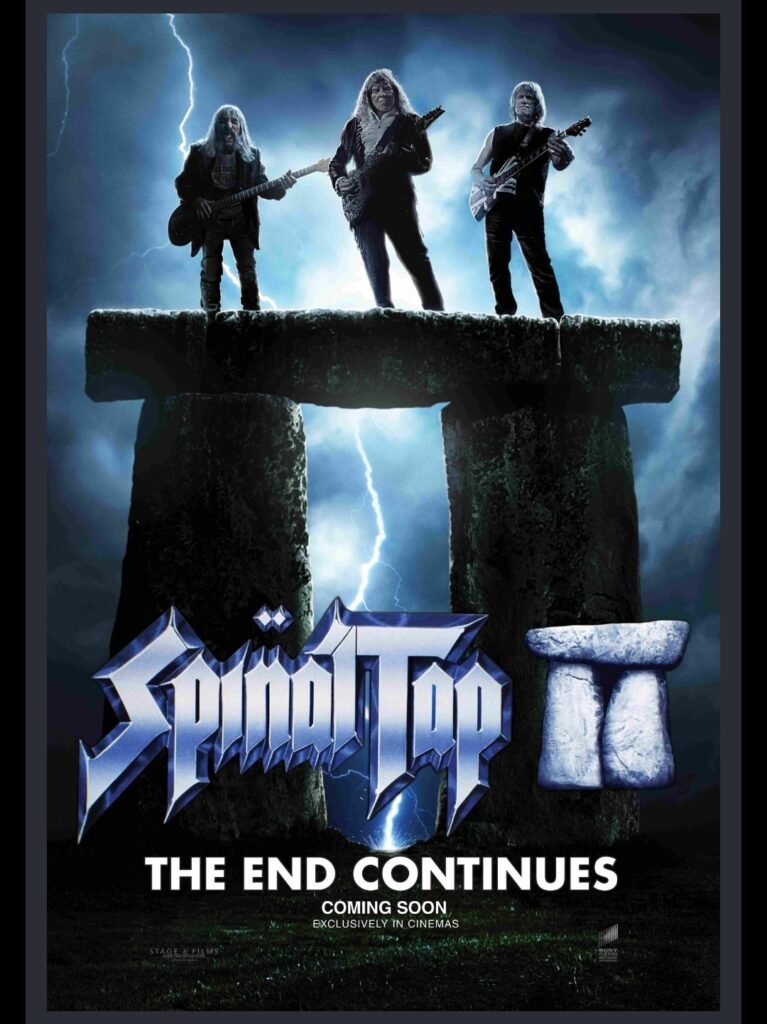
After 41 years, Spinal Tap returns with Spinal Tap II. This isn’t just another legacy sequel; it’s the return of one of the most influential comedies ever made. Rob Reiner steps back into the role of director and documentarian Marty DiBergi, while Michael McKean, Christopher Guest, and Harry Shearer once again become David St. Hubbins, Nigel Tufnel, and Derek Smalls.
The setup is intentionally simple. The band is contractually forced to reunite for one final concert in New Orleans after 15 years of not speaking or playing together. There’s no grand comeback tour, no massive redemption arc — just three aging rock musicians being pulled back into a world they thought they’d escaped. In my opinion, that grounded premise actually works in Spinal Tap II: The End Continues favour. It keeps the story small, character-driven, and focused on relationships rather than spectacle.
Why It Took So Long
This sequel didn’t take decades just because of creative hesitation — it was trapped in legal and financial chaos for years. Rights disputes, royalty battles, and studio control issues kept the project locked away until a settlement in 2020 finally returned ownership to the creators. Only then could the film even begin to exist.
But beyond the legal mess, there was clearly a deeper reluctance. The original This Is Spinal Tap isn’t just a classic — it’s cultural history. It’s studied, quoted, archived, and revered. In my opinion, the biggest fear wasn’t making a bad sequel, but damaging something that already felt complete. The idea only really made sense once they looked at real-life rock culture: legends still touring in their 70s and 80s, farewell tours that never seem final, and nostalgia-driven reunions that blur the line between celebration and desperation.
That real-world context gives the sequel its emotional foundation. This doesn’t feel like a cash grab so much as a curiosity-driven “what would this actually look like now?” experiment.
How the Film Feels
Like the original, most of the dialogue is improvised from a loose outline. That spontaneous energy still exists, especially in the quieter character moments. Conversations feel natural, awkward, and unpolished in a way that scripted comedy rarely achieves.
Visually, though, the difference is noticeable. The switch from grainy 16mm film to digital cinematography makes everything feel smoother and more controlled. In my opinion, it looks more like a modern streaming documentary than a raw mockumentary. There’s nothing technically wrong with it — the film looks good — but that rough, chaotic realism of the original is missing. The scrappiness was part of what made the first film feel real. This one feels curated, filtered, and produced, which slightly breaks the illusion.
Performances
The Core Trio
McKean, Guest, and Shearer are still the soul of the film. Their chemistry feels completely intact, and that’s the movie’s biggest strength.
McKean’s David still balances arrogance and insecurity perfectly. Guest’s Nigel feels older and calmer, but still hilariously oblivious, especially when it comes to guitars, gear, and his side ventures. Shearer’s Derek feels more reflective, more tired, and more philosophical, which gives the character a surprising emotional depth.
They don’t feel like parodies of themselves — they feel like aged versions of the same people, shaped by time, disappointment, and unresolved history.
New Characters
Kerry Godliman brings warmth and momentum as Hope Faith, the daughter of the band’s late manager, whose discovery of the old contract forces the reunion. She feels grounded and believable rather than cartoonish, which helps anchor the story.
Valerie Franco’s Didi Crockett, the band’s 12th drummer, is a standout. She’s not just funny — she’s genuinely talented, and her presence adds energy the band clearly lacks. In my opinion, she represents what the film is really about: new life colliding with old legacy.
Cameos and Celebrity Culture
The celebrity appearances are entertaining, and some moments genuinely work. Paul McCartney and Elton John are fun, and the Zoom call with Lars Ulrich and Chad Smith is a clever joke about Spinal Tap’s cursed drummer history.
But in my opinion, the cameos also weaken the satire. The original film worked because Spinal Tap were delusional nobodies who thought they were legends. Here, real legends treat them like icons, and that flips the joke. It turns the band from tragic absurdists into nostalgic heroes, which changes the tone in a way that feels safer and softer.
What Works
The heart of the film is the relationship between the three leads. Their dynamic still feels authentic, messy, and funny. The humor comes less from outrageous absurdity and more from quiet misunderstandings, awkward silences, and emotional pettiness.
There are genuine laughs, but there’s also a surprising tenderness. In my opinion, the film succeeds most when it stops trying to be a satire and simply lets the characters exist as broken, aging men with unfinished business.
Where It Falls Short
The biggest issue is the lack of meaningful stakes. The original followed a band actively collapsing. Here, the collapse already happened years ago. The story becomes more about reunion than downfall, and that removes the sense of urgency.
The central conflict resolves too easily, and some side characters and subplots disappear without payoff. The pacing feels slightly uneven — not rushed, but imprecise — with jokes sometimes landing too early or too late.
And again, the polished aesthetic works against the mockumentary feel. In my opinion, the film looks too controlled to feel chaotic, and too clean to feel real.
A Bittersweet Goodbye to Rob Reiner
This film hits differently knowing it’s Rob Reiner’s final completed project. His impact on comedy, film, and mockumentary storytelling is massive, and This Is Spinal Tap wouldn’t exist without his vision. Even if this sequel doesn’t reach the heights of the original, there’s something meaningful about his final film being a return to the project that helped define his career. It feels less like a sequel and more like a full-circle moment.
Final Thoughts
In my opinion, Spinal Tap II works more as a reunion than a satire. It’s warmer, gentler, and more nostalgic than the original. It doesn’t have the same sharp bite, the same cruelty, or the same absurd tragedy — but it does have heart, chemistry, and sincerity.
If you love the original, there’s real value in seeing these characters together again. Their dynamic alone makes the film worth watching. But if you’re hoping for the savage comedy of 1984, this won’t give you that.
This isn’t about skewering has-beens.
It’s about time, memory, regret, and one last ride.
The volume doesn’t quite go to 11 anymore —
but it still plays loud enough to matter. 🎸