Winter Of The Crow Movie Review
Introduction
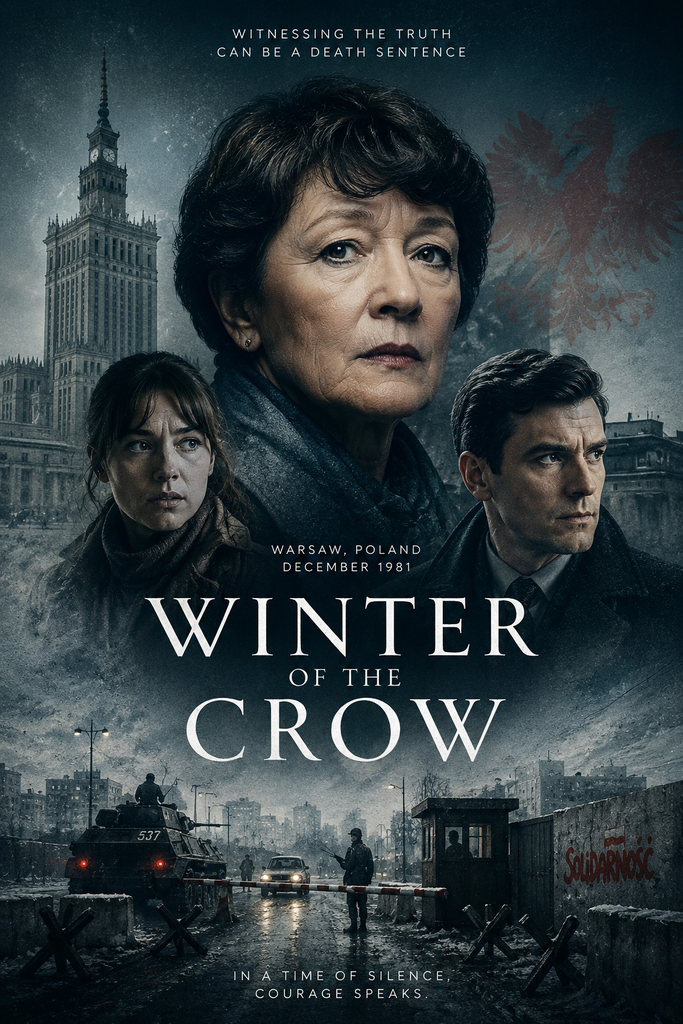
Winter of the Crow is a chilling Cold War thriller written by Kasia Adamik. The story follows a British academic who gets caught up in the political turmoil of a repressive regime during a normal visit to an academic conference.
This takes place during the winter of 1981 in Warsaw as Poland descends into Martial Law. This film has a brilliant performance from Lesley Manville, which gives it an eerie feel.
It gives a glimpse into a country where you cannot trust anyone and any act of defiance can lead to disastrous outcomes.
A Stranger Trapped in a City Under Siege
Manville plays Dr Joan Andrews, a British clinical psychologist who gets caught up in a terrifying situation when she witnesses the secret police kill a student during a brief visit to Warsaw. She has taken the Polaroid photo which could expose the authorities.
She finds herself in a very dangerous situation. In December 1981 General Wojciech Jaruzelski puts martial law into place to try and crush the Solidarity movement.
Lines are cut off, borders are closed and there is an extremely tight curfew in place. This means that Joan is stuck in a country she is not familiar with and cannot use her passport.
With her limited understanding of Polish and the diplomatic system the protection she might otherwise expect she does not have. Me.
This turns into a fight for survival. She gets involved with the resistance. As she tries to navigate through a world filled with secret police, political oppression and unclear loyalties we make good use of her position as an outsider.
We can relate to her because she does not understand the rules of this new world.
Lesley Manville Leads a Strong Cast
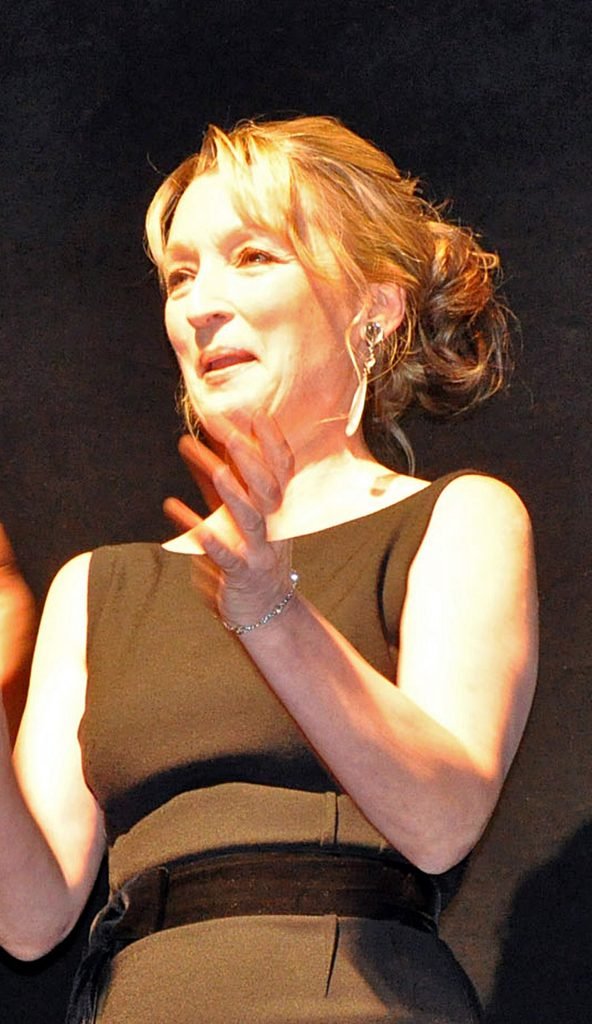
Lesley Manville is absolutely outstanding. She portrays Joan perfectly, giving her a clever, yet vulnerable and determined nature.
This allows her to really make her transition from a visiting academic to a reluctant activist believable.
Manville does not make her seem unrealistic by playing up her scared and unsure nature. This allows the thriller to have an emotional core.
Tom Burke plays a good supporting role. Zofia Wichłacz is very effective as Alina. She adds a real authenticity to the story and helps Joan understand what living under an increasingly oppressive government is like.
Overall the acting was great. Although the script was not always able to give the supporting characters much depth.
It’s mostly Joan’s story and the best parts come when she is becoming more aware of the danger she is in.
A Chilling Portrait of Cold War Poland
The film begins by establishing a feeling of oppression. The cinematography uses a dull palette with lots of grey tones, cold winter scenes and harsh brutalist architecture to create a feeling of physical and emotional oppression within the setting of Warsaw.
This atmosphere helps create a feeling of entrapment through the buildings, empty streets and constant presence of authority.
There is an element of Kafkaesque throughout the film. It creates a feeling of confusion, the information is not reliable and the authorities seem to have a great amount of control.
The film shows well how the individual feels helpless within the political system.
There is a strong historical element to this film. The introduction of Martial Law had a huge impact on modern Polish history and by using Joan’s story we can understand the fear during this time.
The themes of authoritarianism, misinformation and political rebellion are quite relevant. We can relate to how governments can twist information and exploit fear.
This film is based on a short story by Olga Tokarczuk called ‘Professor Andrews Goes to Warsaw’. The story has been expanded to create a more traditional political thriller.
Whilst this provides the film with a good pace and allows for more exploration of the time period, it can be seen to use some clichés.
A Gripping Thriller That Loses Momentum
Overall, Winter of the Crow does a good job of balancing history with thriller elements. The character of Joan is also very vulnerable, giving a feeling of threat and urgency. However, the plot is very political so Joan’s situation is relatable.
Overall, the final third of the film loses a little focus. It is beginning to feel slow and is moving into typical spy film territory.
This causes some of the tension built up earlier to decrease. The story is also much longer than the short story and therefore there are moments where you know what will happen next.
Whilst this doesn’t completely ruin the film, it does stop it from reaching its full potential. If the film had been made in a more subtle way, it would have kept the feeling of mystery that made the previous scenes work well.
Final Verdict
Winter of the Crow is an engaging Cold War thriller brought to life by Lesley Manville’s brilliant performance in the lead role and Kasia Adamik’s atmospheric direction.
The depiction of martial law in Warsaw is well done. The cold cinematography and grand buildings give a consistent mood of tension throughout.
The film also provides a timely insight into the dangers of authoritarian rule, political games and the bravery needed to fight against oppression.
Whilst the last third does drag slightly and relies on common thriller tropes, there is much to enjoy. Manville gives the film a good heartfelt core and the film’s historical setting serves as a chilling reminder of how life can change so drastically during times of political unrest.
Overall, whilst it may not be a perfectly adapted film, it is still a captivating and atmospheric historical film.