28 Years Later
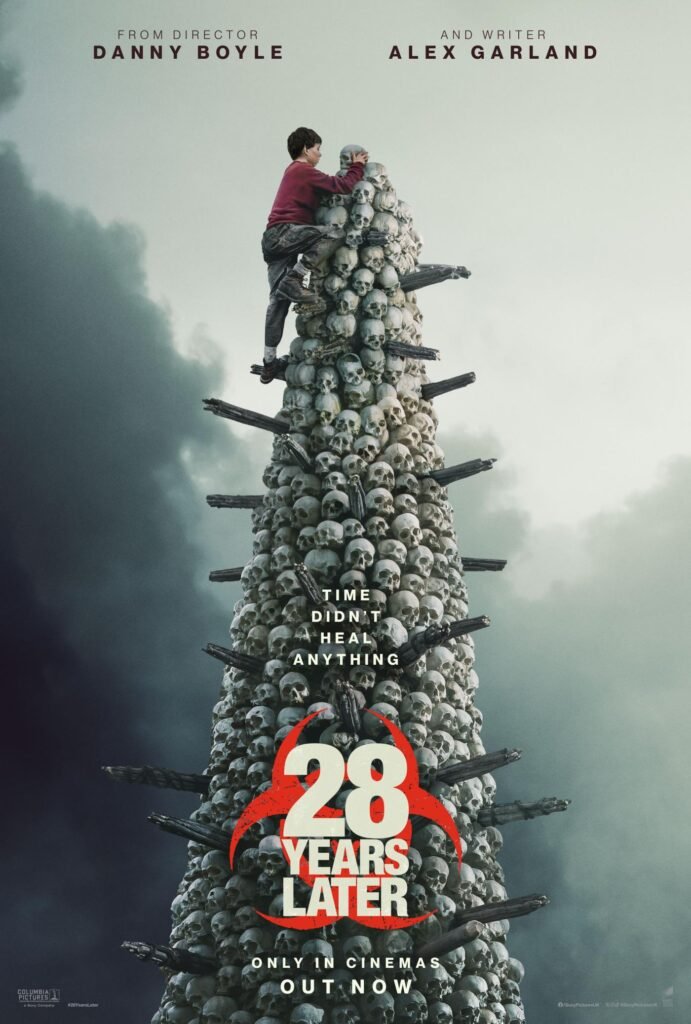
28 Years Later – A Haunting Evolution of Post-Apocalyptic Horror. (Warning Spoilers)
28 Years Later feels like a world aged in silence and scarred by trauma. Unlike explosive disaster films, 28 Years chooses restraint and reflection. Director Danny Boyle and writer Alex Garland reunite for this sequel. As a result, 28 Years expands the legacy with confidence and maturity. Rather than repeat chaos, 28 Years explores endurance decades after collapse. Consequently, the film feels intimate, unsettling, and emotionally grounded.
The Return of Boyle and Garland
One major strength of the film lies in this creative reunion. Danny Boyle brings urgency and kinetic realism. Meanwhile, Alex Garland injects philosophical weight into the narrative. Together, they defined modern horror with 28 Days Later. Now, 28 Years Later deepens that foundation. Instead of focusing only on infection, the film examines moral erosion. Therefore, the horror feels internal as well as external.
A World Long After Collapse
Unlike earlier entries, this film avoids sudden societal breakdown. Instead, it examines life decades after disaster. The Rage Virus exists, but it no longer dominates daily life. In fact, the movie portrays infection as background radiation. The real danger comes from fractured human communities. Micro-societies enforce strict rules and rigid hierarchies. Fear slowly evolves into ritual and culture. As a result, civilization mutates instead of disappearing.
Style and Atmosphere
Visually, the film rejects glossy modern aesthetics. Instead, Boyle embraces grainy textures and natural lighting. The camera feels present and restless. Moreover, long quiet stretches build tension carefully. Stillness often feels heavier than violence. When violence erupts, it shocks rather than entertains. Because of this restraint, 28 Years feels unpredictable and raw.
Violence Versus Stillness
Importantly, violence never feels stylized for spectacle. Attacks arrive abruptly and without cinematic comfort. Therefore, viewers cannot emotionally prepare for impact. However, silence creates deeper discomfort. Wide landscapes expose isolation and moral decay. In those moments, the film becomes almost meditative. Consequently, horror emerges from reflection, not jump scares.
Performances and Character Depth
Alfie Williams anchors 28 Years Later as Spike. His performance feels vulnerable and emotionally honest. Through him, the audience experiences moral awakening. Meanwhile, Jodie Comer delivers layered intensity as Isla. She embodies sacrifice, exhaustion, and fierce protection. Her chemistry with Williams drives the emotional core. Aaron Taylor-Johnson portrays authority with moral complexity. He forces difficult survival choices onto Spike.
Additionally, Ralph Fiennes unsettles quietly as Dr. Kelson. He projects intelligence, ambiguity, and quiet menace.
Together, these performances elevate the film beyond genre conventions.
Spike’s Moral Journey
At its heart, 28 Years Later follows Spike’s ethical evolution. Initially, he depends entirely on parental guidance. He understands survival but not moral nuance. However, exposure to new communities changes him. He witnesses violence justified as necessary. Consequently, inherited morality begins to crack. Gradually, Spike questions rigid survival codes. He observes how fear shapes behavior and belief.
Therefore, he develops independent ethical awareness. By the end, 28 Years leaves his arc intentionally unresolved. He grows more cautious, reflective, and morally alert.
Yet vulnerability still defines him.
Themes of Time and Trauma
Time shapes every frame of 28 Years Later. Survival no longer centers on physical endurance alone. Instead, morality becomes the battleground. Trauma passes between generations. Fear transforms into tradition. Isolation reshapes identity and community. Through Spike’s journey, 28 Years explores inherited trauma intimately. Thus, abstract themes feel personal and immediate.
A Planned Trilogy
Notably, 28 Years begins a new trilogy.
Therefore, the film avoids rushed resolution.
Open endings reinforce thematic weight. Because of this structure, the world feels expansive and lived-in. Boyle allows ideas to breathe and evolve.
Final Verdict
Ultimately, 28 Years Later transcends standard sequel expectations.
It delivers horror rooted in humanity rather than spectacle. Moreover, it balances tension with philosophical reflection.
While infection drives the premise, moral consequence drives the story.
For that reason, 28 Years lingers long after the credits roll.
In conclusion, 28 Years Later stands as a bold evolution of the franchise. It examines survival, morality, and inherited trauma with intelligence and restraint.
Above all, 28 Years proves that time deepens horror when creators embrace complexity.