Good Boy (2025) Review: A Haunting, Emotional Horror Told Through a Dog’s Eyes
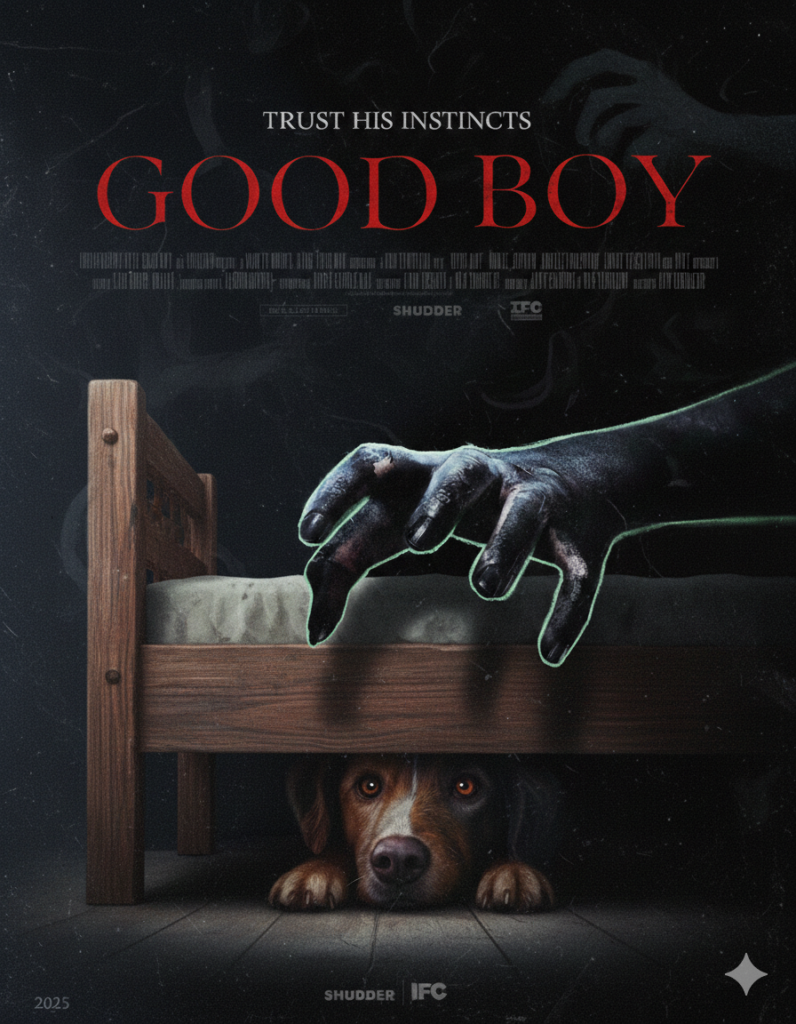
First Impressions of Good Boy (2025)
When I started Good Boy (2025), I expected a simple indie horror gimmick. Instead, I experienced a slow-burn emotional tragedy disguised as horror. The film feels quiet, strange, and deeply personal. Moreover, it avoids flashy scares and predictable twists. Rather than spoon-feed answers, it drops you into a dog’s perspective. Because of that choice, every scene feels intimate and unsettling. You never feel guided or reassured. Instead, you feel confused,
Story and Setup: A Haunted House Through Indy’s Eyes
Good Boy follows Todd, a young man with severe lung disease. He moves into his late grandfather’s isolated country house with his dog, Indy. Immediately, the house feels heavy and wrong. Soon after, strange sounds and shadows disturb Indy. From Indy’s viewpoint, danger appears long before Todd notices it. Additionally, Indy sees visions of Bandit, his grandfather’s deceased dog. These visions do not comfort him. Instead, they warn him that something terrible approaches.
Meanwhile, Todd’s health declines rapidly.
As a result, he grows weaker, harsher, and more distant. Consequently, Indy grows frantic and protective. However, he cannot understand illness or death. Therefore, the horror becomes emotional rather than monstrous. The story captures a slow collapse of body, mind, and connection.
The Director’s Vision and Creative Control
Director Ben Leonberg brings a precise and disciplined vision to Good Boy.
Rather than chasing mainstream horror trends, he commits fully to perspective-driven storytelling.
He builds tension through framing and restraint instead of spectacle.
Additionally, he avoids manipulative scoring and predictable scares.
Leonberg structures scenes around Indy’s physical and emotional reality.
Because of that decision, the film feels immersive and personal.
He also embraces minimalism in pacing and dialogue. Consequently, silence and stillness carry enormous weight.
A Horror Film Built on a Dog’s Reality
What sets Good Boy apart is total commitment to perspective.
The camera stays at Indy’s height almost constantly. Humans appear as towering, distant figures. Often, the film hides their faces or frames them partially.
Because of this, Indy becomes the emotional center. Furthermore, the world feels distorted and unstable. Soft lighting and blurred edges shape each scene. As a result, you sense the world instead of clearly seeing it.
Sound design strengthens this immersion.
You hear breathing, creaking floors, scratching, and distant thuds. Dialogue fades unless it involves Indy directly.
Consequently, the house feels alive and threatening.
Indy as the Emotional Core
Indy delivers a raw and natural performance. He reacts instinctively rather than theatrically. Through editing and framing, small gestures gain emotional weight. For example, a head tilt suddenly feels heartbreaking. Gradually, you project fear, loyalty, and sadness onto him. Because he cannot speak, his body language carries everything. As Todd deteriorates, Indy’s anxiety increases. Watching his helpless devotion becomes emotionally devastating. He does not understand death. He only understands that his person is fading. That innocence intensifies the tragedy.
Emotional Themes Beneath the Supernatural
At its core, Good Boy explores illness and loss. The haunted house functions as a metaphor for terminal disease. To a dog, organ failure feels like a monster. It changes behavior and steals someone slowly. Therefore, the entity feels symbolic rather than literal. Additionally, the film explores helpless love. Indy wants to protect Todd. However, he cannot intervene or communicate clearly. This helplessness mirrors real-life grief. Moreover, the film highlights unwavering loyalty.
Even when Todd becomes irritable, Indy stays beside him. That unconditional devotion drives the emotional weight. Bandit’s presence adds another layer of grief.
He represents unresolved loss and refusal to move on.
Ultimately, Indy’s choice suggests survival and healing..The film quietly encourages choosing life over endless grief.
Strengths of Good Boy (2025)
First, the concept feels original and bold.
Few horror films commit so fully to animal perspective. Second, the emotional impact feels authentic. I felt more anxiety for Indy than most human horror characters.
Additionally, the restrained filmmaking enhances atmosphere. Low-budget limitations actually strengthen tension.
The sound design builds unease without loud jump scares. Furthermore, the film trusts the audience to engage deeply.
Where Good Boy Struggles
However, the film is not flawless.Some sequences repeat similar patterns of tension. Occasionally, the haunted house plot feels simple. At times, the metaphor blurs between symbolic and literal. Todd also becomes difficult to connect with. Moreover, traditional horror fans may not feel frightened. The pacing moves slowly and deliberately. Therefore, viewers expecting action may feel impatient.
Personal Impact and Emotional Weight
For me, Good Boy worked as emotional horror. I felt tense and deeply sad rather than terrified. The dog’s perspective stripped away emotional distance. As a result, every moment felt raw and intimate.
I did not simply watch suffering.
Instead, I witnessed confusion and loyalty unfold in real time. The ending chooses quiet acceptance over spectacle. Consequently, it lingers long after the credits roll.
Final Verdict: Is Good Boy Worth Watching?
Good Boy is not a traditional horror movie.Instead, it delivers a symbolic, emotional, and intimate experience. If you expect dog-versus-monster thrills, you may feel disappointed. However, if you welcome slow, thoughtful storytelling, you may find something special. Although imperfect and occasionally repetitive, the film feels brave. Most importantly, it feels emotionally honest.
Ultimately, Good Boy stands out in modern indie horror. It trades jump scares for grief, loyalty, and quiet devastation. Long after it ends, you may still think about love, loss, and devotion.