Tron: Ares (2025) Review – A Bold, Dark Evolution of the Tron Franchise
First Impressions of Tron: Ares (2025)
Tron: Ares surprised me from the very first frame. Fifteen years after Tron: Legacy, the franchise returns with ambition. Director Joachim Rønning delivers a darker and sharper vision. Immediately, the tone feels heavier and more grounded.
Jared Leto leads as Ares, a digital program entering reality. He joins a strong cast including Greta Lee and Evan Peters. Additionally, Jodie Turner-Smith, Hasan Minhaj, and Gillian Anderson add depth. Most importantly, Jeff Bridges returns as Kevin Flynn. From the outset, the film signals bold reinvention. Consequently, longtime fans must adjust expectations quickly.
A Reversal of Perspective Changes the Stakes
Unlike previous entries, humans do not enter the Grid. Instead, a program enters our world. Ares is created by Julian Dillinger, played by Evan Peters. He seeks a “permanence code” to exist physically. Consequently this reversal shifts the narrative dramatically. Instead the story explores survival, identity, and adaptation.
Watching Ares navigate humanity feels eerie and compelling. Furthermore his awkward attempts at understanding emotion feel unsettling and occasionally darkly funny. Therefore, the film becomes more philosophical than exploratory. It questions what existence truly means.
AI Themes Feel Timely and Relevant
In 2025, artificial intelligence dominates global discussions. Because of that context, the film feels timely and relevant. Ares’s pursuit of permanence mirrors real-world AI debates.
Corporate control and surveillance themes resonate strongly. Learning that Jared Leto helped push this project forward adds context. His creative investment shows in the film’s ambition. Rather than playing safe, the film embraces risk. Consequently, it feels daring even when imperfect.
Visual Style and Practical Effects Elevate the Experience
Joachim Rønning makes deliberate visual choices throughout. Inside the Grid, the aesthetic feels artificial and alien. Robotic camera movements follow Ares precisely. Everything moves with geometric intensity and precision.
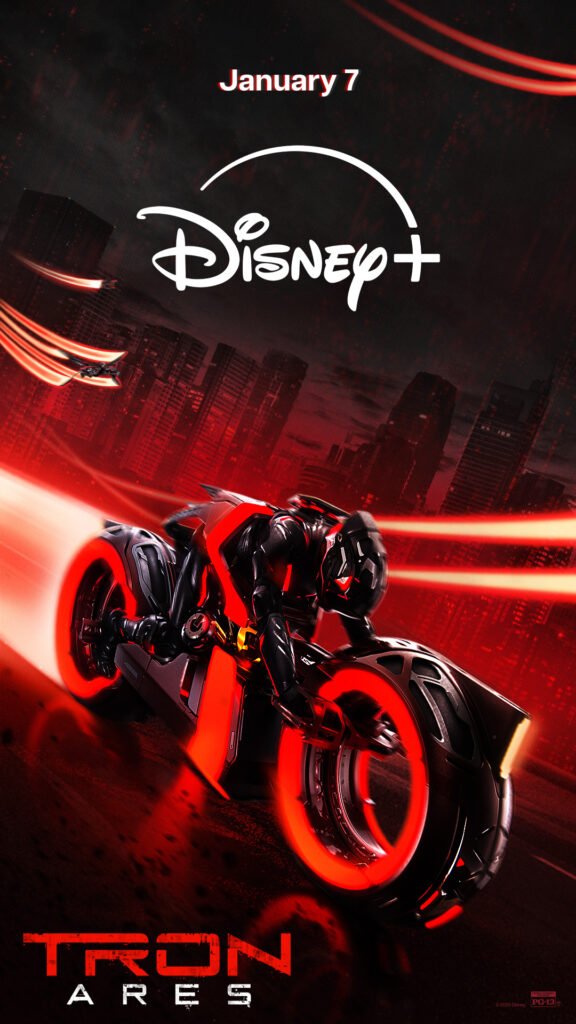
Outside the Grid, the world feels cold and tactile. The real-world scenes resemble a spy thriller. Importantly, the production relies heavily on practical effects. The team built functional Light Cycles for street sequences.
They even shut down parts of Vancouver for night shoots. As a result, the Light Cycle chases feel tangible and intense. For example One narrow street pursuit had me holding my breath. Neon reflections and sparks looked physically real. The Grid visually bleeds into reality during collisions. That blending creates thrilling tension.
Emotional and Philosophical Depth
At its core, Tron: Ares asks big questions. What does it mean to truly exist? More so Ares confronts mortality and irreversible consequences. One powerful moment occurs when he cannot respawn. That scene forces him to experience permanence for the first time. It hit me harder than most action set pieces.
The film also examines creator responsibility. However, some dialogue over-explains its themes. Even so, I appreciate the ambition. It feels better to attempt depth than avoid it.
Performances: Standouts and Missed Opportunities
Jared Leto plays Ares with robotic restraint. His performance feels controlled and deliberate. However, that distance limits emotional connection. At times, I wanted more visible vulnerability.
Jodie Turner-Smith nearly steals the entire film. Her portrayal of Athena feels commanding and menacing. Every confrontation scene crackles with tension. She balances intelligence and danger effortlessly.
Greta Lee brings warmth as Eve Kim. However, the script does not fully explore her character.
Gillian Anderson adds gravitas in limited screen time.Her confrontation with Julian carries raw intensity.
Jeff Bridges provides emotional continuity as Kevin Flynn. His digital presence reminds fans of the franchise’s legacy.
Industrial Soundtrack Reinvents the Franchise’s Identity
Trent Reznor and Atticus Ross compose a powerful score. They depart from Legacy’s symphonic electronic sound. The music feels gritty, industrial, and pulse-driven. The main Ares theme resembles a glitching heartbeat.
At times, distorted vocals reflect Ares’s awakening. Consequently, the soundtrack carries emotional weight. In several scenes, the music elevates weaker dialogue. It remains one of the film’s strongest elements.
Scenes That Stayed With Me
The opening emergence sequence immediately establishes unease. The Light Cycle chase through city streets feels breathtaking. Flynn’s digital remnant scene feels unexpectedly emotional. Furthermore Athena’s confrontations create sustained tension. Each of these moments blends spectacle with introspection.
What Worked in Tron: Ares
First, the industrial score perfectly suits the darker tone. Furthermore, Jodie Turner-Smith delivers a commanding performance.
Additionally, practical effects enhance realism dramatically. Finally, AI themes feel timely and intellectually engaging.
What Didn’t Work
The screenplay sometimes explains themes too directly. Leto’s restraint limits emotional immersion. Limited Grid sequences may disappoint nostalgic fans. Some supporting characters feel underused.
Final Verdict: A Bold but Imperfect Evolution
Tron: Ares stands as a visually stunning franchise entry. It does not fully achieve narrative greatness. However, it embraces risk and ambition. It challenges viewers to think about AI and mortality.
The IMAX experience amplifies its spectacle and sound design. Therefore, I strongly recommend seeing it on the biggest screen possible.
While not flawless, the film feels bold and occasionally brilliant. Ultimately, it evolves the Tron universe in daring new directions.