After the Hunt (2025) Review: Ambitious, Intense, and Emotionally Hollow
First Impressions Of After The Hunt (Warning Spoilers)
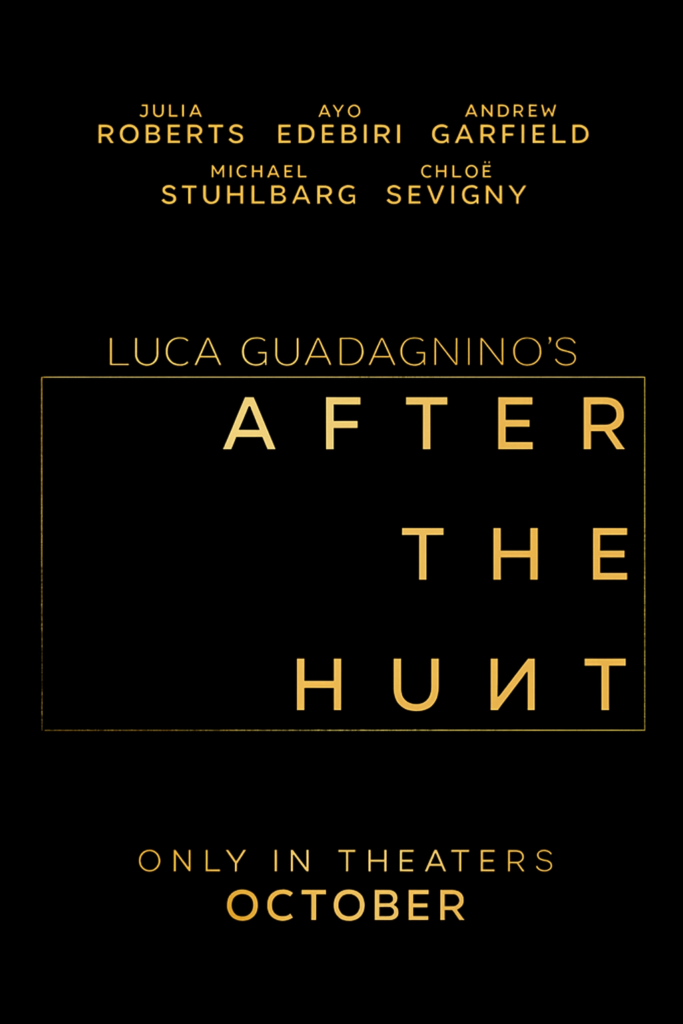
After the Hunt looks powerful on paper. With Luca Guadagnino directing and Nora Garrett writing, expectations feel high. Julia Roberts leads a prestige cast in a morally complex thriller. Given that setup, I expected tension and emotional depth. Instead, I left feeling drained and frustrated. Not because the film challenged me meaningfully, but because it felt confused. The movie wants to feel profound and controversial. However, it often feels overstuffed and emotionally distant.
Story and Psychological Breakdown
Julia Roberts plays Alma, a Yale philosophy professor nearing tenure. Her life appears stable and carefully controlled. That stability collapses when her student Maggie accuses Hank of assault. Hank is Alma’s colleague and close friend. The accusation detonates Alma’s professional and personal identity.
Her friendships, reputation, and composure begin unraveling. As Alma searches for clarity, buried trauma resurfaces. Gradually, the film shifts from mystery to psychological study. As Alma searches for clarity, buried trauma resurfaces. Gradually, the film shifts from mystery to psychological study.
Importantly, the story focuses less on solving the accusation. Instead, it centers on Alma’s internal disintegration.
Direction, Atmosphere, and Score
Guadagnino presents the film in a sterile, clinical style. Tight framing and extreme close-ups dominate nearly every scene. Characters often stare directly into the camera. Sometimes that choice creates tension. However, over time it feels exhausting and intrusive. The camera seems to interrogate rather than observe. The pacing drags heavily throughout. Scenes linger long after making their point.
Trent Reznor and Atticus Ross compose a chaotic score. Their music feels abrasive and intentionally unsettling. Unfortunately, it often overwhelms dialogue instead of enhancing it. Emotional moments feel noisy rather than intimate. Instead of deepening tension, the score announces importance loudly. Consequently, subtlety disappears.
Performances and Writing
Julia Roberts delivers a restrained and powerful performance. She communicates pressure through posture and silence. As Alma deteriorates physically and emotionally, Roberts remains controlled. Her subtlety anchors the film. In my opinion, this ranks among her strongest performances.
Michael Stuhlbarg brings grounded humanity as Alma’s husband. Andrew Garfield plays Hank with visible intensity. However, Garfield’s performance feels one-note and overly angry. Ayo Edebiri portrays Maggie with confrontational rigidity.
The writing limits complexity for several characters. Dialogue often sounds intellectual rather than human. Conversations resemble academic debates instead of organic exchanges. As a result, emotional connection weakens.
Themes, Ambiguity, and Final Verdict
The film tackles trauma, institutional hypocrisy, and moral ambiguity. It also explores generational conflict and performative activism. These themes carry weight and relevance. However, the film spreads itself too thin. It attempts to address everything at once. Consequently, none of the ideas receive deep exploration.
The ending refuses clear resolution. It avoids confirming guilt or innocence. While ambiguity can feel powerful, here it feels hollow. The story simply stops rather than resolves. Ultimately, After the Hunt feels ambitious but emotionally distant.
It values importance over engagement.
Julia Roberts delivers an exceptional performance. Unfortunately, the film surrounding her lacks cohesion. Watch it for her work if you are curious. However, do not expect emotional satisfaction or narrative payoff.