Marty Supreme Review (2025) – A Relentless Character Study of Obsession and Ego
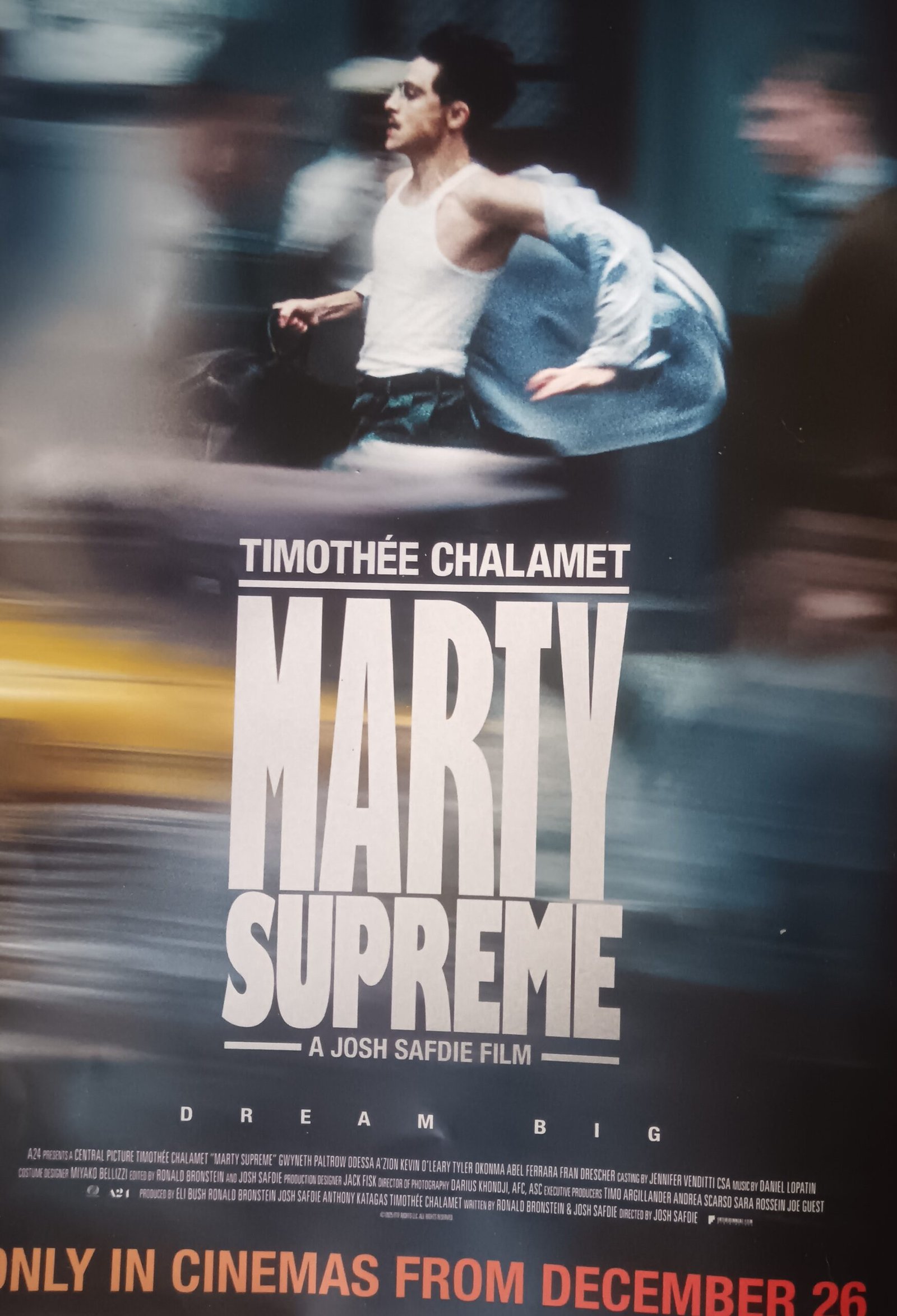
Introduction Marty Supreme (Warning contains Spoilers)
Marty Supreme feels less like a sports drama and more like an endurance test. As I sat through it, I felt trapped in Marty Mauser’s orbit. By the time the credits rolled, I felt impressed, irritated, drained, and strangely moved.
This film does not ask for affection. Instead, it dares you to keep up. Directed by Josh Safdie, Marty Supreme trades inspirational triumph for psychological excavation. Rather than celebrating success, it dissects the hunger behind it.
Obsession Over Achievement
Set in the early 1950s, the story follows Marty Mauser, a table-tennis prodigy clawing out of New York’s hustling scene. However, the sport functions as a framework rather than the focus. The real subject is obsession. From the opening scenes, the film establishes a personality in constant motion.
Marty believes the world exists to be outplayed. Consequently, every interaction feels strategic. Every conversation feels like a negotiation. Unlike traditional sports films, this story does not build toward catharsis. Instead, it builds toward psychological erosion.
A Claustrophobic World That Never Slows Down
One of the film’s greatest strengths lies in its atmosphere. Rooms feel cramped. Streets feel loud and transactional. Even quiet moments carry tension. Rarely does anyone appear relaxed. This 1950s setting avoids nostalgia entirely. Instead, it presents a world driven by leverage and ambition.
Josh Safdie’s direction reinforces that instability. Scenes cut off mid-thought. Arguments erupt without warning. Because of this pacing, I constantly felt one step behind. That sensation mirrors Marty’s philosophy: move faster or fall behind.
Timothée Chalamet Delivers His Most Aggressive Performance
Timothée Chalamet anchors the film with ferocious energy. Marty rarely rests. His body language stays sharp and restless. Even during victory, he appears dissatisfied. Chalamet plays him as someone constantly auditioning for greatness. The charm he shows feels calculated rather than sincere.
The table-tennis sequences stand out for their grounded intensity. The matches emphasize control more than athletic spectacle. Each rally feels like psychological warfare. Marty tries to dominate opponents emotionally as much as physically.
As the story progresses, cracks appear. Confidence remains, yet it turns brittle.
Gradually, his arrogance reveals defensive desperation. Watching that unraveling feels unsettling and compelling.
Hustle as a Moral Framework
In my view, Marty Supreme critiques hustle culture rather than glorifies it. Marty believes in leverage, not loyalty. He evaluates relationships based on usefulness. Once someone loses value, he discards them without hesitation.
What unsettled me most was how recognizable his mindset feels. The film portrays ambition sliding into entitlement with disturbing ease. Although the narrative lets you feel the rush of success, it never hides the collateral damage.
Every victory leaves someone diminished. The cost of momentum becomes painfully visible.
The People Marty Leaves Behind
The supporting cast strengthens the emotional fallout.
Gwyneth Paltrow plays Kay with quiet melancholy. Her dynamic with Marty feels transactional despite surface affection.
Odessa A’zion brings vulnerability to Rachel. She understands Marty deeply, which makes his dismissal of her more painful.
Meanwhile, Fran Drescher portrays Marty’s mother with anxious intensity.
Their scenes suggest years of emotional pressure and manipulation. Through those interactions, the film hints at the roots of Marty’s worldview.
Each supporting character feels defined by how Marty uses them. That design feels intentional and thematically sharp.
A Visual Style That Feels Confrontational
Visually, the film feels abrasive by design. Shot on grainy 35mm film, the camera frames faces uncomfortably close. Sweat, pores, and nervous tics become unavoidable. Success never expands the frame. Instead, the camera presses inward during victories. This approach suggests achievement creates pressure rather than freedom.
The editing avoids clean resolutions. Conversations bleed into chaos. Arguments rarely conclude neatly. As a result, the film feels like one long, relentless push forward.
An Anachronistic Score That Heightens Anxiety
The synth-heavy soundtrack initially feels jarring within a 1950s setting. However, the music gradually aligns with Marty’s internal rhythm. The aggressive score clashes deliberately with the era. It mirrors his impatience and forward momentum. During key sequences, the music builds tension rather than release. Instead of offering comfort, it keeps the audience on edge.
Where the Film Overreaches
Despite its strengths, Marty Supreme occasionally loses focus. The runtime stretches certain subplots without adding depth. Additionally, some provocative scenes feel underdeveloped. At times, the film seems to test the audience’s patience intentionally. A tighter edit might have preserved intensity without sacrificing clarity. When the momentum falters, it does so loudly.
Why It Still Resonates
Even with its excesses, the film lingered with me long after leaving the theater. Specific gestures and lines replayed in my mind. Its messiness mirrors Marty’s own chaos. That parallel creates coherence beneath the noise. I never admired Marty. However, I understood him. That recognition makes the film unsettling and effective.
Final Verdict: A Demanding but Unforgettable Character Study
Marty Supreme refuses to soften its protagonist.Instead, it presents ambition as something corrosive and addictive. Timothée Chalamet delivers one of his most intense performances to date. Josh Safdie directs with abrasive confidence. Although the film feels overlong and occasionally indulgent, it never feels timid.
Watching it felt less like witnessing triumph and more like observing slow erosion. It is not an easy watch. Moreover, it is not universally accessible. Nevertheless, Marty Supreme stands as a fearless character study of ambition consuming itself. I left the theater uneasy rather than exhilarated. Yet that discomfort feels intentional and earned.