Song Sung Blue (2025) Review – A Celebration of Love, Music, and Perseverance
Introduction Song Sung Blue (Warning contains Spoilers)
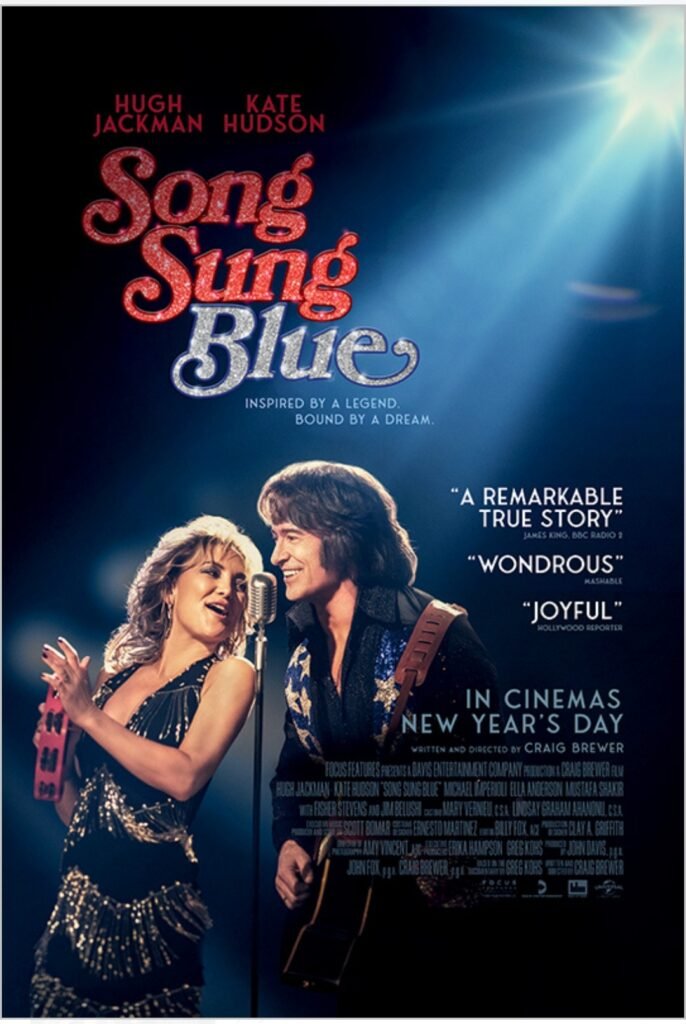
Song Sung Blue is an American biographical musical drama written, co-produced, and directed by Craig Brewer. The film tells the story of Mike and Claire Sardina, a Milwaukee couple performing in a Neil Diamond tribute band called Lightning & Thunder.
Starring Hugh Jackman and Kate Hudson, with supporting performances by Michael Imperioli, Ella Anderson, Mustafa Shakir, Fisher Stevens, and Jim Belushi, the film captures the resilience, love, and ambition of ordinary people chasing extraordinary dreams.
From the very first frame, I felt pulled into the Sardinas’ world. The film does not simply recount musical milestones; instead, it immerses viewers in hope, perseverance, and the quiet heroism of everyday life. Each scene builds upon the last, showing cause-and-effect within the couple’s journey, so that triumphs feel earned, and setbacks hit harder.
Walking Into the Music
Immediately, the film establishes the Sardinas’ dedication and energy. Mike performs as “Lightning,” embodying Neil Diamond’s charisma, while Claire, as “Thunder,” provides instrumental and vocal harmony that elevates each performance.
Their chemistry flows effortlessly, so the audience senses both their personal connection and artistic synergy. Brewer refuses to pad performances with unnecessary spectacle. Instead, he emphasizes rehearsal, sweat, and repetition, making every musical moment feel grounded in years of dedication.
Furthermore, the film shows their small-time gigs alongside glimpses of dreams, so the contrast between ordinary struggles and extraordinary aspirations constantly heightens tension. Watching the Sardinas drive long distances for modest shows or rehearse in cramped spaces, I felt their commitment in a tangible way. Each setback leads directly to the next challenge, and each triumph amplifies the stakes, creating a narrative rhythm that never stalls.
The Summerfest Performance: Triumph on a Big Stage
One sequence crystallizes the Sardinas’ journey: their opening for Pearl Jam at Summerfest in 1995. As Mike and Claire perform “Forever in Blue Jeans” alongside Eddie Vedder, the audience’s energy mirrors their anxiety and excitement. I could feel the tension, nervous anticipation, and exhilaration simultaneously. Brewer structures the scene so that every beat—the audience’s applause, the band’s synchronicity, the performers’ smiles—reinforces the characters’ growth and self-belief.
Moreover, this performance acts as a turning point. Not only does it elevate their professional credibility, but it also marks a psychological milestone: they realize they can dream bigger than their small-time gigs. Consequently, I found myself cheering, riding their emotional wave as the underdog triumph resonates through the entire film.
Tragedy and Resilience
Immediately after establishing success, the film confronts viewers with tragedy. In 1999, Claire suffers a devastating accident, losing her leg while gardening. Brewer does not sidestep the physical and emotional consequences; he confronts them head-on. Watching Claire navigate rehabilitation, reclaim independence, and return to performing, I felt the weight of human perseverance in real time.
The prosthetic leg symbolizes resilience and adaptation, and Kate Hudson’s performance communicates grit, vulnerability, and determination simultaneously. She conveys pain, frustration, and hope with every movement. As the story progresses, Claire’s journey demonstrates that obstacles can shape character and fuel creativity rather than inhibit it. In turn, this focus intensifies the narrative’s emotional core, ensuring that audience investment never wanes.
Craig Brewer’s Direction: Empathy and Authenticity
Craig Brewer channels empathy and precision throughout the film. Drawing on his previous work in Hustle & Flow and Dolemite Is My Name, he captures the nuances of working-class ambition with warmth and insight. Upon discovering the 2008 documentary by Greg Kohs, Brewer felt compelled to adapt the story, integrating personal reflection on unfulfilled dreams following his father’s passing. Consequently, the film gains depth and urgency, combining personal stakes with narrative clarity.
Brewer also condenses two decades into a cohesive cinematic arc without losing narrative momentum. He describes the adaptation as transforming a “life opera” into a “pop song,” and he succeeds. The film maintains tension, particularly through Mike’s health struggles and Claire’s accident, while weaving smaller community interactions to create texture.
For instance, including Buddy Holly, Elvis, and James Brown tribute artists builds a vivid network that emphasizes collaboration and mutual support among performers. These interactions add levity and grounding, transitioning seamlessly between comic relief and emotional resonance.
A Working-Class Aesthetic
Visually, Brewer rejects polished Hollywood conventions, embracing unglamorous venues, worn carpets, and everyday clothing. Consequently, every set feels lived-in, authentic, and intimately connected to the characters. The contrast between humble rehearsal spaces and the grandeur of the stage emphasizes the stakes and heightens tension.
Furthermore, musical choices carry narrative weight. Neil Diamond’s songs function as emotional signposts: “Holly Holy” marks healing, “Forever in Blue Jeans” emphasizes triumph. Each performance integrates into the story, reflecting characters’ inner states and narrative arcs. Transitions from quiet rehearsal to electrifying stage performance flow naturally, ensuring that music propels the story rather than interrupts it.
Performances That Shine
Kate Hudson: A Career-Defining Turn
Hudson portrays Claire with raw energy and subtle nuance. She conveys humor, vulnerability, and determination with equal skill. Watching her sing live, particularly post-accident, evokes both empathy and awe. Every gesture and expression reinforces the character’s inner strength, making Claire’s journey palpable.
Hugh Jackman: Vulnerable and Grounded
Jackman portrays Mike with surprising depth, shedding charisma for nuance. He captures the struggles of alcoholism, past trauma, and family responsibility. The audience witnesses a man balancing ambition with human fragility, and Jackman’s performance ensures the narrative’s emotional stakes remain constant.
Themes and Reflections
The Power of Tribute: The film elevates tribute artists, showing that interpretation and dedication can hold deep personal meaning. Love and Partnership: Mike and Claire’s relationship functions as a creative partnership, illustrating mutual support and shared ambition.
Resilience: Characters repeatedly confront adversity—Claire’s return to the stage, Mike’s health issues—and persist, demonstrating perseverance over fame.
Transitions between musical triumphs and personal crises reinforce cause-and-effect storytelling, ensuring that viewers remain emotionally engaged. Every setback leads naturally to renewed effort, and every success carries consequences, maintaining narrative tension.
Where the Film Struggles
The narrative occasionally suffers from tonal whiplash. Brewer shifts between musical comedy and tragic drama rapidly, sometimes jarring viewers. The compression of two decades creates minor inconsistencies in character aging and pacing. Certain arcs, such as Mike’s PTSD or Claire’s long-term adaptation to prosthetic use, remain underexplored. Despite these issues, the film’s emotional impact remains intact.
Music as Storytelling
The film excels in integrating music with narrative. Neil Diamond’s songs become emotional shorthand, reflecting inner states and pivotal life moments. Furthermore each song carries emotional resonance, strengthening transitions between narrative beats and reinforcing character growth.
Cinematic Moments That Stayed With Me
Several sequences resonated deeply:
Late-night basement rehearsals, filled with laughter, mistakes, and determination.
Mike’s reflective moments, illustrating music as a tool for processing trauma.
The Summerfest performance, a high-stakes culmination of effort and dreams.
Claire’s first return to the stage, exemplifying courage, resilience, and passion.
These sequences connect plot with emotion, ensuring that viewers experience the story viscerally rather than passively.
Final Thoughts
In my opinion, Song Sung Blue combines sincerity, humor, and heart into a cohesive, emotionally resonant package. Kate Hudson delivers a career-best performance, Hugh Jackman grounds the story with humanity, and Craig Brewer immerses viewers in a lived-in world that balances music, love, and perseverance.
Despite minor flaws—tonal shifts, compressed timeline, and underexplored themes—the film succeeds because it actively engages viewers, showing rather than telling, and building tension and release through action, performance, and music.
Ultimately, the film celebrates ordinary people pursuing extraordinary dreams, the bonds of love and friendship, and the transformative power of music. Watching it, I felt uplifted, inspired, and grateful to witness a story that honors passion, community, and resilience. Song Sung Blue does not simply depict life—it sings it.