28 Years Later: The Bone Temple Review – A Haunting Exploration of Morality, Survival, and Human Fragility
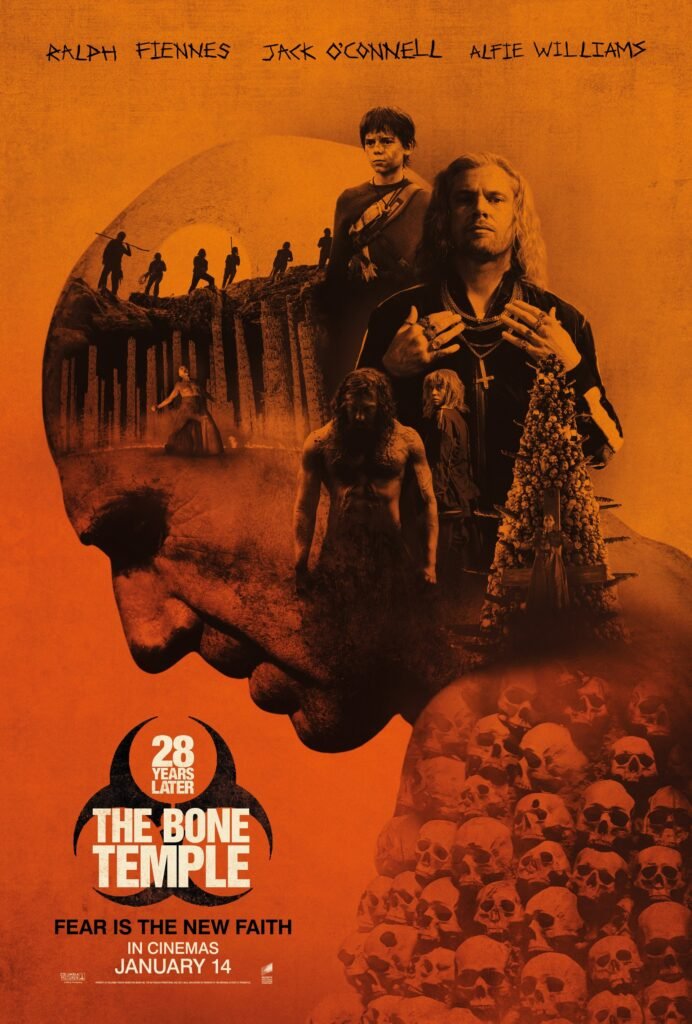
Introduction 28 Years Later: The Bone Temple (Warning contains Spoilers)
The 28 Days Later series has never been simply about infected people hunting survivors down. Since its inception in 2002, the series has examined themes such as fear, breakdown of society, and worst in humanity. Danny Boyle and Alex Garland have made an amazing film series where the infected were frightening.
In time, the franchise continued to develop. 28 Weeks Later covered the military approach and political mismanagement. In 28 Years Later, an adjustment was made with a society surviving alongside the Rage Virus. This new installment, 28 Years Later: The Bone Temple, builds on this development further.
This fourth entry, directed by Nia DaCosta and penned by Alex Garland, approaches things differently. Instead of being about the outbreak, the film delves into what happens after. Specifically, how do you live a meaningful life when civilization as you knew it is gone? What happens to humanity when disaster becomes commonplace?
The result is an ambitious sequel that expands the mythology of the franchise. While not every idea receives enough attention, the film succeeds more often than it fails.
A New Direction for the Franchise
What makes the movie stand out even more is the fact that it is willing to take risks. Many franchises, after a while, fall into a trap of nostalgia and continue to recycle old ideas because they know their audience expects them.
DaCosta brings her own unique voice to the series. There is more of a contemplative approach taken here compared to its predecessors. The earlier films used urgency and panic quite often. This film is more about faith, self-identity, and humanity.
This might come as a surprise to some people watching the movie. Nevertheless, this is quite understandable considering the fact that this film takes place many decades after the epidemic. Much has happened since then. New communities have been established. Different cultures have been developed.
It features Spike joining the gang of Sir Lord Jimmy Crystal. In addition to that, the doctor Ian Kelson is seen forming an odd relationship with Samson, the Alpha Infected. This makes it possible for the film to explore issues which previous parts were unable to address.
Instead of focusing on survival of its characters, the film looks into reasons for their life. This makes it unique among others.
Themes of Faith, Humanity and Evolution
The greatest strength that this movie possesses is thematic complexity. Indeed, the Rage Virus still matters; however, it no longer serves as the center of the narrative.
On the contrary, the movie is all about finding ways to cope with society having adjusted. In this respect, the cult established by Jimmy Crystal is the most accurate example. This is the community of individuals who need answers and are looking for meaning.
It appears to tie in quite well with past movies. The entire series has been about challenging human nature during emergencies. Now, these challenges have become much more intriguing.
There is a lot of focus on power and influence in the cult story line. Jimmy is not a run-of-the-mill bad guy. He is a powerful figure who gives people a sense of identity.
Also, the interaction between Dr. Kelson and Samson creates yet another essential thematic element. This movie questions the notion of the infected, questioning whether they can continue being seen as monsters. Additionally, the movie touches on the subject of empathy within such diverse environments.
This gives the movie depth and makes it more than a regular horror movie sequel. There are some themes that remain underdeveloped.
But there is sufficient thematic material here to prove the necessity of such a movie’s creation.
Nia DaCosta’s Distinctive Vision
Nia DaCosta should be commended for the success of the movie. She does not attempt to mimic Danny Boyle’s style but works on the existing franchise by adding some new elements to it. She has directed the movie very confidently. Her approach to making scenes is such that she gives time to her actors and emotions. There is no lack of balance between emotional and action scenes.
It changes the rhythm. The film becomes more atmospheric compared to other films. It needs not as much movement as it does tension.
DaCosta is best when handling cult elements. She builds a very eerie mood by employing techniques that aren’t necessarily associated with horror films.
It’s usually the calm parts of the film where it really works well. The dialogues carry weight. Relationships between characters feel significant.
Other moviegoers may feel nostalgic for the intensity of previous movies. Nevertheless, DaCosta’s technique sets her movie apart from the other films in the franchise.
DaCosta realizes that a successful franchise needs to change with time in order to stay relevant. She makes sure that her installment does not become predictable.
Cinematography Creates A Different Experience
The cinematography of Sean Bobbitt is an important aspect that defines this movie. It has a very contrasting visual look from the movie, 28 Years Later. In the earlier movie, iPhone cameras were used to make it immediate. This made the movie appear very real and immersive for the viewers.
The Bone Temple has chosen another approach. Bobbitt provides the viewer with a more conventional cinematic image. There is something about the images which is more intense and under control.
The film fits well into such a cinematographic approach since it is not as much about chaos but rather about atmosphere. There are many scenes with very good composition. There is a lot of lingering.
Traditional cinematic cameras replace guerrilla aesthetics. Violence appears brutal but restrained. Moreover, emotional scenes linger deliberately.
The visual aspect also supports the thematic aspects of DaCosta. The world seems more mature. The communities seem like they have been around for many years.
The camera work might not be as innovative as the one before it. Nevertheless, it creates an identity for this film.
Both DaCosta and Bobbitt contribute to the creation of a world that feels familiar but unique.
Strong Performances Across the Cast
The cast delivers consistently strong performances throughout the film. Each actor contributes something meaningful to the story.
The performance by Ralph Fiennes as Dr Ian Kelson is superb. The actor injects into the character a sense of intelligence, humanity, and presence. In the less frenetic scenes of the movie, Fiennes is superb. He manages to convey a lot of feelings through small body movements.
Jack O’Connell makes for an equally good Sir Lord Jimmy Crystal. He manages to create a character that is charismatic yet disturbing at the same time. It is clear why people like following him.
O’Connell refrains from portraying Jimmy as a caricature villain. He portrays him as a person who can inspire both respect and terror.
Jimmy Crystal manipulates faith ruthlessly. He weaponizes belief to justify cruelty. Consequently, dread follows his presence. The fanaticism associated with Jimmy Crystal becomes more intense in terms of psychological fear. The idea of fanaticism seems very realistic.
Different lightings create the feeling of segregation.
Soft colors indicate a sense of humaneness and protection. Dark lighting denotes disintegration and harshness. As a result, the environment reflects moral disintegration.
There is an impressive difference between Fiennes and O’Connell. One of them is associated with empathy and understanding. The other person is connected to conviction and dedication. The opposite positions of these characters contribute a lot to the plot’s tension.
Pacing helps bring more weight to emotions. Little decisions can lead to big repercussions. Trust is a risky currency to use. Spike acts on impulse but honestly. The response of Dr. Kelson is calculated. On the other hand, Jimmy Crystal opts for extremism. Hence, survival reveals different ideologies.
Alfie Williams picks up where Spike leaves off and does so with much greater confidence. There is a sense that he has become more mature in his performance.
The way Alfie deals with his character’s emotional evolution works quite well in this respect. There is certainly something to do with his need for acceptance that makes him a believable protagonist in this surreal environment.
Erin Kellyman should also be credited. While her part may not be huge, she definitely leaves an impact on the audience. She adds dimension to one of Jimmy’s followers.
Kellyman’s acting makes the cult seem realistic. She shows how a person can join a group like this.
The real shock comes from Chi Lewis-Parry as Samson. This role was designed to offer a mere physical danger, yet turned out to be one of the most intriguing roles of the whole film.
Samson receives an incredible dose of humanity from the actor who plays him. Their cooperation with Fiennes is one of the best moments in the movie. There is something special about their relationship, which appears to be quite natural and convincing.
This bond presents the audience with many intriguing ideas that challenge common stereotypes about the infected. Regrettably, there are too few stories about Samson in the movie.
Despite this limitation, Lewis-Parry leaves a lasting impression. Samson may become one of the franchise’s most memorable additions.
What Worked and What Did Not
The film works because it dares not be safe. It adds onto the mythology without recycling any ideas. The issues presented by the movie seem topical and interesting.
The cast is very good. The cinematography lends a unique mood. DaCosta directs in a new way that revitalizes the franchise. The relationship between Kelson and Samson is particularly effective. It introduces fascinating questions about humanity and evolution. These scenes linger in the memory.
The cult storyline also works well. Jimmy Crystal is an engaging antagonist. His influence over followers feels believable. Nevertheless, there are some negatives to the movie. First, some interesting concepts do not get developed adequately enough. Second, some plot lines seem to lack completeness.
The perfect illustration for the second issue is Samson. Samson’s character prompts many intriguing questions. Unluckily, the movie does not focus on him for long.
The tempo of the movie could be another divisive topic for discussion. It would suit certain viewers while others might miss the excitement of the previous parts.
It is also evident that at certain times, the movie tries to establish connections with its potential successors. This has some influence on the ability of the movie to wrap things up satisfactorily. There are threads left hanging in the air.
However, despite the above limitations, the movie does not suffer from them. It is better than its flaws.
Final Verdict
28 Years Later: The Bone Temple Is a Clever and Intelligent Expansion on the Franchise. This movie knows that the franchise’s future must rely on more than just the assaults on the protagonists. It looks at what societies have formed after so many years of fighting for survival.
DaCosta manages to broaden the franchise without betraying it. The cinematography by Bobbitt contributes to the unique style of the movie.
Ralph Fiennes offers an outstanding performance. Jack O’Connell proves to be an effective antagonist. Alfie Williams portrays the further evolution of Spike well. Erin Kellyman shines in her secondary role. Chi Lewis-Parry turns Samson into an unforgettable character.
The movie is ambitious, reflective, and at times, annoying. There were many ideas which needed further development. Several narratives lacked depth. Nevertheless, the courage to venture out is something praiseworthy.
Most importantly, it shows that there are still interesting stories to be told in the franchise. Not only is it about the outbreak, but the consequences of it as well. This is perhaps the biggest asset of The Bone Temple.