Return To Silent Hill (2026) Review – A Haunting, Introspective Descent into Guilt and Repression
Introduction (Warning contains Spoilers)
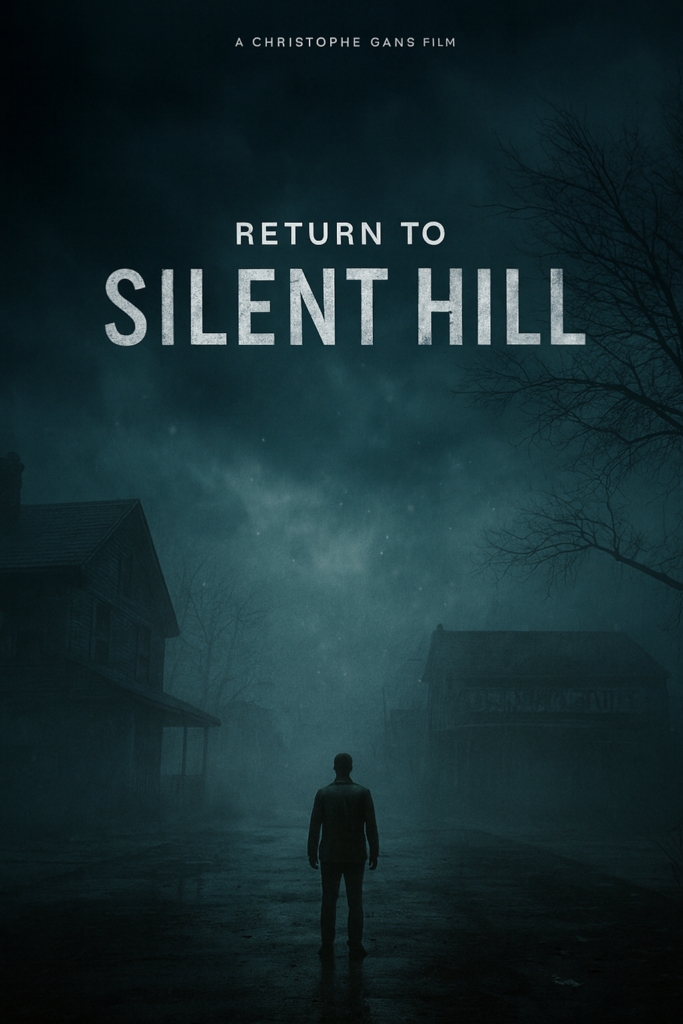
Return to Silent Hill (2026) marks the long-awaited comeback of Christophe Gans to the franchise he first adapted in Silent Hill.
Loosely inspired by Silent Hill 2, this installment functions as a reboot and reimagining rather than a direct sequel.
After watching it with expectations shaped by both the original film and the game, I found a movie driven by mood and theme over conventional horror structure.
Immediately, the film feels deeply personal to Gans. Rather than chase modern horror trends, he revisits a world that clearly still resonates with him. Consequently, the movie prioritizes emotional translation over crowd-pleasing scares. At times, that ambition creates friction and uneven pacing. Nevertheless, the intention remains unmistakable throughout.
The story follows James Sunderland, portrayed by Jeremy Irvine. James lives emotionally hollowed by the death of his wife, Mary. After receiving a mysterious letter seemingly from her, he returns to Silent Hill.
From his arrival, the town feels psychological rather than physical. Fog, decay, and repetition mirror his internal state.
Importantly, the film frames Silent Hill as reactive. The town responds to James’ denial and buried guilt. Instead of random evil, it manifests emotional consequence. Therefore, each environment feels shaped by repression.
Directorial Approach
Gans treats Silent Hill as an emotional mirror. Everything bends toward James’ psyche. While this deepens introspection, it narrows narrative scope. Occasionally, clarity suffers under symbolic weight.
Visually, Gans leans toward romantic symbolism. He reimagines James as an artist instead of an office worker. This change emphasizes metaphor over realism.
Thematically, the shift makes sense.
However, it transforms James into a tragic archetype. As a result, some raw discomfort from the game softens.
Atmosphere remains the film’s greatest strength. Fog dominates the frame.
Silence stretches across abandoned streets.
Negative space reinforces isolation.
Long takes of decay sustain unease.
Visual Effects And Score
Creature design relies heavily on practical effects. Physical performance gives the monsters tangible presence. When Pyramid Head appears, portrayed by Robert Strange, inevitability replaces shock. He moves slowly and oppressively. However, occasional CGI elements feel uneven. Some sequences briefly resemble video game cutscenes.
The score by Akira Yamaoka anchors the experience emotionally. Industrial drones and mournful melodies shape atmosphere.
Rather than accompany scenes passively, the music defines them. Without Yamaoka’s contribution, emotional weight would diminish significantly.
The film prioritizes theme over plot mechanics. Guilt operates as a physical force.
Silent Hill becomes a manifestation of denial.
James’ suffering feels earned rather than imposed. Guilt operates as a physical force.
Silent Hill becomes a manifestation of denial.
James’ suffering feels earned rather than imposed.
Repression drives much of the narrative tension.
James avoids confronting memory.
Conversations remain deliberately vague.
Consequently, emotional repetition reinforces his psychological loop. Love appears distorted and unsettling. The film questions whether devotion masks obsession.
James frames love as justification.
However, responsibility lurks beneath that narrative. The Orpheus myth clearly influences the descent. Yet love cannot undo irreversible choices.
Jeremy Irvine delivers a restrained performance. He portrays James as emotionally numb from the outset.
Stiff posture and guarded expression define his presence. When emotion surfaces, it feels abrupt and uncomfortable.
This approach will likely divide audiences.
Some may perceive distance or flatness.
However, repression demands effort to maintain. Irvine captures that strain convincingly.
Hannah Emily Anderson portrays both Mary and Maria. Her performance shifts between warmth and accusation. She blurs identity intentionally. At times, the result feels haunting. At other moments, theatrical artificiality dominates.
Supporting characters remain subdued intentionally. They often function as reflections of James’ psyche. While symbolism strengthens tone, realism weakens slightly. Consequently, emotional relatability occasionally suffers.
Similarities To The Game
In spirit, the adaptation honors Silent Hill 2.
Core themes of guilt and self-punishment remain intact. Sound design and visual emptiness echo the game strongly. However, structural differences emerge clearly.
The interactive ambiguity of the game disappears. Linear storytelling replaces player-driven discovery. Some revelations arrive earlier than expected. Therefore, subtlety occasionally diminishes.
Visually, the film recreates iconic imagery closely. Recognition brings satisfaction.
Yet familiarity reduces surprise. As a result, impact sometimes softens. Ultimately, Return to Silent Hill challenges viewers deliberately.
It favors emotional logic over narrative momentum. Atmosphere outweighs plot precision. At times, the imbalance shows.
Nevertheless, ambition remains evident.
Christophe Gans does not simply revisit Silent Hill. Instead, he interrogates its meaning.
That struggle appears on screen consistently.
For viewers willing to embrace discomfort, the film offers a haunting meditation on guilt and repression.