
Overall Review of The Strangers: Chapter 3
A Psychological Finale That Elevates the Reboot Trilogy
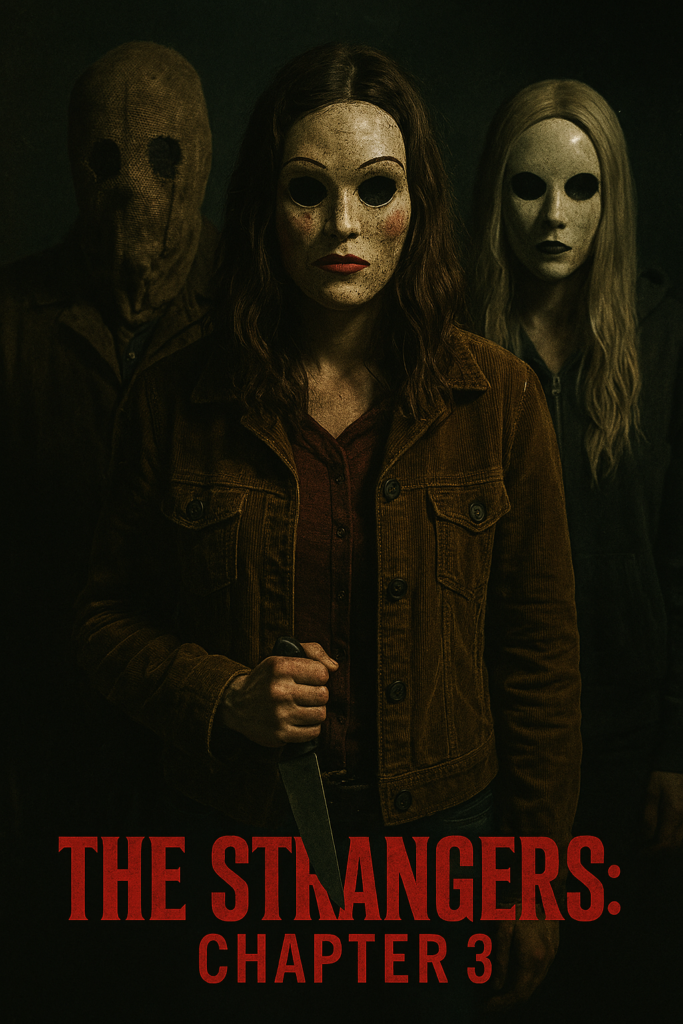
Introduction The Strangers: Chapter 3 (Warning contains Spoilers)
First, the strangers chapter 3 serves as the final chapter in the reboot trilogy. Director Renny Harlin brings the story to its conclusion. Writers Alan R. Cohen and Alan Freedland complete the narrative arc. The trilogy began in 2024 and continued in 2025. However, Chapter 3 delivers the emotional payoff. It resolves the tension that the previous films established.
The story follows Maya, played by Madelaine Petsch. She no longer reacts as a simple victim. Instead, she confronts trauma and moral consequences directly. As a result, the film expands beyond a standard home-invasion premise.
A Trilogy Designed as One Story
One major strength lies in the trilogy’s structure. Harlin conceived all three films as one continuous narrative. He structured them as acts within a single extended arc.
Consequently, Chapter 3 feels like a true culmination. Earlier moments gain new meaning in hindsight. Character interactions now carry emotional weight.
Additionally, Maya’s arc benefits from long-term development..She evolves from frightened survivor to morally conflicted figure. That transformation anchors the trilogy’s emotional core. Therefore, Chapter 3 feels purposeful rather than episodic.
Production and Continuity
The filmmakers shot all three films back-to-back in 2022. And they filmed primarily in Bratislava, Slovakia. The location doubled for the Pacific Northwest. This approach ensured visual consistency across the trilogy. The tone remains cohesive from beginning to end.
Later, the team completed additional photography in 2025. These adjustments refined pacing and narrative clarity.
From my perspective, the refinements strengthened Chapter 3 significantly.
The final product feels cohesive and deliberate.
Directorial Style and Vision
Harlin blends action sensibility with psychological horror. Unlike the 2008 original by Bryan Bertino, this trilogy embraces kinetic energy. However, Chapter 3 shifts toward emotional and psychological focus. Therefore
Harlin balances movement with restraint.
Chase sequences feel intense and urgent.
Yet quieter moments emphasize internal conflict.
The masks, shadows, and isolated environments reinforce symbolic isolation.
Lighting and color grading maintain tonal consistency. Sound design enhances tension without overwhelming scenes. As a result, Chapter 3 prioritizes psychological impact over spectacle.
Themes and Narrative Depth
Without spoilers, the film deepens its thematic focus. It explores trauma, survival, and moral ambiguity. As a result Maya no longer seeks simple escape. Instead, she confronts lasting psychological damage. The film emphasizes unpredictability and sustained fear. Moments of calm quickly collapse into danger. This structure reinforces instability and vulnerability.
Additionally, the narrative examines moral consequence. Survival demands difficult choices. Those choices reshape Maya’s identity. Therefore, Chapter 3 functions as a psychological character study. It transcends traditional slasher expectations.
Performances
Madelaine Petsch delivers a nuanced and controlled performance. Furthermore she balances fear, exhaustion, and resilience effectively. Her physical acting enhances tense sequences. Her facial expressions convey internal conflict without dialogue.
Furthermore, the silent killers remain unsettling. Their deliberate movements build dread steadily. Even off-screen presence creates anxiety. Chapter 3 integrates them into psychological themes. For example they no longer exist solely as shock devices. Instead, they symbolize persistent, inescapable trauma.
Supporting Characters
The film introduces limited secondary characters. Although their presence highlights Maya’s isolation. They reinforce the stakes and emotional tension. Although screen time remains brief, their roles feel purposeful. And they illustrate the consequences of underestimating danger. This reinforces the trilogy’s moral weight.
Emotional and Psychological Impact
Chapter 3 emphasizes emotional horror over gore. For example Harlin foregrounds character transformation instead of repetitive scares. He uses tight framing and shadowed interiors strategically. These visual techniques reflect Maya’s psychological state.
Trauma shapes her behavior and perception.
The film presents fear as cyclical and transformative. Consequently, the ending lingers beyond immediate thrills.
The horror feels psychological rather than purely physical.
Overall Assessment
The film balances tension, action, and character depth effectively. Furthermore it occasionally stretches pacing in transitional scenes. However, the narrative payoff justifies the buildup. Most importantly, Chapter 3 delivers closure. It completes Maya’s arc in a psychologically resonant way. It strengthens the trilogy’s identity as a unified story.
Final Verdict
The Strangers: Chapter 3 stands as the strongest entry in the reboot trilogy. It refines tone, deepens themes, and strengthens character focus. It prioritizes psychological consequence over empty spectacle.
While minor pacing issues remain, the film succeeds overall. It delivers an earned, emotionally intense conclusion. It proves that modern horror can combine action, trauma, and moral complexity effectively.
Ultimately, Chapter 3 transforms a simple home-invasion concept into a layered psychological finale.



Pingback: 5 movies to watch that have a human killer in a mask - Film Misfits