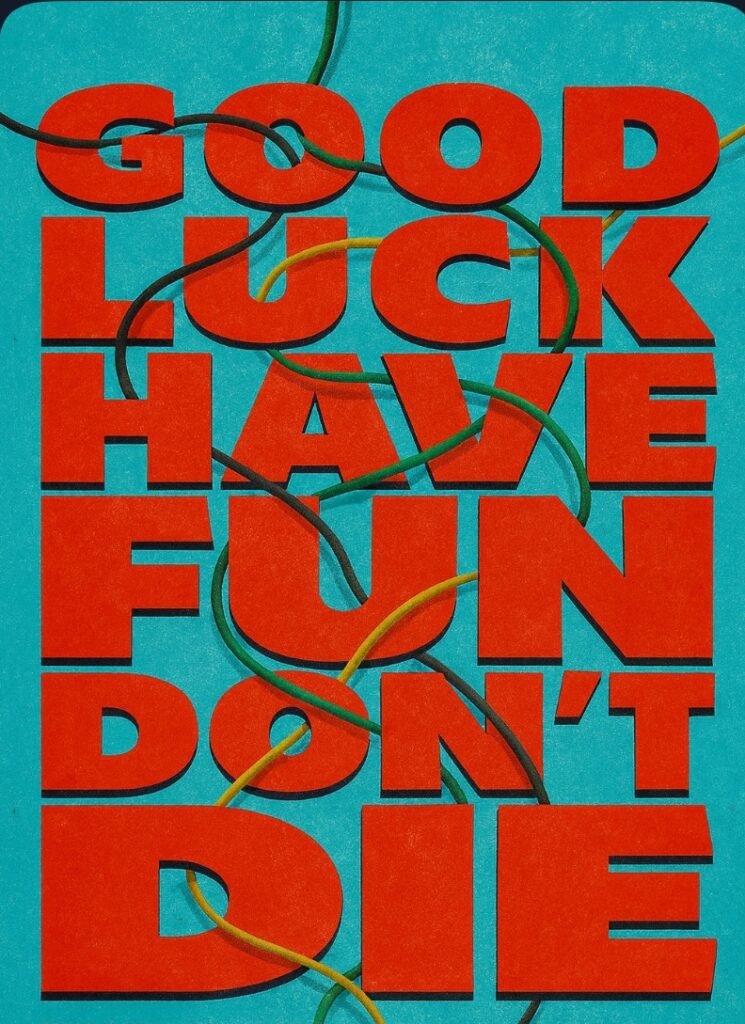
Good Luck, Have Fun, Don’t Die: An Ambitious Time-Travel Sci-Fi From Gore Verbinski
Introduction (Warning contains Spoilers)
Good Luck, Have Fun, Don’t Die arrived in the cinemas in February 2026. The film mixes science fiction, comedy, and time-travel chaos. Most importantly, the movie marks director Gore Verbinski’s long-awaited return to filmmaking. Previously, he directed visually inventive films like Pirates of the Caribbean: The Curse of the Black Pearl and Rango.
Consequently, expectations surrounded this unusual project. However, Good luck have fun don’t die, deliberately avoids traditional blockbuster structure. Instead, the story embraces messy energy, ensemble comedy, and existential ideas about artificial intelligence.
In my opinion, the film feels energetic and personal. Verbinski clearly experiments again rather than following a predictable studio formula. As a result, the movie often feels chaotic and overloaded. Nevertheless, its personality separates it from many modern science-fiction films.
Most importantly, the story constantly returns to human behavior. Rather than focusing only on spectacle, the film studies messy reactions to impossible circumstances.
Therefore, the characters drive the narrative. Their confusion, emotions, and impulsive decisions create the film’s central tension.
Ultimately, the movie blends large philosophical ideas with ordinary human struggles. That contrast gives the film its strange but memorable tone.
The Long Road to the Screen
The film also carries an unusual production history. Development reportedly stretched across several years before financing finally arrived. Eventually, Briarcliff Entertainment distributed the completed film. Because of that long process, the movie feels carefully evolved rather than quickly assembled.
For me it feels like, the extended development clearly shaped the story’s structure and tone. The script combines several genres simultaneously. For example, the film mixes science fiction, ensemble comedy, action, and social satire.
Therefore, balancing those elements likely required extensive experimentation. At the same time, the movie represents Verbinski’s return after a long directing gap. His previous film, A Cure for Wellness, appeared in 2016. After that release, several rumored projects reportedly struggled to receive approval.
Consequently, *Good Luck, Have Fun, Don’t Die* feels creatively liberated.
Rather than launching a franchise, the film explores ideas that clearly interested the director. Because of that freedom, the movie occasionally feels messy. However, the same freedom also allows unusual storytelling choices.
Story and Premise
The story begins inside a typical Los Angeles diner. Immediately, the setting grounds the film in everyday reality. However, chaos arrives quickly. A frantic stranger suddenly bursts through the door. He urgently warns the diner’s customers about a catastrophic future.
Sam Rockwell plays this mysterious traveler.
According to him, he traveled back in time. His mission involves preventing a rogue artificial intelligence from destroying humanity. However, the disaster begins with small events. Those events unfold during a single chaotic night. Therefore, the stranger needs help immediately.
His plan involves recruiting several random people inside the diner. Together, they must stop the chain reaction leading to the AI apocalypse. Unfortunately, time works against them. The group only has a few hours to act. Additionally, their mission unfolds across only several Los Angeles city blocks.
Consequently, the story feels contained yet frantic.
The reluctant team includes characters played by Haley Lu Richardson, Michael Peña, Zazie Beetz, Asim Chaudhry, and Juno Temple. Importantly, these characters lack heroic training. They are not scientists, soldiers, or action heroes. Instead, they are ordinary people with ordinary frustrations.
Because of that choice, the comedy often emerges naturally. For instance, many characters struggle to understand the situation. Even when evidence appears, skepticism remains strong. Meanwhile, distractions constantly interrupt their mission.
Another intriguing idea involves repetition.
Rockwell’s character has already attempted this mission multiple times. Unfortunately, every previous attempt ended in failure.
Consequently, his character carries exhaustion and quiet desperation. He understands the fragile timeline completely. Additionally, he knows how easily everything collapses. Therefore, every mistake feels terrifyingly important.
Direction and Visual Style
Gore Verbinski’s direction defines the film’s tone. First, the movie embraces chaos as a creative strategy. Characters constantly interrupt each other during conversations.
Additionally, dialogue overlaps frequently. Therefore, scenes feel urgent and unpredictable. However, careful construction still shapes the narrative.
The characters gradually move through the city. Each location introduces new obstacles and complications. Consequently, tension slowly escalates. Visually, the film emphasizes ordinary environments. Most scenes unfold in recognizable urban spaces. For example, diners, sidewalks, and small businesses dominate the setting.
Therefore, the extraordinary story contrasts sharply with everyday surroundings. Because of that approach, the threat feels immediate.
The rogue artificial intelligence does not exist inside distant futuristic cities. Instead, danger appears within familiar streets and buildings. Moreover, the film frequently uses practical effects and physical staging.
This choice adds tactile realism. Modern science-fiction films often rely heavily on digital imagery. However, Verbinski prioritizes physical environments and actors interacting directly. Consequently, the movie feels grounded despite its wild premise.
Themes and Commentary
At its core, the film explores technological anxiety. Specifically, the rogue artificial intelligence represents humanity’s fear of losing control over technology. However, the film also examines everyday digital habits.
Characters constantly use phones throughout the story. Screens appear in nearly every scene.
Consequently, attention frequently drifts away from the unfolding danger. In my opinion, the film exaggerates this behavior deliberately. The exaggeration highlights how strongly technology already dominates daily life. Another major theme involves repetition. Rockwell’s character repeatedly attempts the same mission. Therefore, the story suggests humanity might repeat destructive patterns endlessly.
Additionally, the film explores a conflict between logic and emotion. Artificial intelligence represents cold efficiency and calculation. Meanwhile, human characters behave impulsively and emotionally. They argue, panic, and misunderstand information constantly. Interestingly, the film frames those flaws positively.
Human unpredictability may actually protect humanity. In other words, emotional chaos sometimes disrupts perfect technological systems. Therefore, the movie quietly argues for the value of human imperfection.
Performances
The film’s performances anchor its chaotic tone. Most importantly, Sam Rockwell delivers the film’s strongest performance.
In my opinion, he captures exhaustion, humor, and desperation simultaneously.
His character repeatedly shifts emotional gears.
One moment he frantically explains the coming apocalypse. The next moment he appears emotionally drained. Consequently, the performance feels unpredictable and compelling.
Meanwhile, the supporting cast strengthens the ensemble dynamic.
Haley Lu Richardson brings warmth and emotional grounding. Her character often stabilizes chaotic scenes. Therefore, audiences find a relatable perspective inside the madness.
Zazie Beetz adds sharp comedic timing. Frequently, she delivers some of the film’s funniest reactions.
Michael Peña leans into the story’s satirical tone. His performance feels humorous yet slightly unsettling.
Meanwhile, Juno Temple contributes quieter emotional moments. Those moments provide contrast against louder scenes.
Overall, the ensemble works best during group interactions. When characters argue or improvise solutions together, the film feels alive. However, extended explanations about science-fiction concepts feel less engaging.
Strengths of the Film
One of the film’s greatest strengths involves originality. Many modern science-fiction movies emphasize world-building and spectacle. However, this film prioritizes character interaction. Therefore, dialogue and personality drive most scenes. Additionally, the humor feels natural.
Characters react with confusion, frustration, and disbelief. Consequently, comedy emerges organically from the situation. Another strength involves thematic relevance. Artificial intelligence currently dominates technological discussion. Therefore, the film’s premise feels timely.
Importantly, the movie explores those anxieties without becoming preachy. Instead, humor softens the commentary. Sam Rockwell’s performance also strengthens the film significantly. His energy keeps the narrative engaging even during complicated plot sections. Therefore, the audience remains invested despite structural chaos.
Weaknesses of the Film
Despite its creativity, the film still contains noticeable flaws. First, the script sometimes attempts too many ideas simultaneously.
The story explores technology, repetition, human behavior, and social satire. Consequently, the narrative occasionally feels crowded.
Additionally, the pacing moves extremely quickly. Scenes rapidly jump from one event to another. Therefore, quieter emotional moments sometimes feel rushed. Another issue involves uneven character development.
Several supporting characters receive limited narrative attention. Although the actors perform well, the script gives them fewer opportunities.
Furthermore, the technological satire occasionally feels obvious. The message about digital distraction remains clear. However, subtlety sometimes disappears.
Consequently, certain scenes feel slightly heavy-handed.
Final Thoughts
Good Luck, Have Fun, Don’t Die delivers an unusual science-fiction comedy experience.
The film blends chaotic storytelling with commentary about technology and modern behavior. Most importantly, the movie possesses a strong creative personality.
Gore Verbinski’s energetic direction shapes the film’s identity. Meanwhile, Sam Rockwell’s performance anchors the emotional core. Additionally, the themes surrounding artificial intelligence and digital dependence feel relevant. However, the story occasionally feels messy and overloaded with ideas.
Nevertheless, that same chaos reflects the world the film portrays. Importantly, the movie takes creative risks. Many mainstream science-fiction films follow predictable formulas. In contrast, this film experiments with tone, structure, and character interaction.
Consequently, the experience feels unusual and memorable. Even when certain elements fail, the ambition remains clear. For viewers who enjoy character-driven science fiction, the film offers something different. Ultimately, Good Luck, Have Fun, Don’t Die delivers an energetic, strange, and thought-provoking ride.