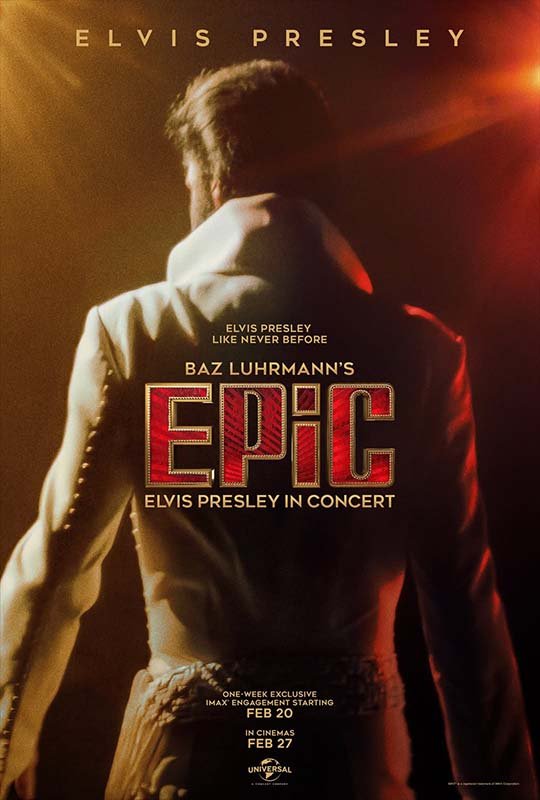
EPiC: Elvis Presley in Concert (2026) Review: Baz Luhrmann’s IMAX Concert Film Revives Elvis Presley on the Big Screen
Introduction
I watched EPiC: Elvis Presley in Concert expecting a traditional Elvis documentary. Instead, I experienced something much stranger and far more immersive. Baz Luhrmann’s film, officially titled EPiC: Elvis Presley in Concert, is not a biopic and not a simple concert movie. It feels more like a cinematic resurrection.
Rather than recreating Elvis through actors, the film builds an entirely new experience using restored concert footage, rare archival recordings, and Elvis’s own voice. After watching it, I felt like I had stepped into a time capsule that had somehow been rebuilt for modern cinema. The result is an unusual IMAX concert film that attempts to bring Elvis Presley back to life on the big screen.
The Discovery That Inspired the Film
The film exists because of a remarkable discovery. While exploring archives connected to Elvis’s performances, Baz Luhrmann and his team uncovered a large collection of unseen concert footage. Some of this material had been sitting untouched for decades. When I learned about this while watching the film, it made the project feel even more fascinating.
These were not short clips or fragments. Many of the reels contained full performances filmed during Elvis’s peak years in the early 1970s. Luhrmann decided to build an entirely new film around this material rather than simply releasing the footage as a historical compilation.
In my opinion, that decision shapes the entire experience. The film feels carefully constructed rather than assembled. Instead of presenting old footage chronologically, the movie creates a narrative that moves through Elvis’s life and career.
How the Film Was Created
Watching the film, it becomes clear that an enormous restoration effort happened behind the scenes. The original material existed in different formats, including 16mm and 8mm film. Some footage lacked synchronized audio. Other sections showed signs of age and damage. The production team spent years restoring the reels frame by frame.
They cleaned scratches, corrected faded colors, and stabilized damaged images. The goal was to make the footage strong enough to fill an IMAX screen. When I saw these restored performances, the results surprised me. The images feel vivid and energetic rather than archival or distant.
Another complex part of the process involved synchronizing silent footage with audio recordings. The team matched lip movements, instruments, and crowd reactions with concert recordings and backstage audio. This careful reconstruction allows entire performances to feel complete again. That technical work becomes one of the film’s most impressive achievements.
The IMAX Experience
The film clearly aims for a large theatrical presentation. Watching Elvis perform on an IMAX screen changes the way the footage feels. The scale makes the performances feel immediate and almost contemporary. The sound design also plays a major role. Concert audio surrounds the audience, creating the feeling of standing inside the arena rather than watching from a distance.
Because of this presentation, the film often feels less like a documentary and more like attending a live show. At several moments I almost forgot the footage was filmed more than fifty years ago.
Elvis as the Storyteller
One of the most interesting creative choices involves Elvis himself narrating parts of the film. Rather than relying on historians or interview segments, the movie uses archival recordings of Elvis speaking about his life and career. These recordings appear between performances, creating a loose autobiographical structure.
Listening to Elvis talk about fame, music, and the pressures of his career adds a surprising emotional layer. In these moments help humanize him. The film does not simply present Elvis as a cultural icon. It also shows the uncertainty and vulnerability behind the legend.
Baz Luhrmann’s Direction
Anyone familiar with Baz Luhrmann’s style will recognize it here. Even though the footage is archival, the editing style feels energetic and modern. The film cuts rapidly between different performances, backstage moments, and visual montages.
Music often drives the rhythm of the editing. At times the movie feels like a visual poem built from Elvis’s performances.
In my opinion, Luhrmann approaches the project with deep admiration for the material. He treats the footage like something alive rather than something historical. That enthusiasm becomes part of the viewing experience.
What Makes the Film Unique
The most unusual aspect of Elvis Epic is the fact that Elvis himself becomes the star again. This is not an actor playing him. It is not a dramatized biography. Instead, the film presents the real performer through restored recordings and live performances.
Because of that approach, the movie feels closer to a musical time machine. Watching it gave me the sense of seeing Elvis in his natural environment on stage.
The film also blends several formats at once. It works as a concert film, a documentary, and a cinematic tribute. Those elements overlap throughout the entire runtime.
Strengths of the Film
The restoration work stands out as the film’s greatest achievement. Seeing decades-old footage presented with such clarity feels remarkable. The IMAX presentation also enhances the performances dramatically. Elvis’s stage presence fills the screen in a way that feels powerful and immediate.
Another strength involves the emotional connection created through Elvis’s own voice.
Hearing him reflect on his career while watching the performances adds a sense of intimacy. These moments give the film genuine emotional depth.
Weaknesses of the Film
Despite its strengths, the film does have some limitations. The structure occasionally feels loose. Because the film builds its narrative from archival fragments, some sections feel more like visual montages than traditional storytelling.
At times the pacing slows when the editing lingers too long on repeated performance styles. However, these moments never completely undermine the experience.
They simply remind viewers that the film is working with historical material rather than newly filmed scenes.
Why the Film Matters
After watching Elvis Epic, the reason for the film’s existence becomes clear. Baz Luhrmann did not want to retell Elvis’s story with another actor. Instead, he wanted to give Elvis the opportunity to perform again for a modern audience.
The newly discovered footage made that idea possible. Rather than functioning as a sequel to the 2022 Elvis biopic, the film acts as a companion piece. It shifts the focus away from dramatization and toward the real performer. This decision gives the film a unique purpose.
Final Thoughts
Elvis Epic is not a traditional documentary and not a conventional concert film. Instead, it feels like a carefully constructed tribute built from rediscovered history. Watching the movie gave me the sense of witnessing Elvis Presley in a new way.
The restoration work, the IMAX presentation, and Elvis’s own voice combine to create a cinematic experience that feels both nostalgic and strangely immediate. Even when the structure feels unconventional, the performances themselves carry enormous energy.
For anyone interested in Elvis Presley or music history, Elvis Epic offers a rare opportunity to see the King of Rock and Roll performing again on the biggest screen possible.