Whistle (2026) Review: Atmospheric Horror That Fails to Fulfill Its Potential
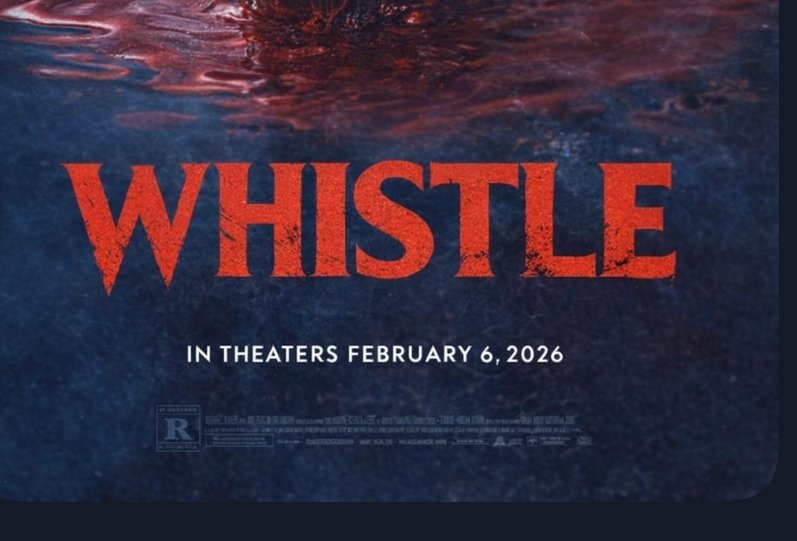
Introduction Whistle (Warning contains Spoilers)
There’s a particular kind of disappointment when a film with a brilliant idea collapses under its own weight. Whistle embodies this fully. On paper, it should have been one of the standout horror films of 2026: a supernatural thriller centered on an Aztec death whistle.
This whistle summons a physical manifestation of a person’s future death. Its concept is rich in cultural depth, mythological intrigue, and cinematic potential. Yet the film wastes almost all of this promise. Instead, it settles for derivative, predictable, and frustratingly shallow storytelling.
Overwhelmed by Influences
From the very start, Whistle feels like it tries to graft together the DNA of other, better films. Its structure mirrors Final Destination, capturing a similar sense of inevitability and “here comes the next death” rhythm.
Meanwhile, the cursed-object setup and teen ensemble echo Talk to Me, but lack that film’s emotional intelligence and thematic depth.
Rather than blending these influences creatively, the movie imitates them. Entire scenes become predictable, removing suspense and diminishing tension.
It’s not homage—it’s repetition, leaving viewers able to predict key events long before they happen.
Predictability Weakens Tension
This predictability robs the film of horror’s most essential ingredient: uncertainty. Horror thrives on instability, yet Whistle moves along predictable rails.
Once the whistle’s rules are explained—early, without ambiguity—the story becomes a checklist. You know who is next and how the scene will escalate.
Even supernatural manifestations, while visually striking, follow a rigid pattern. Their impact diminishes as the story progresses.
The central idea remains strong, but the storytelling never rises to match it.
Sluggish Pacing Drains Energy
The pacing further undermines the film. Despite a high-concept hook, Whistle slows to a crawl during long stretches.
These slower moments could have developed characters, expanded the mythology, or built sustained dread. Instead, they feel like filler designed to hit runtime.
Quiet sequences could have added emotional depth or reinforced cultural context. They fail to do either, stalling momentum.
When the film finally accelerates, it follows predictable beats, offering few surprises and little sustained excitement.
Thin Characters Despite Talented Cast
The characters are built from basic teen-horror archetypes: outsider, loyal friend, anxious love interest, comic-relief cousin.
The script never pushes them beyond these outlines. The generic high-school setting lacks the specificity that could ground the story emotionally.
Without grounding, characters feel like placeholders designed to move the plot forward. Even when emotional stakes appear, they rarely develop fully.
Performances Add Life
Despite weak writing, the cast shines. Dafne Keen brings seriousness and emotional clarity that elevates the lead role beyond what the script allows.
Sophie Nélisse adds warmth and sincerity. Their chemistry delivers the only truly human moments in an otherwise mechanical story.
Sky Yang injects charm and levity, briefly energizing the plot. Nick Frost and Michelle Fairley provide weight and eccentricity in smaller roles.
The actors do everything they can, but the script limits their potential.
Visuals and Sound Offer Glimpses
Visually, Whistle contains moments of inspiration. Corin Hardy’s practical-effects background is evident in the physicality of supernatural manifestations.
Some imagery is genuinely striking, hinting at the stronger movie this film could have been. Sound design also stands out. The whistle’s shriek is unsettling, memorable, and atmospheric. It enhances tension effectively.
However, these strengths feel isolated—fragments of a better movie trapped in a weaker overall execution.
Cultural and Thematic Potential Ignored
The Aztec death whistle is historically and mythologically significant. Yet the film treats it more as a gimmick than a meaningful artifact.
Its origins, symbolism, and cultural context remain largely unexplored. The movie uses cultural elements for flavor rather than substance.
Modern horror often blends folklore with contemporary storytelling, as seen in The Witch, His House, and La Llorona, Whistle misses this opportunity entirely.
Frustrating Climax
By the time the film reaches its climax, disappointment overwhelms. You can see the movie it wanted to be: atmospheric, mythic, emotionally resonant.
Instead, it delivers a derivative, uneven, and shallow horror remix. The film never finds its own voice or identity.
It fails to rise above its influences and neglects the cultural and thematic potential of its premise. Execution never fulfills the promise.
Conclusion: A Film of Lost Potential
Ultimately, Whistle is defined more by what it could have been than what it is. Brilliant concept, talented cast, and occasional atmosphere exist.
Derivative plotting, thin characterization, and slow pacing hold it back. The story remains familiar, predictable, and disappointingly ordinary.
The film is not unwatchable, offering competent scares, strong performances, and some striking visuals.
Yet it never fully delivers. For a story about inevitable death, the most inevitable aspect is how familiar it feels.
Whistle serves as a reminder that even the strongest ideas can falter when a film imitates others instead of finding its own voice.