
Red Eye Season 2 review
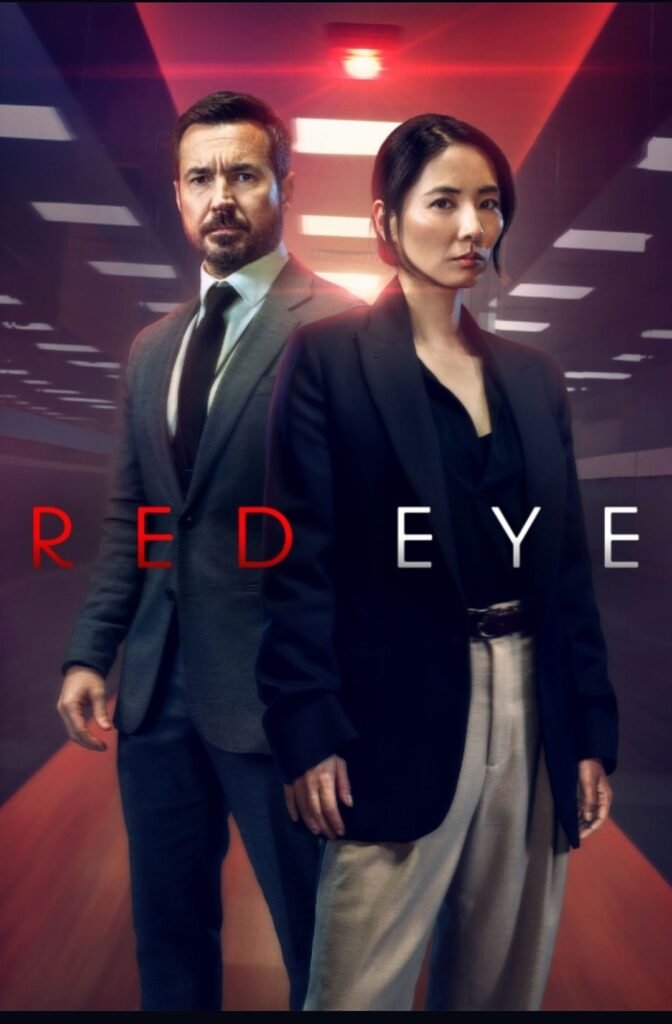
Red Eye Season 2 (Crimson Icarus) Review – Spoilers
Red Eye Season 2: Crimson Icarus returns with greater ambition and a much louder presence. Moreover, it expands far beyond the tightly controlled structure that defined its first season. Created by Peter A. Dowling, the series premiered on January 1, 2026. It brings back a strong cast, including Jing Lusi, Martin Compston, Jemma Moore, and Lesley Sharp.
After watching the full season in quick succession, I found it gripping and relentless. However, it also asks viewers to accept far more narrative shortcuts along the way. Therefore, while the experience feels exciting, it often trades precision for spectacle.
From Heathrow to Total Lockdown
Season 1 thrived on simplicity. In contrast, Season 2 immediately shifts toward scale and spectacle. The story opens at Heathrow Airport with a murder. Consequently, DS Hana Li (Jing Lusi) becomes drawn into the US Embassy in London.
Soon after, a diplomatic event spirals into chaos when a bomb threat forces a complete lockdown. As tensions rise, deaths begin to mount inside the embassy. Meanwhile, MI5 Director Madeline Delaney (Lesley Sharp) becomes trapped aboard a sabotaged aircraft heading toward London. From the outset, the narrative moves with urgency. As a result, it rarely allows the audience time to pause or reflect.
Style, Direction, and Escalation
The change in setting shapes the season’s tone in significant ways. Unlike the confined airplane of Season 1, the embassy operates as a complex and high-tech labyrinth. Surveillance systems, sealed corridors, and diplomatic protections add layers of intrigue. In theory, this evolution strengthens the show’s core concept. However, execution varies, and therefore some moments feel less convincing than intended.
Under the direction of Kieron Hawkes and Camilla Strøm Henriksen, the visual style becomes more kinetic and aggressive. Consequently, the camera work leans heavily on handheld shots and rapid transitions. In addition, the season embraces darker material. A particularly graphic sequence in Episode 5 highlights this tonal shift and reinforces the show’s move toward a harsher, more intense identity.
Relentless Pacing Over Logic
Pacing remains the defining feature of Season 2. Every scene drives the story forward. Therefore, each moment feels designed to maintain tension. The narrative constantly cuts between the embassy and the sabotaged plane, which ensures continuous momentum.
However, this relentless structure comes at a cost. Because the show prioritizes speed, it often sacrifices clarity and plausibility. I found that this approach works extremely well during an initial binge. Nevertheless, the cracks become increasingly visible when you step back and examine the plot more closely.
Ambition and Thematic Expansion
At the same time, the season attempts to broaden its thematic scope. It explores institutional corruption and suggests that the true threat comes from within positions of power. Furthermore, it shifts focus toward UK–US relations, which adds a contemporary geopolitical edge.
The conspiracy surrounding the Samson D300 military project introduces ideas about greed and privatized power. In addition, several characters continue to grapple with unresolved trauma. While these themes add depth, they also stretch the narrative. As a result, the series occasionally feels overloaded with ideas it cannot fully develop.
Performances That Hold the Line
Despite these challenges, the performances provide a strong foundation. Jing Lusi once again anchors the story with a composed and believable performance. She gives Hana Li a clear sense of growth. Therefore, her journey remains engaging even when the plot becomes exaggerated.
Meanwhile, Martin Compston injects energy into the role of Clay Brody. His intensity keeps scenes dynamic. However, his familiar style sometimes undercuts the seriousness of the material. Lesley Sharp brings authority to Madeline Delaney, yet her performance occasionally feels restrained given the stakes.
In contrast, Jemma Moore delivers a more understated arc, which adds psychological nuance. A brief appearance by Richard Armitage also stands out. Consequently, it reconnects the story to its origins and provides a welcome emotional beat.
Character Growth vs Plot Demands
Character development does progress, although it rarely takes center stage. Hana grows more confident and becomes increasingly embedded in the intelligence world. Meanwhile, Brody wrestles with his moral boundaries. Jess attempts to build a career despite lingering trauma. At the same time, Delaney manages multiple crises at the highest level.
Even so, the fast pacing limits how deeply these arcs resonate. Emotional moments appear. However, they pass quickly. Therefore, they do not always achieve their full impact.
The Plausibility Problem
The most significant weakness lies in realism. The US Embassy should feel impenetrable. Instead, the series presents it as surprisingly vulnerable. Intruders move too easily, and key security systems fail too often.
Consequently, tension begins to erode as inconsistencies increase. Although the show remains entertaining in the moment, its internal logic struggles under scrutiny. This issue becomes harder to ignore as the season progresses.
Final Verdict
Red Eye Season 2: Crimson Icarus delivers a high-energy and engaging thriller. It embraces a bigger scope, faster pacing, and more ambitious storytelling. However, it also trades precision for spectacle.
If you value tight plotting and realism, this season may frustrate you. On the other hand, if you enjoy fast-moving drama, it delivers consistent excitement. While it does not surpass Season 1, it still offers a tense and entertaining ride. Ultimately, it proves the series will take risks, even when those risks do not fully succeed.