Andor (TV Series) Review: Star Wars’ Dark, Political Thriller Redefines Rebellion
Introduction: A Star Wars Story for Adults (Warning contains Spoilers)
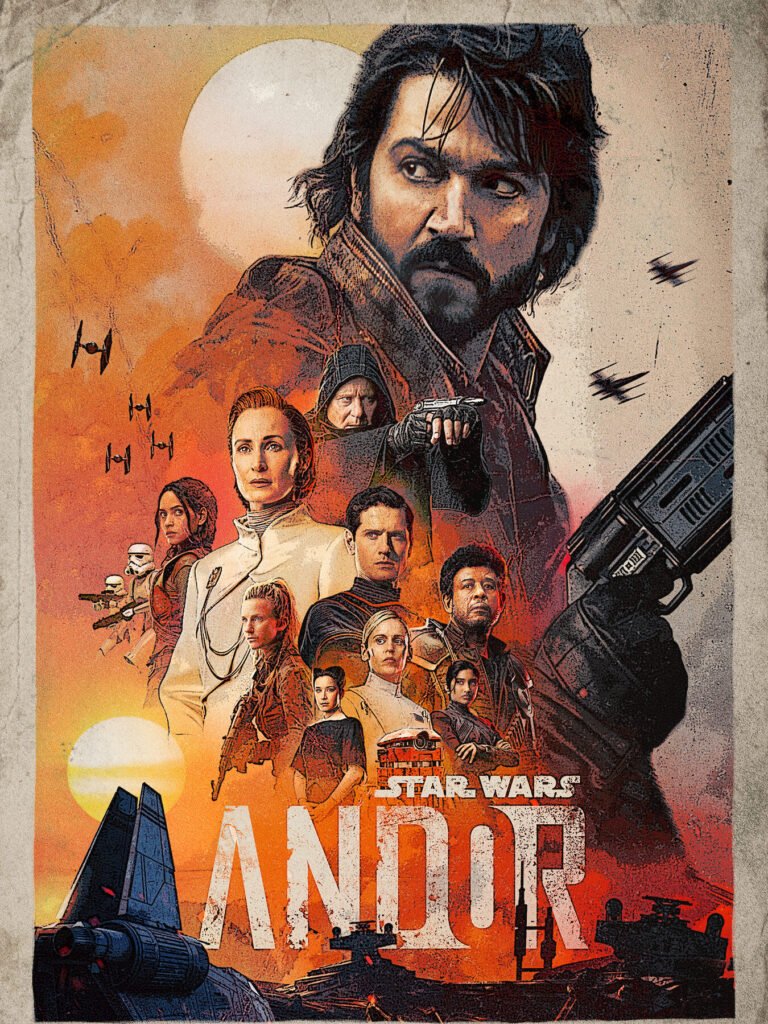
In my opinion, Andor represents Star Wars at its most sophisticated, addressing adults without pandering. From the start, the series avoids familiar space fantasy tropes or leaning on nostalgia. Instead, it delivers a grounded, politically charged thriller.
Rather than focusing on mystical powers or superweapons, the story emphasizes survival, oppression, and resistance. Consequently, it feels real and intimate.
By rooting the narrative in everyday struggles, exhaustion, and quiet desperation, the stakes become tangible and emotionally impactful. This series studies power’s dehumanizing effects and demonstrates how resistance emerges from necessity, not destiny.
A Rebellion Built from Necessity
One key success is rejecting romanticized or idealized rebellion. Andor follows Cassian Andor gradually pulled toward revolution.
Initially, Cassian seeks survival, debt relief, and protecting loved ones rather than heroism. Therefore, his evolution feels realistic.
Every step toward rebellion results from circumstance, injustice, and personal loss. As a result, his transformation becomes compelling and believable.
The series also explores how rebellions function pragmatically. It shows funding, secrecy, paranoia, and moral compromises as necessary rather than accidental.
Therefore, Andor treats the audience respectfully, refusing easy answers about morality and power.
The Empire as a System, Not a Villain
The Galactic Empire appears as a rigid institution rather than a theatrical villain. It thrives on order, efficiency, and political maneuvering.
Imperial officers advance by excelling at surveillance, paperwork, and careerism. Consequently, their mundane actions create terrifying, systemic oppression.
The Narkina 5 prison arc emphasizes psychological manipulation over overt violence. Its routine, fear, and control dehumanize prisoners effectively.
By highlighting procedural cruelty rather than chaos, the Empire feels frighteningly real and recognizable as authoritarian.
A Tangible and Lived-In World
Visually, Andor feels grounded and distinct from most modern science fiction. Real locations and practical sets add physical weight.
For example, Ferrix looks worn by labor, while Aldhani’s landscapes blend beauty with vulnerability. Consequently, every location feels lived-in.
The cinematography favors handheld shots, muted colors, and a documentary-like style. This approach reinforces realism and political thriller aesthetics.
Ships feel heavy, weapons dangerous, and environments credible. Furthermore, this reinforces the idea of Star Wars as a used, functional universe.
Two Seasons of Relentless Progression
The first season focuses on a meticulous character study over a single year, allowing storylines room to breathe.
Later, the final season accelerates, covering the years leading to Rogue One. This jump intensifies inevitability and tension.
The rebellion grows, yet it also becomes compromised and dangerous. What starts as scattered resistance evolves into large-scale conflict.
The political plot on Coruscant becomes especially gripping. Mon Mothma balances public respectability with secret rebellion, creating constant suspense.
By integrating directly into Rogue One, accumulated loss and sacrifice give that film deeper emotional resonance.
Performances That Elevate the Series
Diego Luna delivers restrained brilliance as Cassian Andor. He plays him as reactive, guarded, and driven by survival instincts.
Throughout the series, Luna shows gradual focus, resolve, and burden, reinforcing the inevitability of Cassian’s choices.
Stellan Skarsgård as Luthen Rael embodies rebellion’s moral cost. He conveys exhaustion, fury, and awareness that his goals carry personal loss.
Genevieve O’Reilly portrays Mon Mothma with subtlety and constant restraint. Her actions balance political poise with secret resistance, heightening tension.
Adria Arjona as Bix Caleen grounds the series emotionally. Her suffering is raw, personal, and emphasizes rebellion’s collateral damage.
Andy Serkis delivers Kino Loy’s transformation with heartbreak and authenticity. His arc shows hope emerging through pain rather than inspiration.
Denise Gough and Kyle Soller illustrate authoritarian power’s fragility. Meero and Karn thrive through obsession, insecurity, and ambition, highlighting systemic cruelty.
Even smaller roles impress. Fiona Shaw’s Maarva Andor gives Ferrix moral strength. No performance feels wasted or secondary
Andor Redefines Star Wars Storytelling
By the series’ end, Star Wars appears more sophisticated and adult. The rebellion is brutal, exhausting, and morally complex.
Cassian’s choices in Rogue One now feel earned rather than sudden. Consequently, the story transforms into a cohesive tragedy.
Andor proves the franchise can deliver smart, mature storytelling without relying on nostalgia or spectacle.
It asks hard questions about morality, resistance, and complicity while refusing comforting answers.
Ultimately, this series exemplifies rebellion’s cost and demonstrates why some fights demand total sacrifice.