Blue Moon (2025) Review: A Haunting Character Study That Lingers
Introduction to Blue Moon (2025)
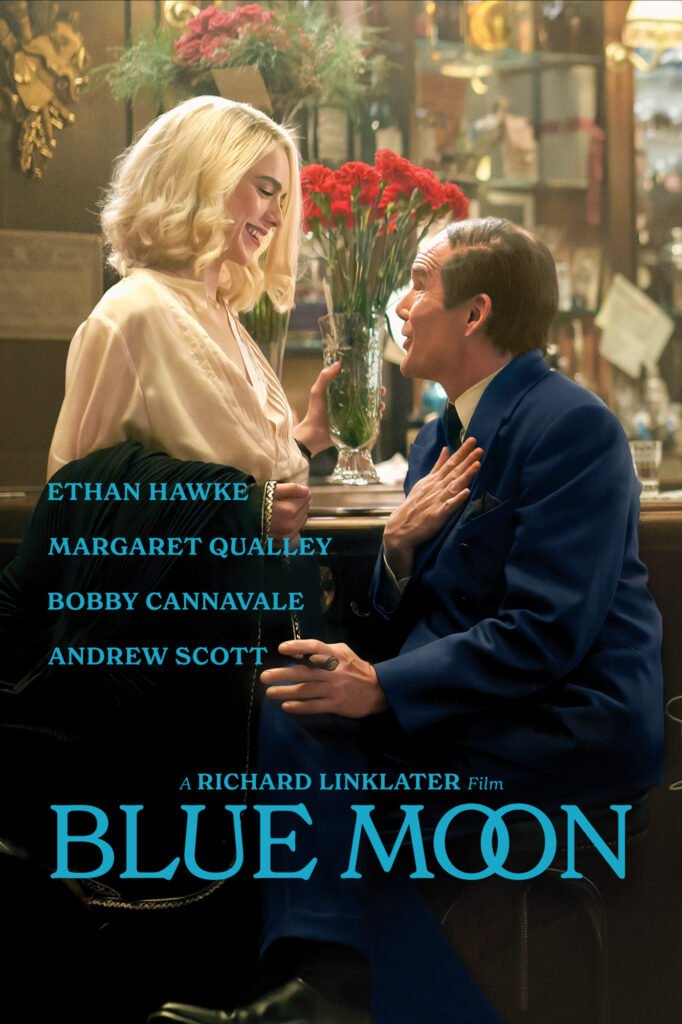
Blue Moon arrives as one of the most intimate dramas of 2025. Director Richard Linklater delivers a restrained and emotionally precise film. The story centers on legendary songwriter Lorenz Hart during his final days. Ethan Hawke leads the cast with a deeply internal performance. From the opening scene, the film establishes a reflective and melancholic tone. However, it never loses focus or emotional clarity. If you enjoy character driven dramas, this film demands attention.
Story and Historical Context
Blue Moon takes place in 1943 New York. Lorenz Hart struggles with addiction, insecurity, and fading relevance. Meanwhile, his former collaborator Richard Rodgers moves forward with new creative partnerships. That professional separation fuels Hart’s emotional spiral. The film unfolds across one pivotal evening. Therefore, tension builds through conversation rather than action.
Instead of grand events, the script explores regret and artistic legacy. As a result, every line carries emotional weight. The title references the iconic song “Blue Moon.” Consequently, music shapes the film’s emotional rhythm.
Ethan Hawke’s Performance as Lorenz Hart
Ethan Hawke delivers one of his strongest performances in years. He avoids theatrical exaggeration. Instead, he uses posture, silence, and subtle expression. Therefore, Hart feels painfully human. Hawke portrays insecurity without begging for sympathy.
At the same time, he shows flashes of wit and brilliance. His performance anchors every scene. Because of that, the film never drifts emotionally. You watch a talented man confront his own decline. That vulnerability creates the film’s most powerful moments.
Direction and Atmosphere
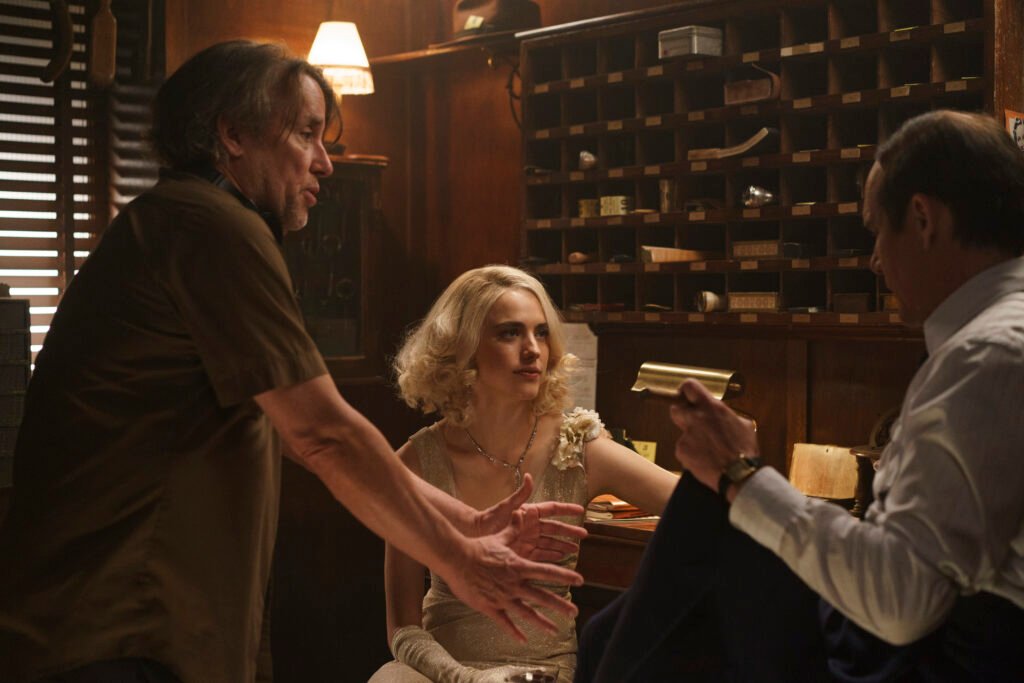
Richard Linklater directs with discipline and control. He favors long takes and intimate framing. As a result, conversations feel immediate and personal. The camera stays close without feeling intrusive. The production design recreates 1940s New York with careful detail.
However, the film never feels trapped in nostalgia. Instead, Linklater focuses on emotional realism. Therefore, the setting supports the character study rather than distracting from it. The pacing moves steadily. Consequently, the film maintains tension without artificial drama.
Themes of Fame, Collaboration, and Regret
Blue Moon explores artistic identity and partnership. Lorenz Hart struggles with comparison and professional displacement. Meanwhile, Richard Rodgers represents forward momentum and reinvention. That contrast drives the emotional conflict. The film also examines loneliness behind public success.
Although Hart wrote beloved songs, he feels isolated. Furthermore, addiction intensifies his fear of irrelevance. As the night progresses, regret grows heavier. However, the film never judges its protagonist.Instead, it presents a clear portrait of self sabotage and brilliance.
Final Verdict: Is Blue Moon Worth Watching?
Blue Moon offers a quiet but powerful cinematic experience.It avoids melodrama and focuses on emotional truth. Ethan Hawke commands the screen with subtle intensity. Richard Linklater shapes the story with confidence and restraint.
Although the film moves slowly, it never feels empty. Instead, every conversation deepens the character study. If you appreciate thoughtful biographical dramas, the film delivers. Ultimately, it stands as one of the most mature films of 2025