Çatlı 2 Movie Review: A Turkish Political Thriller
Introduction (Warning Contains Spoilers)
A biopic about a controversial political figure is hardly ever simple to write, especially if there are many secrets and conspiracy theories around their life.
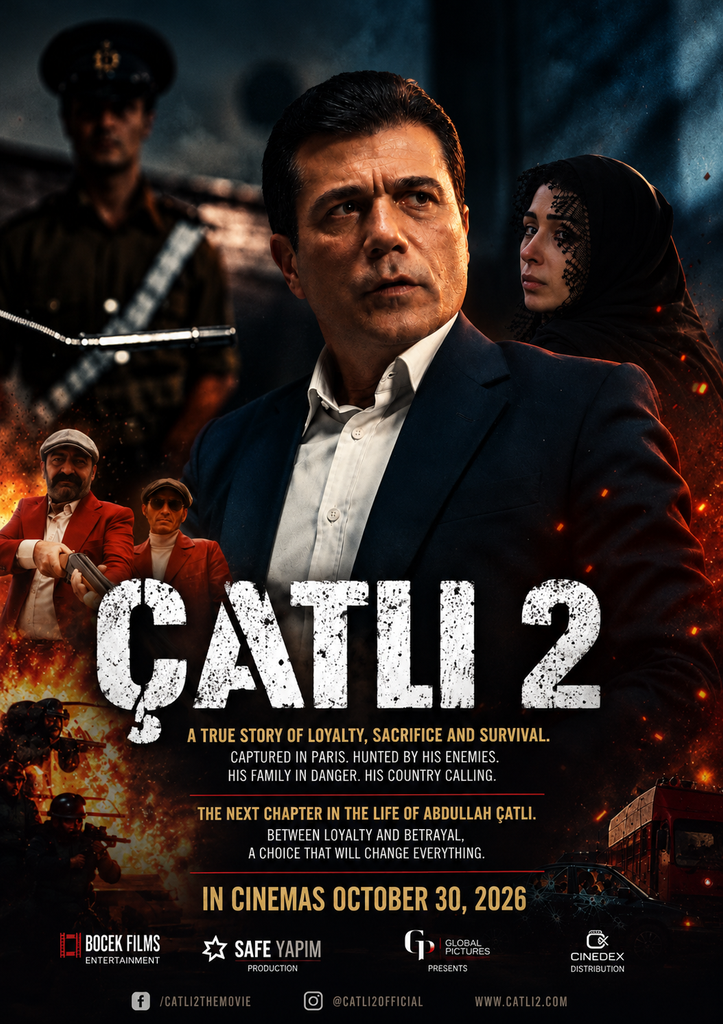
Çatlı 2 chronicles the story of Abdullah Çatli that takes us to a more intense time of his life. This sequel focuses on his time in jail, loyalty to his family and the secrets of Turkish intelligence.
The film, directed by Deniz Enyüksek and starring Vedat İnceefe follows Abdullah Çatli after he survives an attack in Paris. He gets arrested and put into jail by the French police
Now his family are in danger and Turkish intelligence want him to do their bidding, he is stuck between his freedom, political loyalty and wanting to go back home.
Whilst there is an exciting political thriller to this film, it has a wider scope due to it being set in Europe, in jail and having scenes around intelligence.
However, it does make you question if they are trying too hard to show Abdullah as a hero.
A More Personal Story of Captivity and Loyalty
One of the most obvious changes between Çatlı 2 and its prequel is the shift in focus. While the first film focused mostly on the street fighting and political scenes, there is a large amount of focus on Çatlı being in prison in France and the pressure on his family.
The film begins after the Paris ambush. Çatlı is unsure of his future having been taken into custody by the French Authorities and will be facing a trial in Rome. His wife Meral and family are also falling under increasing danger.
The political aspect of the film is also very complicated. After the assassination attempt on the Pope, the nationalist movement is under increased pressure in Europe.
Çatlı is approached by Turkish Intelligence and asked to give away his real identity in order to help them prepare for what is coming in Rome.
This creates the main conflict of the movie. Should Çatlı stay anonymous, loyal to those around him, or work with the Turkish State to get back home? This creates a good emotional core with the themes of being in custody, loyalty and sacrifice.
I really like how they bring Meral and the family into the film more. This provides a different perspective as we can see how his political life has affected those around him.
A Claustrophobic Change of Direction
The movie has a very different feel to the first film. Çatlı 2 takes place in many enclosed spaces including the French prison which allows tension to be built up in the form of dialogue and arguments.
Overall it’s a more political spy thriller. There is less action and more focus on the relationships between Çatlı and the foreign authorities and Turkey.
The threat of the trial in Rome creates a sense of urgency. With the threat of betrayal there is constant pressure on the characters.
Visually, the colour palette has changed to create a more isolated feeling. Cool tones of blue, grey and dull earth colours are used to create a cold and isolated feeling within the prison setting.
The European settings of Paris and Rome allow us to see the bigger picture. High contrast lighting and dark interiors have been used to show the difference between what is going on above board and what is going on behind closed doors.
Clearly inspired by international spy movies. The movie focuses heavily on the political aspects of the story and the high stakes of escaping.
Whilst some of the narrative may be familiar to fans of movies like The Bourne Identity, the movie still holds a strong Turkish identity.
The themes of family honour, loyalty, nationalism, the state and the emotional attachment to their home country make this movie stand out from more traditional Hollywood thrillers.
Although this can be hard to follow for international audiences, it gives the movie a sense of identity.
It does not try to copy Western political thrillers, but instead puts these typical elements into a Turkish historical and political setting.
The Performances: Family and Political Tension
Vedat İnceefe plays the role of Abdullah Çatli. He portrays this character in its most physical form and at its most effective when we see the persistence and stubbornness of the character.
The issues with this performance come from the more complex scenes where he must display a range of emotions.
There are times when he does struggle to show the loneliness, confusion and conflict that occurs within the character.
The role of Meral played by Şiva Behrouzfar is a great compliment to the film. She adds some real emotional moments to the story especially as we begin to understand the impact of her husbands imprisonment.
Through the family story we begin to understand the impact that having a life based around politics and being secretive can have on personal relationships. This stops the story from being too focused on the intelligence and nationalism.
Eren Vurdem and Ömer Kurt also play a key role, adding to the characters of Ütücü and Yetim. Engin Benli also adds to the story with his authoritative role as the Colonel. Erdal Küçükkömürcü also adds experience to the cast.
Overall the supporting cast help to create an atmosphere of confusion around Çatli. However the main role is quite divisive.
The actor has been tasked with showing a lot of complex emotions and at times the performance can lack authenticity.
The Problem of History, Politics and Myth
It can be said that the most significant issue faced by Çatlı 2 is its relationship with Abdullah Çatli himself.
Abdullah Çatli is a very controversial figure within Turkish history, being linked to nationalist politics, organised violence and complex relationships between political movements and criminal networks.
While the film is heavily based on personal narratives and political narratives that are favourable towards Abdullah Çatly, this isn’t inherently a bad thing.
As biography films aren’t required to be impartial, this means that the filmmakers are allowed to present the historical figure through a specific lens.
The issue comes in when the figure they’re presenting has very serious allegations attached to them and their history. Overall the film will not be able to provide a complete picture.
With this in mind, it can be said that Çatlı 2 presents a biased view of Abdullah Çatli’s story due to the focus on themes such as loyalty, sacrifice and national pride.
The film doesn’t look much into the more negative parts of Abdullah Çatli’s history. Therefore, viewers who aren’t invested in the political bias may feel some key information is missing.
As the film is heavily based on political myths, this means that it cannot provide an objective historical piece.
The film will most likely appeal to those who are already familiar with the events, people and ideology involved. For those who are not, some of the political relationships may be a bit confusing to understand.
A Shocking Ending That Divides
Likely to be the most talked about part of the film, the ending focuses on one of the most famous moments in modern Turkish political history; the Susurluk car crash.
The real car crash was very controversial and brought up many issues regarding the ties between politics, security forces and organised crime.
In Çatlı 2 it has been used to create a very provocative ending, with Çatlı seemingly opening his eyes in the back seat as the screen goes to black.
This is a very daring ending that obviously plays with the many rumours and urban legends around Çatlı’s fate.
By doing so it has created an excellent ending for those who are intrigued by the myth around Çatlı, leaving them wanting more.
It also leaves the film with an unforgettable ending that will definitely get people talking.
However, this does cause some issues. As it is a biopic it will automatically raise questions around how accurate it is.
As it plays on the idea that he may have survived it can leave people questioning whether it is fact or fiction.
Whilst the ending is very dramatic it does give the impression that the creators are more interested in keeping the legend alive.
Final Verdict
Overall, this sequel has a more focused and personal story. The film has moved away from the street scenes and is now a more confined political thriller that focuses on themes of imprisonment, family, loyalty and secrets.
Deniz Enyükseks direction gives the film a darker feel, and the European setting combined with the cold colour palette helps to make the viewer feel isolated.
The family aspect has been expanded on well in this film. Şiva Behrouzfar brings a great emotional element to the film and makes the political story more personal.
There are some good tension building moments within the scenes set in prison. Overall the decision to tell the story in multiple parts allows the plot to be developed.
However, there is a lack of balance in portraying an extremely controversial figure in history. The film doesn’t really look into the darker side of Çatlı’s life which makes it hard to see it as an even biographical film.
Vedat İnceefe didn’t portray the character with a lot of depth in his mind. There is also a large focus on Turkish politics and nationalistic myths which takes away from the films appeal.
Whilst the ending is a great cliffhanger, it does add to the conspiracy and urban legends aspect of the film.
Whilst this could excite those wanting to see the story continue, the film may leave those wanting a more in-depth look at Çatlı wanting more.
Overall the film is best when focusing on the personal side of the political loyalty and uncertainty of life in prison.
This is an ambitious sequel with a good thriller structure, however the dedication to celebrating the main character stops the film from looking into the complexity of the history.