Clayface 2026 Movie Review
Introduction (Warning Contains Spoilers)
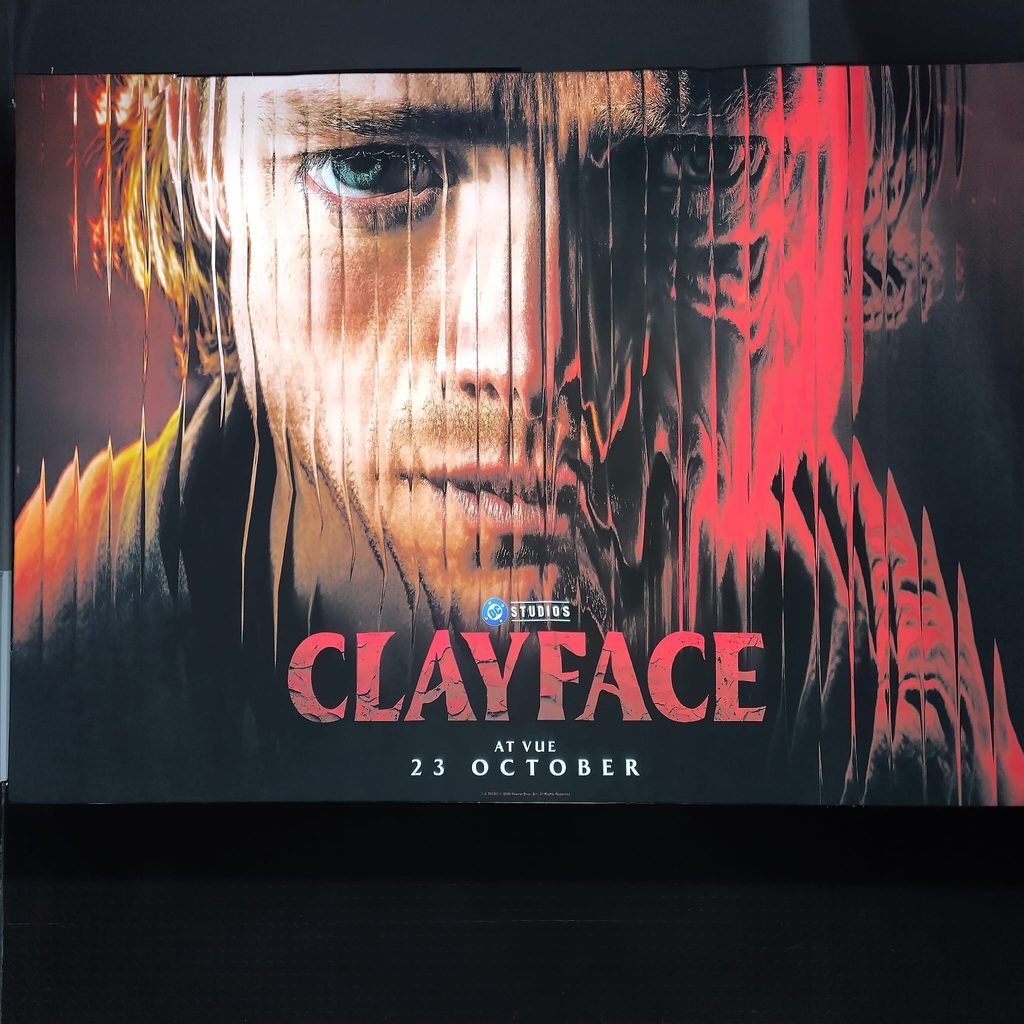
DC Studios takes a darker turn with Clayface, delivering a gruesome body horror story set in Gotham City.
Directed by James Watkins and developed from a story by horror filmmaker Mike Flanagan, the film explores one of Batman’s most tragic villains.
Tom Rhys Harries plays Matt Hagen, an aspiring actor in Hollywood whose career is destroyed by a brutal encounter with a Gotham crime boss.
Desperate to restore his disfigured face, Matt turns to experimental treatment developed by scientist Dr Caitlyn Corr, played by Naomi Ackie.
At first glance, the treatment seems to be a miracle; however, its effects become more and more worrying. Matt starts turning into living clay and his thirst for vengeance puts his humanity at risk.
There is much to like in the film, especially practical effects and a good performance of Harries.
Nevertheless, although being quite successful, Clayface somehow lacks one crucial element, and that is Batman himself.
Direction and Storyline

James Watkins chooses to look at Clayface more as a horror movie than as a comic book adaptation. This strategy sets the film apart as something special within the DC Universe.
It does not take a superhero approach but an approach based on transformations both physical and psychological, and Matt’s growing desperation to return to his previous life.
The tragedy of the character is that Matt is not a monster right away. He is just a man trying to get back to who he used to be and trying to save his face, quite literally.
The film also explores the cruel relationship between Hollywood and physical perfection. Matt’s face represents his livelihood, public identity and sense of self-worth. Losing it means losing everything he believes makes him valuable.
The narrative, on the other hand, fails to keep up with itself at times. There are portions that feel less urgent than others, and some developments would have done well with a little more time.
The ending seems rather rushed, especially when one considers the process of change that comes before it.
Having spent most of the film observing the downfall of Matt’s life, I would have liked more time to consider the implications of his actions.
This is a well-crafted concept, although at times the execution leaves much to be desired.
Practical Effects and Old-School Horror
One of the best qualities of the film is the fact that it makes extensive use of practical effects. The makeup, the transformation process, and all the other elements of the body horror in the film remind one of classic horror movies.
It is nice to see a comic book movie that does not depend entirely on the CGI but uses physical effects in its key monster.
It is nice to see a comic book movie that does not depend entirely on the CGI but uses physical effects in its key monster.
The practical work gives Matt’s transformation a disturbing physical presence. His changing face feels tangible, making the horror more immediate and uncomfortable.
These moments recall the era when filmmakers used prosthetics, makeup and ingenious effects to create memorable cinematic nightmares.
The result feels closer to classic creature features than a conventional superhero blockbuster. It also helps establish Clayface as something different from the usual colourful, effects-heavy comic book adventure.
That approach suits the character perfectly. Clayface is a villain whose very body becomes his defining weapon and greatest curse.
Watching his humanity disappear through increasingly grotesque transformations makes his downfall feel genuinely tragic.
The effects also strengthen the film’s themes. Matt wants to restore his appearance, yet every attempt to regain control takes him further away from himself.
For horror fans, these sequences are among the film’s most memorable achievements. They demonstrate how practical effects can make body horror feel intimate, uncomfortable and surprisingly emotional.
How Does It Compare With Batman: The Animated Series?
The most famous incarnation of Clayface was done by the animated series, Batman: The Animated Series.
Feat of Clay was a two-part episode that aired in September 1992, featuring Matt Hagen as a rising star who becomes a tragic victim of a facial-replenishment chemical that he relies on.
This particular storyline is one of the best examples of how Batman villains can receive a certain emotional background through the series.
Although the change that happens to Hagen is quite scary, his helplessness turns him into an empathic character, who has lost control over what defined him.
This film relies upon similar themes but develops them further to create a feature-length body horror experience.
Its focus on the physical transformation adds a more visceral element to the character’s plight. Live action allows for the exploration of grotesque elements that can only be suggested through animation.
Nonetheless, the animated series has one advantage over the film in terms of storytelling: Batman.
By featuring Batman in Feat of Clay, the story gets an investigator’s perspective on Hagen’s situation and a morality check for his character.
It makes clear that there is a connection between the tragedy of Hagen and Gotham’s criminal environment in the Batman universe.
In this case, the movie employs a unique method whereby the Dark Knight is not present throughout the film, making it easier for Matt’s story to be told on its own; however, it strips the character of his identity.
To me, the film does not fully match up to the emotional satisfaction provided in the animated version since the practical effects make it more visceral, but the original storyline holds its own when tying Clayface’s tragedy to Gotham City and Batman.
While it succeeds in its body horror treatment, it sometimes fails as a Clayface tale.
The Missing Batman Problem
This was my biggest worry before I started the film, and I am sorry to say that it did not entirely go away.
I get why it could be appealing to have an investigation of a more obscure villain that does not require a superhero.
DC Studios gets kudos for trying something new and not making everything look the same.
It would be an interesting thing to do to make an independent horror film involving Clayface.
Nonetheless, placing the story in Gotham City inevitably leads to some preconceived notions about the story.
This is the home of the superhero Batman and Clayface happens to be one of his villains. Nevertheless, Batman is not around anywhere in the story.
The absence becomes increasingly clear as the movie goes on. I kept thinking that there was something missing even while enjoying the horror.
This does not mean that all Batman villains have to include Batman in their stories. There is definitely no problem in making an independent movie about the villain. The issue is that there should be a good reason for separating them.
However, Gotham City seems quite odd without its most prominent inhabitant. This city offers a perfect backdrop for the story, while the movie fails to use this absence as an integral part of the plot development.
I was wary about falling into this trap before seeing the movie. For instance, when some movies about lesser-known superheroes are released separately, there is always a possibility of taking away the only thing that made the character interesting.
For example, Spider-Man spin-offs made by Sony Pictures had a similar problem. While the character can be interesting enough on their own, they do not necessarily make good movies.
It was not necessary for Batman to overshadow the story and steal the limelight from Matt Hagen. Even a simple cameo, a relevant reference or simply a nod towards his contribution would have sufficed.
But what is left behind is a notable omission from the world building aspect of the movie. If it had been an original horror movie involving a man turning into a creature made out of living clay, I might have been able to accept it easier.
But considering that it is a DC movie featuring one of Batman’s classic villains, my expectations were higher.
Performances
The best thing about this film is Tom Rhys Harries. Through him, Matt Hagen is made vulnerable, desperate, and increasingly terrifying.
Through his performance, Rhys Harries makes it clear why Matt wants to regain his old looks, even when the actions taken by him become increasingly difficult to justify.
Matt is a man who is tortured by not being able to come to terms with the loss of his identity.
With time, Matt transforms into something horrifying, but the essence of who he once was is still there.
This emotional foundation makes the gruesome transformations more effective. Without a convincing performance, the film could easily have become a collection of disturbing effects without much substance.

Naomi Ackie also brings welcome humanity to Dr Caitlyn Corr. Her character helps ground the scientific elements and provides an important connection to Matt’s attempts at recovery.
The supporting cast contributes to the film’s grim atmosphere, although some characters could have received more development. Certain relationships feel as though they need additional scenes to reach their full potential.
Nevertheless, the performances help carry the story through its weaker stretches. Harries, in particular, gives the film a compelling emotional centre.
What Worked and What Did Not
The practical effects are a major highlight, delivering gruesome transformations with an old-school horror sensibility.
They give Clayface a physical presence that digital effects alone might have struggled to achieve.
Another noteworthy aspect is Tom Rhys Harries’ impressive performance as the leading actor. He turns Matt Hagen into a tragic, horrific but at the same time sympathetic character.
All of these features make the horror film more meaningful and emotionally grounded.
Nevertheless, the pacing is uneven, and the conclusion seems too hastily done. There are some character interactions that require greater exploration, and some parts of the plot become uninteresting.
The major disappointment still lies in Batman’s lack of presence. The movie does not need him to work; however, Gotham City never seems whole without at least a nod in his direction.
This makes for an interesting dilemma: on the one hand, Clayface strives to be independent; on the other hand, its setting and main character always point to Batman.
Conclusion
Clayface is an interesting effort to introduce true body horror into the DC universe, with good practical effects serving as a pleasant reminder of the old school of horror, and an excellent performance by Tom Rhys Harries.
The movie is a successful demonstration that the antagonists of Batman could be more than challenges for the hero to beat. Matt Hagen’s tragedy offers sufficient material for an intense horror film.
Sadly, unsteady pacing and the lack of a well-developed ending ruin all the efforts of the filmmakers. Another problem that affects the final result of the film is the lack of Batman himself.
As a standalone body horror film, Clayface works reasonably well. As a movie about one of Batman’s most memorable villains, it feels incomplete.
This is certainly an intriguing gamble for DC Studios to have taken, and I think it would be interesting to see more of such genre experimentation in the future.
But future movies based on villains need to consider why they were interesting in the first place.
Sometimes, being by themselves isn’t enough. Sometimes, the missing element is the hero that created them