Coyote vs. Acme Review
Introduction (Warning Contains Spoilers)
It seems that there is some sense in Wile E. Coyote taking his longtime nemesis, ACME Corporation, to court.
For many years, he was their faithful and unlucky customer. All the products promised him success, but all the purchases ended up being disasters for him. This time, however, he does not accept his failure.
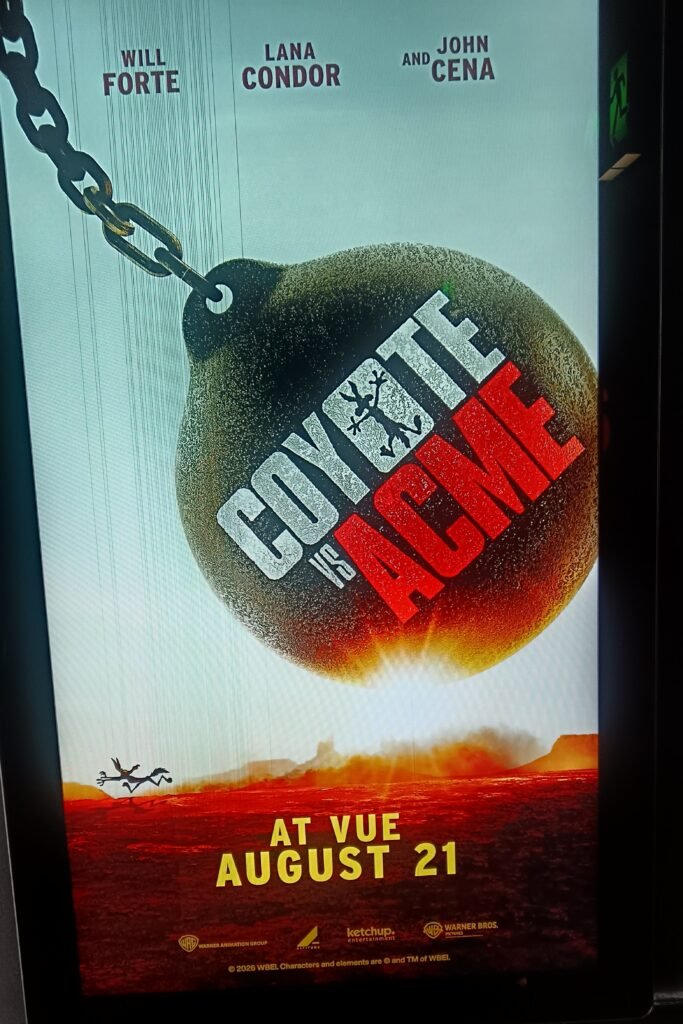
Coyote vs. Acme turns a traditional cartoon joke into a feature-length legal comedy. It is directed by Dave Green and includes both live action performances and Looney Tunes animations.
The leading characters of the film are played by Will Forte (Kevin Avery) and John Cena (Buddy Crane).
It sounds utterly absurd, but that’s what makes it work. It is quite obvious that the Wile E. Coyote is not supposed to find himself in a traditional court room, but Green takes this notion very seriously. Hence the movie turns out to be rather funny, touching, nostalgic and very satirical at times.
Another level of meaning is added by the path the movie takes from creation to screening. Warner Bros. decided not to release this movie once it was finished.
This led to great outrage among viewers and directors alike. At last, the movie was distributed by Ketchup Entertainment.
Such history makes the main conflict in the movie impossible to overlook. Wile E. is pitted against a large corporation having been subjected to exploitation for many years. On top of that, the movie itself had to overcome the struggle against corporate decisions.
A Clever Idea with Surprising Substance
Initially, the plot seems to be a prolonged Looney Tunes gag. Wile E. Coyote has reached his wits’ end due to the ineffective products of ACME, so he turns to Kevin Avery for help in filing a lawsuit against the company. What follows is far from being just that.
Using the courtroom setting, the movie addresses some of the clichéd themes of power and responsibility. ACME is the corporation that enjoys endless amounts of money and power. Wile E. is the individual that thinks that it should be changed.
This makes the movie surprisingly relevant. Its satire on large corporations is not detached from reality in any way.
Another unique aspect is Wile E.’s character development. Usually, it was his failures that were funny. In this case, his will to live is what creates the strength. Failure makes him stronger and inspires him to go on.
This works perfectly well since Wile E. had always been characterized as someone who keeps trying, even though he does not have much success. All the movie is asking from viewers is just to look at this trait differently.
Instead of being seen as a complete failure, Coyote is seen as an underdog. This makes the fight with ACME much more interesting since Wile E.’s perseverance is seen as an admirable trait.
Moreover, the film also discusses such themes as friendship and self-confidence. At the beginning, Kevin is shown as a lawyer who got used to losing. His career made him satisfied with small wins instead of dealing with complicated lawsuits.
Wile E. disputes such an approach from the start. He cannot accept any easy settlement from ACME. Slowly but surely, he succeeds in forcing Kevin to revise his view on failing.
This dynamic forms the heart of the movie. In its absence, Wile E.’s lawsuit might have been nothing but a gimmick. Without Wile E., Kevin’s struggle could have been just another court drama.
This makes their duo quite a powerful team
Dave Green’s Directing

Green’s use of direction works especially well when there are two very different worlds that are put together on screen. In the movie, there are cartoon characters next to real people but without trying to cover up the difference.
Wile E. is clearly a cartoon character. The size, facial expressions, and movements of the character keep the same qualities typical of Looney Tunes cartoons.
At the same time, the human characters live in a realistic setting. This difference plays into the joke. There is no need to justify why the cartoon character can be in a court room.
This is crucial because otherwise, it would distract viewers from the characters themselves.
The production also entailed quite a bit of preparation. The actual Wile E. Coyote puppet was used during filming. This ensured that the actors had something concrete to interact with while they were performing.
The creators of the film also produced planning animations prior to shooting some sequences. This ensured that movement, placement and interaction between the characters was established.
Timing is key in a situation where a human actor works with animation. It needs to happen in perfect time. If not, the funniest joke will seem completely unrealistic.
Will Forte’s acting in particular shows why all of this preparation was necessary. He always looks at Wile E. like there’s an actor next to him. His pauses are not forced at all.
The visual effects also work to sell the illusion. Shadows, lighting, and perspective are able to put the animated characters on the same plane as the live-action characters. The animation isn’t simply layered on top of the footage.
Green uses various methods of animation in the movie. 2D animation maintains the traditional Looney Tunes look. 3D animation gives more flexibility in specific settings.
This compromise between techniques is one of the best visual aspects of the movie.
But the directing is not entirely perfect either. The energy that works for the Looney Tunes shorts is hard to keep up throughout the whole movie. They were able to make jokes in a short period of time.
A feature-length movie requires character development and a larger story than just jokes. And that means that the movie loses some energy sometimes.
It seems to struggle with two styles at once – the classic Looney Tunes chaos and a modern family comedy.
It is the best when Green goes all out with chaos of the classic Looney Tunes movies. But sometimes too much exposition makes it less interesting.
The Animation
One of the best aspects of the animation is the quality of the animation itself. Even more significantly, it knows exactly what Looney Tunes’ fanbase expects to see.
None of the characters have had their personalities drained from them. Wile E. is still Wile E. Coyote; his faces are as exaggerated and impossible as ever.
That was definitely a wise decision, for it makes the film a celebration of its cartoon roots, without being ashamed of them. The characters don’t look like they’re trying too hard to be trendy.
It is especially critical for Wile E. Coyote since he would lose his comedic value if the animator made him a realistic character.
Instead, the animator continues to use cartoon rules so that he can survive all of the ridiculous accidents without ruining the mood.
The pain that he feels will always be exaggerated but not horrifying.
The animator uses contrast when it comes to combining the world of live action and animation, and the result is impressive since viewers see old characters in a new light.
It makes it very easy to establish instant recognition for those who have been brought up on Looney Tunes.
There would be many gestures and visual gags that can elicit nostalgia without necessarily having to do a lot of explaining.
But the problem with nostalgia is that it can actually be a problem in itself when it comes to attracting a younger audience.
They will recognize Wile E., but won’t necessarily know why he is significant.
Of course, there is plenty of comedy that will amuse the viewers who have never seen the Looney Tunes before.
But there are some elements of joy that can be fully appreciated only when one knows where it all comes from.
This makes one think about the target audience of the film. Is it trying to present the Looney Tunes to a new generation or is it paying homage to the old characters?
In my opinion, it seems to lie somewhere in-between.
It is accessible enough but the best of its elements will definitely appeal to those who know the original cartoons.
It is not necessarily a bad thing. But I guess the nostalgic element of the film will mostly resonate with adults.
The Performances
However, the performances merit more appreciation than one may imagine. Working alongside animation poses a challenge for the actors.

Will Forte deserves particular praise for his role as Kevin Avery. Much of the film’s emotion comes from this character.
Forte interacts in large parts of the film with a character that is not physically there. But his reactions are never artificial or unconnected with anything.
He achieves great eye contact with Wile E. His pauses also show that he is listening to another person. This makes the interaction between the two rather believable.
The interaction between Kevin and Wile E. turns out to be one of the most successful parts of the film. The relationship starts with being professional and then slowly becomes friendship-like.
Forte makes Kevin vulnerable enough to allow this transition to happen. He is not just an ordinary lawyer dealing with cartoon characters. He is a lawyer who changes his viewpoint due to the situation with his client.
This is more difficult to perform than one would expect on first glance.
Another advantage of Forte is that he knows how much understatement is needed in such a film. His character is not always competing with the animation. Sometimes he is the straight man.
That restraint makes the cartoon humour more effective. Wile E. can behave outrageously because Kevin reacts as though everything matters.
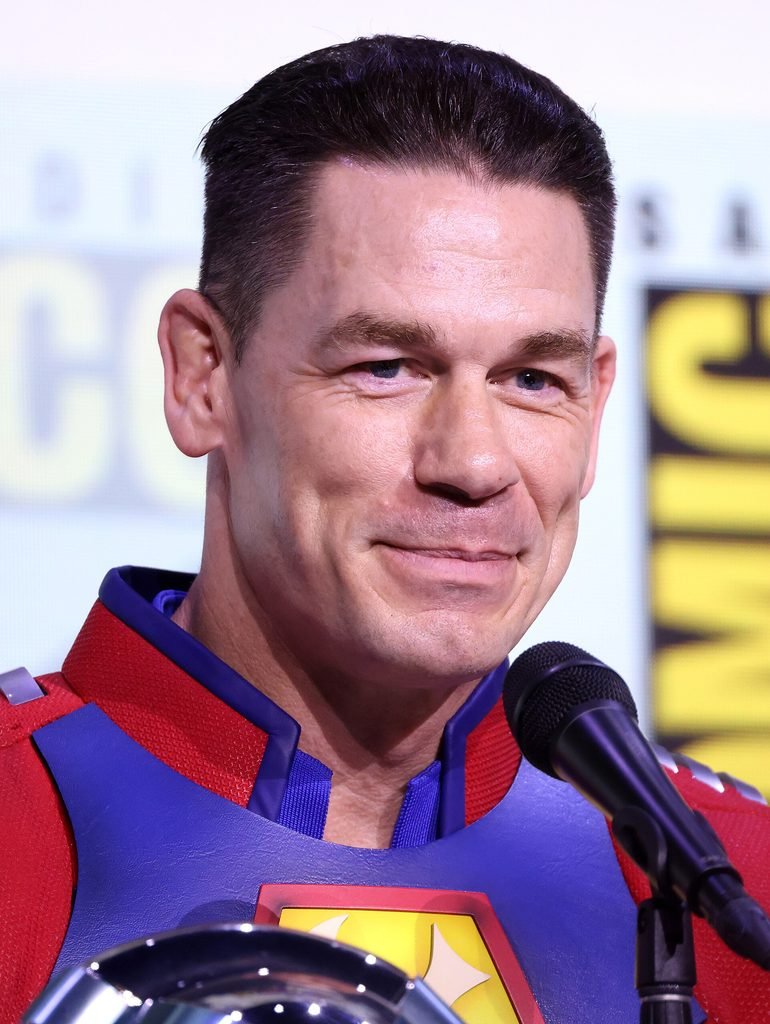
John Cena also proves equally successful in his own way. In the role of Buddy Crane, he shows more confidence and deliberate exaggeration.
Cena knows how funny it could be for a corporate lawyer to defend ACME. Cena makes his character look intimidating without being unpleasant.
His confidence also provides a good contrast to Forte. Kevin symbolizes the weak individual, while Buddy represents a well-oiled corporate mechanism.
Even the secondary actors help make the movie successful. Human characters keep the same balance between sincerity and humor.
The voice acting of Eric Bauza is especially relevant in this case. First of all, the characters should stay true to themselves, and secondly, they have to fit into a completely different story.
The success of the cast comes from the fact that no one regards the animation as some kind of cheap trick. The performances allow the cartoon characters to feel like genuine characters.
Plot and Pacing
The simple plot has been devised in such a way that it will sustain the movie for quite some time. Suing ACME by Wile E. is just a fantastic addition to the basic plot of the cartoon.
It further allows the writers to devise lots of funny visuals. Each failed ACME invention becomes evidence for the case against the company.
The whole setting of court is also a good source of humor. The cartoon logic can be opposed by the real courtroom procedures. This creates opportunities for jokes unavailable in the original shorts.
In addition, the movie extends past the lawsuit. A bigger mystery comes out regarding the actions of ACME. It helps to have the story go on for more than just the first joke.
There is one problem with doing this.
The initial premise is so good that anything else may not be needed at times. The movie feels like it needs a new mystery just to fill out its runtime.
As a result, the pacing becomes inconsistent.
The best scenes happen very quickly. Cartoon jokes and the courtroom humour come together seamlessly.
However, other scenes will slow down the pacing. Some longer expositions become disconnected from the craziness surrounding them.
This is possibly an inevitable part of making Wile E. Coyote into a full-length hero. His original stories were shorter and more concentrated.
The feature needs to have a much more complex structure, which sometimes acts against the character’s rhythm.
The movie runs somewhere between 90 and 100 minutes, depending on the stated time of the screening.
The movie is not overly long for a family comedy. But some scenes may seem to drag on longer than necessary.
The issue of the slow pace is, thus, not only that of length but of finding the right balance.
The film does best when it plays like a Looney Tunes cartoon. The film does not do so well when it turns into a mystery story with cartoon characters.
What Works
Perhaps the best thing about Coyote vs. Acme is its love for the source material. It does not seem to be ashamed of the madness of Looney Tunes.
The animation effectively retains the characters’ usual personalities. This should definitely be something that makes the movie quite interesting for fans.
The live action and animation mix is also really impressive. The directors understand that realism is not needed for believability.
A strong point of the movie is the performance of Will Forte. The connection between him and Wile E. gives real emotional depth to the story.
John Cena makes a very funny foil. The oversized corporate lawyer is appropriate for the comedy without being too much.
The messages of the movie are more substantive than you would expect from a Looney Tunes flick. Corporate accountability, tenacity, and friendship add depth to the storyline.
Humor is found in the combination of all these factors. A serious courtroom case is turned humorous with the introduction of silly cartoon technology as evidence.
Another strength of this movie is the concept of the underdog. Wile E. Coyote was built to fail, but he just won’t give up.
This aspect adds an unexpected element of emotional appeal to the character.
What Does Not Work
The biggest drawback of the film is the impossibility of maintaining the storyline. The cartoon idea is absolutely ingenious in its simplicity.
Any long film will always need something extra. Something that seems to be not as necessary as the main lawsuit.
And the mystery of ACME may hinder the rhythm of the comedy movie. It looks like there are some plot elements that are used to lengthen the story.
And the pace changes accordingly. The movie can shift from brilliant comedy to dull narration very quickly.
There is also the potential of a generation gap.
The older fans of the Looney Tunes would recognize more references and would like the traditional style of animation. The younger crowd could be more interested in the physical comedy.
This does not mean that the movie is not for children. It just means that different audiences would enjoy different things.
One other minor flaw with the animation of the movie is its faithfulness to the Looney Tunes.
This is a hard criticism to give as the classic style is one of its best features. Changing the characters may well have ruined their personality.
However, by not changing them at all, the film runs the risk of becoming a celebration of the familiar. This may not be as important to younger people.
Thus, this film works best when the nostalgia leads into either a great punchline or an emotional beat. Otherwise, it falls flat.
Final Judgement
Coyote vs. Acme is not a flawless movie, yet it is a surprisingly good one.
Its main success is in knowing that Looney Tunes characters do not have to be realistic.
Dave Green directs a movie in which cartoons and humans fit together perfectly. The contrast between them works for the comedy of the film.
It preserves the characters without putting them in a glass cage. The performances add an unexpected emotional layer to the story.
Forte proves to be particularly convincing in his ability to create a connection with the animated character. It deserves being appreciated.
John Cena gets the tone of the movie as well. He plays a corporate lawyer who serves as the appropriate villain for Kevin and Wile E.
Speaking of the plot, it is less coherent. On one hand, it has an excellent main point; on the other hand, the secondary story makes it over-complicated.
It also slows down the rhythm of the movie, which should be energetic and explosive as Looney Tunes are.
However, there are more strong sides to the film than weak ones.
Firstly, the movie feels to be created by people who really know these characters. The movie preserves the history of them without turning into something boring and static.
Secondly, it gives Wile E. a new meaning to be represented. Instead of representing the character’s inability to catch the Road Runner, the constant failures serve as proof of his determination.
Finally, there is something ironic in the fact that the movie that deals with the challenge of a powerful corporation is going to theaters thanks to it.
The flaws of the movie in no way diminish this accomplishment.
Coyote vs. Acme demonstrates that well-known characters can be still utilized successfully when put into a creative new context. Moreover, it shows that nostalgia does not necessarily equal creative lethargy.
There is enough to admire for fans of long-time Looney Tunes in terms of animation and references. For the younger audience, there will be enough of classic slapstick.
It might not perfectly replicate the quick wit of the original short films. Still, it contains enough of the spirit of the original to be amusing.
The biggest success of the film is its honesty.
It does not try to portray Wile E. Coyote as a forgotten relic in need of rejuvenation. Instead, it asks what would happen if a traditional character faced a new challenge.
The answer is a delightful, funny and sometimes unexpectedly smart comedy.
Coyote vs. Acme is thus interesting to see for reasons other than its unconventional plot. It is a tribute to perseverance, companionship and the eternal charm of cartoon nonsense.
Like Wile E. himself, the film stumbles occasionally. Yet it keeps moving forward. That persistence might be the most appropriate quality it could possibly have.