
Crime 101 (2026) Movie Review: A Character-Driven Heist Thriller with Strong Performances
Introduction Crime 101
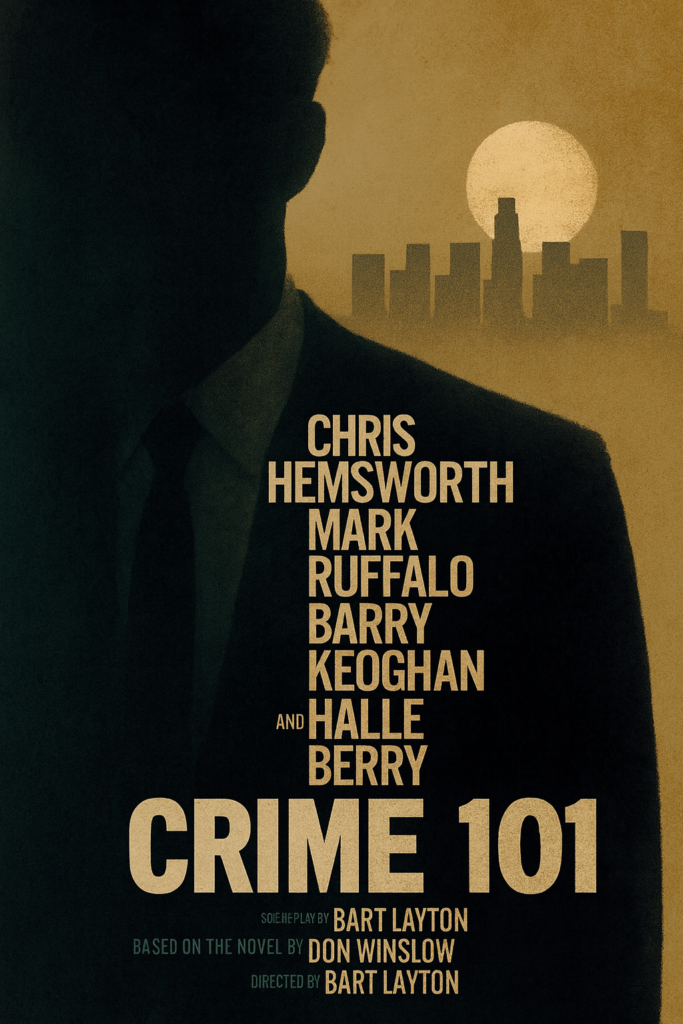
Crime 101 is a neo-noir heist thriller directed by Bart Layton and adapted from a novella by Don Winslow. The source material came out in the 2020 short-story collection Broken. The film is led by Chris Hemsworth, Mark Ruffalo, Halle Berry, and Barry Keoghan. Additionally, a smaller yet memorable role is features Nick Nolte.
At first glance, the story seems to follow a traditional heist structure. However, the narrative instead focuses more closely on the people in the story. As a result, it explores discipline, obsession, and psychological tension throughout the story. Meanwhile, crime gradually reveals the characters’ intersecting lives.
Therefore, the movie is a slow-burn crime drama. Furthermore, mood, character, and atmosphere are the main focus over constant action.
Story and Narrative Structure
The story unfolds primarily across Los Angeles and the California coastline. Meanwhile, the narrative closely follows Mike Davis, (Chris Hemsworth). The film presents Davis as a highly skilled jewel thief whose actions follow a strict code known as “Crime 101.
Davis uses these rules to plan robberies and minimize detection. He carefully controls every detail of his work. From the start, he treats crime as a methodical process, largely avoiding chaos.
His approach is calm with lots of discipline.
Therefore, law enforcement is not able to catch him. At the same time, Detective Lou Lubesnick comes into the movie. Mark Ruffalo portrays the role
Meanwhile, Lubesnick slowly connects several robberies. Although the crimes do not seem to connect at first, he gradually recognizes a pattern. Eventually, he considers the possibility of a single mastermind, laying the foundation for a cat-and-mouse narrative. However, he does not pursue a rapid confrontation.
Instead, the lives of the characters are carefully explored. Halle Berry’s character Sharon is gradually brought into the story.
She is a insurance broker handling high-value theft claims.
Consequently, she frequently deals with the aftermath of major robberies. Meanwhile, she begins to intersect unexpectedly with Davis, which complicates the narrative. These encounters also add emotional depth to the film.
Ormon, (Barry Keoghan), introduces another unpredictable element. Unlike Davis, he disregards strict discipline and frequently displays chaotic behavior, threatening the careful balance Davis relies on. Meanwhile, his actions intensify tension within the criminal world.
Gradually, the characters are drawn closer together. Consequently, a confrontation begins to feel inevitable rather than sudden.
Direction and Creative Approach
Bart Layton’s direction significantly shapes the film’s tone. Known for his documentary style storytelling, he injects a strong sense of realism into the narrative.
Additionally, the story unfolds with restraint. Many modern crime thrillers rely on typical archetypes. However, this film presents characters with realistic personalities and believable motivations.
As a result, the individuals feel believable and human. Furthermore, the film treats situations with noticeable restraint. Scenes frequently unfold slowly. Meanwhile, the film focuses on conversations, gestures, and quiet moments.
These choices gradually reveal internal conflicts. Consequently, the film largely avoids heavy exposition.
Another notable creative decision involves the use of Los Angeles. Traditionally, noir cities appear dark and shadowy. However, bright coastal landscapes and sun-filled streets dominate instead. Therefore, the film establishes a striking visual contrast.
The environment appears calm and visually beautiful. Nevertheless, a persistent sense of danger is subtly kept.
Performances
One of the film’s strongest elements is its performances. Chris Hemsworth delivers a portrayal of Mike Davis, shaping it through quiet control rather than confident swagger.
As a result, the character rarely draws unnecessary attention. Consequently, Davis’s mindset comes through effectively.
Halle Berry provides the emotional weight through Sharon. Her character feels trapped in an unsatisfying life. She conveys subtle frustration throughout her performance. Therefore, she creates a human counterbalance to the heist narrative.
Mark Ruffalo’s detective adds another important perspective. The film presents Lubesnick as intelligent and persistent. However, years of pursuing criminals seem to have worn him down. Therefore, he expresses both determination and weariness simultaneously.
Barry Keoghan introduces a contrasting energy. His character acts volatile and unpredictable. Whenever he appears, he immediately heightens tension. Consequently, he disrupts the world surrounding Davis.
Nick Nolte also appears briefly as an ageing crime boss. Although he has little screen time, he delivers strong gravitas.
Themes and Ideas
The film explores several themes beyond the basic heist structure. First, it heavily emphasizes the concept of discipline, presenting the “Crime 101” rules as a system of order. Davis uses these rules to control unpredictability, believing they make survival in the criminal world possible.
However, that order gradually reveals its fragility. Other characters act from very different impulses. Consequently, threats repeatedly challenge the system Davis relies on. Another important theme is moral ambiguity. The narrative rarely presents clear heroes and villains.
The detective pursuing the thief is not portrayed as perfect. Meanwhile, the thief himself is not entirely unsympathetic.
Because of this complexity, simple moral judgments are avoided. Instead, personal codes and justifications are examined.
Sharon also explores the idea of personal reinvention. She increasingly questions her own life choices. Through interactions with the criminal world, she considers new possibilities. Consequently, her identity begins to shift.
Strengths of the Film
In many respects, the film’s greatest strengths lie in its atmosphere and performances. The slow pacing allows tension to develop gradually. Therefore, a strong sense of inevitability is created.
The film does not rely heavily on sudden twists. Instead, characters’ decisions drive the narrative. The visual style also strengthens the film’s identity, repeatedly emphasizing bright coastal Los Angeles.
Consequently, the setting feels both modern and nostalgic. Another strength lies in the ensemble cast. The characters represent different perspectives within the criminal world. Their interactions create a complex story. Therefore, the film avoids a simple hero-versus-villain structure.
Areas Where the Film Feels Limited
Despite these strengths, certain limitations are occasionally noticeable. For example, the relationship between Sharon and Lubesnick shows thematic potential. However, meaningful interaction between them is rarely shown.
As a result, the film underdevelops that dynamic. Its nearly 140-minute runtime slows the pacing, and several sequences extend unnecessarily.
A tighter structure might have given the narrative more focus. The film does not dramatically reinvent the crime genre and follows familiar storytelling rhythms. Nevertheless, the filmmakers handle these elements skillfully.
Final Thoughts
Overall, Crime 101 delivers a thoughtful and atmospheric neo-noir thriller. Its strongest qualities shine through the performances, visual style, and deliberate pacing, creating a distinctive tone.
The film may not fully redefine the genre, but it delivers a compelling, character-driven story. It emphasizes the psychology of crime over spectacle, making the narrative feel reflective rather than explosive.
For viewers who enjoy slow-burn crime dramas, the experience should feel rewarding. The film consistently delivers strong performances and a vivid sense of place.
Ultimately, the characters maintain lasting interest, while the narrative gradually builds quiet tension around them.