Dangerous Animals (2025)
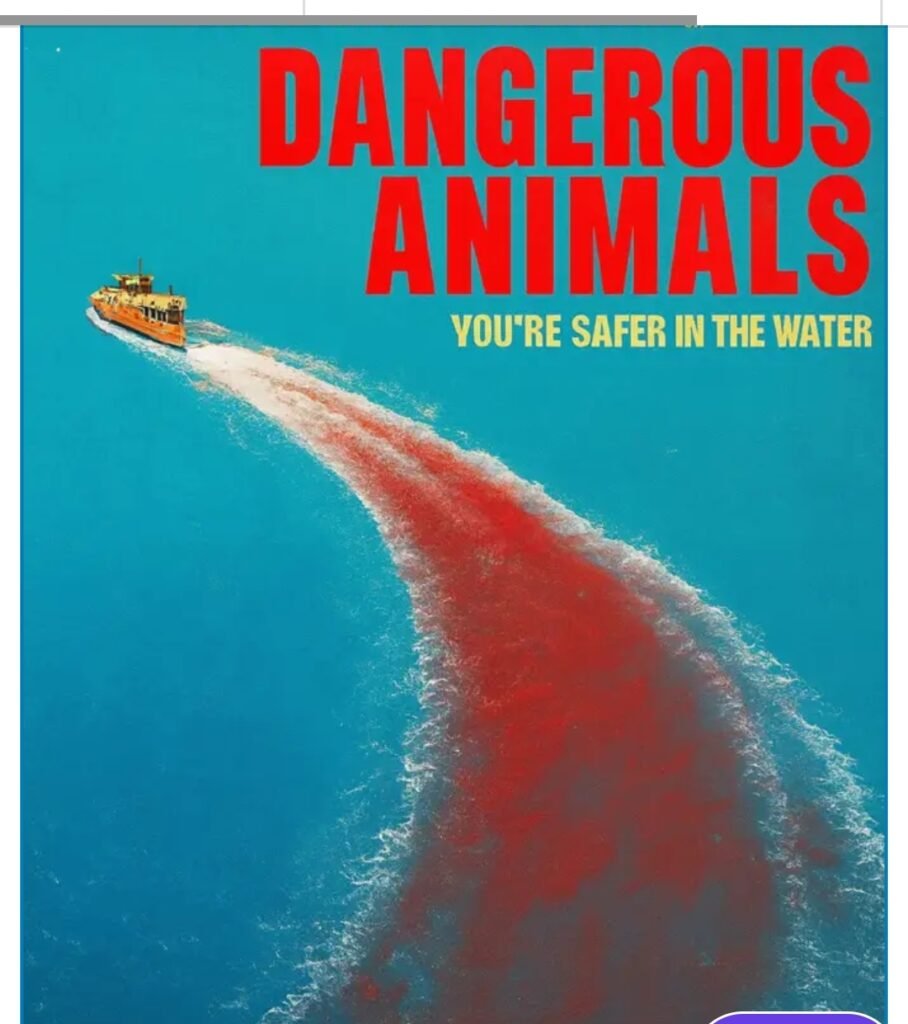
Dangerous Animals (2025): A Brutal, Intelligent, and Unexpected Survival Thriller
Dangerous Animals isn’t just another shark thriller. It’s a survival horror film that feels disturbingly grounded, psychologically tense, and far more human than I expected. Going into it, I assumed I was getting a fairly standard ocean-based horror film with a serial killer gimmick. What I actually experienced was something much darker, more character-driven. Andmore emotionally heavy than a typical genre entry.
This movie doesn’t rely on spectacle alone. Instead, it builds dread through atmosphere, character psychology, and a constant feeling of vulnerability that never really lets up. It’s a film that lingers long after the credits roll—not because of jump scares, but because of how uncomfortably real its fear feels.
Story Setup: Survival at Sea
The film follows Zephyr (Hassie Harrison), a rebellious American surfer living in Australia. A shark-obsessed serial killer played by (Jai Courtney) abducts her and imprisons her on his boat. His plan is simple, ritualistic, and horrifying: feed her to the sharks below as part of his twisted obsession.
At the same time, Moses (Josh Heuston), a young man Zephyr recently connected with. Begins trying to piece together what happened to her, slowly uncovering the truth as time runs out.
What makes this setup work is how intimate it feels. The ocean isn’t just a location—it’s a trap. The boat isn’t just a setting—it’s a prison. Everything feels isolated, cut off, and suffocating. That isolation is one of the film’s strongest tools, because it constantly reinforces the feeling that there is no easy escape and no safety net.
Zephyr: A Survivor, Not a Stereotype
The writers shape Hassie Harrison’s performance as Zephyr into more than just a typical horror protagonist. She’s a drifter, a loner. And someone who uses the ocean as a form of emotional escape rather than just a playground. Hassie Harrison gives a surprisingly layered performance that makes Zephyr feel like a real person instead of a genre cliché.
She’s tough, self-reliant, and guarded, but underneath that toughness is a deep fear of abandonment and connection. You can feel that she’s learned how to survive by staying detached from people, not by relying on them. The ocean is where she feels safe—not because it’s gentle, but because it’s honest and predictable in its danger.
What I found most compelling is how her emotional defenses directly influence the story. Her impulsiveness, her loneliness, and her fear of intimacy all play a role in how she ends up in this nightmare. That makes her captivity feel tragically human rather than random. It doesn’t feel like bad luck—it feels like a chain of emotional choices that lead her into danger.
Her transformation throughout the film is subtle but powerful. She doesn’t suddenly become a superhero; she becomes a survivor. Her strength comes from intelligence, adaptability, and mental endurance rather than brute force. Watching her slowly reclaim control of her situation is one of the most satisfying parts of the film.
Jai Courtney: A Disturbing and Unsettling Villain
A Career-Best Performance
Jai Courtney delivers the most unsettling performance of his career here. This role completely breaks away from his usual action-hero casting, and the difference is shocking in the best way possible.
His character isn’t loud or cartoonish evil. He’s quiet, obsessive, controlled, and deeply unhinged in a way that feels realistic rather than theatrical. His fixation on sharks isn’t just a hobby—it’s a belief system. He treats them like gods, tools, and symbols all at once. That obsession gives his violence a ritualistic quality that makes everything he does feel more disturbing.
What makes him truly frightening is how calm he is. There’s no constant screaming or exaggerated madness—just a chilling sense of certainty in his actions. In my opinion, that calmness makes him far more terrifying than a typical slasher villain. He doesn’t feel like a monster movie character; he feels like someone who could actually exist.
The dynamic between him and Zephyr becomes a psychological chess match. He’s not used to victims who fight back intelligently, and you can feel his frustration grow as she resists him. That tension creates a slow-burning cat-and-mouse game that drives the film’s most intense moments.
Moses: The Human Anchor
Josh Heuston’s Moses brings a softer energy to the film. In a story full of isolation, violence, and psychological horror, he represents normalcy, kindness, and human connection.
While his role is smaller, his presence matters. He provides emotional contrast to the darkness of the main storyline and gives the narrative a sense of hope. In my opinion, he works best as a symbol rather than a fully developed character. Someone who represents what Zephyr could have had if her life wasn’t defined by isolation and fear.
A New Take on the Shark Genre: Humans as the True Predators
One of the most interesting things about Dangerous Animals is how it completely flips the traditional shark-movie formula. The sharks aren’t the villains—they’re just animals. They’re neutral, natural, and indifferent. The real monster is human.
In my opinion, this is what makes the film feel fresh. The sharks aren’t demonized, exaggerated, or turned into mindless killing machines. They’re simply part of the environment, used as tools by a man who is far more dangerous than anything in the water.
This creates a powerful thematic message: nature isn’t evil—people are. The film constantly reinforces the idea that the most dangerous animals on Earth don’t live in the ocean; they walk on land.
Tension, Atmosphere, and Direction
Sean Byrne’s direction is slow, oppressive, and intentionally uncomfortable. The film doesn’t rush. It lets scenes breathe, stretch, and build dread naturally. The confined space of the boat creates constant claustrophobia, while the open ocean creates the opposite feeling—vast, empty, and hopeless.
The atmosphere is one of the film’s biggest strengths. There’s a constant sense of vulnerability, as if safety simply doesn’t exist anywhere in this world. Even moments of calm feel temporary and fragile.
The Shark Sequences: Effective, but Underused
While the shark scenes that are included are intense and well-shot, I personally felt there weren’t enough of them. When they appear, they’re powerful and intimidating, but they’re also sparse.
I understand the creative choice not to make the sharks the main threat, and I respect that. However, the film could have benefited from a few more underwater tension sequences to increase the sense of physical danger and scale. The balance between psychological horror and creature horror sometimes feels slightly uneven.
The Weak Spot: The Romance
The romantic connection between Zephyr and Moses is easily the weakest part of the film. It feels rushed and underdeveloped. They meet, connect quickly, and then the story treats their bond as deeply meaningful without laying enough emotional groundwork to support it.
In my opinion, this hurts the emotional stakes of Moses’s journey to find her. His determination makes sense conceptually, but the relationship itself isn’t given enough time to feel truly real. A few more scenes of genuine bonding would have made their connection feel earned rather than convenient.
The Final Act: Emotional and Satisfying
The final act delivers a genuinely satisfying conclusion. Without spoiling anything, the ending feels earned, emotionally grounded, and thematically consistent with everything the film builds toward.
Zephyr’s arc comes full circle in a way that feels natural rather than forced. Her survival isn’t just physical—it’s emotional and psychological. The ending succeeds because it doesn’t rely on spectacle alone; it focuses on character resolution and thematic closure.
Final Thoughts
Dangerous Animals is a smart, unsettling, and surprisingly thoughtful survival horror film. It’s not just about fear—it’s about isolation, obsession, trauma, and the darkness that exists within people.
Hassie Harrison delivers a deeply grounded performance that makes Zephyr feel real and relatable. Jai Courtney gives a chilling, transformative performance that redefines how I see him as an actor. Sean Byrne’s direction creates an atmosphere of constant tension, and the film’s thematic message about human cruelty versus natural danger feels meaningful rather than preachy.
It’s not perfect—the romance feels rushed, and the shark elements could have been expanded—but its ambition, originality, and emotional weight make it stand out in the genre. This isn’t just a shark movie.It’s not just a serial killer movie.
It’s a survival story about human cruelty, resilience. And the terrifying reality that the most dangerous predators aren’t always the ones with teeth. Dangerous Animals is one of the more intelligent and emotionally grounded survival thrillers in recent years. It’s disturbing, thoughtful, and far more memorable than I expected it to be.