
Dead Man’s Wire Review: Gus Van Sant’s True Crime Thriller
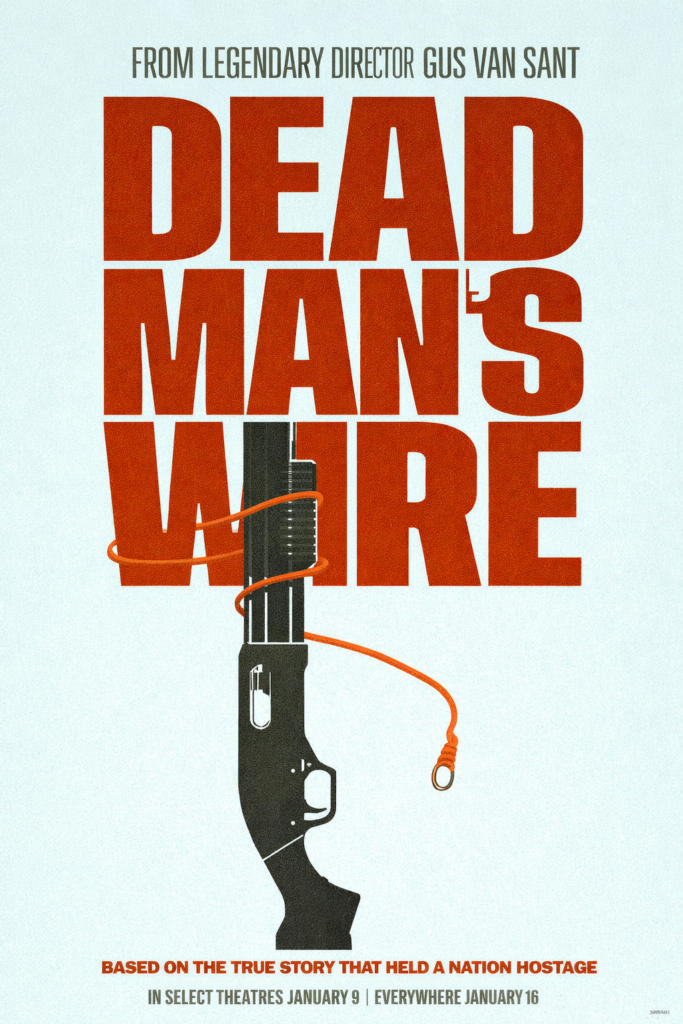
Dead Man’s Wire Review – A Comprehensive Analysis
In this Dead Man’s Wire review, I examine the psychological tension behind Dead Man’s Wire. Director Gus Van Sant explores desperation, paranoia, and moral ambiguity throughout the film. The story centers on the 1977 hostage crisis involving Tony Kiritsis. However, the film avoids the spectacle of conventional thrillers. Instead, the narrative emphasizes psychology and character tension.
As a result, suspense grows through behavior rather than action. The performances drive much of the intensity. Meanwhile, Van Sant’s direction carefully shapes the atmosphere. Nevertheless, pacing and thematic depth occasionally weaken the overall impact.
Opening Sequences: Establishing Tension
Early scenes introduce Tony Kiritsis as isolated and increasingly frustrated. Bill Skarsgård communicates subtle restlessness and desperation. Consequently, the opening builds quiet tension. These moments also foreshadow the coming crisis. Van Sant frames long shots of streets, offices, and bystanders. These visuals highlight Kiritsis’s emotional distance from others. Moreover, they emphasize his vulnerability.
The camera often lingers on ordinary spaces. Therefore, the environment reflects Kiritsis’s mental state. Meanwhile, the slow pacing builds anticipation naturally. Viewers sense approaching conflict. The opening also introduces systemic frustration as a central theme. Kiritsis’s perceived injustice gradually drives the narrative forward.
The Standoff Begins: Psychological Warfare
The central standoff begins once Kiritsis enters the office with the “dead man’s wire.” Tension rises immediately across the scene. Skarsgård dominates the frame with unpredictable intensity. At times he erupts with manic energy. However, he quickly shifts into chilling calm. This emotional volatility reflects recordings of the real Kiritsis.
Meanwhile, Dacre Montgomery provides contrast as the hostage. His restrained performance strengthens the suspense. Van Sant frequently cuts between Kiritsis, the hostage, and negotiators. Consequently, the rhythm remains tense and dynamic. Suspense grows from human reactions rather than spectacle. As a result, viewers constantly anticipate Kiritsis’s next decision.
Media and Public Spectacle
Another key element in this Dead Man’s Wire review involves the film’s media commentary. Radio broadcasts and reporters amplify tension during the crisis. Moreover, Van Sant illustrates how private desperation becomes public spectacle. This transformation reveals society’s fascination with extreme events.
Kiritsis gradually recognizes the media attention. Consequently, he begins addressing an unseen audience. He negotiates not only with police but also with the public. Therefore, the stakes escalate naturally. Some critics believe the media subplot deserved deeper exploration. Nevertheless, it reinforces the film’s theme of behavior under observation.
Psychological Depth and Moral Ambiguity
Van Sant strongly emphasizes Kiritsis’s psychological complexity. He avoids portraying the character as a simple villain. Instead, Skarsgård balances volatility with vulnerability. As a result, audiences experience fear, curiosity, and empathy simultaneously. This moral ambiguity deepens the emotional impact. Furthermore, the film explores how isolation shapes decision-making.
Paranoia and frustration gradually influence Kiritsis’s actions. Supporting characters provide additional contrast. Colman Domingo and Al Pacino represent authority and professionalism. Their calm presence counters Kiritsis’s instability. Although their screen time remains limited, they heighten tension effectively. Ultimately, the story focuses on the psychological duel between captor and hostage.
Pacing: Strengths and Weaknesses
The film uses deliberate slow-burn pacing to sustain tension. Long pauses allow viewers to observe subtle emotional cues. Consequently, suspense develops gradually across many scenes. This pacing also reflects the uncertainty of real crises. However, the early sequences occasionally feel too slow.
The narrative compresses a multi-day event into two hours. Therefore, emotional transitions sometimes feel abrupt. Certain character developments appear rushed. Nevertheless, the pacing enhances realism in several scenes. Continued focus on Kiritsis’s behavior maintains steady tension.
Performance Highlights
In this Dead Man’s Wire review, performances remain the film’s strongest feature. Skarsgård delivers a powerful portrayal of Tony Kiritsis. He convincingly captures instability, paranoia, and desperation. Moreover, he shifts quickly between explosive emotion and quiet menace. This unpredictability keeps viewers engaged.
Meanwhile, Montgomery supports the tension effectively. His restraint increases the emotional stakes. Domingo and Pacino strengthen the negotiation scenes with authority. Their presence grounds the narrative in realism. Even with limited screen time, they enrich the drama. Together, the cast creates an intense psychological experience.
Themes: Execution and Impact
The film explores desperation, moral ambiguity, media influence, and institutional frustration. Van Sant executes psychological tension with careful control. As a result, viewers enter Kiritsis’s volatile mindset. Moral ambiguity encourages reflection on justice and responsibility. Additionally, the media subplot highlights society’s fascination with sensational events.
However, several thematic ideas remain underdeveloped. Institutional critique receives limited exploration. Supporting characters also lack deeper development. Consequently, the broader social context feels restricted. Despite this limitation, the film works as a compelling psychological case study. It prioritizes human behavior over spectacle.
Historical Accuracy vs. Dramatic License
The film closely follows major events from the 1977 hostage crisis. These events include the dead man’s wire and tense negotiations. The script incorporates dialogue inspired by real transcripts. Consequently, the film feels authentic. However, Van Sant compresses the timeline for narrative clarity. This choice maintains cinematic momentum.
The screenplay also merges or simplifies minor characters. These changes strengthen storytelling flow. Nevertheless, the film preserves the spirit of the historical events. Kiritsis appears erratic yet believable throughout the narrative. Meanwhile, the film slightly dramatizes media coverage for thematic emphasis. Overall, the story balances accuracy with cinematic engagement.
What Worked
Several elements stand out positively in this Dead Man’s Wire review. Skarsgård’s performance anchors the film with intensity. Van Sant’s direction emphasizes observation and psychological tension. Long takes strengthen suspense in many scenes.
Moral complexity keeps audiences emotionally invested. The dynamic between Kiritsis and the hostage drives the narrative. Supporting performances reinforce the central conflict effectively. Consequently, the film succeeds as a character-driven psychological drama.
What Didn’t Work
Despite its strengths, the film struggles with pacing and thematic range. Early scenes move slowly for some viewers. Additionally, compressed timelines create abrupt emotional shifts. Several supporting characters lack depth.
The story hints at broader social commentary. However, it rarely explores those themes fully. Some scenes suggest institutional critique without deeper development. As a result, the narrative occasionally feels narrower than the real event.
Overall Verdict
This Dead Man’s Wire review concludes that the film delivers a gripping psychological experience. Skarsgård provides an unsettling portrayal of Tony Kiritsis. Meanwhile, Van Sant guides the narrative with controlled realism. The film captures the chaos of the real crisis effectively. At the same time, it emphasizes human behavior and moral uncertainty. Although the first half moves slowly, tension remains strong throughout.
Themes of desperation and media spectacle resonate clearly. However, certain social ideas remain underdeveloped. Ultimately, the film succeeds as a character-driven drama rather than a traditional thriller. Viewers interested in true crime and psychological tension will likely appreciate it. Despite minor flaws, the film remains unsettling, memorable, and thought-provoking.