Eddington (2025) Review
An Introduction.
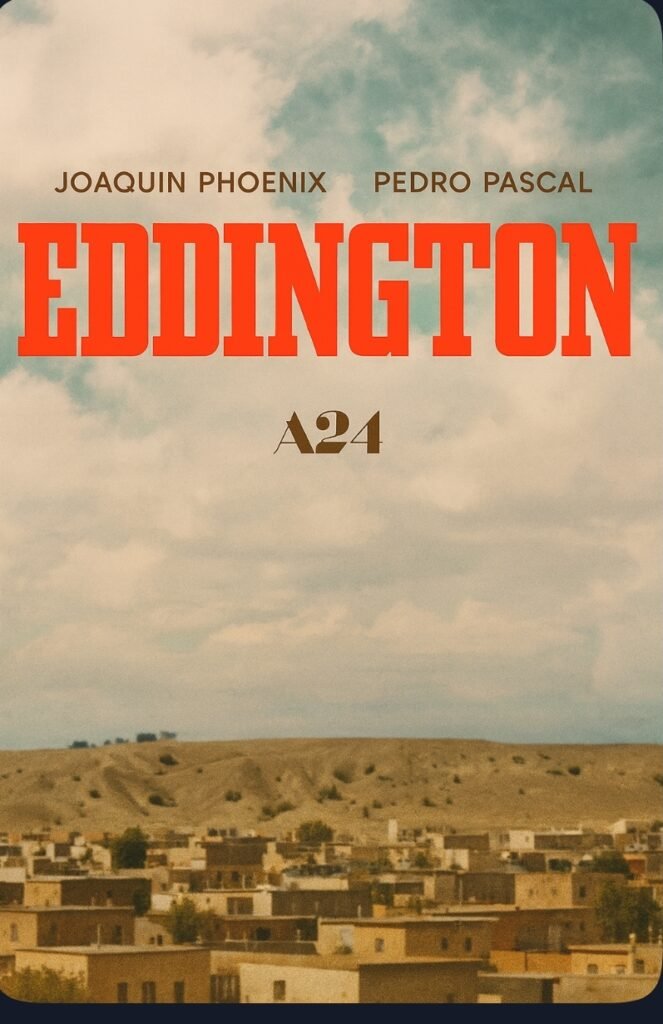
Eddington is a 2025 American neo-Western thriller written and directed by Ari Aster. The film stars Joaquin Phoenix, Pedro Pascal, Luke Grimes, Deirdre O’Connell, Micheal Ward, Austin Butler, and Emma Stone in key roles. Set in New Mexico during the early months of the COVID-19 pandemic, the story explores political rivalry and psychological collapse. Specifically, the film centers on Sheriff Joe Cross (Phoenix) challenging Mayor Ted Garcia (Pascal) during a volatile small-town election.
Something Different
However, this is not a traditional Western or conventional political thriller by any definition. Instead, Aster blends satire, dark comedy, social commentary, and psychological horror into one suffocating cinematic experience. Watching Eddington feels less like observing a story and more like reliving the collective anxiety of 2020. Consequently, the film demands patience, emotional endurance, and a willingness to sit inside prolonged discomfort.
At times, I admired its ambition and fearless commitment to ugliness and confrontation. Yet simultaneously, I felt exhausted, frustrated, and occasionally detached from the unfolding chaos. Ultimately, Eddington feels deeply personal to its director, though not always satisfying for audiences. Setting and Story – A Town on the Brink The story unfolds in May 2020, when lockdowns, fear, and political division reshape daily life. Therefore, the town of Eddington becomes a pressure cooker for paranoia, resentment, and cultural fragmentation.
This rivalry begins as a political contest but gradually mutates into communal psychological breakdown. As tensions escalate, the town itself starts mirroring the instability of its loudest voices. Importantly, the film avoids a clean, structured narrative arc. Instead, Aster constructs a slow descent into chaos that grows increasingly surreal and violent.
The first half unfolds methodically, building discomfort through awkward silences and simmering resentment. Then, the second half spirals into absurdity, confrontation, and moments that barely resemble grounded reality. By the final act, the film abandons stability entirely and embraces symbolic collapse. As a result, the narrative feels less like a story and more like a community’s mental disintegration.
Atmosphere and Tone – Suffocating by Design
Above all, Eddington excels at atmosphere.
Every frame radiates tension, instability, and the quiet threat of imminent eruption.
Even calm conversations feel loaded with hostility and suppressed volatility.
Therefore, viewers never fully relax, even during scenes that appear mundane. Aster uses empty highways, dusty landscapes, and harsh desert light to emphasize isolation.
Importantly, New Mexico appears bleak and emotionally cold rather than picturesque or romantic.
Technology also shapes the film’s suffocating tone. Phones appear intrusive, invasive, and weaponized rather than neutral communication tools. News clips, livestreams, and social media feeds flood the screen with relentless digital noise. At one point, the framing mimics a smartphone interface, trapping viewers inside algorithmic chaos.
Although some moments feel heavy-handed, many visual choices land with disturbing effectiveness. Consequently, the entire film plays like a prolonged panic attack stretched across 148 relentless minutes.
Ari Aster’s Direction – Ambition Without Restraint
Unlike Hereditary or Beau Is Afraid, this film contains no supernatural horror elements.Instead, Aster locates horror within misinformation, ego, paranoia, and institutional mistrust. Stylistically, he embraces chaos and rejects tidy narrative discipline. As a result, Eddington often feels intentionally messy and disorienting. Aster examines how individuals retreat into personalized realities shaped by algorithms and fear. Furthermore, he critiques moral grandstanding and identity performance across political divides.
However, his ambition occasionally overwhelms the storytelling. The film tackles COVID, race, masculinity, activism, AI, conspiracy culture, and corporate power simultaneously. Because of this overload, no single theme receives the depth it truly deserves. Consequently, the movie sometimes feels like a lecture rather than an exploration.
Performances – Joaquin Phoenix Dominates
Joaquin Phoenix as Sheriff Joe Cross. Phoenix delivers a raw, uncomfortable, and deeply human performance as Joe Cross. He portrays Cross as volatile, insecure, and desperate for control in a crumbling world. Physically, Phoenix transforms his posture, breathing, and vocal rhythms to embody quiet instability. Moreover, he communicates insecurity and rage through subtle glances and clenched silences. Even when the film drags, Phoenix commands attention and anchors emotional momentum. Without his performance, the film’s structural weaknesses would feel far more glaring.
Pedro Pascal as Mayor Ted Garcia
Pascal plays Garcia with restraint and composure throughout escalating conflict. However, the script limits him, reducing his character to a symbolic counterweight. Although Pascal brings presence, the narrative never fully explores Garcia’s internal life.
Micheal Ward as Deputy Michael Cooke
Ward delivers a subtle and grounded performance that feels painfully authentic. Through restraint rather than spectacle, he captures moral confusion and quiet despair.
Emma Stone and Austin Butler
Stone and Butler appear underutilized within overcrowded narrative threads. Particularly, Stone’s Louise feels disconnected from the film’s central political conflict. Her storyline introduces spiritual abstraction but fails to integrate meaningfully into the core narrative. Consequently, her arc increases runtime without deepening thematic exploration.
Deirdre O’Connell
O’Connell portrays conspiracy obsession with unsettling realism and credibility.Her performance feels recognizable, uncomfortable, and painfully reflective of recent cultural tensions.
Themes – Social Breakdown and Moral Performance
The film presents 2020 as a collective psychological fracture point. People retreat into echo chambers where algorithms reinforce fear and outrage. Additionally, Aster critiques how individuals weaponize victimhood into moral spectacle.Both political factions perform righteousness while refusing genuine understanding.
Moreover, the film suggests powerful institutions benefit while communities self-destruct publicly.Unfortunately, these compelling ideas never fully mature into cohesive thematic resolution.
What Doesn’t Work – Pacing and Excess
The nearly two-and-a-half-hour runtime feels indulgent and unjustified. Several scenes repeat emotional beats without expanding character insight or narrative progression. Furthermore, tonal shifts between satire, horror, and absurdity create uneven momentum. Because the film refuses tonal commitment, it often feels unfocused and narratively scattered. The emotional payoff also lacks resonance after extensive buildup and chaos. Instead of catharsis, the ending leaves a hollow, ambiguous emotional aftertaste.
Final Thoughts – Admirable Yet Exhausting
Eddington stands as one of the most emotionally draining films in recent memory. Rather than shock through spectacle, it exhausts through relentless psychological intensity. I respect the ambition, boldness, and thematic fearlessness behind this project. However, I cannot say I enjoyed the experience of watching it unfold.
Phoenix delivers an extraordinary performance that elevates uneven material significantly. Meanwhile, Aster crafts an atmosphere that feels disturbingly authentic and immersive. Yet the bloated structure, overloaded themes, and tonal chaos limit its overall impact. Ultimately, Eddington mistakes narrative excess for thematic depth and urgency.
My Bottom Line
Eddington is bold, divisive, ambitious, and unapologetically uncomfortable. It contains moments of brilliance buried beneath clutter and overextension. Joaquin Phoenix alone makes it worth watching at least once. However, the exhausting runtime and messy structure discourage repeat viewings.
If you admire Ari Aster’s uncompromising vision, you will likely find this fascinating.If you prefer focused storytelling, this film may test your patience severely. Personally, I respect Eddington more than I genuinely like it. I admire its craft and performances, yet I have no desire to revisit it.