
Glenrothan Brian Cox Film Review
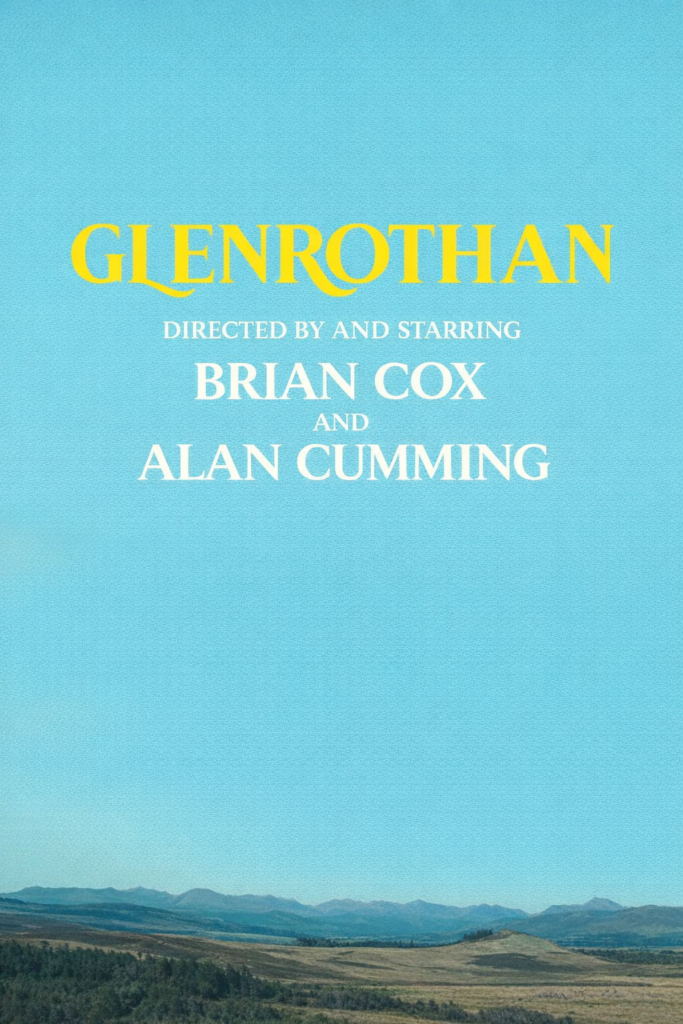
Introduction: Glenrothan Brian Cox Film Review
This Glenrothan Brian Cox film review starts with a simple observation. The film arrives not with the fanfare of a major studio release. Instead, it is billed as deeply personal project.
This is a movie with a heavy sense of personal significance to it. It combines two of the biggest names in Scottish acting, Brian Cox and Alan Cumming, in a movie rich in atmosphere, memories, and unresolved familial relationships.
How Glenrothan Came To Be
What makes this movie especially interesting is the process by which the film was made. It was something that was being discussed for quite some time as part of existing relationships in the world of arts.
This film emerged as a result of love for the stories told by Scots. But then there comes the true moment of truth. Cox, who had acted in many films in his life, decided to become the director himself. And even though this was not something easy, this gamble made Glenrothan unique.
There’s a sense that Cox didn’t just direct this film — he willed it into existence. He chose to shoot on location in Scotland.
Casting Cumming as his on-screen counterpart, he made the production feel more like a gathering of voices with a shared history.
Their performances as estranged brothers carry a lived-in familiarity. That kind of authenticity simply can’t be manufactured.
Everyone involved seemed to understand exactly what story they were telling, even as the film takes its time getting there.
Glenrothan emerges as an interesting place to start talking about this topic. This is because it marks a sort of debut — not in the traditional sense though.
This is the creation of an artist who has been watching, acting, and analyzing for all his life. Now he takes a step back and molds the entire picture.
Whether that view helps create something memorable is an altogether different question.
Cox As Director: Restraint Over Flash

For a first time director, Cox displays an unusually understated and traditional filmmaking style. The understatement is the source of both strengths and weaknesses of Glenrothan.
Not emphasizing the technical side of directing like camera work, he relies on acting and the rhythm of the piece. An acting career definitely shows in his works; in many ways it influences his directing style.
Cox lets the camera stay in certain places a bit longer than usual. This allows him to emphasize silences, pauses and facial expressions.
A performance-first approach seems to suit Cox and Cumming very well indeed. There is a fluidity in their interactions that indicates a certain level of trust.
It seems that Cox has stepped back enough for the actors to get the right moment. Sometimes, one can even say that it is theater on film.
Dialogue is done in one take without excessive cutting or manipulation. Some people will perceive it as authentic, while others may consider it somewhat boring.
Glenrothan Plays It Safe
Visually, the film is quite safe — but with good reason. The landscapes of Scotland are used as an emotional background but not as picturesque scenery.
They are muted and gray, matching the inner condition of the characters. Cox does not attempt to come up with anything new regarding these landscapes visually.
He just uses them wisely, shooting in natural light. This results in a grounded look for the movie that suits its nature.
Nevertheless, his inexperience is evident in his pacing and structure. Some moments in the movie meander.
Some scenes either do not have the requisite build-up or are just short of some energy at their conclusion.
This happens with actors directing their first movies; they are more concerned about the scene rather than the sequence. However, Glenrothan has sincerity that can’t be denied.
So was he successful? Technically speaking, Glenrothan is not the product of a mature filmmaker who already has his own style.
However, Glenrothan is a good first feature because it is well thought-out and personal. Cox knows what to emphasize in a movie — characterization, dialogue, emotions.
So, this feature is not really dazzling as a directorial debut but it certainly makes its point.
The Cinematograpy: Texture Over Spectacle
Jaime Ackroyd‘s cinematography is one of the understated strengths of Glenrothan. It handles most of the emotional labor without ever making a fuss about it.
There is a reason for this. Instead of beautifying Scotland in an ostentatious way, Ackroyd emphasizes texture – the mist on the window, wet stones, grey skies, and slow-moving light over the hills.
It is a fitting way to depict the setting of Scotland as well. There is no suggestion of the landscape being an idyllic natural wonder or simply the backdrop to events.
Rather, the setting feels inhabited and emotionally charged. The Highlands come across less as a place and more like a memory – wide open, desolate, and somewhat harsh.
It is as if the setting is an extension of the people in the film.
In Ackroyd’s work, what is particularly distinguishing is the contrast. The film itself goes from a narrow space to an open outdoor space without making much noise about it.
This creates a sense of emotional detachment among the characters. There is no big fuss made about it, but the film makes sure it happens in a very deliberate way.
Ackroyd is not trying to assert his authority on the film through any kind of signature style. Rather, he is backing it up. And in doing that, he makes sure that the film becomes earthy and reflective in its own right.
Themes: Silence, Identity, And Regret
In essence, Glenrothan is more focused on what lies underneath a life-time of being silent than a story.
The main idea in the film is that of reconciliation; however, it does not come through in the simplest way.
The film focuses more on the difficulty in the initial attempt at reaching a point where this can be done. The two brothers have let years of pride and lack of interaction make them people they hardly recognize themselves.
There is also a clear theme of identity, specifically of a place nature. With the film being so firmly based on the Scottish setting,
Cox makes it very clear that your place of origin never really leaves you. It can be seen through the character of Cumming, who is back after being away for so many years.
Does it mean that one ever really leaves the place of their origin?
Regret Hangs Over Everything
There is regret about everything. Nothing in a larger-than-life way, but the regret of the smaller kind that is often the result of lost opportunities and words left unsaid.
The movie continuously returns to the theme that not everything in life comes at the right time for reconciliation.
And once that happens, it may be too late. This is how the movie gets its reflective, somewhat melancholy mood. Time is constantly passing people by.
There is another theme which is clearly visible in the film; that is masculinity, especially one molded by the previous generation.
These are men who find it difficult to express themselves emotionally. Rather than expressing emotions directly, they choose to remain silent or change the topic of conversation.
Much of the conflict in the film doesn’t lie in what was said, but rather in what was not said. Long silences, unfinished sentences, and conversations that get sidetracked the moment they become important.
The combination of these issues causes the movie to be more contemplative than a piece of art. It requires a viewer’s patience – maybe even some thinking about oneself. The movie does not shove its message into your face. Yet it does remain in your head.
The Performances: Cox, Cumming And Henderson
It is the acting of Glenrothan which adds the gravitas to the film. The movie is built upon, almost wholly, the relationship between Cox and Cumming.
Everything else just seems like a backdrop for this. Thankfully, Cox and Cumming do not disappoint when it comes to their acting.
There is an intensity about Cox’s character that is very controlled. What is intriguing about the character is how much he tends to play down what one would assume he should inflate.
Cox does not have his characteristic explosive presence, which he is known for in other movies. Rather, he is more subdued and reserved.
It is easy to imagine a man who has had decades of suppressing emotion rather than releasing it.

In contrast, Cumming performs in an outwardly expressive manner. His character bears the burden of separation.
He is a person who has been somewhere else, constructed his own identity, and has now returned to a place that does not recognize him anymore.
The strength of his performance lies in the fact that he doesn’t portray that experience in a merely nostalgic or regretful way. There is a sense of defensiveness beneath it.
Where the success of their performances lies is in the way they play off each other. There is not much acting to each other going on.
It almost becomes listening, with long silences and thoughts that have been cut short, instances when neither knows what to say next.

Then there is Shirley Henderson’s portrayal of Jess. It may be more restrained than either of the lead roles, but it’s just as memorable. Henderson is able to give Jess a very watchful presence.
She is largely an observer within the context of the brothers’ clash. But still, Henderson makes her presence felt as someone vital to the story.
There’s a warmth in Jess that the film uses sparingly, and becomes the one the men themselves are unable to attain – it’s the emotional anchor the film creates through her character.
The best parts Henderson plays in the movie are those where she’s reacting rather than speaking.
Verdict
When considered as a character-based drama featuring two heavy-hitting actors, Glenrothan frequently succeeds in achieving its aims from an emotional standpoint.
Unfortunately, the filmmaking surrounding these performances isn’t always up to the same level — though the core of it does have
What comes through clearly is the dynamic between the two men. The film excels whenever it allows itself time for the long, tense dialogue scenes between the two brothers.
The performances ring true rather than manufactured. There is a strong sense of history shared between the two — resentment, familiarity, and fondness all wrapped up in one neat package.
The atmosphere of the film is yet another distinct positive feature. The atmosphere of Scotland is captured subtly and thoughtfully by Ackroyd.
The style of his cinematography gives the film a subdued visual appearance. There is consistency in the atmosphere created, from the greyness of the sky and landscape to the plainness of interiors, which is conducive to the emotions conveyed by the film.
However, where the movie falls short is in terms of its structure and pacing. There are some scenes that drag on.
The story doesn’t have much momentum from one scene to another. The movie tends to reiterate rather than develop its themes.
However, there is also a certain degree of restraint that sometimes turns into a limitation. Cox’s directorial style is quite considerate and character-oriented.
Nevertheless, it is not always capable of providing the necessary variety in terms of rhythm or visuals. The idea behind such minimalism is quite obvious, but sometimes it seems to be too balanced.
Nonetheless, Glenrothan is ultimately a successful movie more than a failure. The successes of Glenrothan are on the level of performance, atmosphere, and emotional truthfulness, while the failures revolve around pacing and cinematic scope, but not fatal problems.
Glenrothan is a movie that is reminiscent of the first steps taken by Cox to explore an innovative artistic path.