Hamnet (2025) Review – A Quiet, Devastating Meditation on Grief and Art
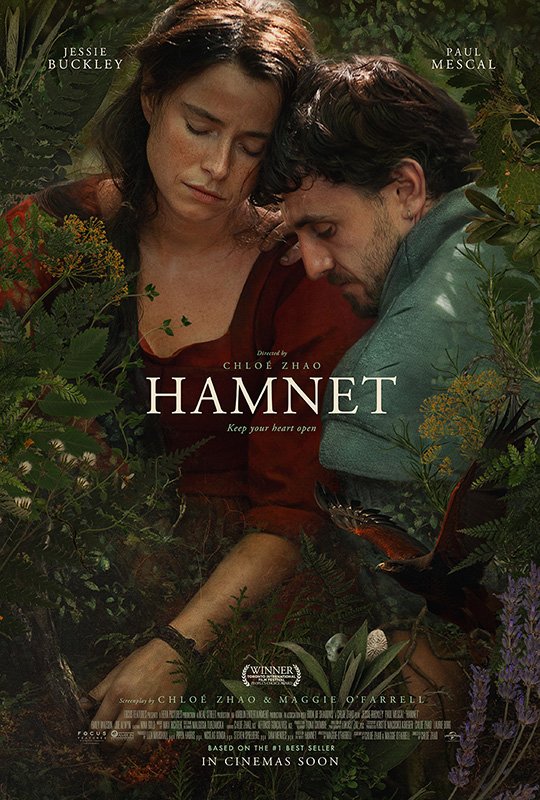
Introduction Hamnet (Warning contains Spoilers)
Hamnet is not a film you casually absorb and leave behind. It lingers. When the credits rolled, I didn’t immediately stand up. I just sat there, still, trying to steady myself. The experience felt less like watching a historical drama and more like being invited into someone’s private mourning.
Directed by Chloé Zhao and adapted from Hamnet by Maggie O’Farrell, the film imagines the life of William Shakespeare and his wife Agnes after the death of their son. But it isn’t a traditional biopic. It doesn’t care about literary trivia or theatrical milestones. It cares about what grief does to a marriage, to a mother, to a father, and to the fragile space between love and loss.
This is not a loud film. It doesn’t beg for attention. It whispers — and if you lean in, it devastates.
What the Story Is Really About
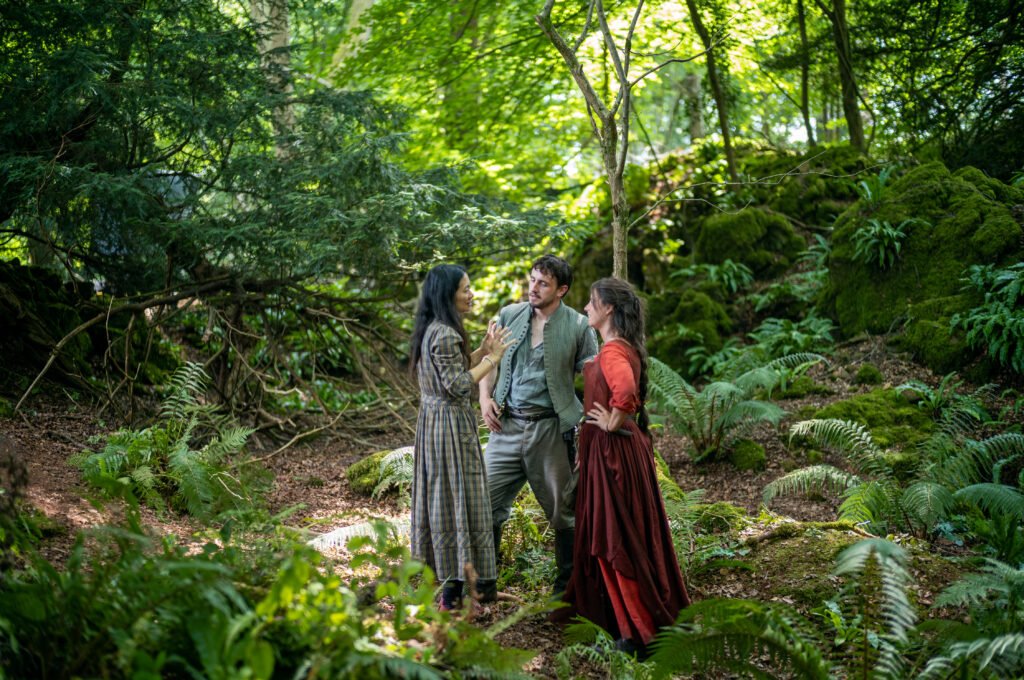
Director Chloé Zhao with actors Paul Mescal and Jessie Buckley with on the set of their film HAMNET, a Focus Features release.
Credit: Agata Grzybowska / © 2025 FOCUS FEATURES LLC
On the surface, the narrative is simple: Agnes Shakespeare loses her eleven-year-old son, Hamnet, to illness. Years later, William channels that loss into the play Hamlet. But the film resists turning that transformation into a neat emotional arc. Instead, it stays in the aftermath.
The camera lingers with Agnes. We see her before the tragedy — intuitive, deeply connected to nature, attuned to small details others miss. We observe the rhythms of domestic life: shared meals, quiet labor, fleeting laughter. Zhao builds this world slowly so that when it fractures, we feel the rupture.
William’s life unfolds in parallel, divided between Stratford and London. His distance is not framed as cruelty but as confusion — an inability to inhabit grief in the same way Agnes does. They love each other, yet sorrow pulls them apart into separate silences. In my opinion, the film’s greatest strength is that it refuses to package grief into a lesson. There is no moral. No easy catharsis. Only endurance.
A Film Born from Personal Reflection
Knowing how this film came together deepens its emotional impact. Chloé Zhao reportedly began drafting the script during a difficult period in her own life, writing much of it while traveling by train. That sense of personal vulnerability is embedded in every frame.
Bringing Maggie O’Farrell on as a co-writer ensures the adaptation feels respectful rather than reductive. Even where the film diverges from the novel’s structure, it never feels careless. It feels translated — from prose to image, from interior monologue to gesture.
With producers like Steven Spielberg and Sam Mendes involved, this could have easily turned into a glossy prestige drama. Instead, it remains restrained and intimate, deliberately resisting spectacle.
The Physical World: Texture and Authenticity
One of the most striking aspects of the film is its tactile realism. Nothing feels polished for display. The homes look worn. The village streets feel muddy and lived in. Filming in Weobley rather than modern Stratford gives the setting authenticity without romanticizing it.
The Tudor buildings do not dominate the frame — they simply exist, as solid and weathered as the people inside them. Agnes’s childhood home in Wales feels softer, almost dreamlike, as the people inside them.
Agnes’s childhood home in Wales feels softer, almost dreamlike, as if memory is gently shaping its edges.
The reconstructed Globe Theatre becomes a powerful emotional threshold. Built using oak beams reminiscent of its historical counterpart, it carries a sense of gravity. By the time the narrative reaches this space, it feels less like a stage and more like a confrontation — between private pain and public art.
Direction, Structure, and Visual Language
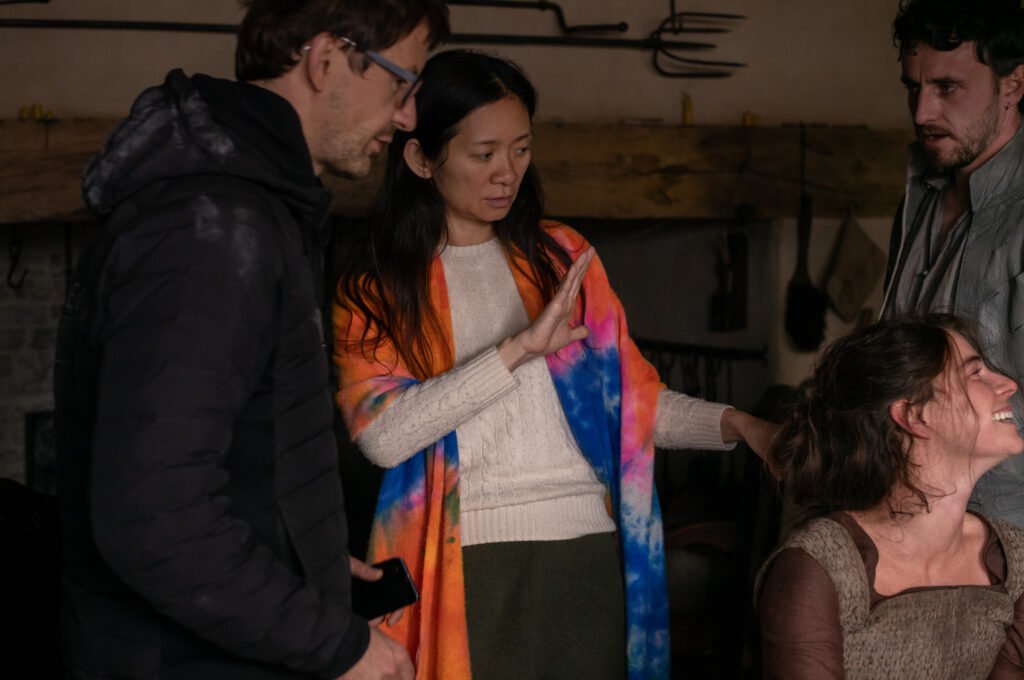
Credit: Agata Grzybowska / © 2025 FOCUS FEATURES LLC
Zhao’s direction is unmistakable. She allows scenes to breathe. Silence is not empty here; it is heavy. Long pauses and lingering close-ups do more than dialogue ever could. Unlike the novel’s nonlinear structure, the film unfolds chronologically. In my opinion, this decision works beautifully on screen. Watching the family’s joy gradually unravel makes the eventual loss more shattering. We move forward with them, step by step, unable to skip ahead.
Visually, the film is stunning without drawing attention to itself. Natural light dominates. Candle flames flicker softly. Sunlight filters through narrow windows. Shadows are allowed to remain. The camera lingers on hands brushing fabric, soil clinging to fingers, water rippling in a basin. It creates a sensory intimacy — you don’t just observe their world, you feel it.
Color plays a quiet symbolic role. Agnes’s wardrobe leans into deep reds and bruised purples, echoing emotional weight. William’s palette gradually fades into muted grays as he retreats inward. Even broken objects in the household mirror the family’s fractured state.
The Emotional Experience
Watching this film felt almost intrusive — as though I was witnessing something sacred and private. The pacing forces you to sit in discomfort. There is no dramatic orchestral swell guiding your emotions. The silence demands participation. By the time the story reaches the Globe Theatre sequence, I was emotionally exhausted. The final act is devastating in a restrained, almost unbearable way.
Seeing William shape his grief into language while Agnes struggles to speak hers is heartbreaking. Art becomes both bridge and barrier — a way of expressing pain and, at the same time, distancing it. In my opinion, this is one of the most honest portrayals of loss I’ve seen in years. It does not romanticize suffering, but it does dignify it.
Where It May Divide Audiences
This film will not be for everyone.The pacing is slow — sometimes deliberately so. If you expect a conventional Shakespeare biopic or dramatic spectacle, you may find yourself restless. The Hamlet sequences are also presented without heavy exposition.
The film assumes emotional engagement rather than intellectual explanation. It trusts viewers to understand the resonance rather than spelling it out. For me, this restraint felt intentional and meaningful. But it requires patience and openness.
Comparing Film and Novel
The novel is deeply interior, particularly in its portrayal of Agnes’s thoughts. Translating that internal world to film was always going to be challenging. Instead of relying on voiceover, Zhao uses imagery and silence. Nature becomes Agnes’s emotional vocabulary. Long shots replace pages of introspection.
The invented sequence depicting Hamnet alone in a shadowy, stage-like space as he dies is especially haunting. Though not present in the book, it feels emotionally truthful. It symbolically binds the child’s death to the theatrical world that will later carry his name.
The film also simplifies aspects of the marriage, minimizing tension related to William’s infidelity. In my opinion, this focus tightens the narrative, even if it sacrifices some of the novel’s complexity.
The Performances
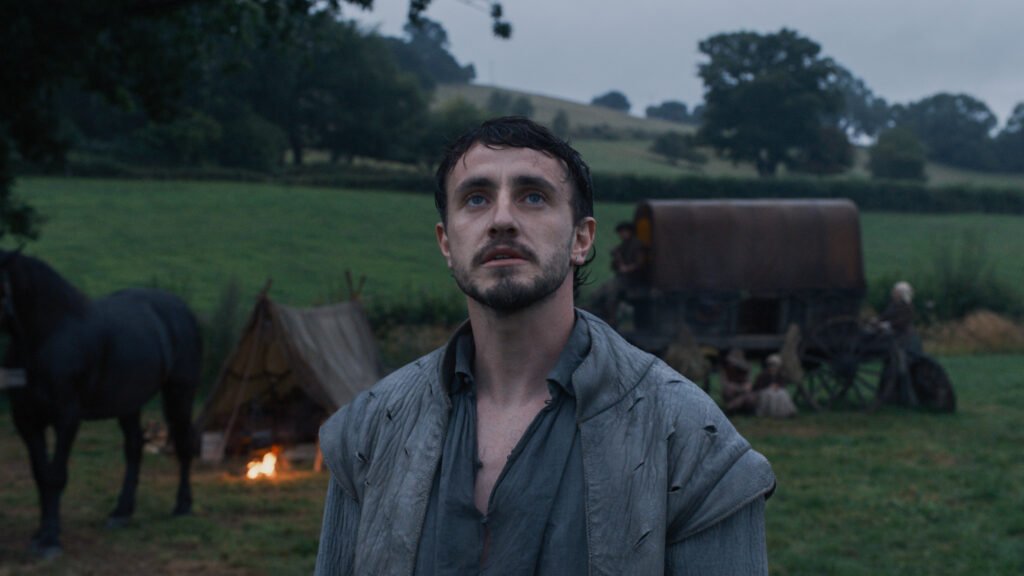
Credit: Agata Grzybowska / © 2025 FOCUS FEATURES LLC
Paul Mescal as William ShakespearePaul Mescal delivers a restrained, deeply affecting performance. His William is not distant out of indifference, but because he does not know how to remain present in the face of loss. His grief manifests as motion — travel, work, writing.
There are moments when his voice falters or his eyes linger just a second too long. Those small details make the performance feel painfully real. His chemistry with Jessie Buckley is subtle yet believable, rooted in shared history rather than grand declarations.
Jessie Buckley as Agnes Shakespeare
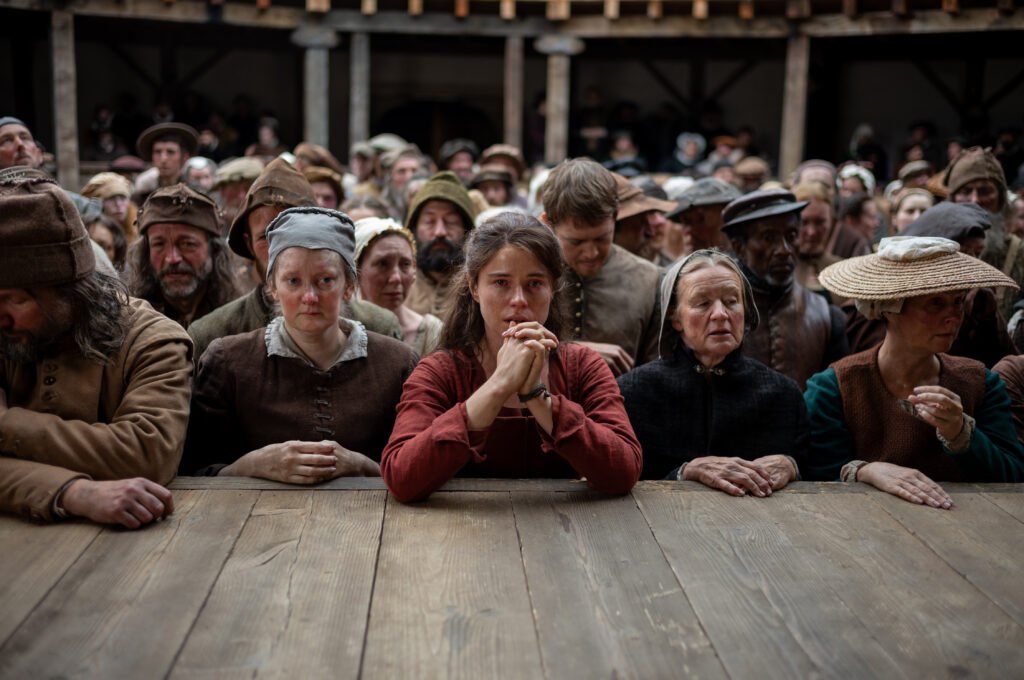
Credit: Agata Grzybowska / © 2025 FOCUS FEATURES LLC
Jessie Buckley is extraordinary. Her portrayal of Agnes is raw, physical, and almost overwhelming. She embodies a woman both grounded in earth and shattered by absence. Her grief is not theatrical. It is embodied — in collapsed posture, vacant stares, sudden eruptions.
Some of her most powerful moments contain no dialogue at all. The Globe Theatre sequence cements this as a career-defining performance. Watching her face as she witnesses art born from her pain is one of the most powerful cinematic moments I’ve experienced.
Supporting Performances
Emily Watson delivers a monologue about child loss that is quietly devastating. What initially reads as severity reveals itself as survival. Joe Alwyn plays his role with subtlety, fitting naturally into the world without overshadowing it. Jacobi Jupe’s performance as Hamnet feels authentic and unforced, adding to the emotional weight of the story.
What Worked — and What Didn’t
What Worked
The patience of the storytelling
The visual restraint
The emotional honesty
The final act, which reframes everything that came before
Jessie Buckley’s unforgettable performance
What Didn’t Fully Work
The pacing occasionally tests endurance
Some stretches of stillness may feel repetitive
Viewers expecting dramatic escalation may feel disconnected
Final Thoughts
Hamnet is not entertainment in the conventional sense. It does not rush to comfort or explain. It asks you to sit with sorrow. To witness it. To feel its weight. In my opinion, that is what makes it powerful. If you are open to a slow, immersive, emotionally demanding experience, this film is absolutely worth your time. But go in prepared: it wants to unsettle you. It wants to linger. And long after you leave the theater, it will.