Highest 2 lowest
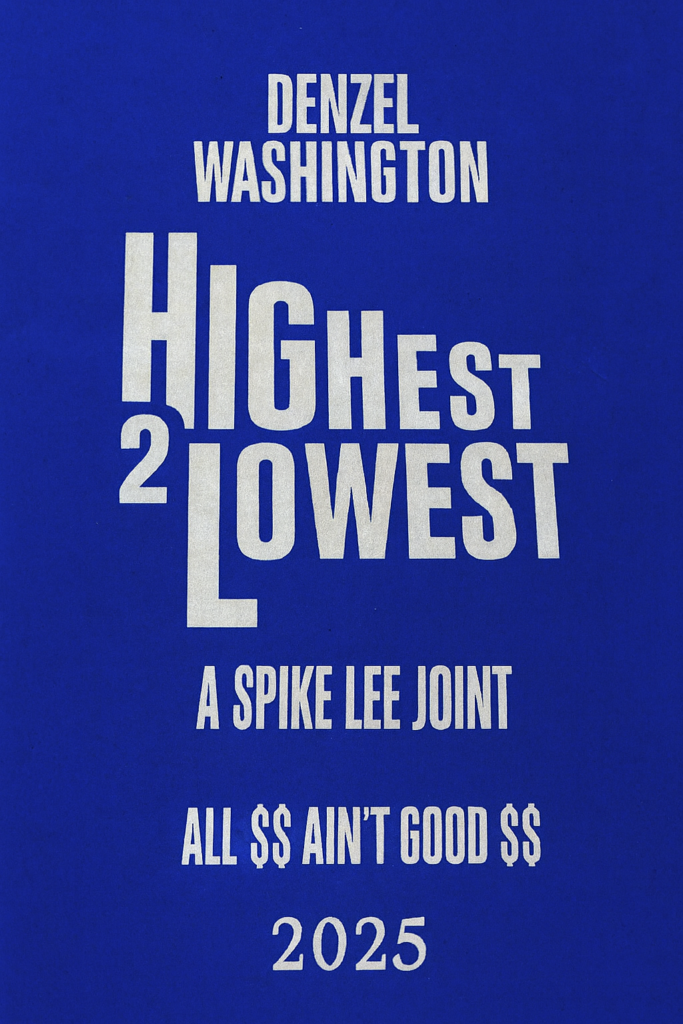
Introduction: Highest 2 Lowest: Walking Into a Heavyweight Collaboration (Warning contains Spoilers)
Going into Highest 2 Lowest, I expected more than a typical crime thriller, anticipating Spike Lee and Denzel Washington’s collaboration. Both artists bring enormous talent, reputation, and cinematic weight, elevating expectations for audiences familiar with their previous outstanding work together.
This film is inspired by Akira Kurosawa’s High and Low, providing a modern reinterpretation. The story promises crime, moral complexity, and social commentary, showing Spike Lee’s distinctive vision through contemporary settings and cultural context.
From the first scene, the Highest 2 Lowest demonstrates ambition, blending suspense, drama, and ethical dilemmas to challenge viewers’ emotions effectively. While not flawless, the movie immediately establishes itself as a serious, thoughtful, and emotionally charged story.
The Story and Its Modern Setting
David King, a powerful music mogul, navigates industry change, personal danger, and moral challenges threatening his legacy and career simultaneously. The film begins with business politics, corporate maneuvering, gradually introducing a ransom plot that complicates his life drastically.
Every decision David makes carries consequences emotionally, financially, and morally, creating tension beyond traditional crime thriller expectations for audiences consistently. Through plot progression, the movie shows how wealth and influence cannot protect someone from ethical dilemmas or unexpected personal danger.
Suspense arises less from physical danger and more from moral responsibility, guilt, and consequences that force David to question himself continuously.
Denzel Washington’s Performance
Denzel Washington anchors the film with a performance that is subtle, layered, commanding. He portrays David King as confident, intelligent, powerful, yet vulnerable, tired, and burdened by responsibility, age. His performance emphasizes controlled emotion, letting fear, stress, and moral conflict build gradually in his eyes and voice without exaggeration.
Washington balances multiple aspects of David’s personality: businessman, father, and morally conflicted human, making the character feel authentic and relatable. Without his performance, the film would lose emotional weight, focus, and narrative coherence, with him, it remains grounded and compelling.
Spike Lee’s Direction
Spike Lee’s direction shapes the movie visually and thematically, giving New York City energy, chaos, diversity, and narrative presence naturally. He reinterprets the story for modern audiences, connecting crime, ethics, and music industry commentary through cultural lenses deliberately.
The music industry functions as a metaphor for control, exploitation, image, and survival, reflecting societal issues and tension consistently. The visual style emphasizes character, emotion, and environment, using cityscapes, interiors, and movement to enhance suspense and moral complexity.
Although some social commentary feels heavy-handed, it reflects Lee’s passion and desire to provoke thought while balancing entertainment carefully. The director’s style keeps the story bold and memorable, prioritizing human conflict and moral questions over technical precision.
Supporting Cast and Characters
The supporting cast is uneven; some performances add depth while others feel underdeveloped, failing to match Washington’s intensity throughout scenes. David King’s wife feels underwritten, reducing emotional impact during critical moments that require fear, pain, and vulnerability to resonate.
Police characters and secondary roles exist mainly to move the plot forward rather than function as complex human beings. Despite these weaknesses, the supporting cast occasionally amplifies tension and contrast, highlighting Washington’s central performance throughout the narrative.
Imbalance in character development reminds viewers that this story focuses on David King’s ethical dilemmas and personal transformation. Even with uneven performances, the film maintains audience engagement through its central narrative and high-stakes suspense throughout runtime.
Sound, Music, and Atmosphere
The soundtrack is sometimes inconsistent, with certain moments enhancing tension, while other musical choices feel distracting or misaligned with pacing. Music symbolizes identity, control, and taste in the story, emphasizing the moral and psychological stakes David King faces consistently.
Sound design enhances environments, tension, and suspense, allowing audiences to experience city energy, boardroom pressure, and emotional weight effectively. Occasionally, misaligned soundtrack choices interrupt flow, but overall sound reinforces power, fear, and responsibility themes without undermining story progression.
Atmospheric elements such as city noise, echoes, and music create immersive storytelling, complementing visual direction and enhancing suspense, drama, and themes.
Overall, the film’s audio aspects support characters, narrative, and emotion, even if not every musical choice succeeds perfectly within the story consistently.
Pacing and Structure
The pacing shifts between tension-filled suspense and slower sequences allowing emotional reflection while balancing thriller mechanics with moral exploration. Transitions occasionally feel abrupt, but character focus, Washington’s performance, and ethical dilemmas maintain audience attention throughout every scene consistently. Some sequences emphasize ethical complexity, while others highlight corporate intrigue and suspense, creating a rhythm keeping the narrative dynamic.
Despite uneven pacing, the story maintains momentum, engaging viewers through character focus, suspenseful stakes, and moral tension across sequences. This rhythm reinforces thematic depth, showing how consequences, responsibility, and vulnerability interact with power, wealth, and personal choices realistically. Ultimately, structure prioritizes emotional resonance and moral stakes over genre mechanics, allowing the film to explore humanity and decision-making.
Themes and Meaning
Highest 2 Lowest explores power, morality, legacy, and responsibility through David King’s psychological and ethical struggles under extreme societal pressure. The story questions wealth, privilege, and influence, showing how human connection and morality suffer when financial or social power dominates.
David King’s ethical dilemma is not just about ransom; it reflects identity, vulnerability, and moral responsibility under societal and personal pressures. The film shows wealth and success cannot shield individuals from moral consequences, emotional vulnerability, or responsibility for actions consistently
Ultimately, the story leaves audiences questioning morality, responsibility, and power, prompting reflection long after viewing without excessive action or spectacle.
Conclusion
Highest 2 Lowest is ambitious, messy, and uneven, but succeeds through moral complexity, suspense, and Denzel Washington’s powerful, grounded performance.
The film’s flaws do not reduce its emotional resonance, thematic depth, or memorability, making it engaging, thought-provoking, and worth watching.
Spike Lee’s direction elevates the story with visual style, social commentary, and cultural relevance while balancing tension, ethics, and suspense.
The movie challenges audiences to consider morality, power, legacy, and human vulnerability while delivering suspense, emotion, and social commentary effectively