
Lanterns Review: HBO’s Green Lantern Series Misses Its Mark
The HBO series has the makings of a standard police procedural, with the same powers and limitations as most in the genre. The only difference is the cosmic superhero title.
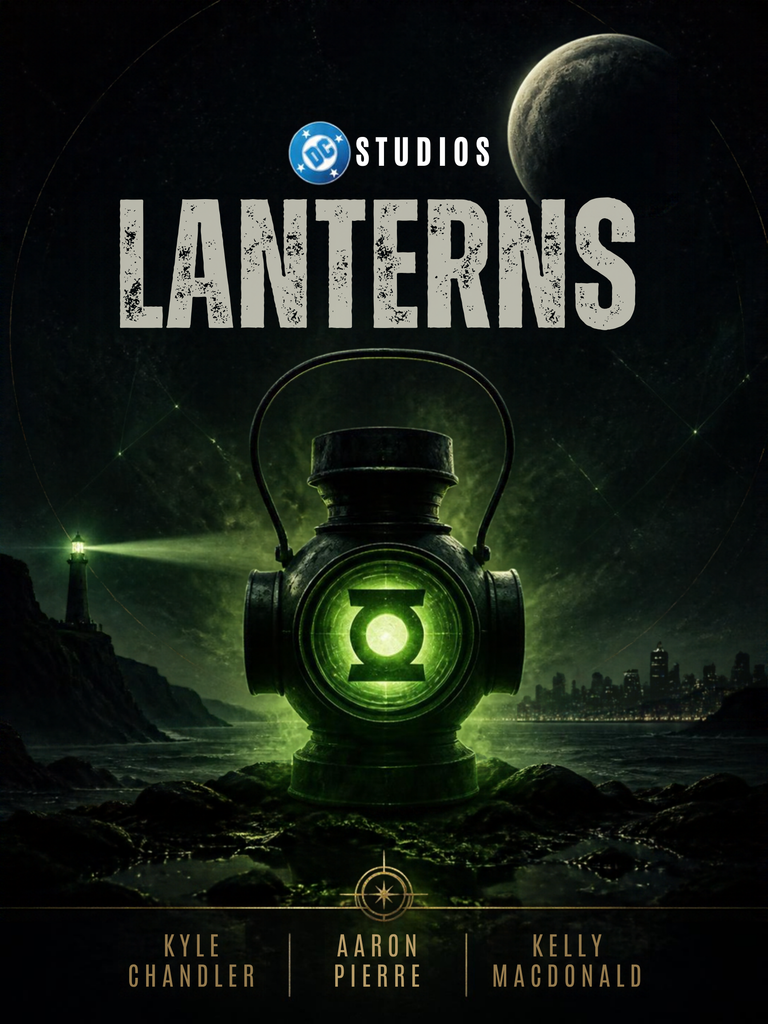
HBO’s Lanterns focuses on John Stewart as is chosen to replace Hal Jordan as the next Green Lantern. Before he can get the job, though, John has to train under Hal, who doesn’t want to give it up easily. So Hal makes things difficult for the young protégé, deliberately putting John in compromising situations. During one training drill, John is approached by Hal’s holographic memory with information that sends the two on a mission to Rushville, Nebraska, to investigate something otherworldly: the same place the first Earth Green Lantern, Abin Sur, landed all those years ago.
As far as superhero stories go, not much to make one entertaining. Lots of heroic action, a little adventure mystery exploring Earth and beyond, and some conflict between the hero and their love interest to lead the audience on an emotional journey. Choose one or mix and match, and you have something watchable. But somehow Lanterns evades all of that. The drama never carries real emotional substance, and the on-screen chemistry between John and Hal doesn’t know exactly what it wants to be. It starts like a buddy-cop show, but the older guy is so messed up that there’s no way his character can be redeemed.
The action scenes are visually astonishing and delivered with raw aggression. They sit toward the realistic end of the spectrum, but they’re few and far between, and they aren’t enough to hold up eight episodes. Instead, the show leans on a police procedural narrative, with backstories that disrupt its momentum. Every decision John makes forces him to confront his personal demons, and the flashbacks that follow reveal more about his character. They feel more like a studio ploy to drag the series out.
The screenwriting doesn’t do right by its actors, especially Kyle Chandler. Chandler anchored (Friday Night Lights) and has shown his range in (Argo and Bloodline), yet his character never stood a chance of being acceptable. He’s a punching bag, and the weaker he looks, the better John Stewart looks by comparison. The show swapped Hal Jordan’s classic, charismatic flyboy swagger for a depressing, grounded-cop aesthetic with no moral compass. Chandler is a great actor, and it’s painful to watch him play this version of the character.
The casting director found near-perfect look-alikes for the comics, but allocating large chunks of the series to John’s backstory isn’t necessary. Aaron Pierre stood out in (Rebel Ridge), where his character fits perfectly. As John Stewart, though, he’s so fearless and masculine, in the vein of Arnold Schwarzenegger or Sylvester Stallone, that it feels misplaced. Kelly Macdonald, whose work in (Trainspotting) and (No Country for Old Men) is hard to forget, brings real weight to the town. Still, we’re in an era when dual timelines and split narratives keep fans hooked.
The little action we do see is entertaining, exciting, and intense, so why kill that momentum with weak investigative storylines that lack intriguing twists? Nathan Fillion, who won over fans as Malcolm Reynolds in (Firefly) and as Richard Castle in (Castle), is a talented actor who has delivered some incredible performances. But he needs to stop turning up in roles like Guy Gardner that never develop into anything solid. This is made worse by his costume, which makes his character look cheap. We know John Stewart needs to be the perfect Lantern, but more effort could have been shown to the supporting cast.
Lanterns’ plausibility should be credited to the creators Damon Lindelof (Lost), Chris Mundy (True Detective), and comics writer Tom King. The trio made the series simple enough for viewers to understand. There’s no need to research decades of Lantern characters. The series had the perfect entry point for a genuinely interesting adaptation, but a weak storyline and underdeveloped characters took that potential away.