A Relentless Descent Driven by Park Chan‑wook’s Fierce Vision
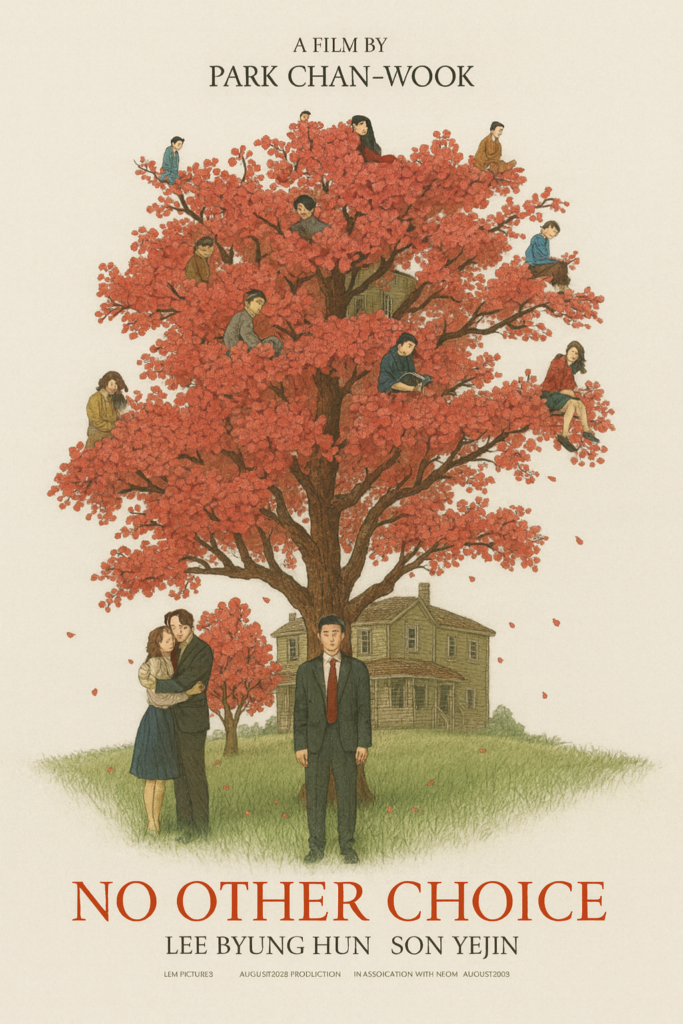
Introduction No Other Choice (Warning contains Spoilers)
No Other Choice delivers sharp energy and relentless tension that push Park Chan‑wook into bold and uncompromising creative territory. Moreover, the film opens with immediate urgency that throws viewers into Yoo Man‑su’s collapsing world without hesitation. Additionally, Park drives every moment with tight control that strengthens the film’s dark humor and escalating violence. Consequently, the story maintains constant pressure that forces Man‑su into increasingly reckless and destructive decisions.
A Character Consumed by Fear, Ego, and Brutal Ambition
The story follows Yoo Man‑su as he loses his job and confronts crushing fear, humiliation, and rising desperation. Moreover, he targets rival applicants and eliminates them because he believes violence guarantees his return to professional stability. Additionally, Park exposes the absurdity of modern corporate competition through sharp satire and ruthless emotional honesty. Consequently, the film highlights how ambition mutates when survival instincts overpower dignity and reason. Furthermore, the narrative shows how ego drives Man‑su toward choices that destroy every remaining part of his identity.
Performances That Drive the Film’s Emotional Ferocity
Lee Byung‑hun commands the film with fierce intensity and delivers a gripping portrayal filled with urgency and emotional volatility. Moreover, he drives every scene with sharp focus that reveals Man‑su’s unraveling identity. Additionally, Son Ye‑jin strengthens the narrative with grounded emotional depth that highlights the strain created by fear and ambition. Meanwhile, the supporting cast energizes the film with bold performances that amplify its humor and tension. Furthermore, each actor pushes the story forward with clear intention and powerful emotional clarity.
Visual Craft That Sharpens Every Psychological Shift
Park directs with striking confidence and uses every stylistic choice to reinforce the film’s themes. Moreover, he builds symbolic imagery that reflects Man‑su’s collapsing sense of self with vivid clarity. Additionally, Kim Woo‑hyung’s cinematography shapes a moody visual world that mirrors the character’s spiraling desperation. Furthermore, Jo Yeong‑wook’s score drives the tension with rhythmic unease that sharpens every emotional beat. Likewise, the production design intensifies the film’s bleak atmosphere with precise and deliberate detail.
Writing That Cuts Through Satire, Horror, and Social Critique
The screenplay blends satire and horror with precise control and never loses focus on character psychology. Moreover, Park uses sharp dialogue and escalating conflict to expose the cruelty of competitive labor markets. Additionally, he critiques fragile masculinity by showing how ego drives Man‑su toward reckless and destructive choices. Consequently, the film becomes a powerful commentary on identity, ambition, and the brutal logic of modern capitalism. Furthermore, the script maintains relentless momentum that keeps viewers engaged and unsettled.
Rising Chaos That Tightens the Film’s Grip
The pacing remains tight throughout the film and pushes the story toward darker and more chaotic territory. Moreover, Park structures the narrative with rising intensity that keeps viewers tense and fully invested. Additionally, the violent moments strike with shocking force because they reflect Man‑su’s emotional collapse. Likewise, the humor grows sharper as the stakes rise, creating a unique blend of dread and absurdity. Furthermore, each sequence drives the story toward a climax filled with raw emotional impact.
A Final Act That Hits with Brutal Emotional Precision
The final act delivers a brutal conclusion that reinforces the film’s central themes with fierce clarity. Moreover, Park confronts viewers with uncomfortable truths about ambition, survival, and the cost of unchecked ego. Additionally, the ending lingers because it exposes the emotional damage created by relentless competition. Consequently, the film leaves a lasting impression that encourages reflection long after the credits fade. Furthermore, the final scenes deepen the film’s commentary with sharp and unforgettable imagery.
Critical Impact That Strengthens Park Chan‑wook’s Global Legacy
Critics praised No Other Choice because it combines bold style, sharp writing, and fearless performances. Moreover, audiences embraced its dark humor and intense storytelling, which created strong momentum across festivals and streaming platforms. Additionally, the film strengthened Park Chan‑wook’s global reputation as a master of genre blending and social critique. Consequently, its success expanded its reach and introduced new viewers to its unsettling and unforgettable narrative. Furthermore, the film’s acclaim reinforced Park’s status as one of cinema’s most daring storytellers.
Final Thoughts on a Fierce and Uncompromising Thriller
Ultimately, No Other Choice stands as one of Park Chan‑wook’s most daring and incisive works. Moreover, it blends satire, violence, and emotional depth into a gripping portrait of a man losing everything. Additionally, the film challenges viewers to confront uncomfortable truths about ambition, identity, and the pressures created by modern capitalism. Consequently, it remains a powerful and unforgettable entry in Park’s acclaimed filmography. Furthermore, the film’s intensity continues to resonate because it captures the brutal cost of survival in a collapsing system.