
Primetime Movie Review
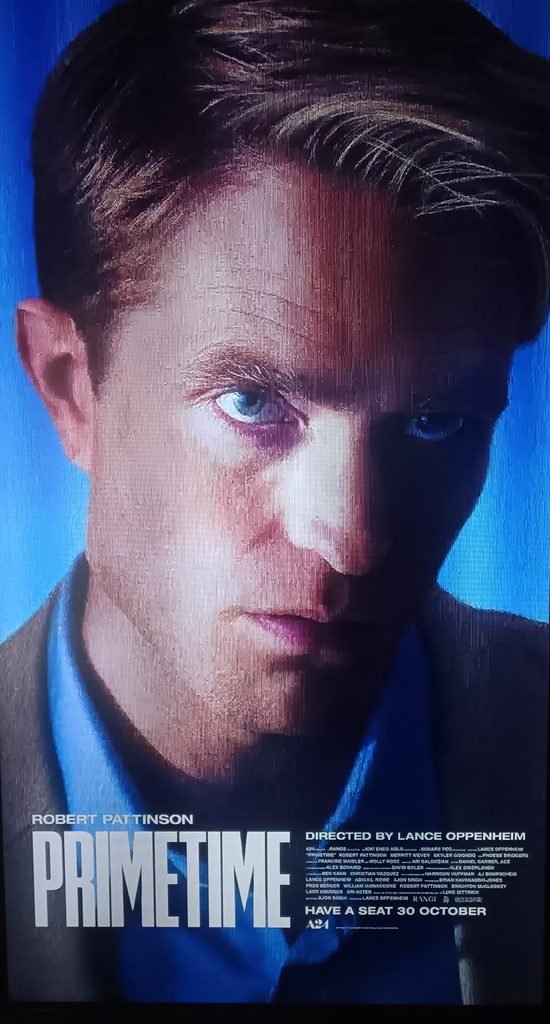
Primetime Movie Review: Robert Pattinson’s Unhinged Media Satire
There has always been a strange link between television and exploitation. The sad, shocking and shameful can be turned into entertainment very quickly with an audience willing to watch.
Prime Time (Lance Oppenheim’s psychological thriller from 2026) plays with this uncomfortable theme and turns it into something increasingly dark.
This film, starring Robert Pattinson as a fictionalised version of To Catch a Predator host Chris Hansen, follows the peak of the controversial TV phenomenon in 2006.
Obsessed with getting his show onto prime time and beating hit shows on the networks such as Lost, Chris gets more and more involved with a group of vigilantes carrying out their own sting operations. His ambition leads to them undertaking a high profile operation in Texas.
Based off the 2007 article by Luke Dittrich in Esquire titled Tonight on Dateline This Man Will Die, this isn’t a typical biopic or crime thriller.
Oppenheim presents a darkly humorous and increasingly horror-esque look at how far media will go to sensationalise a story, public morality and those who benefit from turning human suffering into entertainment.
Pattinson gives an incredible performance and the film has a bold visual style. It is often very humorous, but can also be quite scary and uncomfortable.
However, the final act can be quite chaotic meaning the main message can sometimes get lost.
Robert Pattinson Delivers a Mesmerising Performance

Primetime is worth watching for Robert Pattinson, who gives an incredible performance. Pattinson does not try to emulate the real Chris Hansen, instead he plays a fictionalised version of the TV host who finds himself becoming more and more obsessed.
In front of the cameras Pattinson plays a slick, professional and commanding Chris Hansen. He has a good understanding of what television requires and can control interviews, however behind the scenes we start to see more of a facade.
Pattinson really brings this to life. He is obsessed with exposing wrong doing but also wants to create the biggest television moment he possibly can.
His obsession with beating out other programmes and getting a spot on primetime becomes unhealthy.
What makes it so uncomfortable to watch is the ease in which Hansen can switch between being morally outraged and being a showman.
Although he presents himself as wanting to do the right thing, his actions suggest he cares more about the show.
Pattinson makes this very interesting to watch. His performance can be quite over the top and almost maniacal, which works for this film as they are trying to push their characters to the extreme. Pattinson still has a lot of charm even when Hansen is extremely unlikeable.
Overall this is another incredible performance from Pattinson who continues to take risks with his characters.
He does not make us feel sympathetic towards Hansen, instead we get to see his image start to crumble.
Lance Oppenheim’s Distinctive Directorial Approach

Lance Oppenheim has created his first narrative feature film. His documentary style can be seen throughout and creates a more warped version of reality than a traditional historical drama.
At the start, the film feels like a behind the scenes media thriller. Throughout the film we see Hansen and his colleagues planning their operations, discussing TV opportunities and trying to create more sensational content.
This gives the film a fast paced feel due to the nature of the media world where attention is the most valuable.
However, as the plot develops you begin to get a darker feel to the film. What seems like a dark comedy about the TV industry, becomes a far more sinister plot when the characters become obsessed with creating the perfect situation.
This creates a feeling of uncertainty for the audience. It is unclear if you are watching a news investigative story, a crime story or some form of complex entertainment.
Oppenheim handles the shift in tone very well. Whilst there are many uncomfortable comedic elements throughout the film, the more sinister moments become very effective due to the absurd situations they occur within.
At times it does get too much, especially in the latter half of the film. However, the director deserves recognition for not making this a predictable TV biography.
The film has a unique feel and the increasing sense of horror makes it stand out from more traditional media thrillers.
A Remarkable Visual Recreation of the Mid-2000s
The cinematography is one of the best elements of the film. Oppenheim works with cinematographer David Bolen to bring back the look of mid-2000s televsion and consumer tech.
Throughout the film there are 12 camera formats used. From low resolution hidden cameras and grainy handheld camcorders, to more traditional cinematography techniques. This gives a very erratic and uneven look throughout the film.
The hidden camera shots work very well. The grainy low quality creates a sense of discomfort to the viewer as they feel like they are voyeuristically peering through a camera.
The look resembles some of the first reality tv shows and internet videos we saw. The feeling of being looked at is emphasised by the low quality of these shots.
However, the more traditional shots give a darker feel with lots of colour. The television studios are lit with bright artificial light and the scenes outside of the cameras become darker and more expressive.
This plays into the themes of the film. As Hansen has created an image for herself in the public eye, the imagery outside of the production is very unrefined. The further away from the studio we get, the more uneasy the visuals become.
Primetime feels very authentic with this technique. The feel of the film is as if it has been pieced together from the leftover visuals of an era where reality tv, digital cameras and online communities were quickly becoming a part of how we consume information.
A Dark Satire About the Pursuit of Ratings
At its core Primetime is a film about using people’s suffering for entertainment.
The concept works so well due to the unique nature of ‘To Catch a Predator’. Primarily appearing to be an attempt to catch predators who wish to exploit children, it uses a lot of publicity, embarrassment and shock value.
By highlighting this, Oppenheim uses the idea of Hansen and their desire to beat famous shows on the network like Lost.
This gives a strong narrative as they are looking to catch a high profile target who are known as The Whale.
As this becomes a more successful TV show, we start to question why they are doing this. They have good intentions to expose criminals however the journalists have an interest in getting exciting stories and the network want people to watch.
Although this appears to work well together, we begin to see how this can be corrupted.
This film suggests that those involved in the hunts could be exploiting people for their own gain. Whilst the people being investigated would appear to be the obvious targets to expose, the journalists, network executives and vigilantes are part of a system which exploits human weakness.
This film is most interesting as it looks into this uncomfortable idea. Whilst there is nothing necessarily wrong with exposing crime, it makes us question what happens when justice becomes linked to gaining attention, money and professional recognition.
There is a lot of dark humour in this however it does not take away the uncomfortable feeling. The audience is encouraged to laugh at the absurdity of television culture while also questioning why these situations are being presented as entertainment in the first place.
A Strong Supporting Cast
Although Pattinson dominates the film, the supporting performances provide important counterpoints to his increasingly erratic character.

Skyler Gisondo plays an emotional role that allows us to understand his character outside of Hansen’s career-driven desires.
This gives us some of the most touching scenes of the film as we see the consequences of the operation.
Merritt Wever is also good as a newsroom presence who offers a steadier moral perspective. Her character provides an important contrast to Hansen’s chaotic energy, representing a more measured approach to the ethical responsibilities of journalism.
Jonathan Lipnicki gives a very intense and raw performance in one of the main parts of the film. This helps push the story into its darker ending.
The casting was done deliberately to create an unnerving conflict with the image that we might expect to see.
The secondary characters are an important aspect of the movie as it can’t be purely a vehicle for Pattinson.
The core themes rely on the motivations of these characters and their performances help create a whole world filled with different motivations and moral ambiguity.
However, the overall focus of the film is on Hansen which makes sense as they are such a central character.
This does sometimes make the other characters feel more like parts of his mental breakdown.
When the Television Spectacle Turns Into Horror
The way the film transitions from media satire to psychological horror is fascinating.
The Texas operation is the peak of Hansen’s obsession with creating an epic TV show. This builds on their previous efforts to target an incredible person, but ultimately becomes a much more dangerous venture.
The last part of the film has a very neo gothic feel to it. The visuals become more dark and expressive, whilst the narratives become disjointed to reflect the breakdown of the characters’ personas.
This is very effective as the horror is not coming from anything entirely different. The horror comes from the same thing running through the whole plot.
The desire for high ratings, public embarrassment and the belief that doing anything for a good cause makes it acceptable are all factors that contribute to the horror of the film.
The film becomes increasingly uncomfortable throughout. You’re no longer just watching people trying to create a TV show, you’re watching the consequences of their actions of using real people.
However, the last part of the film can be a bit polarising. The disjointed visuals can at times take away from the story being told. Some of the more abstract visuals make the message of the film not as clear.
An Ambitious Film That Doesn’t Always Find the Answers
However, there are issues with how successful Primetime is at critiquing the media culture we live in.
Whilst it raises interesting themes around journalism, voyeurism and commercialising justice, these themes aren’t thoroughly explored throughout the film.
Each character is often shown as being very exaggerated with their specific attitude. Whilst this is great for the satirical aspect of the film, it does mean the social commentary feels a little shallow.
The film also has an element of shock value. Whilst clearly Oppenheim is trying to create a discomforting film, some of the most intense scenes don’t really further the core ideas of the film.
The conclusion also has issues. Whilst the disjointed nature and increasing intensity makes sense to fit with the psychological approach, at times the film does lose control of its argument.
By the time the credits roll there are some key points around accountability and complicity that feel like they have been hinted at rather than explored.
Whilst this could be seen as a positive, as the film does centre around the idea of a lack of clear boundaries between entertainment and exploitation, it would have been nice to have had slightly more narrative clarity to allow the ideas to translate into something more impactful.
Final Verdict
A daring and creepy psychological drama which looks at some uncomfortable topics through the lens of reality TV.
Lance Oppenheim has put together an incredible narrative debut. Using his experience in documentaries to give Primetime a real sense of time whilst still being incredibly relevant today.
12 different camera styles are used throughout which makes the film really unique. The contrast between the grainy voyeuristic shots and more cinematic shots really makes the themes stand out.
Robert Pattinson plays the highlight of the film. He brings a magnetic, creepy and often darkly humorous performance to the role of fictionalised Chris Hansen.
He plays him in such a way that we believe him to be a well mannered TV personality but slowly we learn he is very narcissistic.
Merritt Wever, Skyler Gisondo and Jonathan Lipnicki also add some great performances to help add an emotional aspect to the story.
The greatest thing about this film is how it manages to create a sharp satire about the media whilst making it a real psychological horror.
It makes us think about the idea of “justice” being a performance and exploiting people for ratings. It can be quite controversial looking into how much those investigating are also taking part in a predatory nature.
Sometimes however the story does lack the depth it should have. The final act becomes very messy and the messages around morality can be confusing. Whilst the more controversial parts work well they don’t always help develop the story.
Overall this is an amazing and often thrilling film. It isn’t an easy watch and there aren’t many comforting answers but Pattinson’s incredible performance, unique style and dark humour make it hard to ignore.
Ultimately this is a film about how people take others worst moments and turn them into entertainment. It makes us uncomfortable with the idea that we as the audience are also part of this spectacle.