Resident Evil 2026 Review
Introduction (Warning May Contain Spoilers)
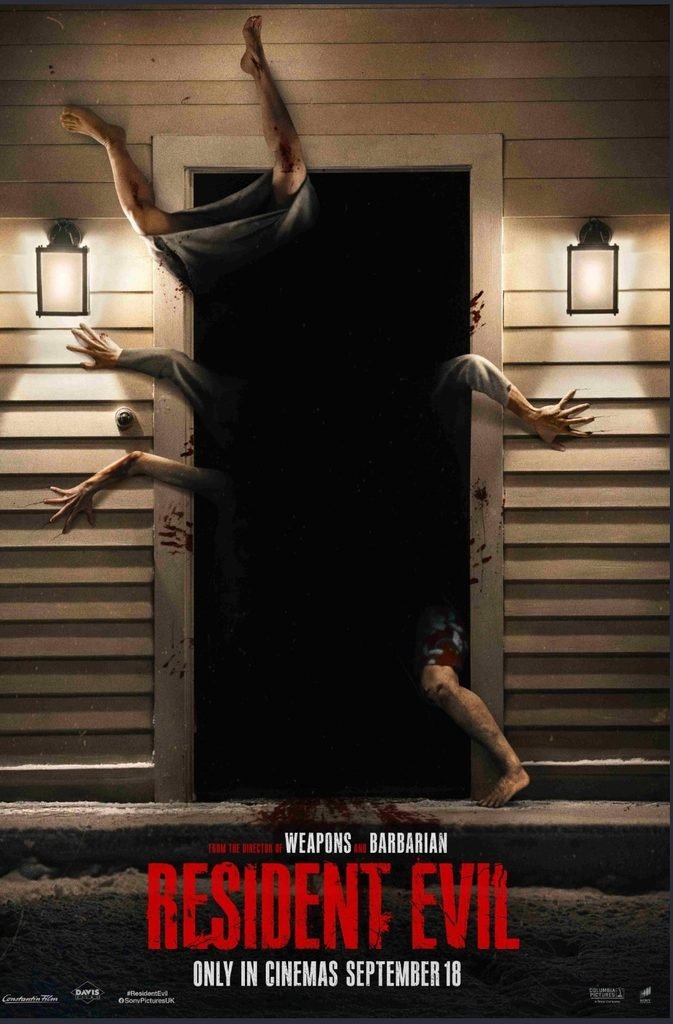
There have been quite a few attempts made at turning the Resident Evil games into movies. Some have fared better than others.
The original film arrived in 2002, starring Milla Jovovich as the character Alice. That series eventually grew into six action-heavy movies.
These movies became popular among moviegoers even though they were moving away from the game series. They started to become bigger, louder, and more action-oriented.
After that was the release of Resident Evil: Welcome to Raccoon City in 2021. This movie tried to be closer to the game series.
Now, the franchise has been completely reset once again. This new Resident Evil arrives with a very different approach.
Zach Cregger directs the film following his success with Barbarian and Weapons. Shay Hatten shares writing duties with him.
This leads to a more streamlined horror film. It lasts about ninety-four minutes without any time being wasted.
There is one more huge difference from games. The story doesn’t revolve around known game characters like Leon Kennedy or Jill Valentine.
Rather, our protagonist is Bryan, played by Austin Abrams. He is a normal medical courier who takes on a very strange delivery assignment.
He delivers a strange package to Raccoon City General Hospital. He undertakes this mission because double money has been offered to him.
However, it couldn’t have come at a worse time for him. This is because Bryan reaches Raccoon City just when the T-Virus outbreak starts.
What follows is a night of survival, confusion, violence and increasingly disturbing creatures. It is also surprisingly different from previous Resident Evil films.
For me, that difference is where this new reboot becomes interesting.
A New Resident Evil

I was interested in seeing Cregger tackle Resident Evil for several reasons. I found Barbarian and Weapons interesting examples of his filmmaking style.
It just seemed like something that would fit well with his style. On the other hand, I was worried about yet another Resident Evil movie.
The previous films had struggled to balance the games with their own cinematic identities. This new film also introduced another concern.
There are no familiar game protagonists driving the story. Instead, we are asked to follow someone completely new. That could have made the film feel disconnected from the games.
However for the most part the film feels like a Resident Evil movie. At the same time, it unmistakably feels like a Zach Cregger movie.
More importantly, those two identities work remarkably well together.
There seems to be no attempt by Cregger to conceal his filmmaking identity. Humour, visual and tonal elements are clearly present.
There are instances in the movie that can clearly be recognized as belonging to Cregger’s earlier works. Even some responses from characters carry with them Cregger’s characteristic humour.
There is the well-known employment of “WTF” that fits right into place. Humour is provided without completely undermining the horror aspect of the movie.
It is necessary since there are already strange tonal contrasts in Resident Evil games. These can be frightening, ridiculous, dramatic and sometimes humorous.
This film understands that combination surprisingly well.
Story And Pacing

The plot line is pretty simple, but I believe this works in favor of the movie. Bryan’s task gives a definite direction from the very beginning.
Bryan needs to deliver the cargo. And then everything starts collapsing around him.
This simple idea makes it possible for the movie to move at an accelerated pace, because there is no need to create complex subplots and background.
The plot and the pace go hand-in-hand most of the time. Every new thing that appears in the movie helps to keep Bryan moving forward.
This makes the movie fast and energetic.
But I did think that some more information could be provided about the infection outbreak in the movie. Some people might want to know what exactly happened.
It does make sense, however, to avoid spending too much time on explanations. Most people who watch Resident Evil have a general idea about what the outbreak is.
These games and previous films created this world for viewers. Explaining too much about the T-Virus would have slowed down the entire film.
Therefore, it adopts a smart strategy. It assumes that audiences know certain things and focuses only on the survival of Bryan.
I believe that it is quite an effective choice.
The fairly short running time also contributes to maintaining the pace. Occasionally, I wish that there were more character development, but overall it never drags.
In a way, it is a breath of fresh air. Sometimes franchise movies tend to become too crowded with characters and their mythology.
This Resident Evil is much more focused.
Does It Work As A Standalone Movie?

I would say, yes, mostly. No profound expertise in games is required to comprehend Bryan’s story.
First of all, the basic concept of the movie is quite clear even for newbies. The main character is stuck in the outbreak and has to stay alive.
Secondly, this particular movie does not demand viewers to be aware of every detail of the franchise mythology. As a result, it becomes much easier to watch.
Nevertheless, I guess that existing fans will benefit more from watching the film.
Some details and elements of the movies may become more apparent due to understanding of the games. Plus, the background of Raccoon City becomes more significant.
In conclusion, there is some kind of good compromise between accessibility and familiarity in the movie.
On the one hand, it does not seem to be a difficult task for those who have never played Resident Evil.
On the other hand, it still offers a lot of elements recognizable by fans of the game.
In my opinion, it is a reasonable way to remake the franchise. This movie does not reproduce a known plot; instead, it builds up a completely different story.
Directing

Zach Cregger’s direction is one of the key points of the movie.
The movie has an unusual visual style right from the first minutes of viewing. It is darker and more personal in its approach than many of the preceding movies in the franchise.
Also, Zach Cregger knows how to leave space for tension. He does not try to jump straight into action or creatures.
The movie leaves some room for building the tension.
All his past work can be felt while watching the movie. The peculiar humor and change in tones seem familiar to me.
But at no point did he make the movie seem like Barbarian, only with the Resident Evil name tag.
It was one of my major fears before I watched it. Instead, he adjusts his directing style to the franchise.
The end result seems both familiar and original.
Game influence is especially noticeable in Cregger’s work with the camera. The viewer often sees locations through the eyes of Bryan.
It creates the feeling that environment is important.
The movie also understands the need for uncertainty. We do not always know what lies ahead of us.
That uncertainty is one of the foundations of survival horror.
Cinematography
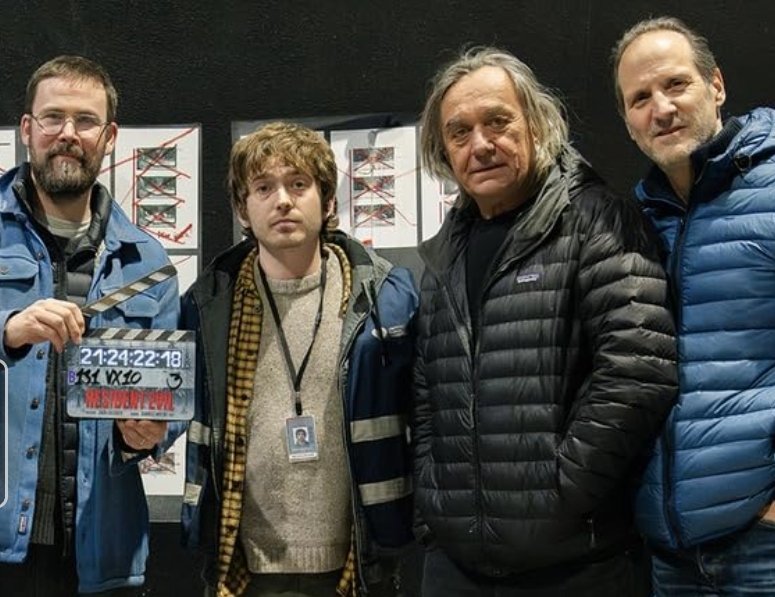
The cinematography of Dariusz Wolski contributes significantly to the mood.
The movie features an atmosphere which is very dark and disturbing, but which fits perfectly with the plot.
Quite a lot of the fear in the movie comes from not seeing something clearly.
Darkness becomes a tool in telling a story, instead of being purely visual. Sometimes a lot of the light comes from practical light sources.
Phone lights and headlights sometimes become essential. It creates a feeling of vulnerability.
You are frequently looking into darkness while not sure of what you may find there.
This makes even the normal places seem scary. The cinematography helps the game influence come through as well.
Sometimes the camera follows Bryan instead of simply recording him. This made many scenes very physical for me. Which worked particularly well with the 4DX experience.
The 4DX Experience
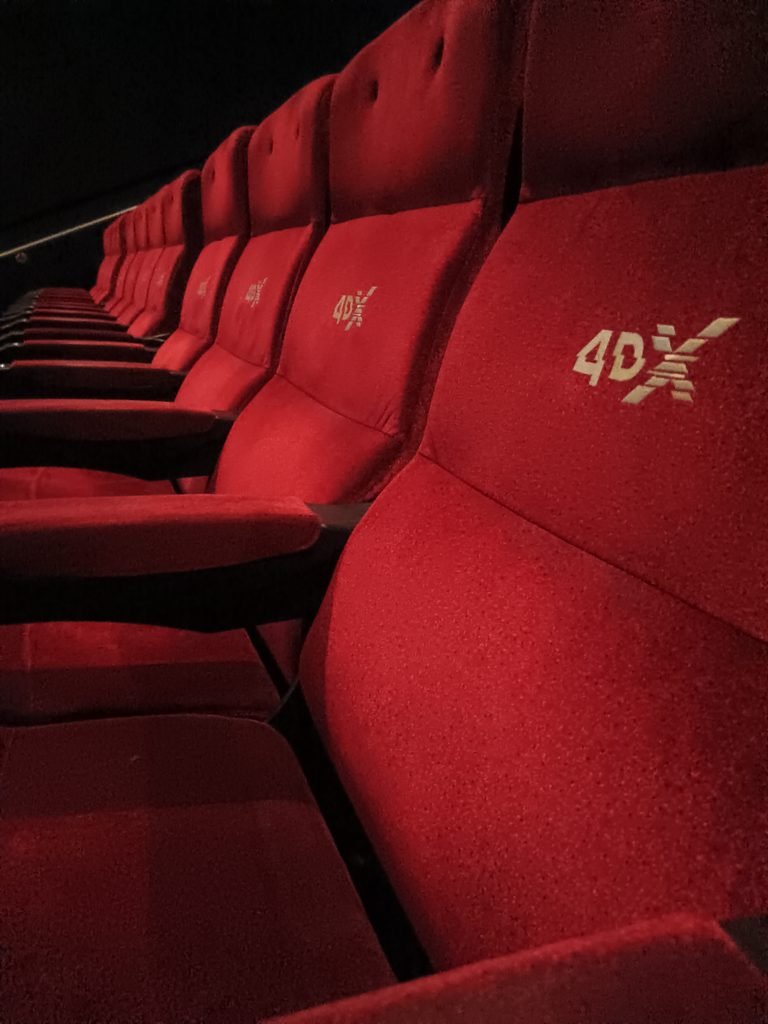
I chose to see Resident Evil in 4DX on purpose. Having watched the movie, I believe this was the right decision in regards to this particular film.
The moving chairs gave an additional physical element to the experience.
Whenever Bryan is running, falling or experiencing any physical movement, one can feel that physically as well. It brings closer to the character.
Almost turns into an element of gaming design of the movie.
While in a usual cinema one watches Bryan making his way through the streets of Raccoon City, in 4DX one goes along with him.
Of course, this cannot give the real experience of what Bryan goes through physically. Still, it gives its approximation.
This made quite a lot of action and horror scenes more immersive. This also gave me a stronger sense of gaming experience recreated in the film.
An interesting relationship can be observed between these three mediums. The video game allows the player control. The film captures the perspective from that viewpoint.
And the 4DX experience takes that perspective and adds movement. This is a great combination for this kind of film.
Visual Effects
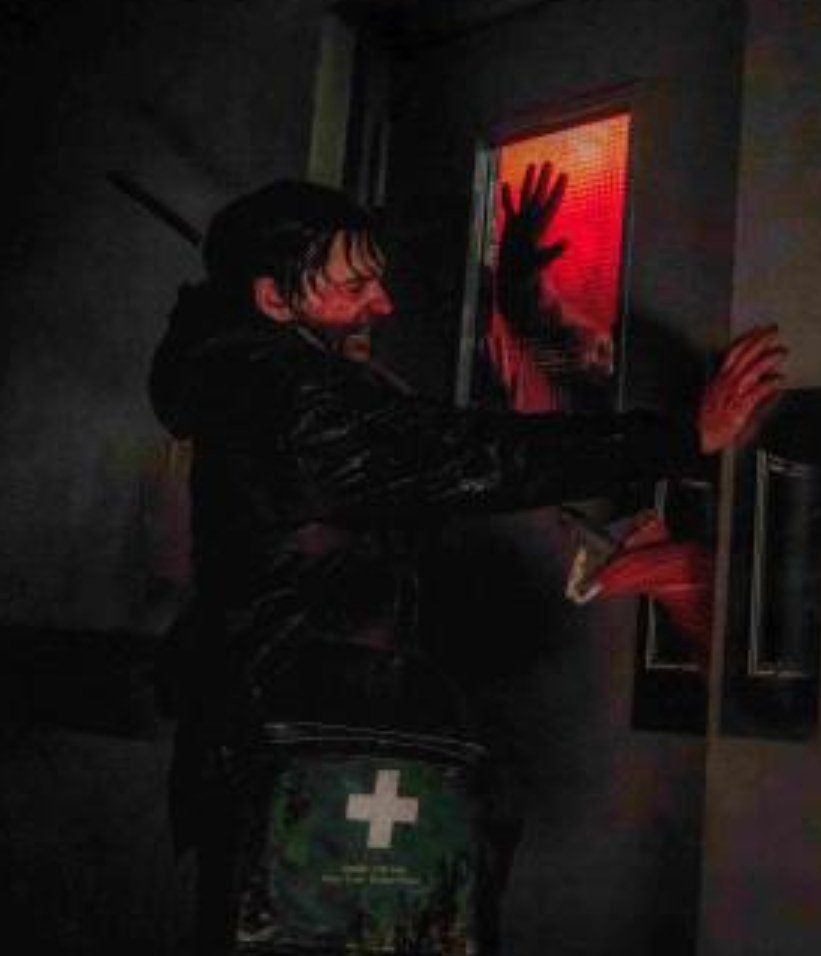
Unfortunately, the visual effects are one area where the film occasionally let me down.
Some of the CGI looked noticeably weak to me. There were moments when the effects did not look completely convincing
This may prove somewhat distracting in relation to the creature sequences.
However, I do not believe that this issue lies in the nature of the creatures’ ideas. There are some quite intriguing ideas involved within the film.
The virus creates some quite shocking mutations. The film attempts to create creatures that do not just feel like zombies.
The maternity ward scene was especially well created.
There is something inherently frightening about the setting and what Bryan discovered there. This is an example of how good the creature ideas are.
There were also some instances where I saw some parallels with John Carpenter‘s The Thing, specifically the creation of creatures.
While personally I do not see this as being a bad thing at all.
The Thing is immensely influential when it comes to body horror. This influence can work effectively in a Resident Evil storyline.
However, once parallels become clear then comparisons are inevitable. That does not automatically make the creature work unsuccessful. It simply means the film is drawing from an extremely recognisable source.
The bigger issue for me was consistency. When the effects work, they make the creatures genuinely disturbing. When the CGI looks weaker, it can break the illusion.
Interestingly enough, 4DX highlighted this fact.
While the convincing creatures’ effects gained even more immersion through the moving chairs, weaker CGI became even more apparent thanks to the physical effects.
The concepts are always better than the implementation itself.
Soundtrack
And the soundtrack was another aspect that was successful for me.
The score is appropriate to the mood of the movie and creates the consistent creepy atmosphere. The music is rarely out of place regarding the events in the movie.
One can always feel a certain underlying tension.
And it is quite significant because the horror movies do not always have to be noisy. Sometimes it is much more efficient when there is a suggestion of danger in the air.
It is the soundtrack that is responsible for it.
There are also evident signs of the influence of John Carpenter on the soundtrack of the movie.
Some synth-driven parts brought back memories of the horror movies by Carpenter. But again, it was not something that I found problematic.
The horror movies by Carpenter inspired many other directors to make their films.
It is also in the atmosphere that Cregger was creating. But the influence becomes evident when combined with the creature effects.
Nevertheless, the soundtrack manages to fulfill its function perfectly.
Sound Design
The sound design is worth considering separately from the soundtrack.
The soundtrack sets the mood, whereas the sound design makes the environment tangible.
Footsteps, sounds of creatures, impacts, and environment sounds contribute to the building of suspense. These sounds can also increase the feeling of danger of a place.
Sometimes the sound alone can be sufficient to evoke fear even when we do not see anything yet.
It comes especially handy for this dark movie. We hear someone coming closer to us but we are unsure of their whereabouts.
In this way, fear is instilled in us without any jump scare. Furthermore, the sound design enhances the 4DX experience.
The combination of movement, sounds and cinematography increases the involvement of the audience.
It helps to establish the idea that Bryan is living through all these events together with us. It is another reason why I would advise you to watch this film in 4DX.
Performances

Austin Abrams holds the majority of the film with his character, Bryan.
This is no small task, especially considering the lesser presence the other characters have on screen.
The actor succeeds in presenting Bryan as a regular Joe instead of an archetypical action hero.
The man is scared and bewildered with everything that is going on. He is not instantly able to survive the apocalypse like a professional survivor.
It makes the character more relatable. At the same time, the actor suits Cregger’s comedic style.
The supporting characters in the film include Zach Cherry, Kali Reis and Paul Walter Hauser.
These are all people who help add something to the movie whenever they feature in the film, but the plot is still focused on Bryan.
This has an impact on the viewer that is quite unique.
The fact that Bryan is the main character means that we understand the events of the film from his perspective.
This means that we learn of the outbreak at the same time as he does. This means that Bryan becomes a very good stand-in for the audience.
It also links in well with the 4DX element of the film. Through the movement involved I was able to understand something of what Bryan understood.
When Bryan moved, the seats moved with him. 4DX may be particularly suitable for this sort of film because of this.
It is not just the character moving in this case, the audience moves too.
What Worked And What Did Not
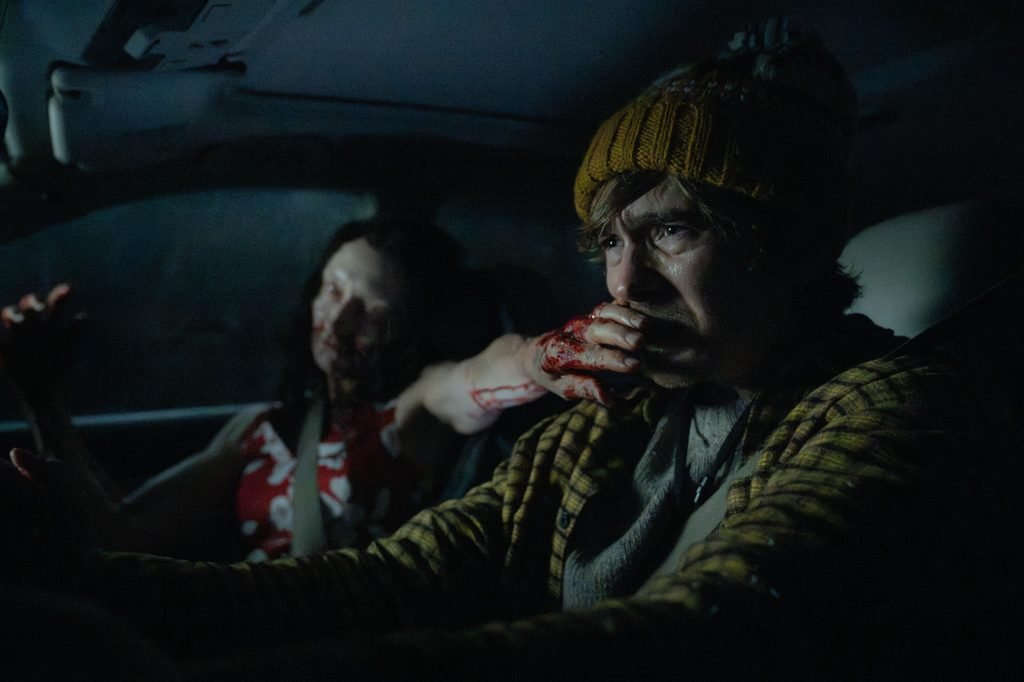
For me, Resident Evil could have been a great movie. There is a lot here that I genuinely enjoyed.
First of all, Cregger presents a new identity for this franchise without breaking its connections to the video games.
The atmosphere in this movie is excellent, and the game-style camera is used perfectly. The pace is also good.
The movie does not seem to waste any time, and Bryan gives a focus for the film’s plot.
Creatures are another advantage. Even though some parts of CGI are not very good, there are quite some disturbing creature ideas used.
This maternity ward scene is one of them.
Also, the Carpenter influence can be seen as something new and interesting in this movie, although it is visible.
In my opinion, however, the biggest problem of this movie is its ending. I did not find the conclusion particularly satisfying.
The film builds towards its final moments with enough tension to create certain expectations. Unfortunately, the ending did not provide the payoff I personally wanted.
Again, there are similarities with The Thing in the way the finale is built. This is not necessarily a bad thing.
I also feel that the movie could have expanded on some aspects.
More information regarding the outbreak would be nice to have. Some characters might have required further development.
But having too much of it might have ruined the pacing of the movie. This leaves the movie in an interesting position.
A few of its weak points are indeed annoying because the movie is very close to becoming a really good one.
Final Verdict
Overall, I enjoyed this new Resident Evil. Though it is not perfect and had an ending that kept it from being great, the flaws do not overshadow the positives.
The inconsistent CGI use also detracts from some of the horror at times. Nevertheless, there is plenty that Cregger got right.
Firstly, he has made a Resident Evil film that feels unique to him but is still part of the franchise. Choosing the original Resident Evil story was a wise choice.
The film provides something fresh to follow for viewers while still maintaining all the survival horror components necessary.
The film’s cinematography, score and atmosphere all combine well. The addition of the 4DX effect brings something additional to that mixture.
For myself, the 4DX brought even more immersion and added to the link between the onscreen and physical experience of Bryan.
Definitely recommend seeing Resident Evil in 4DX if possible. The seat motion effects fit well with the film’s action, horror and game-style camerawork.
At times, it genuinely felt as though I was experiencing the movement alongside Bryan. This was what made the whole cinema experience stand out from watching any other horror film.
In conclusion, this is an imperfect yet captivating reboot. Not everything goes according to plan all the time in the film.
But it shows that an original story can carry forward the essence of the game. To me, the movie falls just short of being excellent.
But it is not because of the ending or the overused CGI. There is enough in the film to make it worth watching for the fans of the series.
Most importantly, it captures the essence of the game while clearly being a Zach Cregger movie. And this is a good starting point for a reboot of the franchise.