The Choral (2025) Review: A Beautifully Performed Yet Frustratingly Safe Wartime Drama
Introduction: Prestige, Pedigree, and High Expectations: The Choral (warning Spoilers)
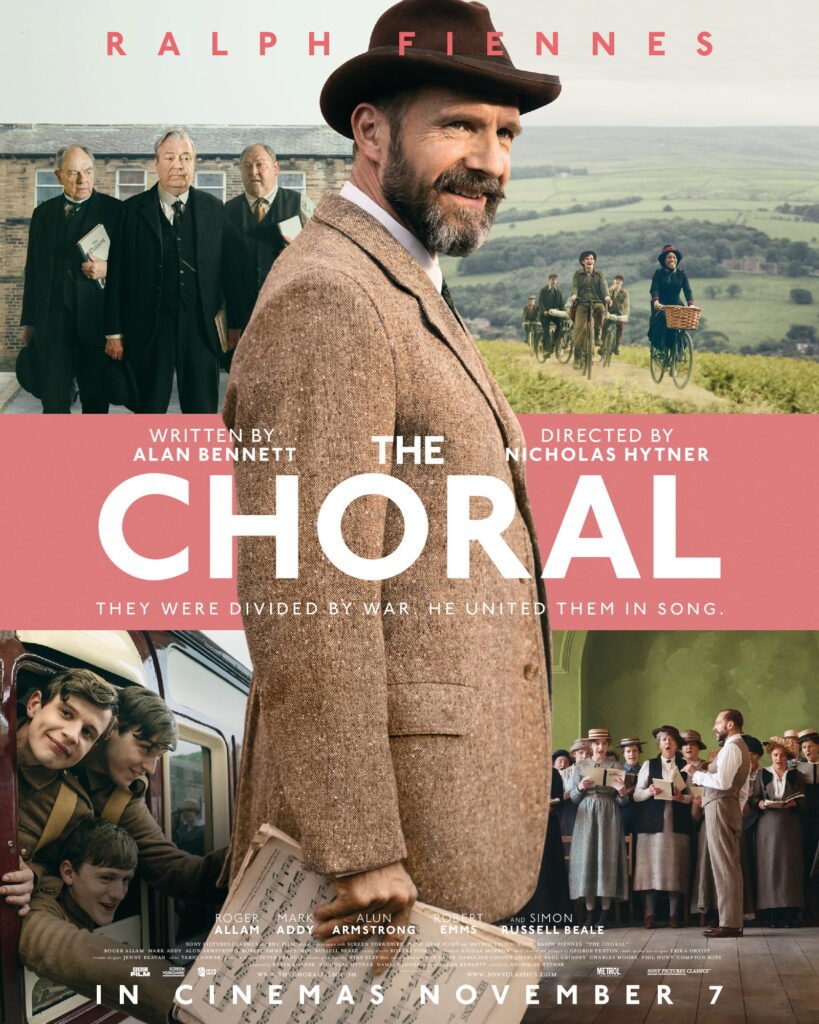
The Choral arrives with enormous prestige attached. Director Nicholas Hytner reunites with writer Alan Bennett. Together, they previously delivered The History Boys, a sharp and emotionally layered ensemble drama. Naturally, expectations run high. Moreover, the cast signals quality at every level. Ralph Fiennes leads a formidable group of British talent.
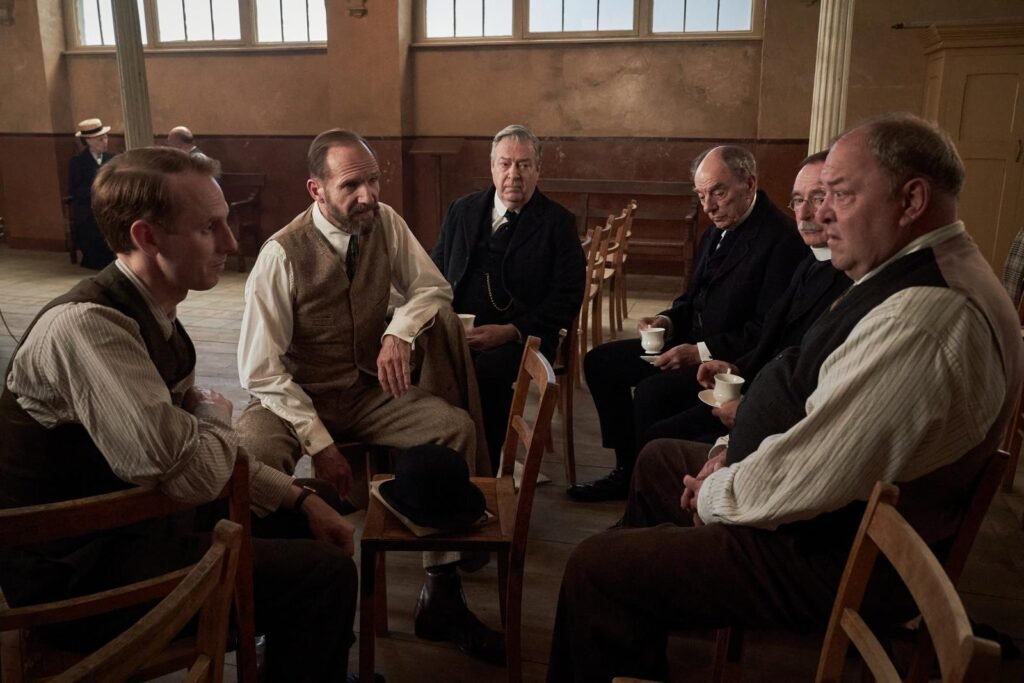
He joins Roger Allam, Mark Addy, Alun Armstrong, and Simon Russell Beale. That lineup promises nuance, intelligence, and emotional gravity. At first glance, the premise also feels rich with dramatic possibility. The story unfolds in 1916 during the height of World War I. A struggling Yorkshire choral society attempts to stage Edward Elgar’s monumental work. That work, of course, is The Dream of Gerontius by Edward Elgar.
Immediately, the setup suggests layered themes. War, loss, patriotism, art, and identity all hover beneath the surface.
However, despite these promising ingredients, the film never fully soars. Instead, it settles into something safe, polished, and emotionally restrained.
Story and Structure: Familiar Ground with Limited Risk
The narrative centers on Ramsden, a fictional Yorkshire town. Like many communities in 1916, it bleeds from war. Most able-bodied men serve on the front lines. Therefore, the local choral society struggles to survive. In response, the committee recruits teenage boys to fill missing voices. They also hire an outsider to lead them. That outsider arrives in the form of Dr. Henry Guthrie. Ralph Fiennes plays him with measured intensity.
Guthrie recently returned from Germany. Consequently, suspicion shadows his every move. The townspeople distrust his foreign associations. After all, Germany stands as the enemy. This tension provides fertile dramatic soil. However, the script rarely digs deep enough. Instead of exploring Guthrie’s time abroad in detail, the story hints vaguely. We receive fragments rather than full context.
Because of that restraint, Guthrie remains partially opaque. Fiennes injects complexity, yet the script limits him. Meanwhile, the choir rehearses Elgar’s demanding composition. Rehearsals dominate much of the middle act. On one hand, these sequences build authenticity. On the other hand, they stall momentum. From early on, the film telegraphs its trajectory. The community resists change, then gradually embraces it. Obstacles appear, then dissolve. Finally, the performance promises redemption. This arc feels comforting yet predictable. As a result, tension rarely peaks.
Performances: Actors Elevate Thin Material
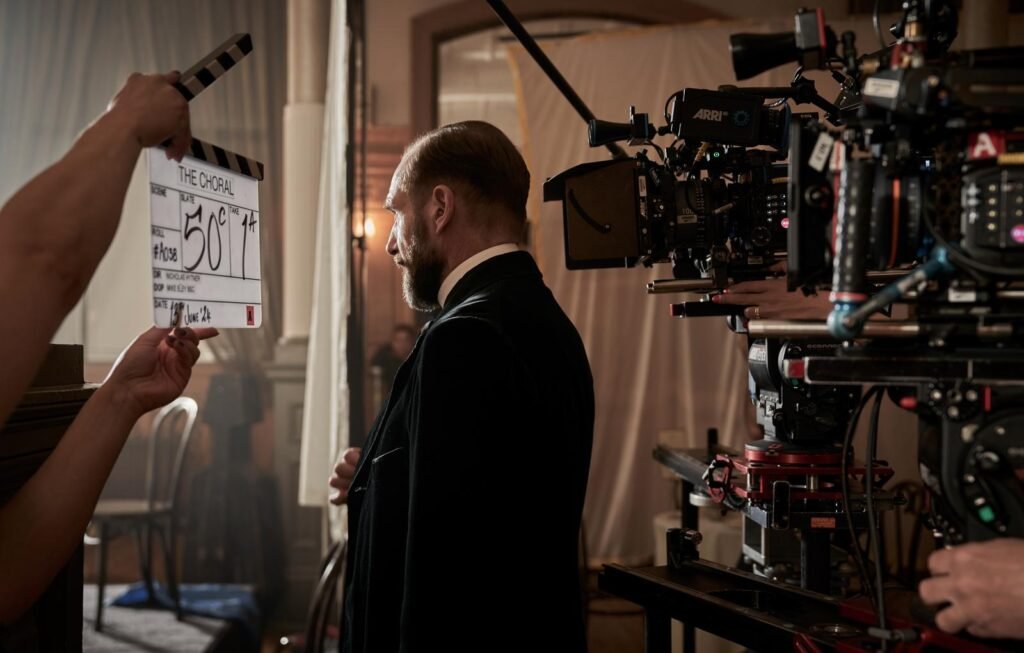
Despite narrative limitations, the performances shine. Ralph Fiennes anchors the film with quiet authority. He avoids grand theatrics. Instead, he favors controlled restraint. Every glance suggests withheld emotion. Every pause implies private struggle. Even when the script sidesteps his backstory, Fiennes fills the silence. Therefore, Guthrie never feels hollow.Roger Allam and Alun Armstrong enrich committee scenes with dry wit.They embody stubborn Yorkshire pragmatism convincingly.
Mark Addy adds warmth and understated humor. Meanwhile, Simon Russell Beale delivers intellectual sharpness. Collectively, the ensemble brings authenticity. However, strong acting cannot replace narrative depth. Characters often hint at inner conflict. Yet the story rarely explores those tensions fully. Consequently, the cast carries more weight than the script provides.
Dialogue and Tone: Bennett’s Wit Shines, Then Fades
Alan Bennett’s dialogue sparkles in isolated moments. Committee exchanges crackle with dry humor. Yorkshire sarcasm cuts through solemnity effectively. Therefore, the early scenes feel lively and textured. However, tonal shifts create imbalance. One scene leans into comedy. The next plunges into somber wartime grief. Transitions sometimes feel abrupt. Rather than blending humor and tragedy seamlessly, the film alternates between them.
As a result, emotional rhythm suffers.
Bennett’s voice remains distinct.
Yet the script hesitates to push characters into uncomfortable territory. Instead, it circles weighty themes without confronting them head-on.
Themes: Ambition Without Commitment
The Choral gestures toward multiple complex ideas. War trauma surfaces repeatedly. Class divisions simmer within rehearsals. Xenophobia influences how townspeople treat Guthrie. Sexuality also appears in subtle hints. However, the film never pursues these threads deeply. For example, anti-German prejudice emerges early. Later, the narrative softens that hostility conveniently.
Similarly, class tensions flare briefly. Then they dissolve without lasting consequence. The film wants to examine how art heals communities. That intention feels sincere. Nevertheless, sincerity alone cannot replace thematic rigor. The script introduces big ideas but resolves them too neatly. Therefore, the emotional impact diminishes.
Visual Style and Atmosphere
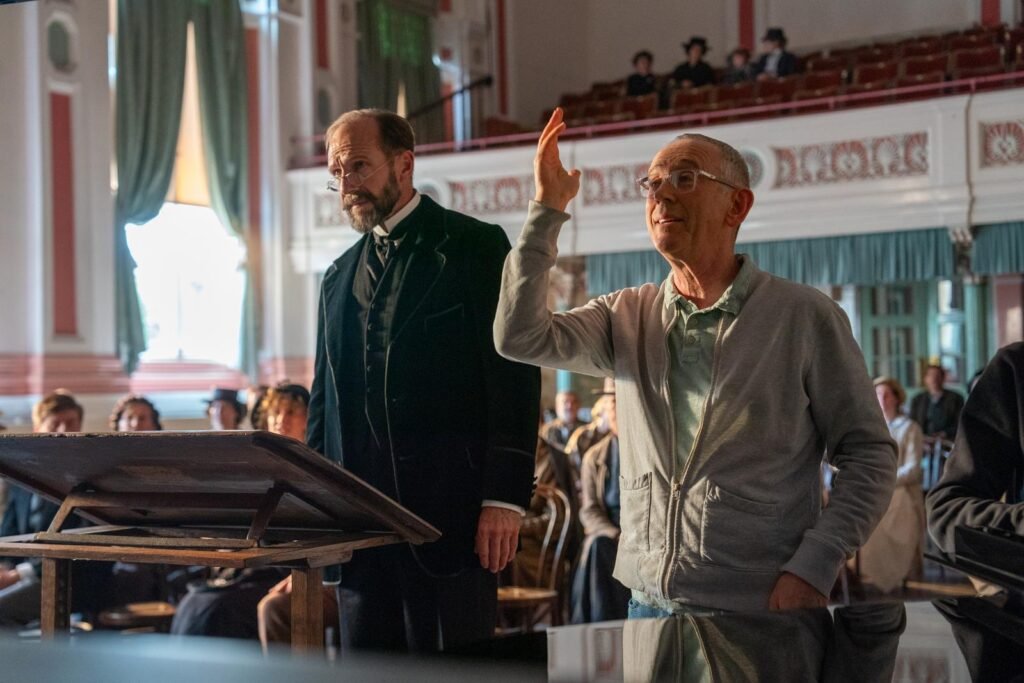
Visually, the film embraces classic period drama aesthetics. Warm golden light bathes interiors. Muted tones define exteriors. Costume and production design feel meticulously researched. Ramsden appears lived-in and authentic. Nothing feels artificially theatrical. However, the cinematography rarely takes risks.
The camera favors conventional framing. While polished, the imagery lacks urgency. World War I rarely feels chaotic or destabilizing. Instead, the film presents wartime England as solemn yet safe. That choice reinforces the overall conservatism of the storytelling.
Music and Emotional Weight
The choral sequences form the film’s emotional backbone. Elgar’s composition carries undeniable power. When the choir sings, resonance fills the screen. Music conveys what dialogue sometimes cannot. However, rehearsal scenes repeat frequently. Without escalating stakes, repetition drains intensity.
For viewers unfamiliar with choral music, patience may wane. For enthusiasts, the sequences offer immersion. Still, music alone cannot carry dramatic momentum. The script must amplify stakes around it. Unfortunately, those stakes often feel muted.
Final Thoughts
At its core, The Choral demonstrates competence. The cast excels. The dialogue contains flashes of brilliance. The production design immerses viewers in 1916 Yorkshire. Yet the film avoids confrontation. It softens edges where sharper insight could thrive.
Compared to The History Boys, this story feels restrained. That earlier film challenged ideas of education, sexuality, and ambition directly. Here, risk feels minimized. Consequently, emotional resonance weakens. The Choral never fails dramatically.
However, it never truly surprises either. It comforts more than it challenges.
And that, ultimately, defines its limitation.