The Moment (2026) Review: Charli XCX’s Mockumentary Satire of Fame and Pop Culture
Overview of The Moment (2026) (Warning contains Spoilers)
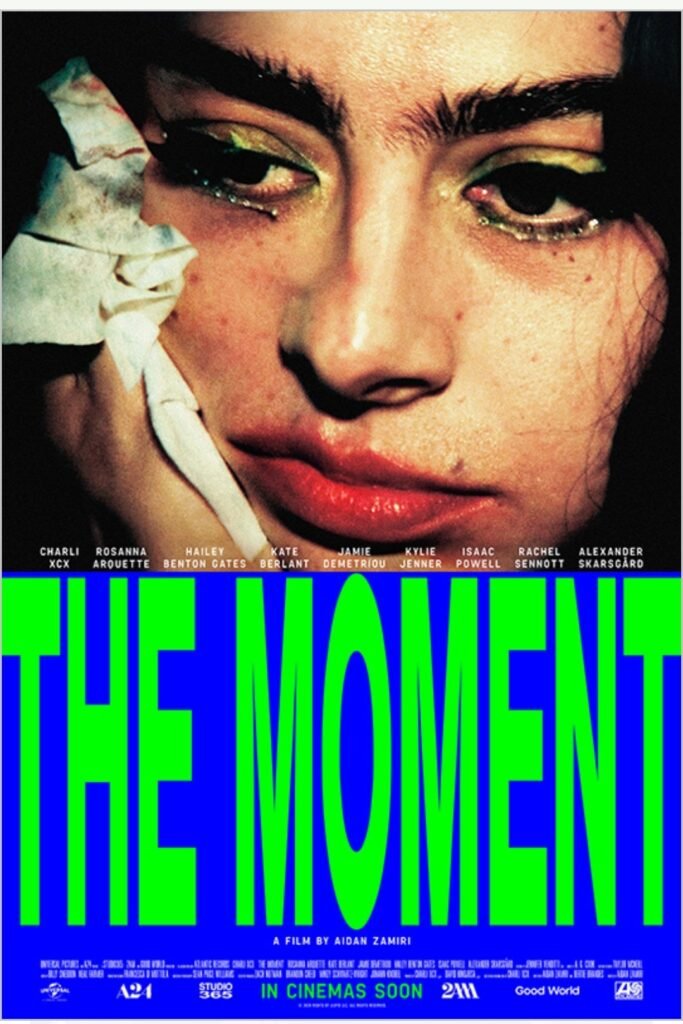
The Moment (2026) is a comedy-drama mockumentary directed by Aidan Zamiri. Pop star Charli XCX created the original concept.
The film blends fiction with documentary storytelling. As a result, viewers follow a fictionalized version of Charli XCX navigating fame.
The movie premiered at the Sundance Film Festival on January 23, 2026. Soon after, theaters released it on January 30, 2026.
The film runs for 103 minutes. Meanwhile, A24 distributed it in the United States. In the United Kingdom, Universal Pictures handled distribution.
Plot and Premise
The story focuses on an exaggerated version of Charli XCX. Specifically, she prepares for a major arena tour. The tour follows the success of her album Brat. Consequently, expectations around her career rise quickly.
The mockumentary format reveals chaos behind pop stardom. For example, viewers see rehearsals, industry meetings, and intense creative pressure. However, the film avoids a typical concert-movie structure. Instead, it satirizes the music industry.
Furthermore, the narrative highlights pressure from record labels, fans, and media outlets. Ultimately, everyone demands the next big success.
Cast and Performances
The film features Charli XCX playing a fictionalized version of herself. Additionally, the supporting cast includes Rosanna Arquette, Kate Berlant, Jamie Demetriou, Isaac Powell, and Alexander Skarsgård.
Several celebrities also appear in cameo roles. For instance, Kylie Jenner and Rachel Sennott portray fictionalized versions of themselves.
This mix of actors and real personalities strengthens the mockumentary tone. As a result, reality and parody constantly overlap. This mix of actors and real personalities strengthens the mockumentary tone. As a result, reality and parody constantly overlap.
Directorial Style and Visual Choices
Director Aidan Zamiri brings strong music-video influences to the film. Therefore, the visual style feels energetic and contemporary.
Handheld camera work appears frequently throughout the movie. Likewise, quick zooms and direct-to-camera interviews reinforce the documentary feel.
Consequently, the audience feels like they watch a real behind-the-scenes documentary. Yet the narrative clearly blends fact and fiction. Zamiri also mixes staged scenes with improvisational moments. Because of this choice, conversations often feel messy and natural.
Furthermore, awkward pauses and chaotic interactions highlight the absurdity of celebrity culture.
Visual Contrast and Narrative Structure
Zamiri often contrasts public and private spaces. Public scenes show concerts, interviews, and rehearsals with bright lighting and stylized visuals. These moments resemble glossy music videos.
In contrast, private scenes appear simpler and quieter. Natural lighting and minimal movement create a more grounded atmosphere. Therefore, the film clearly separates public glamour from private stress.
The narrative structure also feels fragmented. Instead of a linear story, the film jumps between interviews, rehearsals, and media appearances. Consequently, the editing mirrors the chaotic schedule of a modern pop star.
Themes: Fame, Identity, and Celebrity Culture
Several themes shape the story. First, the film examines how celebrity identities form.
The narrative suggests fame rarely grows from talent alone. Instead, branding, marketing, and media exposure shape public personas.
Documentary interviews reinforce this idea. Meanwhile, managers, labels, and publicists constantly influence the artist’s image.
Another theme focuses on maintaining success. Charli faces pressure to produce new cultural “moments.”
Consequently, the film critiques how quickly pop culture moves. Artists must constantly remain visible to stay relevant.
The story also explores authenticity and identity. Because Charli plays herself, the film questions how much of a public persona feels genuine.
Execution of the Themes
Critics generally appreciated the film’s themes. The mockumentary approach captured the chaotic energy of celebrity culture.
However, some reviewers felt the themes lacked deeper development. The narrative introduced interesting ideas but rarely explored them fully.
Additionally, the fragmented structure sometimes weakened emotional depth. As a result, dramatic moments occasionally felt less impactful.
What Worked Well
Several elements worked particularly well. First, the mockumentary style felt fresh and energetic.
Zamiri’s music-video background shaped the film’s lively visual language. Handheld shots and interview segments increased realism.
Furthermore, the supporting cast delivered strong comedic performances. Kate Berlant and Jamie Demetriou especially added awkward humor.
Their improvisational style created spontaneous and entertaining scenes. Consequently, the satire of celebrity culture felt believable.
What Didn’t Work as Well
Despite its strengths, the film shows several weaknesses. Most importantly, the narrative structure often feels loose.
Because the story jumps between many fragments, it sometimes resembles a series of sketches.
This structure occasionally disrupts pacing. Therefore, the story struggles to build strong dramatic momentum.
Additionally, emotional depth sometimes feels limited. The film introduces themes about fame and identity but rarely explores them deeply.
Final Thoughts
Overall, The Moment offers an entertaining satire of modern pop culture.
The film succeeds through style, humor, and insider industry commentary. Meanwhile, its narrative structure sometimes feels uneven.
Nevertheless, the movie presents a fascinating look at celebrity branding and artistic identity. Ultimately, it captures the strange machinery behind modern pop stardom.