The Phoenician Scheme Film Review
Background and First Impressions Of The Phoenician Scheme.
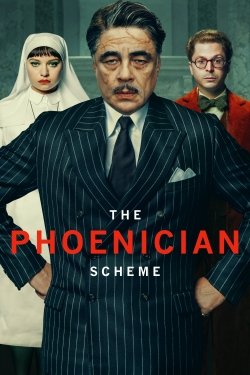
The Phoenician Scheme is a 2025 espionage black comedy thriller written and directed by Wes Anderson. Working once again with Roman Coppola on the story. It’s an international production, shot between the United States and Germany. And backed by Anderson’s long-time collaborators at American Empirical Pictures alongside Indian Paintbrush.
Before even getting into the film itself, it’s hard not to mention the sheer scale of the cast. The lineup reads like a Wes Anderson greatest hits album. Benicio del Toro, Mia Threapleton, Michael Cera, Riz Ahmed, Tom Hanks, Bryan Cranston, Mathieu Amalric, Richard Ayoade. Jeffrey Wright, Scarlett Johansson, Benedict Cumberbatch, Rupert Friend, Hope Davis,F. Murray Abraham, Charlotte Gainsbourg, Willem Dafoe, and Bill Murray. On paper, it’s the kind of ensemble that almost feels excessive. And going in, I genuinely wondered whether this would be another case of star power overwhelming substance.
Story and Setup
At the center of the film is Zsa-Zsa Korda, played by Benicio del Toro. A fabulously wealthy, morally flexible businessman attempting to complete a sprawling infrastructure project known as the Phoenician Scheme. When an apparent conspiracy begins driving up costs and threatening the entire operation. Korda finds himself scrambling to secure more funding. Calling in favors and negotiating with a series of eccentric investors, allies, and enemies.
Running alongside this is Korda’s strained relationship with his daughter, played by Mia Threapleton. Who lives as a nun and represents a moral counterweight to her father’s cynical worldview. The film bounces between boardrooms, covert meetings, family confrontations, and increasingly absurd situations. All while maintaining an undercurrent of espionage and paranoia. I found myself constantly reassessing who could be trusted and who was quietly working against whom. Which made the plot far more engaging than I initially expected.
Low Expectations
I’ll be honest: I walked into The Phoenician Scheme with fairly low expectations. The trailers leaned heavily into familiar Wes Anderson imagery — rigid framing, pastel colors, clipped dialogue, and an intentionally opaque plot. After Asteroid City, which left me admiring the craft but emotionally disconnected. I worried that Anderson had fully disappeared into his own aesthetic, prioritizing presentation over storytelling.
In my opinion, Asteroid City felt more like an art installation than a film I could truly lose myself in. Because of that, I assumed The Phoenician Scheme would be more of the same. Impressive to look at, fun to dissect, but distant and cold on an emotional level. That assumption turned out to be completely wrong. And that surprise is one of the reasons this film worked so well for me.
Benicio del Toro Steals the Film
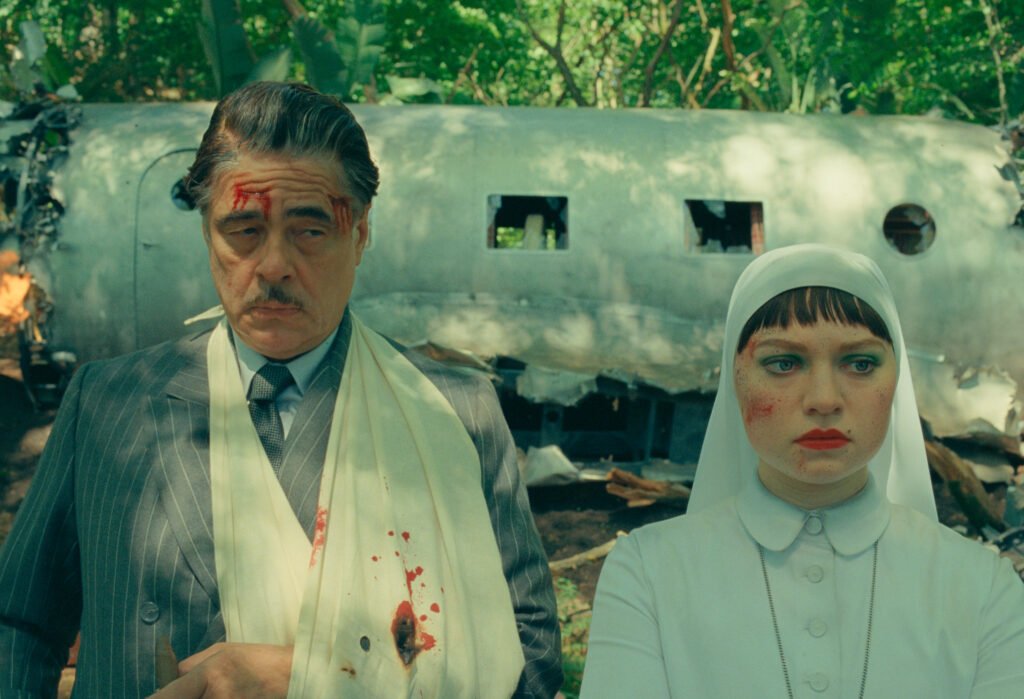
For me, the film lives and dies with Benicio del Toro’s performance — and thankfully, he delivers something genuinely special. His portrayal of Zsa-Zsa Korda is funny, unpredictable, and oddly endearing despite the character’s blatant selfishness and ethical flexibility. Del Toro has always excelled at intensity, but here he shows an incredible sense of comedic timing and restraint.
A Different Performance
What impressed me most was how grounded his performance felt. Even in the most heightened, stylized scenes, he never plays Korda as a caricature. Instead, he finds humor in the character’s seriousness, his absolute belief that he’s the smartest person in every room. I found myself laughing not just at the dialogue. But at the way del Toro uses pauses, body language, and subtle expressions to sell the joke.
This is easily one of my favorite performances of his career. And it made me wish he’d been given more comedic roles earlier on. He completely earns his place at the center of the film. And gives Anderson a strong emotional anchor to build around.
Mia Threapleton and the Emotional Core
Mia Threapleton was another major highlight for me. Playing Korda’s daughter could have easily turned into a symbolic or underwritten role. But she brings real texture and quiet strength to the character. Her scenes with del Toro are some of the film’s most effective. Especially when the comedy falls away and the tension becomes personal rather than plot-driven.
I really believed their relationship — the affection, resentment, disappointment, and unspoken history between them. Threapleton never overplays her hand, and her stillness works beautifully against Anderson’s typically busy compositions. In my opinion, she gives the film its emotional spine, and without her, the story would feel far more hollow.
Michael Cera’s Unexpected Standout
Michael Cera’s performance as Bjorn, a soft-spoken tutor with a fascination for insects. Ended up being one of my favorite elements of the entire film. The character initially seems like classic Anderson eccentricity. But Cera commits to him so fully that he becomes far more than a joke.
His Norwegian accent — which could have easily become distracting — actually adds to the character’s specificity and charm. I was surprised by how much emotional resonance Cera finds in Bjorn. Especially in quieter moments where his loyalty and sincerity shine through. In a cast this large, standing out is no small feat, and Cera manages it effortlessly.
Wes Anderson Back in Balance: Style With Purpose Again
Visually, The Phoenician Scheme is unmistakably Wes Anderson. Symmetrical framing, bold colors, carefully curated sets. But this time, I felt like the style was working *with* the story rather than competing against it. Unlike Asteroid City, where the visual concept often felt like the main attraction. Here the design supports character and narrative at every turn.
I especially appreciated how the film balances whimsy with clarity. Scenes are still playful and meticulously composed, but I never felt lost or emotionally removed. There’s a warmth here that I’ve missed in Anderson’s more recent work. And it reminded me of why films like The Grand Budapest Hotel resonated so strongly.
A Script That Actually Moves
The screenplay is sharp, fast-moving, and surprisingly accessible. The espionage elements provide genuine momentum. And the film never feels like it’s stalling just to indulge in its own cleverness. In my opinion, Anderson and Coppola strike a much better balance here between dialogue-driven humor and plot progression.
Even with a massive ensemble, the film stays focused. Characters come and go without overstaying their welcome, and each scene feels purposeful. I found myself consistently engaged, which isn’t something I can say about all of Anderson’s recent films.
Final Thoughts
By the time the credits rolled, I was genuinely impressed by how much I enjoyed The Phoenician Scheme. It feels like a course correction — not a rejection of Wes Anderson’s style, but a refinement of it. The film is funny, visually stunning, and, most importantly, emotionally engaging. This is Anderson reminding us that beneath the precise framing and stylized dialogue. He’s still a storyteller who understands character, timing, and heart.
Anchored by a phenomenal lead performance from Benicio del Toro and supported by a cast that’s actually used well. The Phoenician Scheme stands among his strongest work in years. If you, like me, felt a bit distant from Asteroid City, this film may come as a very welcome surprise.