
The Weight Movie Review

Introduction: A Hard Road to Freedom
Some movies make survival heroic.
The Weight makes it difficult.
This movie, set against the backdrop of the Great Depression of 1933, celebrates a bleak view of America.
It revolves around Samuel Murphy (Ethan Hawke) a battle-torn WWI veteran who is faced with an impossible decision.
Having been wrongly imprisoned, Samuel Murphy is sent to a tough labor camp.
His freedom appears unlikely to regain.
But the strongest drive for him is not freedom.
He would like to get back to his daughter before she turns into a ward of the state.
This desperation forms the basis of the story’s emotional component.
Murphy agrees when the corrupt warden (Russell Crowe) of the camp makes him an offer.
The job he has to do can be easily described but extremely difficult to accomplish.
He has to move a huge amount of gold across unfriendly territories. The trip will soon turn into much more than smuggling operation.
It becomes a test of endurance, loyalty and survival.
Director Padraic McKinley uses that premise to create an old-fashioned adventure with modern dramatic sensibilities.
The result is a film that feels deliberately out of time. Its influences are clear without becoming completely derivative.
There are echoes of Sorcerer, Deliverance and Jeremiah Johnson throughout the film.
Yet The Weight is less interested in recreating those films than understanding their atmosphere.
It wants physical danger to feel physical. It wants hardship to leave marks on its characters.
A Throwback to Survival Cinema
Padraic McKinley’s background as an editor is evident throughout the film.
His feature debut demonstrates a strong understanding of visual rhythm.
Nevertheless, he intentionally steers away from the slickness that defines the modern action films.
The wilderness looks gritty and cold and unfriendly. The actors look tired because they should look tired.
It is one of the distinctive traits of the film’s physicality.
According to some information, McKinley worked on the rather small budget for such kind of project.
Perhaps, that fact helped him in some way. Locations and real stunts make the trip realistic.
This film does not focus on visual effects all the time. Rather, the danger usually comes from the environment itself.
It makes the wilderness look like one of the characters of the movie.
Mud becomes a barrier. Weather becomes a menace. Distance becomes tiring.
The gold itself becomes one more burden.
Every mile carried has a physical and psychological consequence. That approach recalls the survival cinema of previous decades.
Those films often allowed environments to dictate the pace. They also allowed characters to suffer without immediately cutting away.
The Weight understands the value of that approach. Its strongest sequences are often the simplest.
A difficult climb can become more suspenseful than a large action sequence.
A tense conversation can carry more weight than an explosion.
The film’s commitment to physical filmmaking gives those moments credibility.
Ethan Hawke Carries the Film
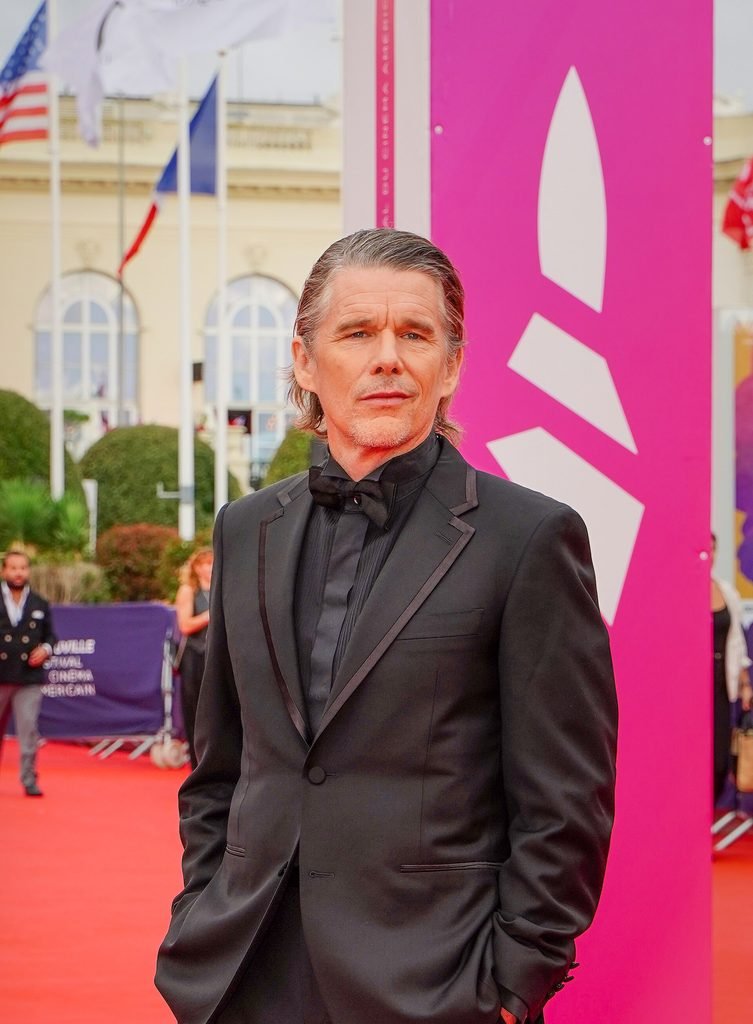
Ethan Hawke is the film’s central strength.
He gives Samuel Murphy a weary presence that immediately establishes his history.
He is not the typical action hero.
Samuel is scarred by the war experience. He is also exhausted by poverty and incarceration.
His motives derive from parenthood and not from glory. This distinction makes the work of the actor especially successful.
He plays Samuel as a person having not much left to lose. He hides his anger behind the quietness.
He hides his fear behind the determination. He also hides his responsibility.
The actor knows that Samuel does not have to talk about his suffering all the time.
His face can express those emotions when dialogue fails. His physicality is also crucial.
Samuel looks like a person having been through a lot. His movements do not have any carefree elegance of the typical action hero.
Each physical effort costs him something. It adds more credibility to the scenes of survival.
The audience will never think that Murphy is invincible.
He can be injured. He can make mistakes. He can become exhausted.
He can also lose control. Those limitations make his determination more impressive.
Hawke therefore anchors the film without turning Murphy into a larger-than-life hero.
His performance is quieter than the premise might suggest.
That restraint is one of the film’s greatest assets.
A Father Rather Than an Action Hero
The emotional focal point of The Weight is Murphy’s father-daughter bond. It is the reason why his wilderness expedition becomes necessary.
Without it, the gold would only be yet another MacGuffin. Thanks to it, however, every move acquires more meaning.
Murphy isn’t putting himself at risk for the sake of riches. He is putting himself at risk because he is running out of time.
His daughter might get separated from him. This is what provides an emotional countdown in the movie.
What is more, this makes it impossible for Murphy to become cynical.
The movie recognizes the fact that desperation can live side by side with love.
Murphy is flawed, but he is not emotionally hollow. This is conveyed very convincingly by Hawke.
Murphy’s sensitivity tends to be hidden under fatigue.
The film does not need constant flashbacks to explain their relationship.
Instead, the audience understands what Murphy is fighting for.
That simplicity works.
Russell Crowe’s Menacing Warden
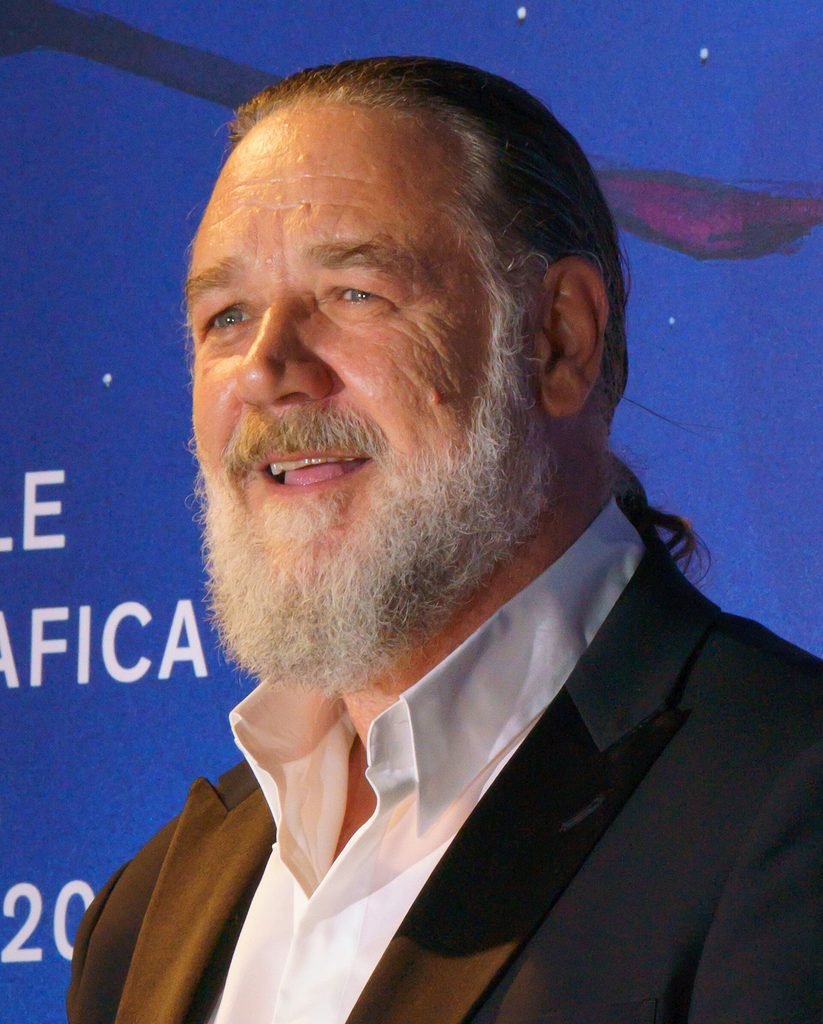
Crowe has an entirely different role here. While his appearance as the camp warden is relatively limited, his presence dominates the story.
Crowe portrays the character with a deliberate menace. Something in his demeanor is decidedly unpleasant.
The character does not require fancy speeches to display his power. His casual cruelty suffices for that.
There is something old-fashioned about the villainy in the performance by Crowe.
The warden is not made sympathetic to any extent. He displays an institutional power in a ruthless way.
His exploitation of desperate prisoners adds to the menace.
The tobacco-spitting manner adds another dimension of unpleasantness.
While the mannerism is crude, it is appropriate for the gritty nature of the film.
Crowe knows that the character gains from unpredictability.
His appearances thus create a considerable effect on the viewer.
He acts as a sort of a frame in the movie.
The character sets off the story and then remains a part of it psychologically.
While some viewers would wish for Crowe to appear more often, his relative limitation prevents overuse of the character.
His menace is partly caused by the fact that the character appears infrequently.
The Prisoners and Their Conflicts
One of the interesting choices made in the movie is that each of the prisoners has an individual personality.
This is evident when Austin Amelio brings out the violent personality of Rankin who almost immediately becomes a conflict within the group.
His aggressive personality leads to conflict among members of the group.
But sometimes, Rankin comes across as more of a typical mischief-maker than as a fully developed character.
Avi Nash gives Singh a quieter and more dependable presence.
His performance provides an important contrast to the group’s more unpredictable personalities.
Lucas Lynggaard Tønnesen brings youthful vulnerability to Olson.
That vulnerability makes the harsh journey feel even more dangerous.
George Burgess adds another distinctive presence as Letender.
Jeffrey Lee Hallman also contributes as Big, helping give the group greater physical presence.
Alec Newman brings additional tension as Taggert.
Julia Jones gives the film one of its most quietly compelling performances as Anna.
She brings strength and vulnerability to a character shaped by hardship and survival.
Anna joins Murphy and the prisoners during their dangerous journey through the wilderness.
However, she never feels like a simple supporting figure.
Jones gives Anna a strong sense of independence and emotional intelligence.
Her character also provides an important contrast to the male-dominated prisoner group.
Together, the performers prevent the prisoners from feeling like anonymous figures accompanying Murphy.
Their conversations reveal different histories, motivations and attitudes towards their uncertain freedom.
These moments create a stronger sense of community within the group.
They also make the journey more emotionally complicated.
The prisoners do not always trust one another.
Some are driven by desperation.
Others are motivated by greed.
Some appear to have little faith in their chances.
That uncertainty creates tension throughout the journey.
McKinley’s use of conversational scenes is particularly effective here.
Characters reveal themselves while walking through difficult terrain.
The technique could easily have become artificial.
Instead, it often gives the characters welcome depth.
The Direction of Padraic McKinley

McKinley’s first feature demonstrates impressive confidence.
His background in editing appears to have given him strong control over pacing.
He understands when to let a scene breathe.
He also understands when tension needs to accelerate.
The direction is restrained rather than flashy.
That works particularly well for the material.
The film’s influences are visible, but McKinley does not simply copy their techniques.
He uses their ambience and places it into his narrative.
The movie looks like a modern production using old-school ideas of making movies.
There is a focus on characters.
There is a focus on the environment.
There is also a focus on physical repercussions.
The movie is hardly ever focused on spectacle per se.
If anything happens, there is always a point behind it.
That kind of discipline is very refreshing.
Nevertheless, the movie sometimes goes too slow.
Some wilderness sequences could have moved faster.
The film sometimes lingers after the dramatic point has already been made.
That contributes to its slightly uneven middle section.
The Politics Beneath the Adventure
One of the most interesting aspects of the film is its political undertones.
The film is set during the Great Depression. The setting is more than just a backdrop for the film.
It is relevant to practically every major event in the film. The prisoners are desperate because economic opportunities have dried up.
The warden has power because weak people have few options. The gold is worth a lot of money.
Its value is especially evident against the backdrop of poverty around the characters.
As such, the film is very interested in class and power.
It asks how far people will go when survival is reduced to a transaction. It also questions who has the right to freedom.
Murphy is put in prison by an institution. He needs help from another person in order to get out of there.
The help is ultimately another form of control. As such, the film portrays capitalism and power in an especially dark light.
Money is power. Labor is exploitable.
These ideas give the film more substance than its adventure premise suggests.
It is not simply a story about transporting gold. It is a story about what desperation does to human beings.
What Works Best
Perhaps the most compelling ingredient is the performance by Ethan Hawke.
Ethan’s performance adds emotional authenticity to the film.
Furthermore, his performance saves Murphy from being the usual survivalist hero.
The practical approach of filmmaking is yet another strong point. The surrounding atmosphere is truly hostile.
Physical performances contribute to the journey. Prisoner backstories give the ensemble more depth.
These scenes let the movie reflect on the individuals it shows. There is yet another actor who leaves an indelible impression: Russell Crowe.
Crowe plays the warden that is really unpleasant company in each and every scene.
Another reason to praise the film is the political context.
The movie is well aware that it is able to benefit from the era in which it takes place.
What is most important is that The Weight is aware of its style.
It is intentionally grim. It is intentionally physical. It is intentionally old-fashioned.
That confidence gives the film personality
What Does Not Work
There are flaws in the movie.
The major flaw of the film is that the underlying story line becomes very predictable.
Most experienced film viewers will know what’s coming next. There are no great surprises in what can or cannot happen.
Certain choices of some characters can be easily predicted based on the story. The worst case happens when there is such a volatile prisoner involved.
The film depicts Murphy as an intelligent and careful person.
But still there are cases when he places trust in someone who doesn’t deserve it at all.
That causes dissatisfaction. Such situations look forced instead of inevitable.
Better writing can improve that choice.
There are also certain familiar archetypes used in the movie.
For example, the aggressive prisoner is rather typical. It exists mostly for the purpose of inner conflict.
This is a good justification for the character. But still there is something artificial about him sometimes.
In general the most vivid characters in the film are much deeper.
The ending is where the film’s tonal discipline briefly collapses. For most of its running time, The Weight maintains a bleak atmosphere.
Its world is harsh. Its characters are damaged. Its survival story carries a melancholy quality.
Then the closing credits arrive. A contemporary rock track is suddenly used over the cast roll call.
The choice is striking. Unfortunately, it is also distracting. The music feels disconnected from the historical atmosphere.
Instead of allowing the film’s mood to linger, it introduces a playful modern energy.
That can feel almost too cute. A more restrained musical choice could have preserved the emotional weight.
The problem is not the use of modern music itself. The problem is the abruptness of the transition.
The film spends so much time creating a specific atmosphere
The audience is left wondering why the filmmakers wanted such a dramatic tonal shift.
For some viewers, it may feel fun. For others, it will feel like an unnecessary mistake.
I suspect the latter reaction will be stronger.
Final Verdict
The Weight is a gritty film that is a great atmospheric piece of survival thriller cinema that boasts physical realism.
Director Padraic McKinley delivers an excellent film director debut. His expertise as an editor can be felt in the way this movie looks.
Moreover, the director knows how to make a rugged survival movie.
The picture reminds one of older survival thrillers while remaining independent of nostalgia.
Thanks to the practical approach to filming, the scenes taking place in the wild seem realistic and dangerous.
Samuel Murphy (Ethan Hawke) is the emotional center of the film.
A very reserved performance of an actor helps to make a character look believable while not making him an action man cliché.
There is a menacing Russell Crowe playing Clancy, who shows up only briefly but still impresses.
One should not forget Julia Jones’ subtle performance of Anna.
The prisoner cast also gets a boost from unique performances and engaging interactions.
These features assist the film in developing more than a mere wilderness story.
Its themes dealing with poverty, work, power and desperation lend the plot more weight.
Nevertheless, there are some flaws in The Weight as well.
There are many situations that seem familiar to the viewer as they employ certain stereotypes associated with prisoners.
Some events can also be predicted in advance.
The rhythm of the movie sometimes lacks a flow, especially in the middle part.
The finale itself is yet another mistake as its modern and musical nature does not fit in with the film.
Nevertheless, all these shortcomings make the picture less good than the survival films that served as the basis for it.
They, however, do not diminish McKinley’s accomplishment as a debut filmmaker.
Indeed, he made his own film that has its own character and knows its roots.
More importantly, he shows himself able to combine spectacle and characters into one.
It may not reinvent the genre, but it delivers a tough and compelling experience.
For viewers who enjoy character-driven survival stories, it is an easy recommendation.