The Woman in the Yard (2025) – A Review
Universal Pictures and Blumhouse Productions.
All Rights Reserved.
Introduction:The Woman in the Yard: Horror Rooted in Human Pain
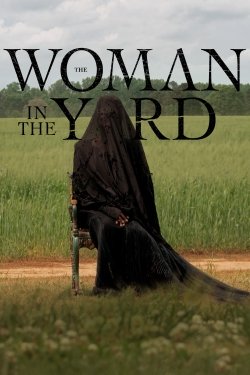
The Woman in the Yard is a 2025 American psychological horror film directed by Jaume Collet-Serra . Written by Sam Stefanak in his feature screenwriting debut. Starring Danielle Deadwyler, Okwui Okpokwasili, Peyton Jackson, Russell Hornsby, and Estella Kahiha. The film presents itself as a restrained horror story. What unfolds is something far more emotionally unsettling than I was expected.
Rather than relying solely on traditional scares, this film anchors its horror in grief, trauma. From the moment it begins, there’s a heavy atmosphere that lingers, signaling that this is not a typical horror.
The Story Setup: A Family Left Shattered
Danielle Deadwyler plays Ramona, a mother struggling to survive after a sudden car accident killed her husband tragically and unexpectedly. She suddenly must care for her fourteen-year-old son (Jackson) and six-year-old daughter (Kahiha) while navigating grief, fear, and a lonely farmhouse. The isolated home already feels tense, and when a mysterious woman (Okpokwasili) silently appears in the yard, unease immediately increases dramatically.
The family lives in a rural farmhouse, a setting that feels isolating even before anything strange occurs.
At first, Ramona assumes the woman—played by Okwui Okpokwasili—is confused, lost, or mentally unwell. But as the days pass the woman continues to return. Getting closer to the house each time. It soon becomes clear that her presence is intentional and deeply unsettling. What begins as discomfort slowly turns into dread, forcing Ramona to confront a threat she can’t explain or escape.
A Premise That Defies Expectations
On paper, the idea of a woman standing in a yard doesn’t sound particularly frightening. I went into the film wondering how such a minimal concept could possibly sustain a feature-length runtime. Surprisingly, the movie makes it work—not through constant scares, but through tension, implication, and psychological unease.
The fear doesn’t come from what the woman does, but from the fact that she simply *exists*, unmoving and persistent. Like an unwanted thought that refuses to go away. The longer she stays, the more unbearable her presence becomes.
Beneath the Horror: Grief as the True Antagonist
What struck me most is how much this film is about grief and depression rather than the supernatural. The woman in the yard feels less like a conventional horror villain and more like a manifestation of Ramona’s unresolved trauma. She represents loss, guilt, and emotional paralysis—things Ramona cannot outrun, no matter how hard she tries.
As the story progresses, the line between reality and psychological breakdown becomes increasingly blurred. The film doesn’t hand you easy answers, and in my opinion, that’s intentional. It invites you to sit with Ramona’s pain rather than offering relief through simple explanations.
Performances That Ground the Film
Danielle Deadwyler delivers a powerful and deeply affecting performance. She portrays Ramona as a woman barely holding herself together, exhausted by grief yet desperately trying to remain strong for her children. Every moment—every hesitation, every outburst—feels earned and painfully real. She carries the film with a quiet intensity that never feels forced.
Peyton Jackson and Estella Kahiha are equally impressive. Their performances add emotional weight. Especially as their characters attempt to care for their mother in ways children shouldn’t have to. The family dynamic feels authentic, and that realism makes the unfolding horror even more disturbing.
Okwui Okpokwasili’s presence as the woman in the yard is haunting despite her limited dialogue. Her stillness, body language, and gaze are unnerving, creating a sense of menace without overt aggression.
A Deliberately Ambiguous Final Act
As the film moves into its final act, the narrative becomes more abstract and open-ended. In my opinion, this is where the movie will divide viewers. The ambiguity can be frustrating if you’re looking for clear answers or closure, but it also reinforces the film’s themes.
Not everything is explained, and not everything is resolved. This mirrors the reality of grief itself. Loss doesn’t wrap itself up neatly, and the film reflects that uncomfortable truth.
Horror That Creeps Rather Than Jumps
While The Woman in the Yard leans heavily into psychological horror, it does include a handful of effective jump scares. They’re used sparingly and strategically, never overwhelming the story.
The real horror lies in the atmosphere: the silence, the stillness, and the slow realization that something is deeply wrong. The dread builds gradually, creating a sense of unease that lingers long after individual scenes end. It’s the kind of horror that seeps under your skin rather than shocking you outright.
Final Thoughts: A Haunting, Thoughtful Experience
Overall, I found The Woman in the Yard to be a compelling and emotionally resonant horror film. It’s not designed to please everyone, especially those looking for fast-paced thrills or clear-cut explanations. But in my opinion, its strength lies in its willingness to trust the audience and explore uncomfortable emotional territory.
This is a horror film that uses genre conventions as a vehicle to examine grief, depression, and the long shadow of trauma. Whether you view the woman as a supernatural entity or a psychological manifestation, the impact remains the same. The Woman in the Yard is unsettling, intimate, and quietly devastating—and it stayed with me long after the credits rolled.